"IMO Secretary-General Arsenio Dominguez told member states and industry representatives on 24 April that there was 'no safe transit anywhere' in the Strait of Hormuz."
The September Acceleration: Three Tankers Hit in 24 Hours
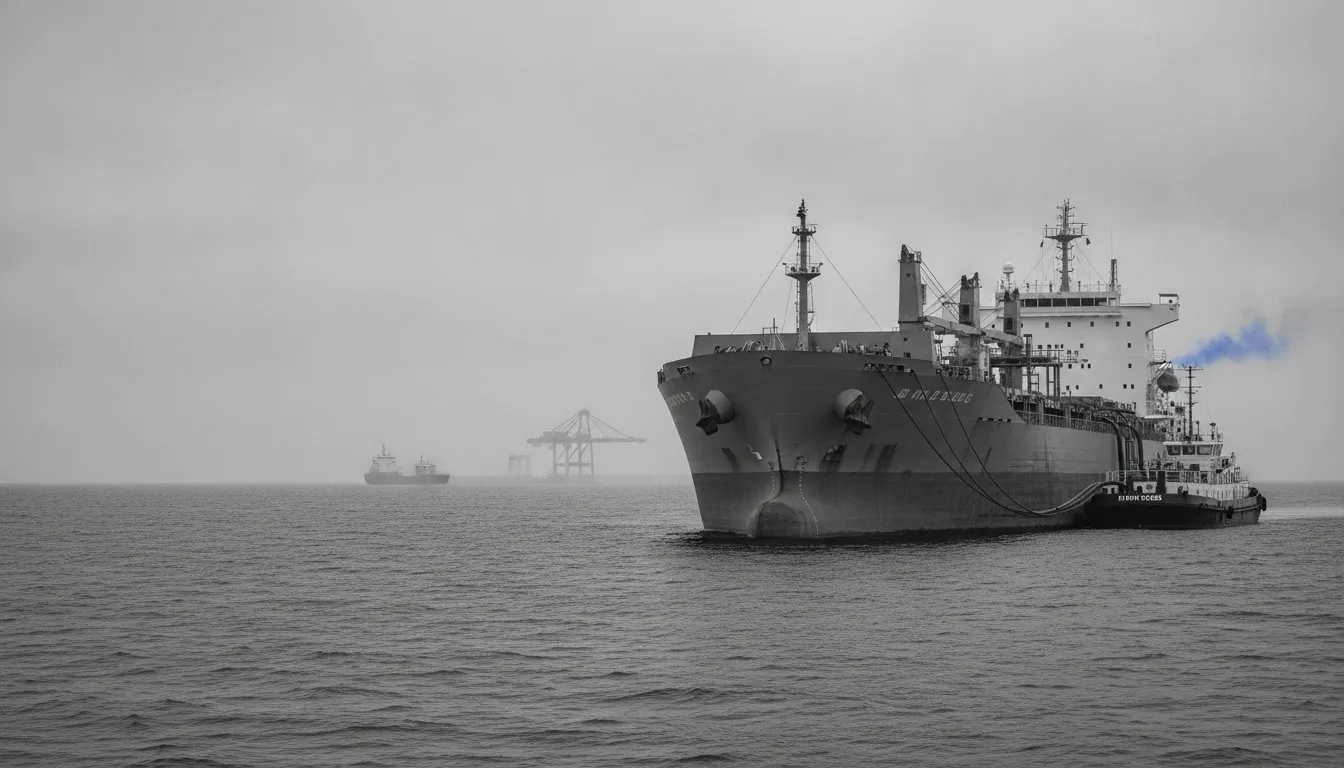
On 29 September 2026, three tankers were struck by unknown projectiles within the Strait of Hormuz: Mersin Prosperity (a VLCC managed by ADNOC), Sinbad (a Liberian-flagged tanker managed by Anglo-Eastern), and Al Ruwais (an ADNOC-operated LR2). A day earlier, on 28 September, the Kuwait Oil Tanker Company's VLCC Al Funtas was struck by an unknown projectile, causing a fire onboard that crews later extinguished. The crew aboard Al Funtas was reported safe, and the vessel continued underway. These incidents bring confirmed incident counts to 81 total (74 attacks, 7 near-misses) since the broader escalation began earlier in 2026, with reporting delays continuing to obscure the full scope of events.
The concentrated strikes on KOTC vessels are tactically and strategically significant. Kuwait has no pipeline bypass infrastructure for Hormuz, meaning every crude cargo bound for international markets must transit the strait. A maritime intelligence assessment noted that Iran appears to be targeting KOTC as a fleet rather than only targeting listed non-compliant vessels, extending the tactical scope of targeting beyond traditional economic sanctions frameworks. Three KOTC vessels—Kaifan, Burgan, and Al Salam II—have already been struck, and the targeting pattern suggests systematic vulnerability for the entire Kuwaiti tanker fleet. This represents a material shift in attack doctrine that directly expands the at-risk vessel population and raises insurance and operational cost exposure for the region's largest crude exporters without alternative routes.
War-Risk Surcharges Locked in Through Q4: Real Cost to Procurement
Major ocean carriers have implemented non-negotiable war-risk surcharges (WRS) that have now become permanent line items in freight invoices and procurement budgets. Hapag-Lloyd charges USD 1,500 per TEU for standard dry containers and USD 3,500 per reefer or special-equipment container on all bookings issued on or after 2 March 2026. The surcharge applies to any booking already issued but not yet shipped, as well as to cargo already on the water but not yet discharged. CMA CGM's Emergency Conflict Surcharge ranges from USD 2,000 per 20-foot dry container to USD 4,000 per reefer or special-equipment container, and was applied retroactively to cargo already in transit. Maersk implemented similar surcharges of USD 1,800–$3,800 depending on container type.
These surcharges are non-negotiable and calculated as a direct percentage of a vessel's hull value—typically 1% to 7.5%—based on threat assessments published by the Joint War Committee (JWC) of Lloyd's Market Association. When the JWC expanded its Listed Areas to include the Persian Gulf on 1 March 2026, carriers activated surcharges within hours. Unlike traditional freight rates or fuel adjustment factors (BAF/CAF), which are formula-based and partially negotiable, WRS is a defensive cost pass-through. When standard marine cargo insurance explicitly excludes war risk, military escalation, piracy, and acts of terrorism, carriers must purchase supplementary war-risk insurance coverage. That added expense is then spread across all cargo on a specific vessel, creating universally applied, unavoidable costs for any shipment touching the Persian Gulf, Red Sea, or affected port corridors (Bahrain, Iraq, Kuwait, Qatar, Oman, UAE, Yemen, and Saudi Arabian ports of Dammam and Jubail). For reefer and special-equipment containers—high-value perishables, hazardous goods, and custom machinery—the WRS premium can exceed the underlying freight cost, forcing buyers to absorb double-digit percentage increases in landed costs.
Fujairah and Oman: The New Bunkering Frontier
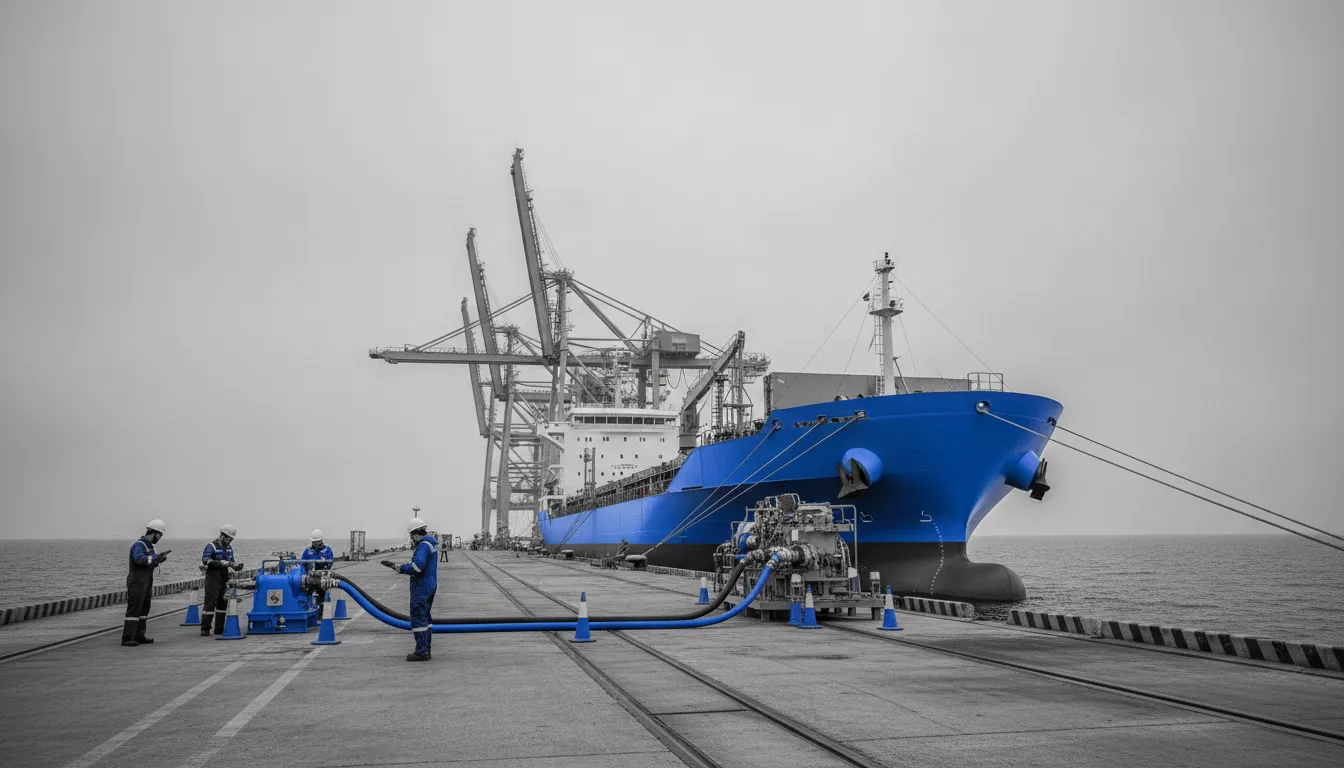
With Hormuz transits now considered systematically hazardous, operators are actively shifting bunker procurement to ports geographically positioned outside the chokepoint. Fujairah, located on the UAE's Gulf of Oman coast, has emerged as the second-most-watched loading port in the region after Saudi Arabia's Yanbu. The Abu Dhabi Crude Oil Pipeline (ADCOP), completed in 2012 at a cost of approximately USD 3.3–4.2 billion, moves crude from inland Habshan fields directly to Fujairah's loading terminals at approximately 1.5 million barrels per day nameplate capacity, entirely bypassing the Strait of Hormuz. Pre-war flows through the pipeline averaged 1.1–1.2 million barrels per day; since mid-March 2026, the line has operated at full capacity as operators test its limits and coordinate with international buyers.
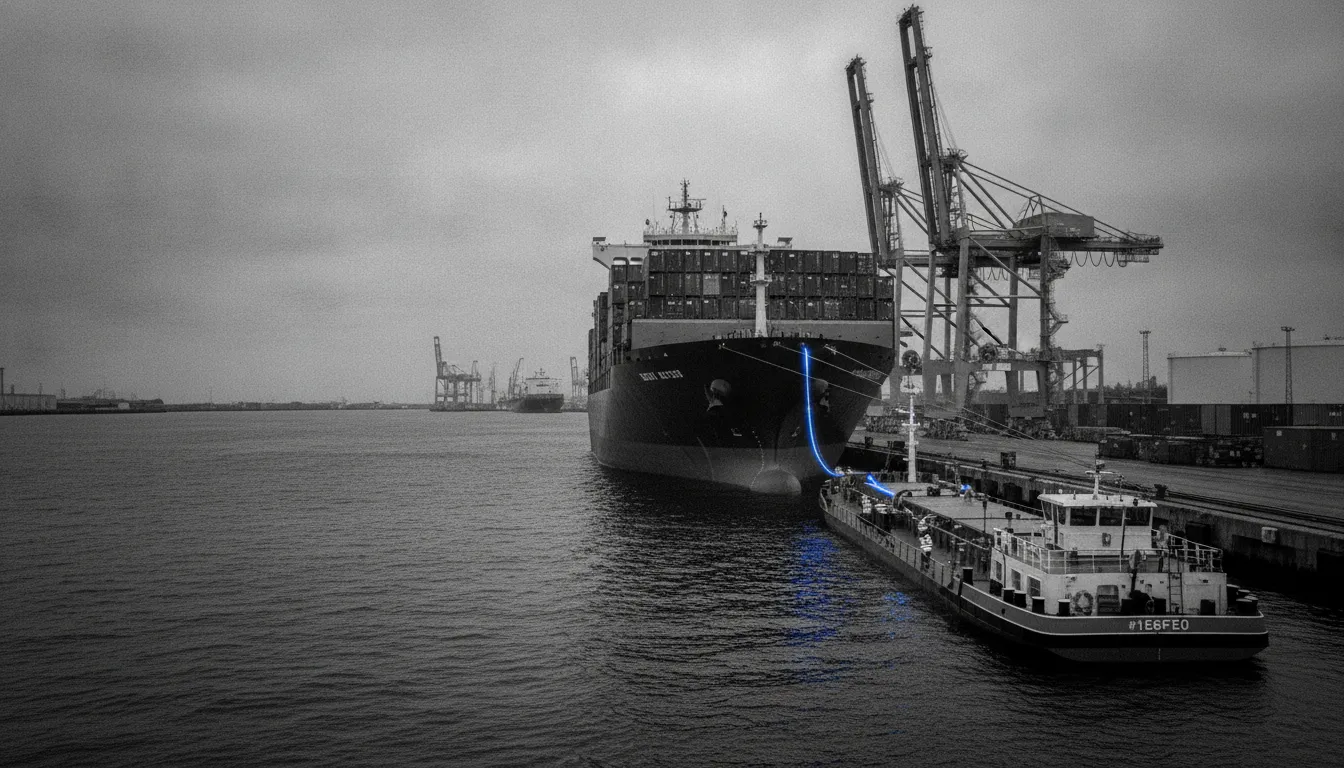
VLCC arrivals at Fujairah have roughly doubled since mid-March 2026. Chinese state energy buyers—particularly Sinopec and Unipec—have lifted Murban crude from Fujairah terminals rather than relying on traditional Hormuz-transit routes via Das Island and Jebel Dhanna, signalling a structural shift in procurement geography. Fujairah ranks as the world's third-largest bunkering hub, with sheltered anchorage, deep-water capacity, and storage terminals capable of holding millions of barrels simultaneously. The vast majority of bunkering operations occur at anchorage, with fuel delivered by barge to vessels waiting offshore, reducing the need for port-call delays and eliminating exposure to congested Gulf terminal infrastructure. However, Fujairah's own infrastructure remains vulnerable: drone strikes on bunkering facilities in March 2026 disrupted loadings, and supply remains comparatively tight compared to established hubs in Singapore and Rotterdam. ADNOC has accelerated Phase 2 expansion of the Habshan-Fujairah pipeline, targeting an additional 0.5–1 million barrels per day capacity within 12–18 months, and Abu Dhabi has committed to tens of billions in port infrastructure investment outside Hormuz—but current throughput cannot fully absorb the volume displacement from a sustained Hormuz closure.
Bunker Price Volatility and Regional Procurement Spread
Bunker procurement across regional hubs has fractured into unprecedented spreads. VLSFO prices in major Asian hubs exceeded USD 800 per metric tonne in mid-2026, with Fujairah experiencing especially tight supply despite its strategic significance as a bypass hub. The refined product shortage reflects demand redistribution: refined product flows from the Persian Gulf have been curtailed as shipping companies reroute away from Hormuz, elevating blending component costs at refineries servicing the US Gulf Coast and other traditional bunker supply points. In Fujairah specifically, marine gas oil (MGO) trades at nearly double VLSFO pricing—a spread directly impacting voyage economics for operators required to use MGO in Emissions Control Areas (ECAs) where lower-sulphur fuel is mandatory.
The bunker market has undergone a structural shift toward forward contracting. Operators report that pre-purchasing stems or locking in forward supply contracts at fixed prices is now routine practice, rather than relying on spot market availability, which is now both unreliable and subject to rapid repricing. This shift reduces overall spot market liquidity and amplifies price spikes when demand surges unexpectedly. The Strait of Hormuz carries approximately 20% of global oil shipments; any escalation between Iran and a Gulf state or Western naval forces lifts crude prices within hours, which feeds directly into bunker fuel costs, which then flows into Freight All Kinds (FAK) rates within days through BAF (Bunker Adjustment Factor) revisions. Longer Cape of Good Hope routings—now forced by carrier service suspensions through Suez—burn substantially more fuel per voyage than traditional Suez transits, adding additional BAF pressure on top of structural war-risk costs.
Container Rerouting and Cape of Good Hope Penalty Costs
Container shipping has experienced acute Q4 disruption. Multiple major carriers including Hapag-Lloyd and Maersk have ceased Trans-Suez services through the Bab-El-Mandeb Strait, defaulting instead to longer Cape of Good Hope routing that adds 7–14 days of transit time to Europe–Asia movements. This rerouting absorbs meaningful vessel capacity globally, compressing container availability on traditional routes and delaying inventory arrival into European and North American distribution networks. The longer voyage burns substantially more fuel, compounds bunker costs through elevated BAF revisions, and introduces schedule risk into just-in-time procurement cycles.
Critically, war-risk surcharges apply regardless of actual routing choice. Even shippers actively rerouting around conflict zones via Cape passages incur full WRS line items, because carriers structure the surcharge as a global volatility premium reflecting repositioned empty containers, bunker cost spikes tied to any Hormuz tension, and port congestion across alternative hubs. For importers shipping high-value reefer containers (perishables, pharmaceuticals, fresh produce), the combined effect of WRS, extended transit time, and bunker surcharge can push per-unit logistics costs up by 15–25% compared to pre-crisis baseline assumptions. A shipper moving 40-foot reefer containers from Asia to Europe now incurs USD 4,000 WRS, extended voyage time adding 10–15 days of inventory carrying cost, and elevated bunker adjustment factors—totalling incremental cost impact of several hundred dollars per container.
What This Means for You: Immediate Procurement Actions
For buyers and vessel operators, the September incidents confirm that Hormuz risk is no longer a tail scenario—it is the planning default for Q4 and beyond. Procurement teams should take four immediate actions: First, map all existing Gulf-sourced supplier commitments and identify costs priced without WRS factored in; many contracts executed in Q1–Q2 2026 are now in breach of actual landed-cost assumptions. Second, negotiate forward stem locks or supply contracts at fixed prices rather than relying on spot bunker availability, which is now unreliable and subject to rapid repricing at any new escalation. Third, evaluate bunker sourcing outside traditional Persian Gulf terminals—accepting higher per-unit costs at Fujairah anchorages, Omani ports (Duqm), Port Louis (Mauritius), or Sub-Saharan Africa (Durban, Walvis Bay)—as insurance against further Hormuz escalation. Fourth, build 2–3 week schedule buffers into voyage planning to accommodate Cape routing delays, extended port dwell at alternative hubs, and potential congestion at critical transshipment points. The combination of these actions—geographic diversification, forward contracting, and schedule flexibility—is now the cost of doing business in global maritime procurement.