"Ocean Terminal is a major part of our strategy to prepare Savannah for future growth. The renovated berth is fully completed and ready for big ships." — Griff Lynch, CEO, Georgia Ports Authority
The 60 Per Cent Milestone: What's Complete and What Remains
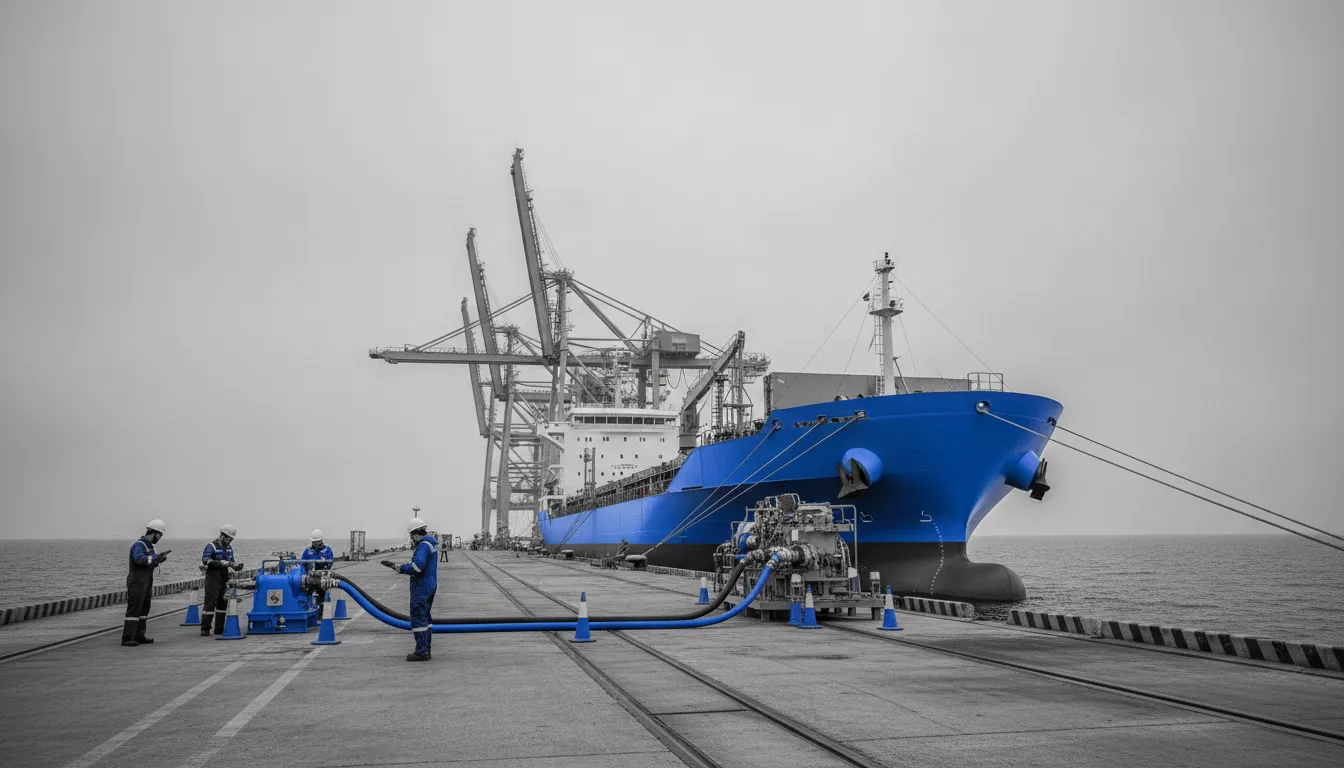
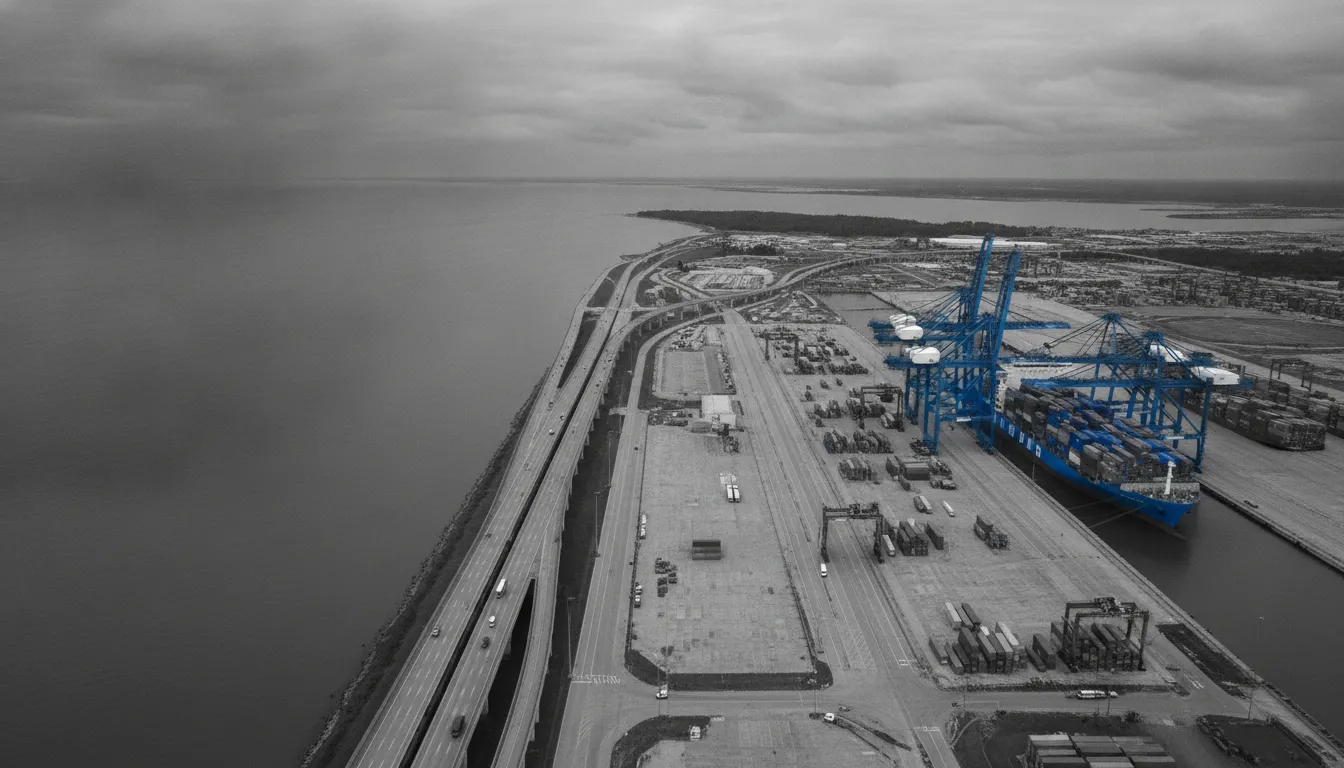
As of 29 September 2026, Georgia Ports Authority confirmed that Ocean Terminal renovation work has surpassed the 60 per cent mark. The berths themselves—a combined 2,650 feet of quay—are now fully operational and capable of handling two large container vessels simultaneously. The truck gate infrastructure is also live, featuring 12 inbound and six outbound lanes, with a $29 million port-funded overpass now routing departing traffic directly onto U.S. 17 and Interstate 16, bypassing neighbourhood streets and reducing dwell time in the local supply chain. This infrastructure maturity represents the completion of critical berth and landside work, establishing the physical foundation for the terminal's transition into a modern mega-port.
Remaining work concentrates on the 200-acre container yard renovation, which is being executed in two distinct phases. GPA will continue operating only smaller vessels at Ocean Terminal until mid-fall 2027, when the first phase of yard renovation completes. Full yard completion is scheduled for end-2028. Board Chairman Alec Poitevint stated that the terminal transformation—modernising a 200-acre facility whilst keeping the port operating—represents a substantial undertaking, yet the authority's progress has been rapid and directional. Once finalised, the terminal will shift from a mixed breakbulk-and-container operation to a dedicated high-capacity container facility, aligning with GPA's broader shift of breakbulk cargo to Brunswick and optimising the entire Savannah complex for containerised cargo.
Capacity Expansion: From 200K to 1.75M TEUs by 2028
The scale of the capacity increase is dramatic. Ocean Terminal currently handles approximately 200,000 TEUs annually; by end-2028, that figure will jump to 1.75 million TEUs—an eight-fold increase representing 1.55 million additional annual containers. This expansion alone will materially increase the Port of Savannah's overall throughput. In August 2026, the port handled 529,523 TEUs—the sixth-best month on record—with export loads rising 4.2 per cent year-on-year to 117,242 TEUs and import loads climbing 1.5 per cent to 265,859 TEUs. GPA leadership described August demand as strong and anticipated robust performance through the remainder of 2026, signalling sustained momentum for both the existing operation and the expanded terminal coming online.
Anchoring this growth is GPA's 10-year, $5 billion master plan to add five additional container berths in Savannah and one RoRo berth in Brunswick. Ocean Terminal is the centrepiece of this strategy. Once all Ocean Terminal improvements take effect alongside subsequent Savannah Container Terminal phases (planned for Phase I completion by 2030), the Port of Savannah will reach 9 million TEUs of annual capacity by 2029—a transformational shift for the Southeast and a direct challenge to West Coast port dominance in US-Asia trade. CEO Griff Lynch stated that growth in population and manufacturing across the Southeast necessitates this readiness, positioning Savannah as the primary gateway to inland markets serving over 600,000 jobs throughout the state and broader region.
Modern Infrastructure: Eight Electric Cranes and Optimised Gate Operations
Ocean Terminal is being outfitted with eight Super Post Panamax ship-to-shore cranes, all electric and manufactured by Finland-based Konecranes. Four new cranes arrived in January 2025, bringing the terminal's full fleet to eight by design completion. Chief Operating Officer Ed McCarthy emphasised that upon completion in 2028, these eight ship-to-shore cranes will have the capability to service two vessels simultaneously, enabling Ocean Terminal to accommodate the largest vessels serving the U.S. East Coast—positioning Savannah as a competitive first-port-of-call for mega-ship services. The electric infrastructure underlines GPA's emissions-reduction commitment and signals to ocean carriers—particularly those with decarbonisation mandates—that Savannah is upgrading to match the environmental standards of modern mega-ports.
The newly operational truck gate and multi-lane inbound system, combined with the $29 million overpass connecting directly to Interstate 16, address one of the most critical pain points for East Coast supply chains: drayage congestion and last-mile inefficiency. Historically, container movements through Savannah required extended local-road routing via downtown streets, adding 2–4 hours to supply-chain dwell times and creating traffic bottlenecks. Direct highway access now positions Ocean Terminal as a genuine inland-connectivity competitor, reducing total door-to-door transit times to Atlanta, Memphis, and Nashville. Vice President of Operations Susan Gardner noted that GPA's crane productivity and 24-hour rail transit to inland markets is industry-leading, establishing Savannah as a differentiated value proposition for importers and exporters prioritising speed.
Yard Phases and the Mid-Fall 2027 Inflection Point
The project timeline hinges on two critical phase gates that will reshape how the terminal operationalises capacity. Phase One yard completion (mid-fall 2027) will enable GPA to accept larger vessels, though at reduced throughput capacity as yard automation and staging infrastructure come online. During this interim period, vessels can use Ocean Terminal as a lay berth—a staging area where ships park temporarily before moving to Garden City Terminal's open berths. Research shows this lay-berth strategy will cut berth idle time from the current 12 hours down to 3 hours (a 75 per cent improvement) and maximise overall port utilisation by reducing the time a berth sits unused whilst waiting for the next vessel. Ships currently average six hours waiting at the lay berth before entering the main berth nearby to commence cargo operations, a meaningful efficiency gain compared to previous scheduling.
Phase Two completion (end-2028) unlocks full 1.75M-TEU capacity and represents the true operational crossover. By that date, Ocean Terminal will be equipped to handle the largest Ever Class and HMM boxships serving the East Coast, making it the first major gateway south of New York-New Jersey to offer dedicated first-port-of-call capability for mega-ship services. This positioning matters enormously for suppliers and ship operators: vessels no longer need to sail past Savannah to Norfolk, Virginia, or wait for smaller-berth availability at other facilities. The combination of berth capacity, electric crane infrastructure, and direct intermodal connectivity creates a compelling value proposition for carriers seeking to optimise their East Coast rotation schedules.
Strategic Supply-Chain Implications for Procurement Teams
For ship suppliers, chandlers, and provisioning agents targeting the US East Coast, Ocean Terminal's growth creates both strategic opportunity and operational urgency. Savannah's container volumes are already climbing rapidly (August 2026 export volumes up 4.2 per cent; overall August throughput of 529,523 TEUs represents the sixth-best month in port history), and the terminal's expanded capacity will attract more direct-call, mega-ship services that previously routed to New York-New Jersey, Norfolk, or other northern gateways. This represents a fundamental shift in East Coast calling patterns, with major container lines expected to reroute Asian-origin cargo to Savannah as first landfall, accelerating dwell-time compression and requiring procurement partners to respond accordingly.
Suppliers must accelerate regional hub positioning now, before mid-fall 2027, to capitalise on this inflection. Bunker supply, lubricant inventory, spare parts, and fresh-provisions networks need to be pre-positioned in the greater Savannah region to service a projected doubling or tripling of call frequency and substantial increase in vessel size. Lead times for consumables and spare-parts procurement should be shortened from current East Coast averages (typically 3–5 business days) to 24–48 hours, matching the compressed dwell times that Ocean Terminal's berth, gate, and rail infrastructure will enable. Ship-supply companies should also evaluate warehouse space near the port to support just-in-time provisioning schedules, ensuring they can respond to the faster vessel rotations that mega-ship services demand.
Competitive Context and East Coast Port Dynamics
Savannah's expansion occurs amid intensifying East Coast competition. The Port of Virginia completed its 55-foot deepening project in March 2026, making it the deepest East Coast port and enhancing its appeal for draft-constrained, ultra-large vessels. Delaware's $669 million Diamond Creek Terminal (DCT) is under construction and will offer 1.2 million TEUs of annual capacity when complete, attracting regional cargo in competition with Savannah. Baltimore and Charleston are also investing in container-yard modernisation and berth expansion to capture share of the West Coast diversion trend. However, no single East Coast competitor yet matches Savannah's combination of inland rail and truck connectivity, real-time berth throughput, operational velocity, and now—thanks to Ocean Terminal's completion timeline—purpose-built mega-ship capacity arriving two to three years before competing terminals fully operationalise comparable facilities.
GPA leadership's emphasis on supporting over 600,000 jobs across Georgia and broader Southeast validates the economic weight of this expansion and signals sustained confidence in Savannah's role as North America's fastest-growing container hub. For procurement teams and ship-supply companies, this strategic position argues for immediate investment in establishing service nodes—bunkering points, chandlery operations, technical repair coordination, and spare-parts warehousing—within the Savannah region now, ahead of peak demand growth in 2027–2028. Early positioning will secure preferred operational status and customer loyalty as mega-ship call frequency accelerates.