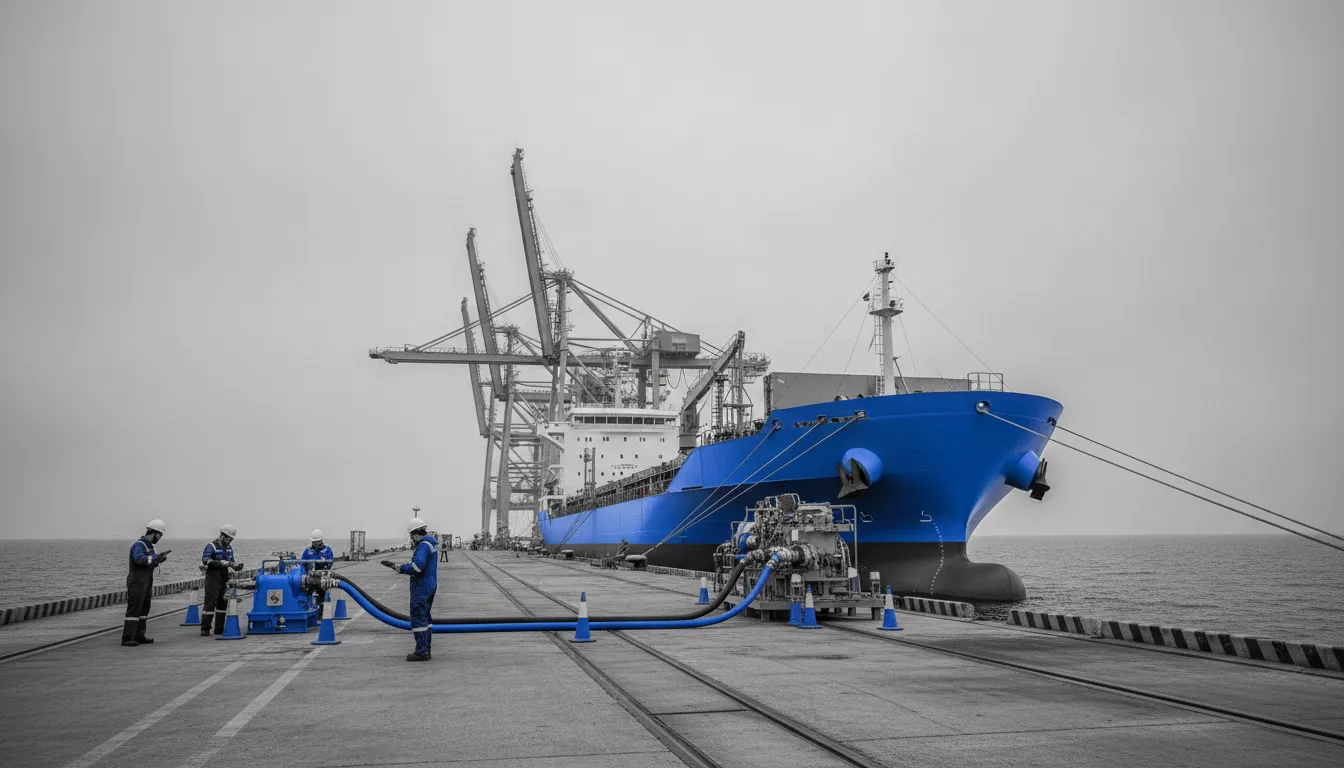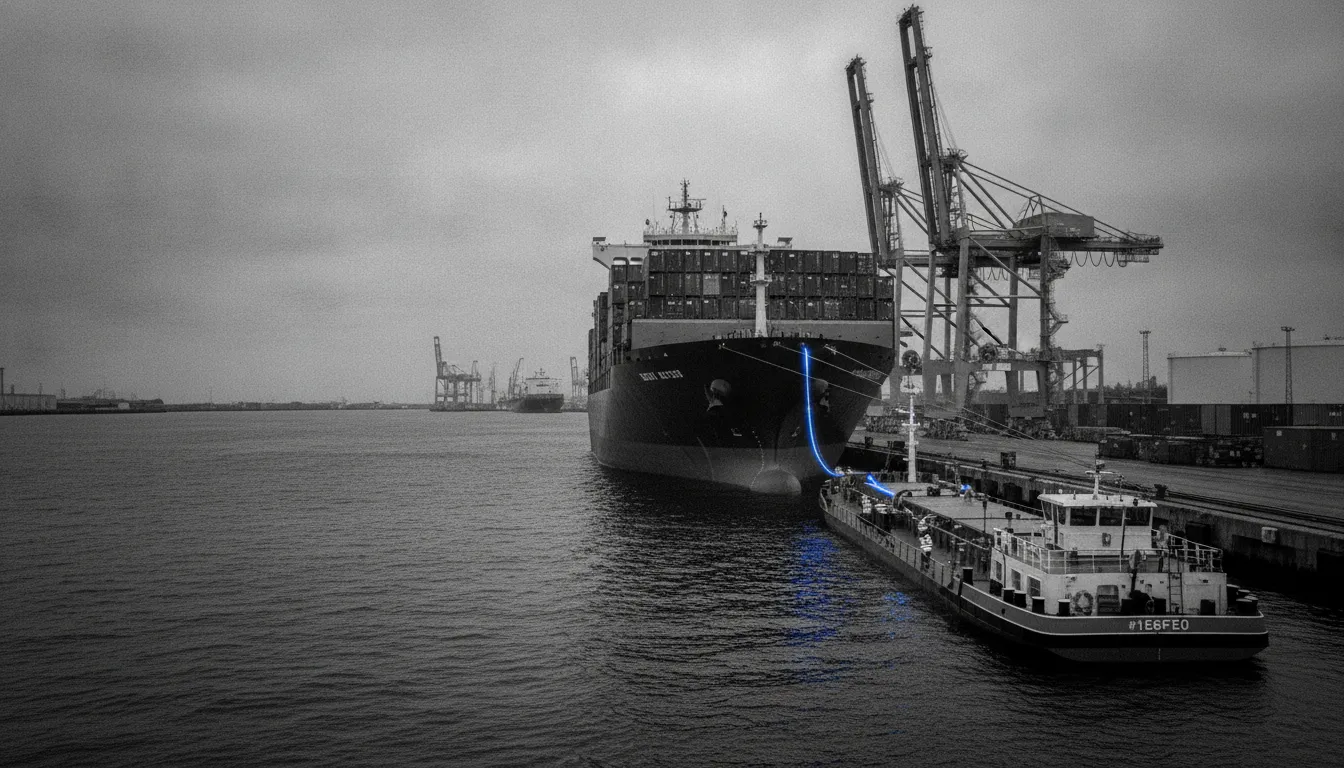
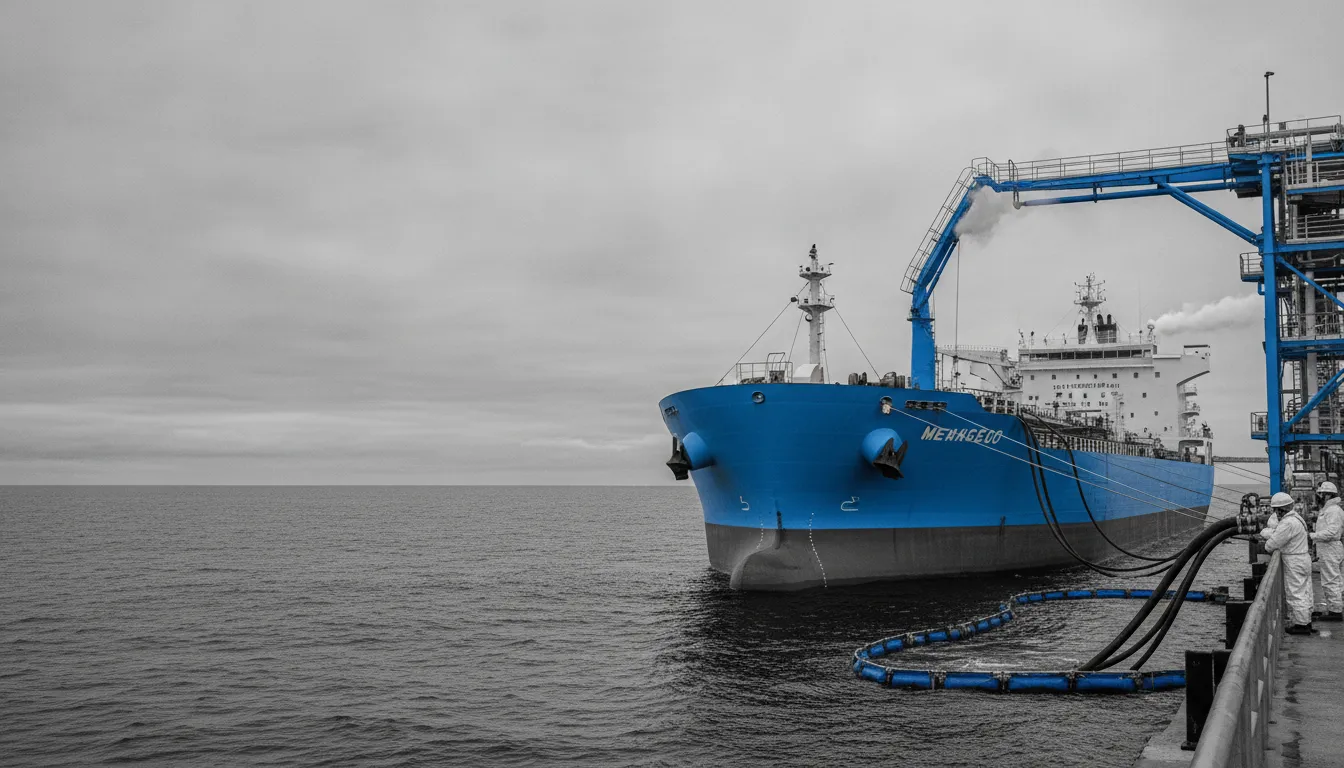
"The revised guidelines provide more flexibility in fuel tank placement and leakage-handling arrangements, introduce a new concept for ventilation of fuel spaces, expand guidance on the design of bunkering stations and fire extinguishing, and add new guidance on bunkering operations and personal protective equipment."
What Changed in September 2026: Five Core Revisions
The CCC 12 Sub-Committee session finalised revisions covering every section of the existing guidelines (MSC.1/Circ.1621), reflecting operational experience from ships already running on methanol and ethanol. The update introduces four major technical pillars: flexibility in fuel tank placement and leakage management, a new ventilation concept for fuel spaces, expanded bunkering station and fire-suppression guidance, and new operational and PPE protocols. This marks the first meaningful evolution of alcohol fuel safety rules since their 2020 interim adoption.
Lloyd's Register emphasises that the revision prioritises toxicity, bunkering, fire safety, operations, and personnel protection—areas where real-world methanol-fuelled operations have revealed gaps in the original framework. For methanol specifically, safety extends well beyond conventional fire risks to include crew exposure hazards from toxic vapours and ingestion pathways. The updated guidance reflects this dual burden, particularly in deck-level operations where bunkering crews face direct contact with low-flashpoint, neurotoxic fuel. DNV confirms the revision covers all sections and gives designers greater flexibility over positioning of fuel tanks and arrangements for dealing with leakage, while the strengthened bunkering operations guidance places greater emphasis on practical handling by crews as well as ship design aspects.
Vapor Return Lines and Deck Space: Mandatory Anti-Release Infrastructure
A watershed provision in the draft guidelines mandates that ships using methanol or ethanol must be fitted with a vapor return line (VRL) to allow tanks to be filled without releasing vapour into the atmosphere. This is the most operationally disruptive change for existing bunkering infrastructure, as many shore facilities and supply vessels lack vapour return capability. The revised text specifies new provisions for bunkering stations on open deck, in semi-enclosed spaces, and in fully enclosed spaces—each with distinct hazard-zone requirements aligned with the IGF Code.
Critically, the guidelines note that fitting a VRL is not intended to restrict operations where shore or bunker tanker infrastructure lacks return capacity. However, this carve-out is narrowly written: it applies only when a supplier genuinely cannot provide vapour return, not as a blanket exemption. Suppliers without vapour handling capability will face operational friction and competitive disadvantage as buyer specifications tighten. The volume expansion factor for methanol vapour is 1:1.4 times the liquid being transferred—meaning adequate deck space and tank headroom are now non-negotiable design inputs for both ship and terminal. Bunker tankers receiving returned vapor must have sufficient tank capacity to accommodate this expanded volume, and when vapor is returned to the same discharge tank, the process must be closely monitored to prevent overpressurisation and safety incidents.
Toxicity Thresholds and Methanol-Specific Alarms: A New Crew Safety Paradigm
For the first time, IMO guidance distinguishes between methanol and ethanol hazards explicitly. Methanol carries neurotoxic effects requiring local alarm or visual indication at 200 parts per million (ppm) vapor concentration at entrances to enclosed crew spaces such as fuel preparation rooms. This represents a pivot from design-only compliance to operational monitoring during bunkering activities.
The 200 ppm threshold is significantly tighter than historical practice and reflects growing evidence that crew exposure during bunkering and maintenance poses systemic risk. Denaturants and fuel additives can alter toxicity profiles, making third-party source verification mandatory. Suppliers must now document fuel composition and confirm compatibility with both ship and bunkering station systems in writing before transfer begins—a procedural lift that few chandlers currently embed into their pre-bunkering workflow. The draft text distinguishes methanol's neurotoxic effects and the intoxication risk from ethanol separately, with corresponding hazard controls. Toxicity hazards extend beyond vapour inhalation to include skin contact and absorption pathways, requiring comprehensive PPE protocols that go beyond conventional oil-fuel bunkering practices.
Ventilation Architecture: New Concepts for Fuel Space Management
The revised guidelines introduce a new approach to ventilation of fuel spaces—a departure from the static provisions in the 2020 interim rules. This reflects experience gained from early methanol conversions where conventional forced-draft systems proved inadequate for managing low-flashpoint, highly volatile vapour behaviour. The new ventilation concept accounts for methanol's rapid evaporation rate and the need for continuous purging in enclosed or semi-enclosed fuel preparation areas.
Terminal operators and ship designers must now model ventilation requirements during actual bunkering scenarios, not merely during static storage. Air-change rates, extract positioning, and interlock protocols with transfer operations all fall under the new framework. Equipment manufacturers will need to certify ventilation systems specifically for alcohol fuel applications, creating a new compliance burden for bunkering facility upgrades and shipboard system modifications. The expanded provisions also address cofferdam and tank-adjacent space purging, ensuring that adjacent compartments remain inert and free of explosive methanol-air mixtures during fuel transfer.
Fire Safety and Bunkering Station Design Standards
Fire-fighting arrangements have been substantially expanded, reflecting methanol's unique combustion profile: it burns with a nearly invisible flame in daylight and produces no smoke, making detection and suppression materially different from conventional fuel-oil fires. The revised guidelines expand provisions covering bunkering station design and fire-extinguishing systems, moving beyond prescriptive A-60 fire-rated divisions to performance-based risk assessment aligned with the IGF Code.
Alcohol-resistant foam systems and rapid-response detection mechanisms are now explicit requirements rather than guidance. Shore facilities that double as multi-fuel bunkering stations must retrofit fire suppression infrastructure to handle methanol spills—conventional hydrocarbon suppressants are ineffective. Suppliers and terminal operators face capital outlays for new detection, alarm, and foam-injection systems. The scope includes both open-deck bunkering (where weather and wind complicate foam application) and enclosed station bunkering (where confined-space fire dynamics demand faster suppression response). Emergency shutdown (ESD) procedures must now account for vapor recovery system integrity during fire events.
Operational Procedures and Personal Protective Equipment
The strengthened guidance on bunkering operations and personal protective equipment marks a critical shift toward crew-centric safety management. Prior to commencing bunkering, ship and shore personnel must agree in writing on transfer rates, vapor return arrangements, communications protocols, and emergency procedures. Hazardous area delineation on both supply source and receiving ship must be confirmed as compatible—the goal is to keep ignition sources outside the other party's hazard zone.
PPE requirements now extend beyond respirators to include chemical-resistant gloves, eye protection rated for methanol splash, and in some cases, emergency escape breathing apparatus for personnel in enclosed fuel preparation spaces. Crew training protocols have been tightened through separate IMO training guidelines (HTW 12), with mandatory certification for seafarers aboard methanol or ethanol-fuelled vessels. Suppliers must verify crew competency and ensure written fuel transfer agreements are signed by both master and terminal supervisor before hoses are connected.
Timeline and Compliance Readiness: What Suppliers Must Do Now
The revised guidelines remain draft provisions until Maritime Safety Committee approval at MSC 113 in June 2027. However, the nine-month window between September 2026 and June 2027 is not idle time; an intersessional working group will meet next year, and some member states continue seeking revisions, leaving room for final tweaks before formal adoption. Ship suppliers and bunker brokers should not wait for approval to begin readiness planning.
Immediate actions include: auditing existing vapor return capability at major bunkering terminals; identifying which vessels in service lack VRL fittings and scheduling retrofits; reviewing fire suppression systems for alcohol-fuel compatibility; training bunkering teams on 200 ppm methanol toxicity monitoring and emergency response; and establishing fuel composition verification protocols with suppliers. Class societies and flag states will likely issue interim advice well before June 2027, but proactive preparation will prevent last-minute compliance crises and operational disruptions when final rules take force.