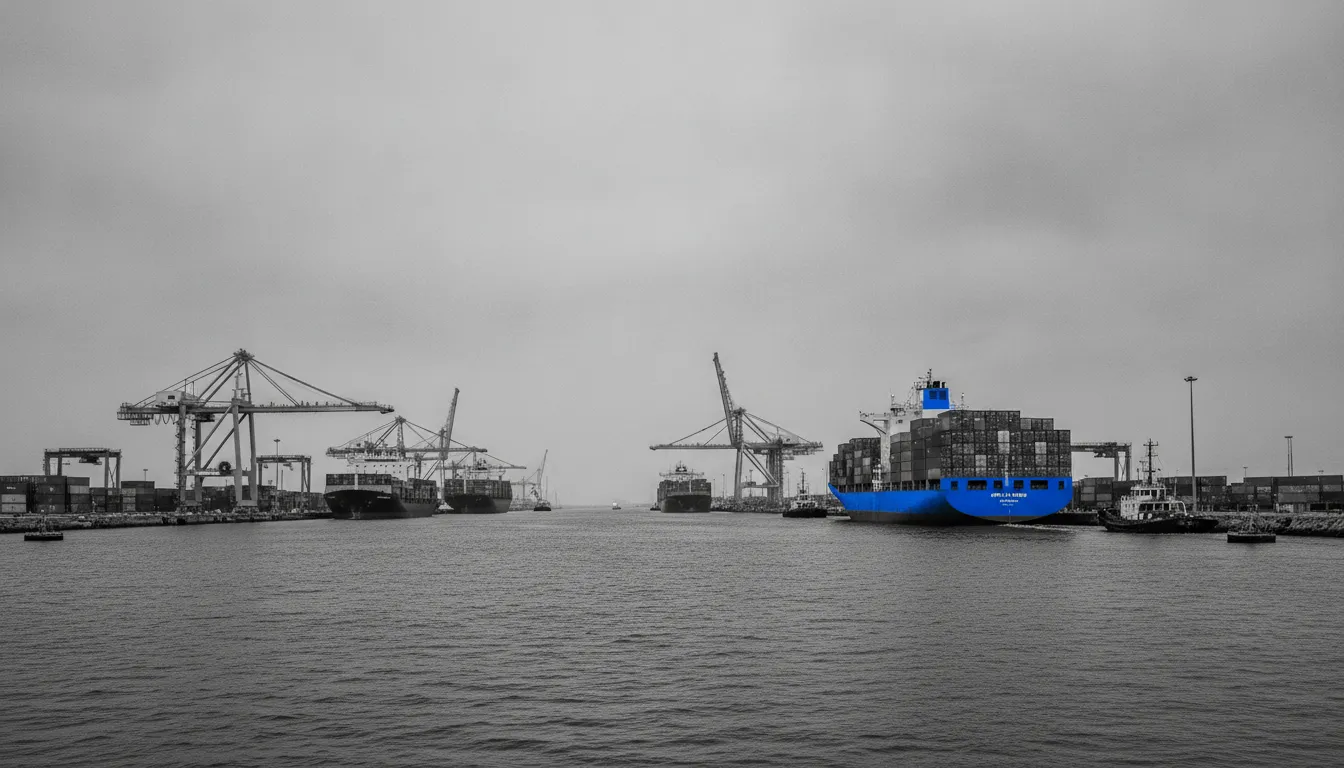
The Port of Douala handles 80% of Cameroon's bulk cargo and 85% of national trade volumes, serving as the critical transit hub for landlocked Central African markets including Chad and the Central African Republic.
Douala Dry Bulk Terminal: $87m Phase One Investment and 30-Year Concession
On 12 February 2026, AD Ports Group (a publicly traded Abu Dhabi-headquartered operator) and Africa Ports Development (APD) signed a 30-year concession agreement to design, build and operate a new specialised dry bulk terminal at the Port of Douala in Cameroon. AD Ports Group, together with two other UAE investors, holds 60% of the operating company alongside APD's 40% stake, giving AD Ports an effective economic interest of 51%. Phase one investment from AD Ports' share is AED 320 million (approximately $87 million, or EUR 73.4 million). The concession operates as a public-private partnership (PPP) structured under a Build-Operate-Transfer (BOT) framework, with the broader concession programme carrying a total investment cost of CFA 282 billion (approximately $455 million). Financing partners include Afreximbank and AFG Bank, reflecting strong regional confidence in Douala's capacity expansion.
The terminal facility will comprise two berths and approximately 450 metres of quay wall, with annual handling capacity of 4 million tonnes of dry bulk cargo—clinker, gypsum, fertiliser and grain. Construction is scheduled between 2026 and 2028 in close collaboration with the Port Authority of Douala. Once operational, the terminal is projected to create up to 4,000 direct and indirect jobs in Cameroon's maritime and logistics sectors. Regional CEO Mohamed Eidha Al Menhali stated that the agreement "represents a strategically important expansion of AD Ports Group's presence in Africa and reinforces our commitment to developing high-impact maritime infrastructure in high-growth markets." The terminal will strengthen Douala's role as a gateway to Central Africa, supporting industrial development and trade resilience across the region's landlocked economies.
Congo Container Expansion: $200m Contract Awards and Two-Year Build Timeline
On 18 May 2026, AD Ports Group announced the award of three major contracts worth AED 735 million (approximately $200 million) for the Noatum Ports Pointe-Noire Terminal in the Republic of the Congo. The container terminal is being developed under a majority-owned joint venture between AD Ports Group and CMA CGM Group's subsidiary CMA Terminals, following an agreement signed in February 2025. AD Ports holds a 30-year concession from the Congolese Government, extendable for a further 20 years. Construction is expected to be completed within approximately two years, with the foundational contracts marking a significant milestone toward delivering a modern, future-ready facility. The Noatum Ports Pointe-Noire Terminal will enhance the port's capacity to handle larger vessels and higher annual throughput, reinforcing its role as a regional trade gateway serving Central and West Africa.
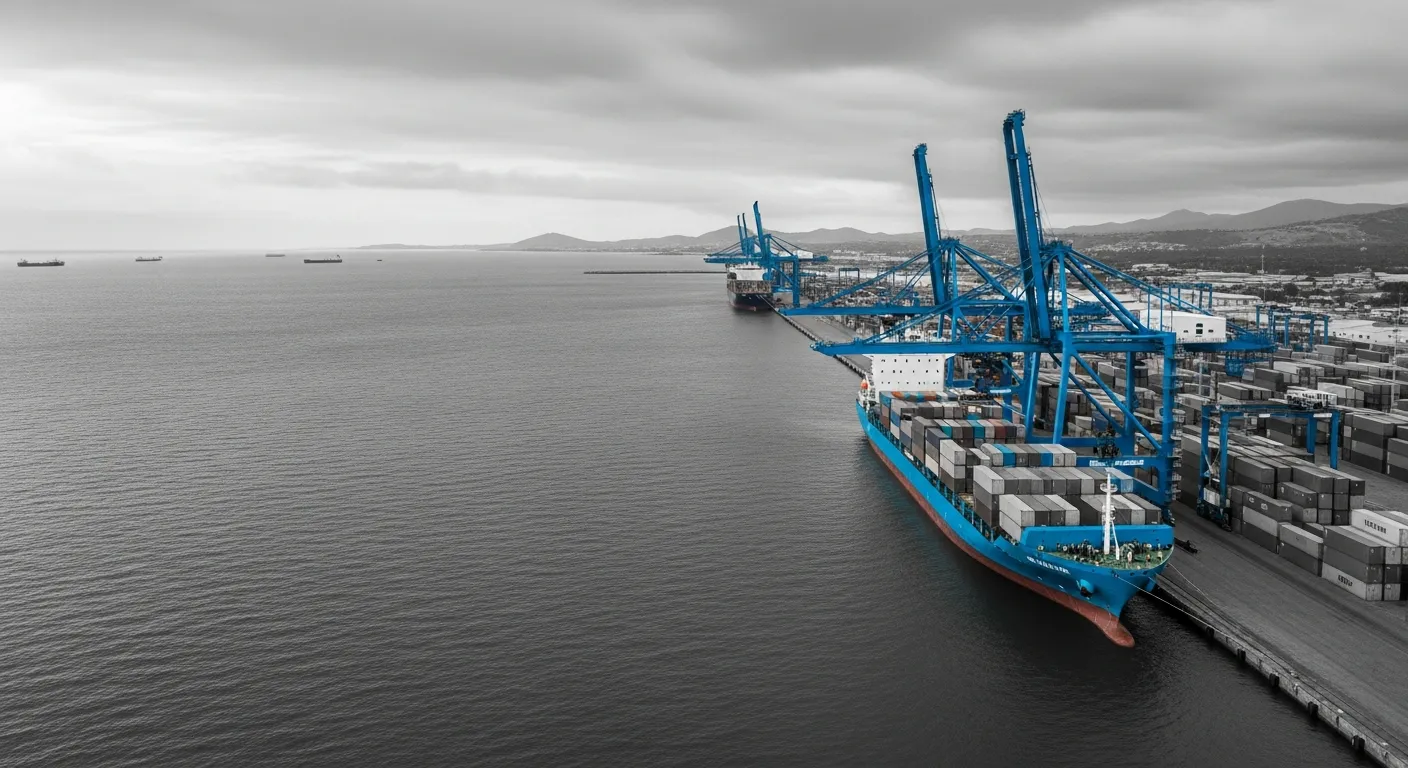
The three contracts cover marine works, topside infrastructure, and crane supply. MAR CONTRACTING SARLU and MBTP SA JV—both Congolese companies—received two contracts valued at AED 551 million ($150 million) for marine and topside works, including full design and construction of the quay wall, marine structures, crane foundations, container yard infrastructure, operational and administrative facilities, utilities networks, substations and supporting terminal infrastructure. Shanghai Zhenhua Heavy Industries Co Ltd (ZPMC) was awarded AED 184 million ($50 million) for three Super Post-Panamax ship-to-shore cranes and nine hybrid rubber-tyred gantry cranes. The terminal is estimated to create up to 9,000 jobs, comprising 800 in construction, 400 in direct terminal operations, and 7,000 indirect positions through related business opportunities. This employment impact reflects both the construction phase and the start of operations, supporting workforce development and economic growth in the Republic of the Congo.
Infrastructure Specifications: Quay Walls, Vessel Capacity and Environmental Performance
The Pointe-Noire terminal's first phase will deliver a 420-metre quay wall at 16-metre draft, designed to accommodate Patagonia-class container vessels—the largest ships currently calling at West and Central African ports. The facility will include a 100,000-square-metre logistics area, providing substantial yard for container storage and operations. These specifications address a critical gap in Central African port infrastructure: the ability to receive modern large-capacity containerships that reduce per-unit shipping costs and improve trade competitiveness for the wider region. Pointe-Noire serves as the natural gateway to Brazzaville, the western Democratic Republic of Congo and the southern Central African Republic, positioning it as a critical hub for regional supply chain integration.
The crane contract emphasises environmental performance and operational efficiency. Hybrid RTG cranes supplied by ZPMC are expected to reduce diesel consumption by up to 60% compared to conventional diesel-powered units, saving approximately 1 million litres of fuel annually and reducing CO₂ emissions by around 5,000 tonnes per year. This sustainability focus aligns AD Ports' and CMA CGM's global environmental commitments and appeals to international shipping lines increasingly subject to decarbonisation requirements. The Douala dry bulk terminal's hinterland connectivity—linking the port with major industrial centres and regional trade corridors across Central Africa—will amplify demand for specialised bulk handling equipment, particularly for cement clinker, fertiliser and grain discharge and storage operations.
Regional Gateway Status and Trade Corridor Integration
Both terminals strengthen Cameroon and Congo's positioning as gateways for Central and West African trade flows. Douala, as Cameroon's largest maritime port, already handles 80% of the country's bulk commodities and 85% of national trade volumes, serving as a transit hub for landlocked Chad, the Central African Republic and broader regional markets. The new dry bulk terminal directly addresses strong and sustained demand at the region's principal maritime gateway. Pointe-Noire, positioned as the natural gateway to Brazzaville and the western Democratic Republic of Congo, will see container capacity increase and vessel dwell time reduce, lowering unit shipping costs for regional exporters and importers and attracting leading global shipping lines.
AD Ports' concurrent investments in Egypt, Morocco, Tunisia, Kenya, Tanzania, Angola and the Republic of the Congo reflect a broader African expansion strategy anchored in high-growth markets. The two Cameroon and Congo projects anchor AD Ports' Central African footprint and signal long-term confidence in regional trade growth despite commodity price volatility. Both terminals are aligned with national development plans emphasising economic diversification, infrastructure modernisation and reduced dependence on hydrocarbons. The Republic of the Congo's National Development Plan prioritises exactly these objectives, while Cameroon's infrastructure initiatives seek to strengthen its role as the primary gateway for regional trade in Central Africa.
Job Creation, Local Content and Skills Development
The Douala dry bulk terminal project carries substantial employment multipliers. The development is expected to create up to 4,000 direct and indirect job opportunities, supporting workforce development and economic growth in Cameroon. The Congo container project will generate approximately 9,000 jobs: 800 during the construction phase, 400 in direct terminal operations, and 7,000 indirect positions through related business activities and supply chain integration. Combined, these two AD Ports projects will generate approximately 13,000 direct, indirect and construction-phase employment opportunities.
Local participation is embedded in both awards: in Congo, MAR CONTRACTING SARLU and MBTP SA (Congolese companies) received the marine and topside works contracts valued at $150 million, ensuring local construction expertise and supply chain participation. Community investment, skills training, local content commitments and workforce development are expected to feature prominently in both projects' construction and operational phases. The Congo project aligns with the Government's National Development Plan, which emphasises inclusive growth and local economic participation. Both terminals' designs and procurement requirements create openings for regional logistics operators, equipment suppliers, maintenance providers and vessel service networks positioned in Central African hubs or connected through broader West African supply chains.
Procurement Windows and Supply Chain Implications for Buyers and Operators
Procurement for dry bulk handling equipment, ship chandlery, port services and container logistics will intensify across both sites between 2026 and 2028. Buyers sourcing supplies for vessels calling Douala should anticipate improved clinker, gypsum, fertiliser and grain discharge capacity; those serving container operations at Pointe-Noire will benefit from faster throughput and modern ship-to-shore and rubber-tyred gantry infrastructure. Shipping lines will reduce vessel dwell time and per-unit costs; ports will capture higher throughput volumes. Suppliers positioned in regional hubs (Port Said, Djibouti, Antwerp-linked networks, West African logistics parks) should prepare for increased demand from both terminals' supply chains and vessel service requirements.
AD Ports' track record across Africa and CMA CGM's global shipping relationships ensure professional procurement standards, transparent tendering and reliable payment discipline, reducing counterparty risk for vendors and logistics partners. The two-year construction timeline for Pointe-Noire (2026–2028) and 2026–2028 schedule for Douala create overlapping procurement and supply chain activity across both sites. Procurement tenders for dredging services, marine works, equipment supply, installation supervision and port services are now active or imminent across both projects, presenting immediate sourcing opportunities for maritime suppliers, equipment lessors and specialist contractors.