
"ICTSI is deeply committed to establishing Durban Gateway Terminal as the gateway for South Africa's trade with global markets and the premier trade hub in the region."
ICTSI's Public-Private Partnership: A Transformative Turnaround
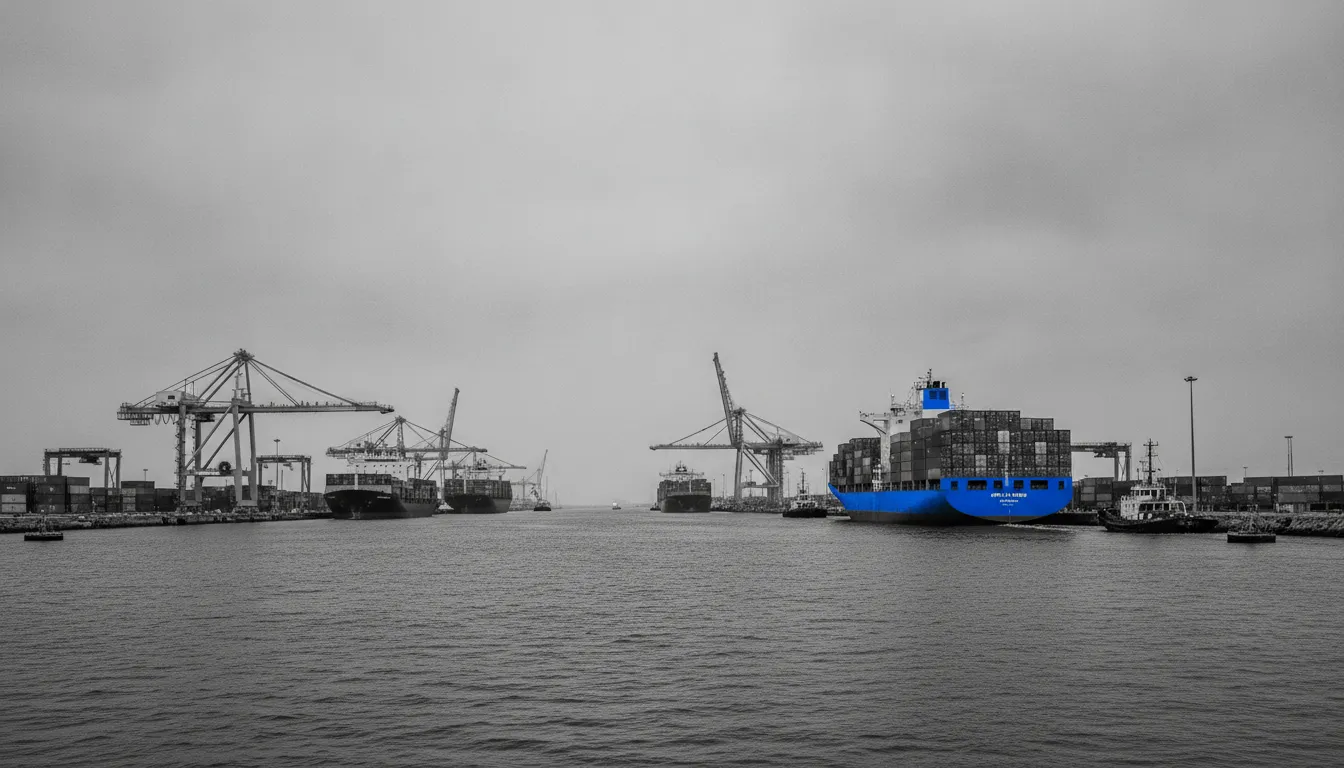
The 25-year partnership between Transnet SOC Ltd and International Container Terminal Services Inc (ICTSI) became operational on 1 January 2026, marking South Africa's first major port privatisation. ICTSI will operate DCT Pier 2—which accounts for 72% of Durban's total throughput and approximately 46% of South African port traffic—under a special-purpose vehicle, Newco, in which Transnet holds 51% and ICTSI holds 49%. The Manila-headquartered operator committed USD 670 million to infrastructure upgrades and capacity expansion from 2 million to 2.8 million twenty-foot equivalent units (TEUs) annually. The terminal itself operates across 1,760 metres of quay length and commands 120 hectares of container storage and backup area.
The agreement follows a complex 2+ year journey: ICTSI was selected as preferred bidder in July 2023, faced a legal challenge from Maersk's APM Terminals in March 2024, and secured a High Court dismissal of the challenge in October 2025. Transnet and ICTSI formally signed the joint operating agreement on 10 December 2025. ICTSI commenced operations under the new structure on 1 January 2026. According to freight reports from June 2026, ICTSI's immediate operational focus was on serving clients effectively, including supporting South Africa's critical citrus export season. Transnet Group CEO Michelle Phillips characterised the partnership as "an important element of our strategy to modernise, expand and improve our key assets" and "a big step in our efforts to improve efficiencies across our terminals and transform our ports into world-class hubs."
Productivity Targets: From 18 to 28 Moves Per Hour
The headline metric driving expectations is gross crane productivity (GCH): the concession agreement targets an increase from 18 to 28 moves per hour and a doubling of ship working hours (SWH) from 60 to 120 annually. These gains hinge on new handling equipment, advanced digital systems for yard planning, and dual-cycling operation—discharging an import container and loading an export container in a single crane move—paired with efficient gate automation and vehicle booking systems. According to ICTSI's concession documents, the operator will procure additional handling equipment to speed up truck movement in and out of DCT Pier 2, whilst introducing mobile applications that trigger relevant alerts to vessel planners, eliminating information gaps that previously plagued operations.
May 2026 assessments by logistics experts at Kuehne+Nagel noted tangible improvement at the port, including increased truck traffic at the gates and faster container handling cycles. Vessel waiting times are expected to decrease as productivity adjustments take hold. Previous crane productivity at Durban had languished at 18 moves per hour—a figure cited in early 2024 research as reflective of chronic underinvestment in critical handling equipment. The historical backdrop matters: in November 2023, more than 60,000 containers were reportedly stuck at sea around Durban due to equipment failures and congestion. ICTSI's investment programme addresses this legacy by deploying new ship-to-shore cranes, mobile cranes, and yard equipment designed to support the higher throughput target.
Durban's Chronic Capacity Crisis and ICTSI's Efficiency Mandate
Durban Container Terminal Pier 2's operational challenges run deep. The port ranked in the bottom tier of international performance indices—364th out of 370 ports in the 2021 World Bank Container Port Performance Index—despite handling 31.4 million tonnes of cargo annually and anchoring regional trade. Chronic congestion, equipment shortages, underinvestment in critical infrastructure, and ageing systems had eroded Durban's standing from Africa's busiest container port to third place behind Tangiers and Port Said. Research from early 2024 documented persistent challenges in berth productivity, yard capacity, equipment availability, and landside coordination, with Durban Pier 1 sitting at only 44% container carrier capacity and 60% stack occupancy in January 2024.
ICTSI's mandate is to reverse this trajectory. The private sector partner committed to not only increasing container throughput from 2 million to 2.8 million TEUs but fundamentally reshaping terminal operations through digital systems, yard optimisation, and disciplined maintenance protocols. The concession represents Transnet's strategic bet that global expertise and private capital can cure what state ownership and underinvestment had failed to resolve. Transnet noted that the partnership is expected to "reduce logistics costs and stabilise supply chains," perennial concerns for exporters and importers using Durban, whilst also attracting new shipping volumes displaced by competitors.
The Bunkering Paradox: Speed vs. Fuel Security
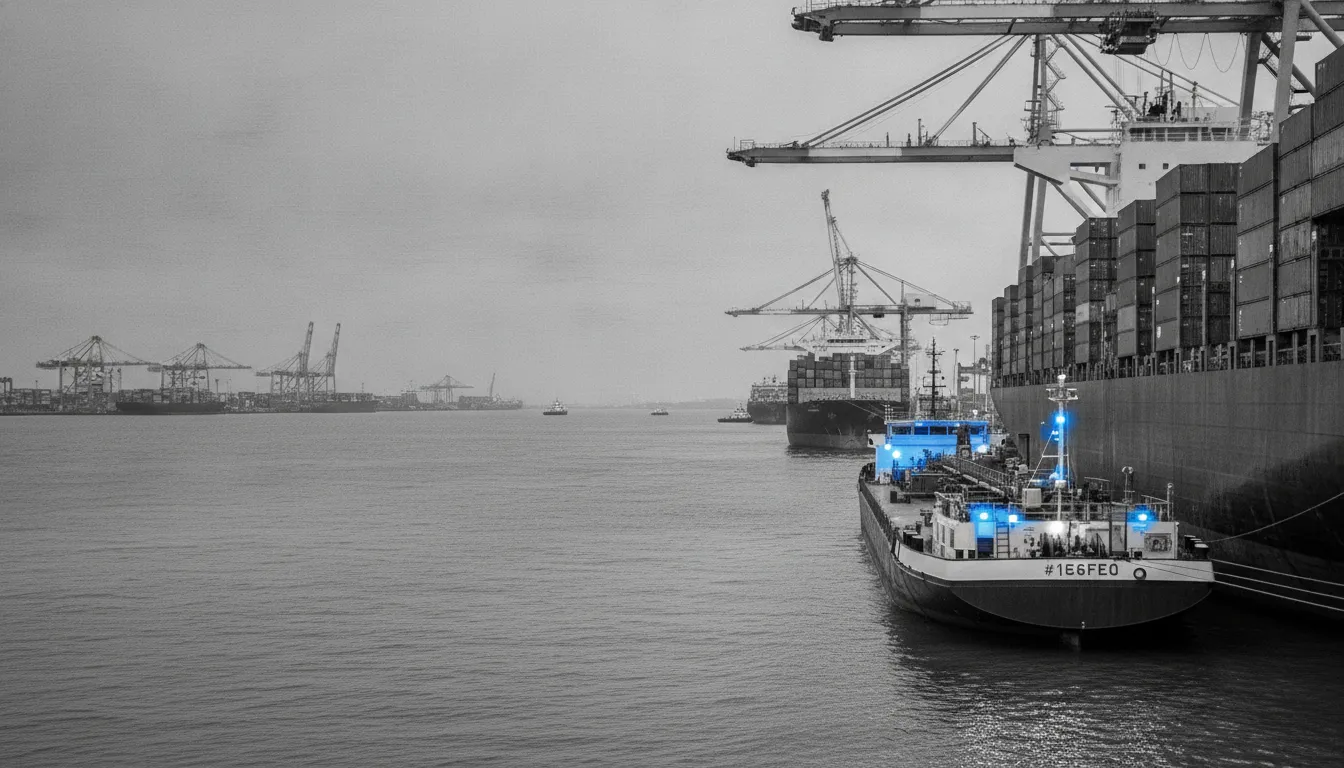
ICTSI's efficiency gains introduce a paradox rarely highlighted in port performance discourse: accelerated container handling compresses vessel dwell time, creating acute timing pressures on in-port bunkering supply. Durban operates private double-hull bunker barges and maintains dedicated berths and pipelines for bunker fuel delivery, yet suppliers now face narrower windows to coordinate fuel provisioning with container discharge and loading operations. Bunker suppliers in Durban have become entirely reliant on imports after South Africa's remaining oil refineries shut down in recent years, meaning fuel-supply logistics depend on upstream inventory, barge availability, and berthing coordination.
The risk is operational: a vessel arriving for a scheduled 40-hour call under the old 60-hour working-year regime could flex its bunkering window. Under ICTSI's 120-hour annual working regime and 28-move-per-hour crane productivity, that same vessel now departs in 30 hours or less. If bunker-barge scheduling, port authority slot allocation, or fuel-supply-chain delays push fuel delivery past vessel departure time, the shipowner faces the choice of refueling at the next port (typically at premium cost and delay) or accepting partial tanks. For ship chandlers and suppliers managing provisions, spares, and technical stores alongside bunkering, the compression is equally acute. Facilities include dry docks and repair services at Durban, but supply-logistics pipelines must now synchronise with container-terminal crane cycles.
Supplier and Shipowner Strategy: Dual-Priority Logistics
Buyers, shipowners, and suppliers operating through Durban now face a new operational discipline. Pre-arrival coordination is non-negotiable: vessel agents must confirm bunkering slots, chandlery delivery windows, and spare-parts availability before berthing, not after. Suppliers report increased demand for "just-in-time" delivery protocols, where fuel, provisions, and stores arrive within defined berth-call windows rather than on ad-hoc, flexible schedules. Ship supply companies working Durban have begun collaborating more closely with port agents, local trucking partners, and bunkering operators to ensure that landside delivery logistics—road transport, customs clearance, terminal access—do not become the new constraint.
For larger shipping lines, this means negotiating fixed berthing windows (CTOC—Container Terminal Operations Contract) with guaranteed working hours and simultaneous coordination of bunker-barge and supply-chain slots. For smaller operators, it demands greater inventory buffer or willingness to absorb premium refueling costs at alternative ports. The real-time visibility tools ICTSI is rolling out—digital berth schedules, gate automation alerts, yard-planning dashboards—provide the signal infrastructure for this coordination, but only if suppliers and agents actively integrate those systems into their supply-chain workflows. The margin for error has compressed from hours to minutes.
What This Means for You: Managing the Efficiency Trade-Off
ICTSI's Durban concession is fundamentally reshaping the cost-benefit calculus of calling South Africa's flagship container port. Vessel turnaround acceleration translates to lower per-container handling fees and reduced demurrage risk—genuine competitive gains for shipping lines and exporters. Yet those gains are real only if bunkering, provisions, and ship supply logistics are coordinated as integral parts of the terminal call, not afterthoughts. Suppliers entering Durban must adopt a "pre-departure confirmation" mindset: bunker-volume quotes, delivery windows, and contingency fuel ports must be locked before vessel arrival. Shipowners should factor bunkering coordination into their call-planning cycles and be transparent with agents about fuel requirements and acceptable refueling alternatives if Durban-based supply windows slip. The port authority and ICTSI have a vested interest in avoiding supply bottlenecks that would negate container-handling efficiency; early dialogue with key suppliers and shipping lines on integrated logistics protocols will be essential to sustaining the gains.