
"The Red Sea works most days, but never quite the way it did in 2022." — Industry analysts tracking shipping recovery as of April 2026, noting that while the corridor is moving traffic again, war-risk insurance remains structurally elevated.
The Houthi Threat Remains Active: Conditional Not Resolved
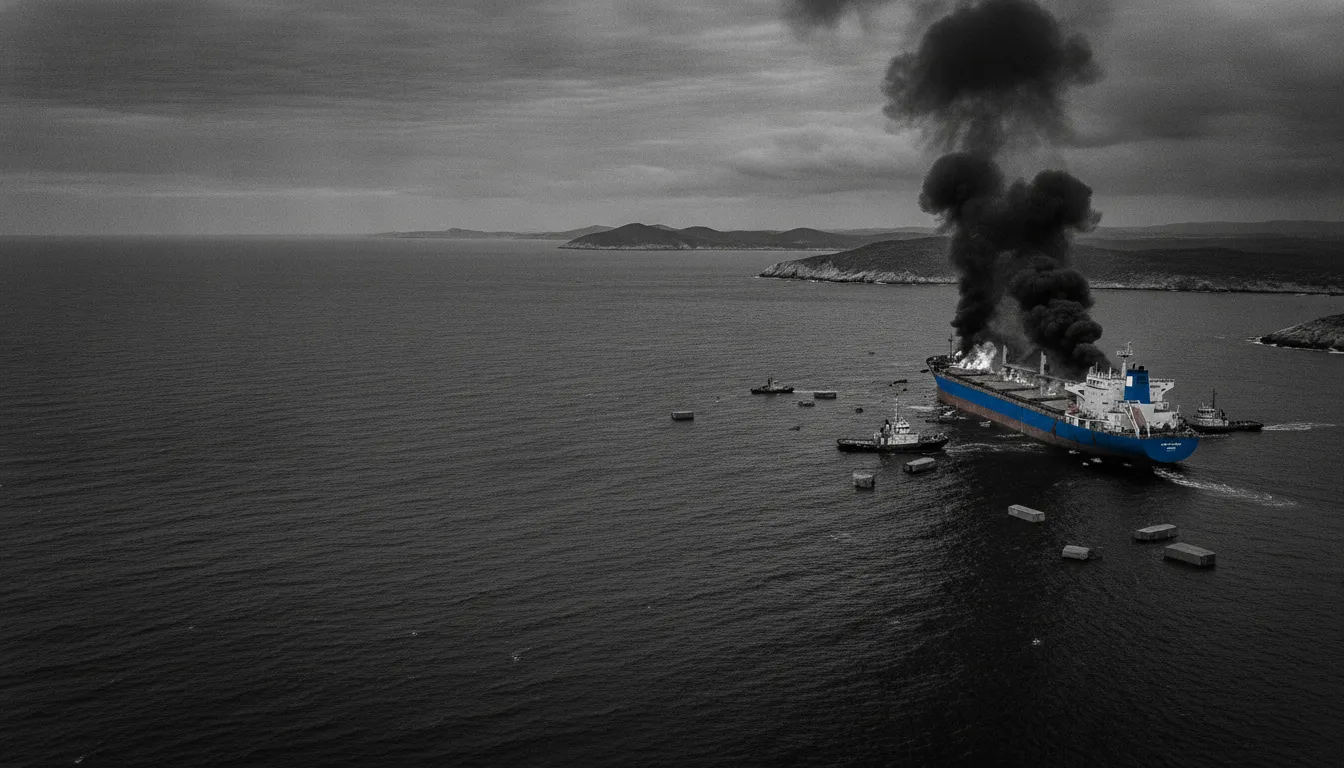
Since November 2023, Yemen-based Houthi forces have launched sustained attacks on commercial vessels transiting the Red Sea and Bab el-Mandeb Strait. From November 2023 to October 2025, there were more than 100 separate Houthi attacks affecting more than 60 nations. The group paused attacks briefly after an October 2025 Gaza ceasefire, but declared a renewed ban on Israeli-linked shipping in June 2026 as fighting between Israel and Iran reignited. Military-grade threats remain: potential hostile actions include unmanned aerial vehicle (UAV) attacks, unmanned surface vehicle (USV) attacks, ballistic and cruise missile strikes, and illegal boardings.
The threat landscape is volatile and conditional on the broader regional conflict. As of mid-2026, Houthi attacks continue with intermittent intensity, meaning the Red Sea route has not returned to pre-crisis stability. Daily traffic through the Bab el-Mandeb Strait remains far below pre-crisis levels, with many shippers still avoiding the route as default policy. Carriers now manage exposure through insurance and fleet fragmentation: Chinese-affiliated vessels historically faced lower targeting risk, enabling COSCO lines to maintain higher Red Sea utilisation and gain competitive advantage during the worst disruption. Western carriers—Maersk, Hapag-Lloyd, CMA CGM—have been more cautious and are now testing selective service resumption with limited voyages.
Rate Escalation Signals Carrier Confidence (or Desperation)
Freight rates on Asia–Europe and Asia–US East Coast routes have been climbing steadily through summer 2026. As of January 2026, long-term container rates from Far East to North Europe stood 58% above end-of-2023 levels; Mediterranean routes were up 45%. By mid-2026, spot-rate volatility had moderated slightly from 2024 peaks, yet Asia–Europe rates still sit 25–40% above pre-crisis levels, and Asia–US East Coast runs 15–25% higher than pre-disruption baselines. For a standard 40ft container from China to the US East Coast, the Red Sea premium alone adds $800–$1,500 in direct freight cost, plus $300–$500 in war-risk insurance surcharges.
The recent rate uptick reflects carriers' calculated bet that Red Sea transits will stabilise sufficiently by Q4 to absorb scheduled sailings without unplanned cape diversions. Red Sea rerouting absorbs approximately 2.5 million TEU of global container capacity, locking in elevated rates across Asia–Europe and Asia–US East Coast corridors. If carriers successfully scale Red Sea usage without major incident, freight costs should normalise downward as constrained capacity is freed. However, any fresh attack spike could reverse gains instantly, resetting insurance premiums and forcing carriers back to 10–14 day cape delays. The gamble is now built into pricing.
Maersk and Hapag-Lloyd Lead Cautious Suez Return
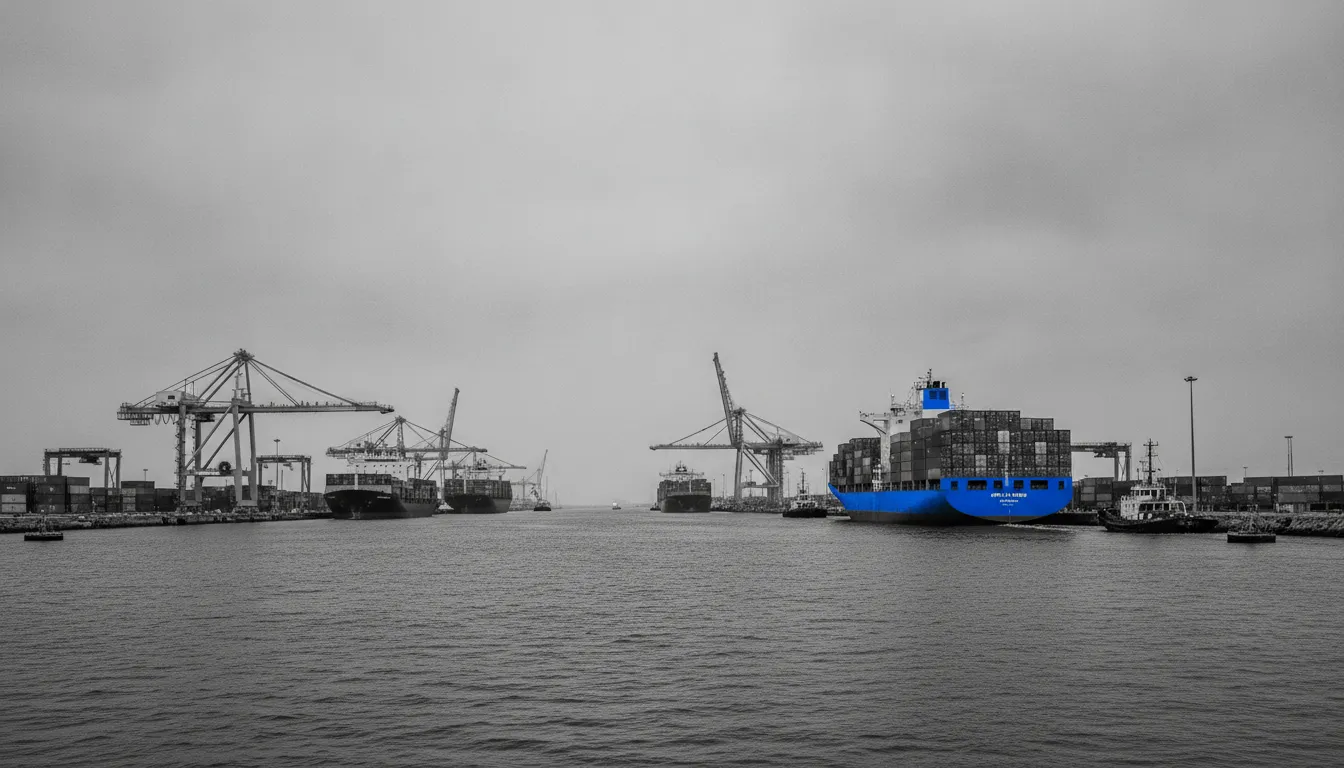
In July 2026, Maersk announced resumption of its Middle East–US East Coast (MECL) service via the Suez Canal corridor, signalling an important step toward mainline service normalisation. The move, made in cooperation with Hapag-Lloyd through the Gemini alliance network, drastically shortened transit times and demonstrated commercial confidence in near-term Red Sea stability. Maersk's decision to resume reflected industry-wide pattern: as of February 2026, major carriers restarted limited Red Sea services after months of avoidance, testing security conditions with controlled trial voyages.
These pilot services came with layered contingency: carriers maintained full cape routing backup plans and explicit flexibility to divert individual sailings or entire services back to the Africa route if security changed. Maersk explicitly kept its backup plans in place; single sailings or whole services can still move back to the Cape of Good Hope if conditions deteriorate. This dual-routing architecture is now standard practice, fragmenting the shipping market into two operationally separate supply chains: fast, expensive Suez transits and slow, cheaper (but fuel-intensive) cape transits. Port infrastructure adapted: Egypt's Red Sea Container Terminals opened a semi-automated facility at Sokhna Port in January 2026 to absorb increased Suez traffic, betting on sustained corridor recovery.
Supply Chain Fragmentation: No Market-Wide On–Off Switch
The critical operational reality for procurement and shipping teams is that there is no single market-wide routing status. Red Sea and Suez routing is now set service-by-service, carrier-by-carrier, and even sailing-by-sailing. A shipper using three different carriers on the same Asia–Europe lane could experience three different routings simultaneously—one via Suez, one via cape, and one via mixed networks. Transit times on the same service operated by the same carrier can now differ by as much as one week, depending on whether that specific sailing is routed through the Red Sea or around Africa. This variability breaks traditional supply chain predictability and forces buyers to re-baseline inventory planning, warehouse capacity, and port allocation assumptions.
Industry expectations suggest no full-scale return to pre-2023 Suez dominance before 2027. Most carriers and insurers expect Red Sea disruptions to persist, making diversions the default through at least 2027. The fragmentation creates structural oversupply: when carriers do return vessels to faster Suez routes, they free up ships that entered the market to compensate for cape delays. BIMCO estimates that large-scale Red Sea return could reduce global ship demand by around 10%, exacerbating existing overcapacity and putting downward pressure on rates. This paradox—rising spot rates now, potential rate collapse on Red Sea normalisation—traps buyers between locking in high long-term contracts and gambling on autumn spot-market moderation.
Insurance, War Risk, and Hidden Operating Costs
War-risk insurance premiums remain structurally elevated across all Red Sea transits. At the height of the crisis, hull and machinery coverage surged dramatically, and war-risk premiums climbed to levels that exceeded the economic advantage of the shorter Suez route. Even as attacks have moderated in intensity, premiums have not normalised to pre-crisis baselines. Shipowners and charterers still navigate elevated security protocol costs, layered surcharges, and underwriter caution. Multiple P&I clubs have already exited Persian Gulf and Red Sea cover entirely, narrowing underwriting capacity and raising premiums further. For carriers, these invisible costs sit on top of visible freight rates and are passed directly to shippers through surcharges.
War-risk surcharge layers typically include base WRS (War Risk Surcharge: $500–$1,500), Emergency Conflict Surcharge (ECS: $200–$500), Emergency Fuel Surcharge where applicable, and Port Surcharge variants. These stack on top of published freight rates, meaning a $2,000 Far East–North Europe spot rate could carry an additional $1,000+ in layered surcharges. The