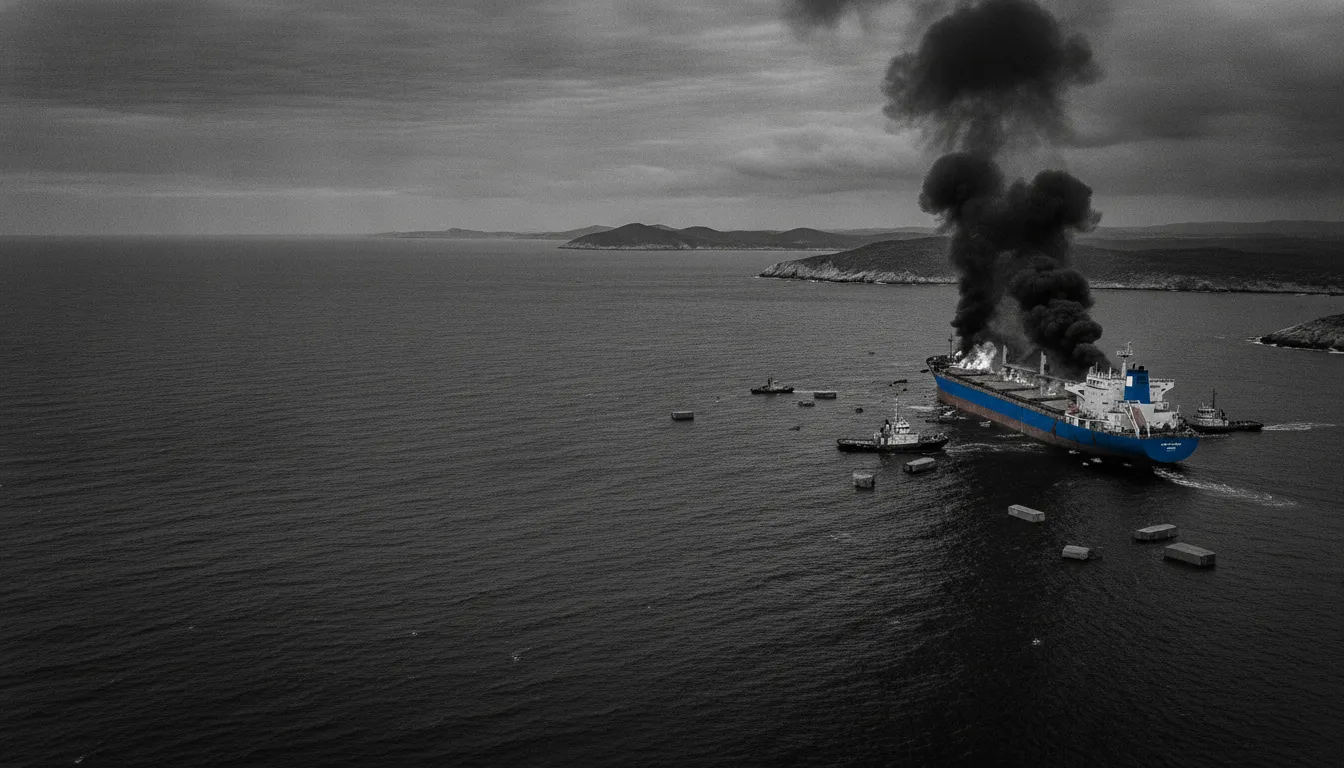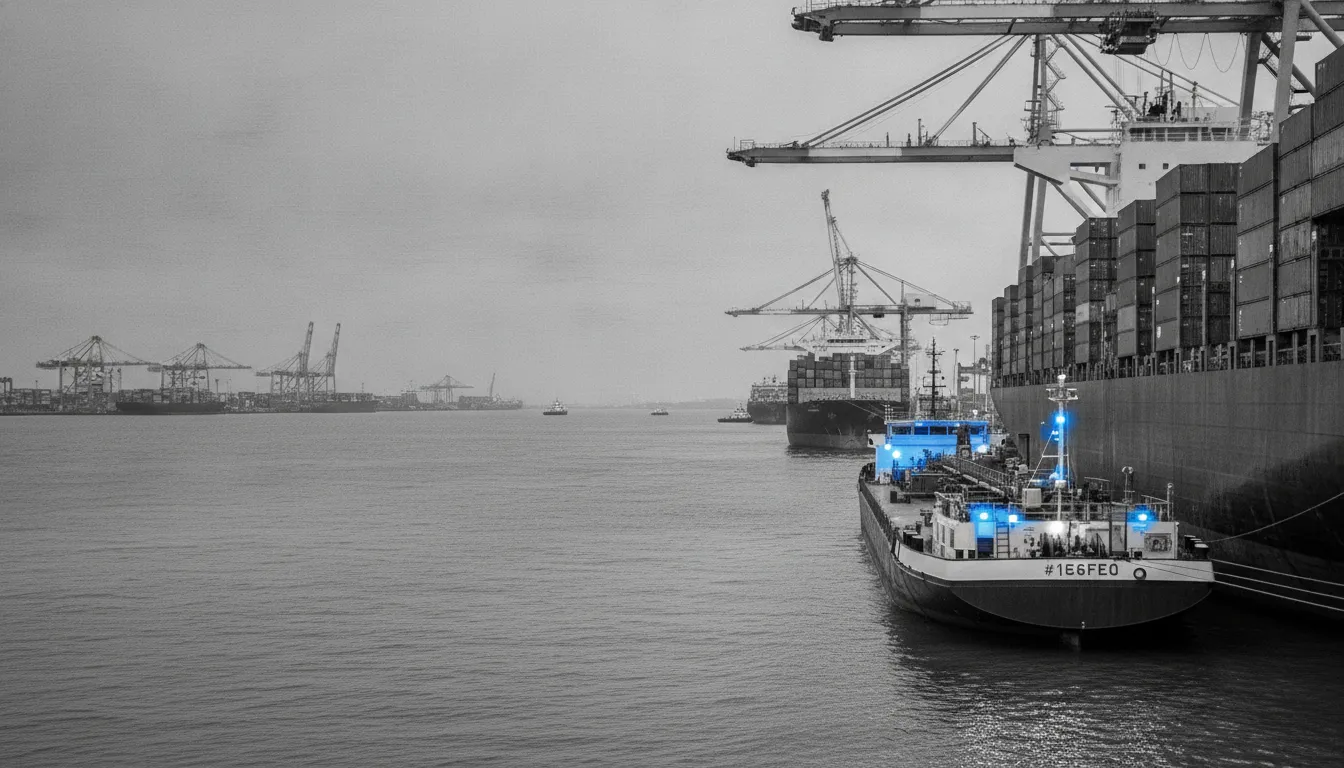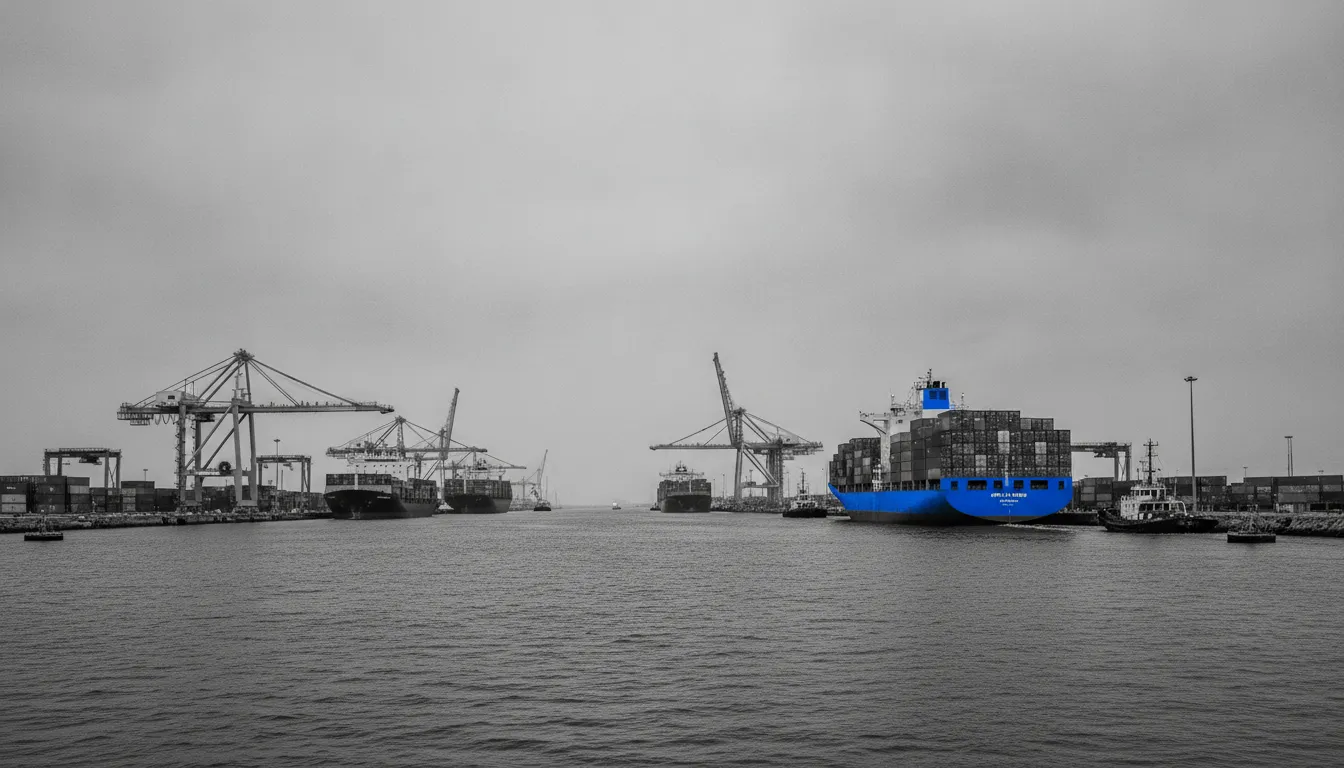

"Terminal 1 transformation is already delivering measurable results, achieving its highest-ever monthly container throughput of 46,582 TEUs in July 2026 contrasting the starting benchmark of 13,779 TEUs in May 2024."
The Surge in Numbers: A Snapshot of Growth Trajectory
DP World's Terminal 1 at Dar es Salaam recorded 46,582 TEU in July 2026—its highest monthly container volume on record. This represents a stark contrast to May 2024's baseline of 13,779 TEU, marking a 237% increase in just over two years. The acceleration reflects both the maturation of DP World's operational takeover in April 2024 and rising regional demand for integrated logistics capacity across East and Central Africa. This rate of growth significantly outpaces typical port-expansion trajectories, signalling both strong underlying trade fundamentals and the operational impact of modern cargo handling systems now embedded in the terminal.
Container vessel calls at the terminal increased to 20 in May 2026 from seven in May 2024, signalling growing confidence in the port's reliability and scheduling predictability. Intermediate data from May 2026 showed DP World handling 44,001 TEU—a 57% increase year-on-year and more than three times higher than May 2024—demonstrating that the July peak was not an anomaly but part of a sustained upward curve. The broader port has also crossed the 30-million-tonne annual throughput milestone, with 2024/25 fiscal year cargo reaching 27.7 million tonnes—a 15% increase from the prior year and the highest in the port's operational history. Tanzania's ports authority has now set a target of 54.59 million tonnes by 2030/31, underscoring an ambitious trajectory of regional trade growth that will keep Dar es Salaam under sustained volume pressure.
Infrastructure Backing the Momentum: DP World's Transformative Investment
The July 2026 performance figures are inseparable from the terminal's ongoing modernisation. DP World's concession agreement, awarded in 2024 under a Build-Operate-Transfer model for 30 years, commits over USD 500 million to infrastructure and IT upgrades. This capital commitment is among the largest private-sector investments in East African port infrastructure in recent years. The company has already deployed initial USD 250 million, with plans to expand total investment to USD 1 billion as the terminal scales, demonstrating confidence in sustained regional growth.
This investment is already translating into measurable operational gains: ship turnaround times have fallen from seven days to just three days since DP World assumed operations in April 2024—a 57% reduction that directly improves vessel scheduling efficiency and reduces carrying costs for shipping lines. The upgrade includes seven operational yards spanning 90,000 square metres—currently being redeveloped by EDECS Group under an active construction contract—plus digital yard management systems, enhanced cargo storage and handling capacity, port-wide fire protection networks, and high-mast lighting infrastructure. These capital works directly support faster berth utilisation, reduced dwell times, and improved safety—critical factors for buyers and operators managing tight supply-chain schedules. The port now handles containers, general cargo, and bulk commodities within a single modern terminal framework, offering multimodal cargo flexibility that earlier infrastructure could not provide.
Regional Gatekeeping Power: Seven Landlocked Nations Depend on Dar
Dar es Salaam handles more than 90% of Tanzania's international maritime trade and serves as the primary maritime gateway for seven landlocked countries across East and Central Africa—including Zambia, the Democratic Republic of Congo, Rwanda, Malawi, Uganda, Burundi, and South Sudan. This gatekeeping role amplifies the strategic importance of the July 2026 surge. Efficient port operations directly affect transportation costs, delivery times, supply-chain reliability, and ultimately the competitiveness of manufacturers, traders, and exporters across the entire sub-region. A single-day delay at Dar es Salaam can ripple across weeks of additional lead time for landlocked supply chains, making the halved turnaround time particularly valuable.
The port's efficiency improvements are already rippling inland through integrated logistics corridors. Tanzania Ports Authority has invested in the Kwala Inland Container Depot in Kibaha, connected by rail and designed to handle over 300,000 containers annually—roughly 30% of Dar es Salaam's container traffic. This infrastructure reduces port congestion and demurrage risk for importers clearing goods for landlocked markets. For shipowners and procurement managers sourcing from or supplying to Central African supply chains, faster regional evacuation translates directly to lower logistics costs and reduced inventory holding periods. Government revenue from DP World operations—Tsh325.3 billion to date—has been reinvested into critical projects such as Mgao Island Port and Dhow Wharves, further reinforcing inland and coastal logistics capacity. The integration of the Standard Gauge Railway and revival of the Tazara line create seamless multimodal networks that strengthen Dar es Salaam's position as a true regional distribution hub.
Bunkering and Ship Supply: An Emerging Hub in East Africa's Maritime Corridor
The surge in container volumes and vessel calls creates immediate demand for maritime services at Dar es Salaam. Seven Ocean Bunkering, a global marine fuel supplier, already operates at Dar es Salaam as one of 20 strategic African ports in its network, offering VLSFO, HSFO, LSMGO, and MGO via bunker barge and pipeline. The growing vessel call frequency—from seven calls in May 2024 to 20 in May 2026—increases the addressable market for fuel suppliers, victualling agents, lubricant dealers, and spare-parts chandlers. Each additional vessel call translates into 4–6 days of provisioning demand, spare-parts procurement, and crew-service requirements.
East African ports are positioning themselves as refuelling and transshipment hubs as global shipping navigates decarbonisation pressures and increasingly explores route alternatives to congested corridors. Strategic port expansion across the region, backed by government initiatives and public-private partnerships, is supporting the emergence of alternative-fuel infrastructure. Industry research indicates that East and West African coastal markets represent emerging opportunity segments tied to port development and regional maritime trade growth, with continued 5.5% annual growth in LNG bunkering activity expected through 2030. For ship supply procurers and bunkering operators, the July 2026 figures at Dar es Salaam signal sustained vessel traffic and growing pressure on suppliers to establish or expand warehousing, inventory, and service presence at the terminal. The port's modernisation creates operational predictability that makes it attractive for long-term supply contracts and partnership development.
Transshipment Potential and Regional Distribution Hub Positioning
The July 2026 container surge is part of a broader repositioning of Dar es Salaam from a simple import-export gateway to a regional distribution hub. This shift is explicitly reflected in Tanzania's Vision 2050 development strategy and aligned with the African Continental Free Trade Area (AfCFTA) framework, which has reduced tariff barriers across 54 countries and redefined the strategic logic of port development. As tariff barriers fall, logistics efficiency becomes a decisive competitive factor; firms now prioritise reliable and cost-effective links to both coastal and inland markets, a shift that creates new opportunities for ports offering superior transshipment capabilities and consistent multimodal connections.
For procurement buyers, this evolution creates new sourcing and consolidation opportunities. Goods can now move through Dar es Salaam, be stored and sorted at inland depots like Kwala, and be redistributed to multiple landlocked destinations via integrated rail-road networks. Containerised imports destined for Rwanda or the DRC no longer require separate port calls; they can be consolidated, warehoused, and dispatched inland as demand signals warrant. The port's fiscal contribution—Tsh325.3 billion in government revenue to date—reinforces political and strategic commitment to continued infrastructure investment, reducing the risk of supply disruption or capacity constraints that plague less-developed regional alternatives.
What This Means for You: Capacity, Competition, and Strategic Entry Points
The 46,582 TEU July 2026 figure signals sustained regional demand and heightened competition for berth space, road access, and skilled cargo-handling capacity. Average vessel queuing at Dar es Salaam has peaked at 20 vessels per day, requiring continued investment in berth expansion; four new berths numbered 12–15 are currently under development to relieve congestion. For buyers and shipowners, this means tighter scheduling windows, higher potential demurrage risk if port congestion recurs, and increased leverage for terminal operators—but also concrete proof that Dar es Salaam is now a viable, increasingly reliable East African container hub with institutional backing and sustainable capital investment.
Ship suppliers, bunkering operators, and logistics providers should treat this surge as validation for expanded presence at the terminal. The volume trajectory supports investment in inventory, warehousing partnerships, and on-site staff presence. For procurement teams sourcing goods destined for landlocked East and Central African markets, Dar es Salaam's modernisation—evidenced by halved turnaround times, monthly container volumes now 3.4 times higher than May 2024, and 90,000 square metres of new operational yard capacity under construction—offers both faster clearance and greater competitive advantage against regional alternatives. The 30-year DP World concession with committed USD 500 million investment provides strategic certainty; this is not a short-term capacity play but a long-term repositioning of East Africa's maritime infrastructure.