
"Arranging bunker supplies recently has become increasingly fraught. Therefore, we need to extend our lead times, avoid trouble ports, and maintain a wider range of alternative ports at all times to handle any potential issues that may arise."
A Fleet Fractured Across Two Routes
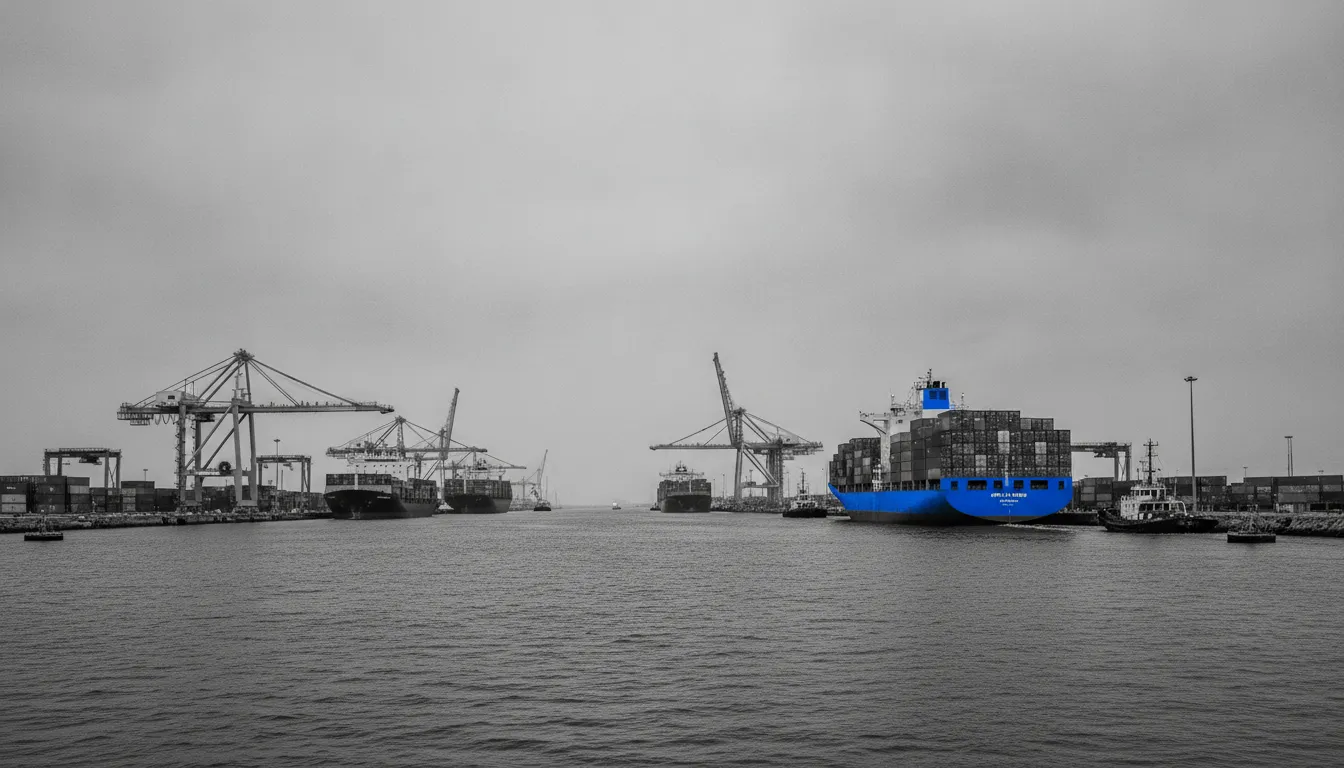
Major container lines—Maersk, MSC, CMA CGM, and Hapag-Lloyd—are operating a selective portfolio approach to Asia–Europe services in August 2026. Maersk is gradually restoring Asia-Europe services via the Suez Canal after rerouting ships around the Cape of Good Hope at the onset of the Red Sea crisis in late 2023. Simultaneously, competing carriers continue expanding trans-shipment capacity on alternative routes. This hedging strategy, whilst prudent given recurring Houthi attacks and persistent geopolitical tensions, has fractured fleet allocation across competing corridors and left neither route operating at historical efficiency.
The mathematics are brutal. Between 12 and 15 per cent of global trade, and up to one-third of East-West container flows, normally transit the Red Sea corridor via the Suez Canal. When rerouted via the Cape of Good Hope, carriers add nearly 11,000 nautical miles and 10–14 days to voyages. This extended voyage prolongs the time vessels spend at sea and ties them up longer, reducing the number of trips each vessel can make annually. For Asia-Europe services, this overhead absorbs vessel capacity that would otherwise service secondary lanes. By August 2026, an estimated 5–7 per cent of the global container fleet is tied up in Cape routing—equivalent to 1.3–1.8 million TEU pulled clean out of the market. Carriers have shifted vessels from less profitable routes (Intra-Asia, Latin America, Africa) to the congested Asia-Europe and Asia-US lanes, creating cascading tightness on secondary trade corridors. This chain reaction means even routes that never touch the Red Sea end up with tighter space and slightly higher rates.
Dual-Chokepoint Risk: Suez Uncertainty and Hormuz Proximity
The renewed volatility reflects two compounding geopolitical flashpoints that have fractured rate seasonality and forced carriers into permanent hedging mode. Throughout 2024 and early 2025, over 70 per cent of diverted container traffic had tentatively returned to Suez routes as Houthi attacks appeared to moderate. Those gains proved fragile. When US-Israeli strikes against Iran escalated in early March 2026, Maersk, CMA CGM, and Hapag-Lloyd suspended Suez operations simultaneously and rerouted back around Africa. By May 2026, an estimated 70 per cent of freight previously routed through the Red Sea had been rerouted again, marking one of the most significant disruptions to global trade routes. The Suez Canal remains open and fully operational, but container traffic through Bab el-Mandeb has fallen more than 70 per cent from pre-crisis levels, with Suez Canal transits down 50–60 per cent year-on-year since 2024.
This oscillation creates unresolved scheduling risk and forces carriers to maintain dual operating systems. When both Suez and Hormuz come under pressure—as occurred in July 2026 when the Strait of Hormuz entered a fresh crisis phase—the Cape becomes the sole reliable artery for Asia-Europe and Asia-Middle East cargo. With both chokepoints under stress, Cape effective capacity absorption (+10–14 days per voyage) gives carriers leverage on General Rate Increases and surcharges across Asia-Europe, Mediterranean, and US lanes. Carriers must hedge aggressively: maintaining Suez operational readiness and crew positioning, whilst simultaneously banking contingency Cape tonnage and securing alternate refuelling protocols. The result: no single route carries enough allocated capacity to absorb seasonal demand elasticity without triggering blank sailings, schedule churn, or demurrage spirals.
Bunker Procurement Windows Collapse: Lead Times Extend to 7–15 Days
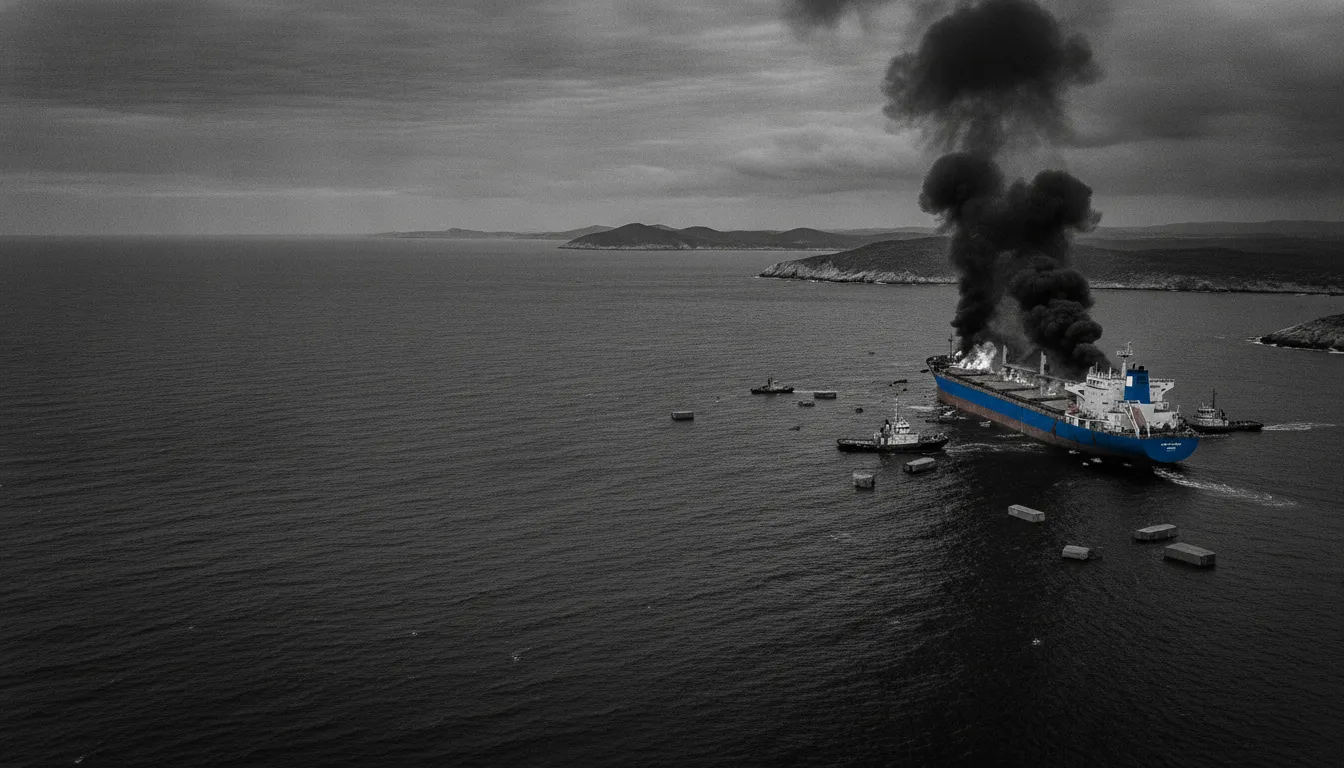
The compressed capacity environment has collided directly with bunker supply stress, creating a dual squeeze on vessel operations. By May 2026, the Strait of Hormuz closure choked off the supply of bunker fuel that powers the maritime industry and feeds its largest refuelling hub in Asia. Bunker fuel is a literal bottom-of-the-barrel product—heavier and dirtier than refined crude oils used by other vehicles—that helps move 80 per cent of globally traded goods transported by sea. Singapore's bunker supplies, historically the global benchmark and the world's largest bunkering centre, held initially despite regional energy constraints. However, prolonged cutoff from major sources of heavier crude oil (Iraq and Kuwait) threatens sustained shortages across Asia-Pacific operations.
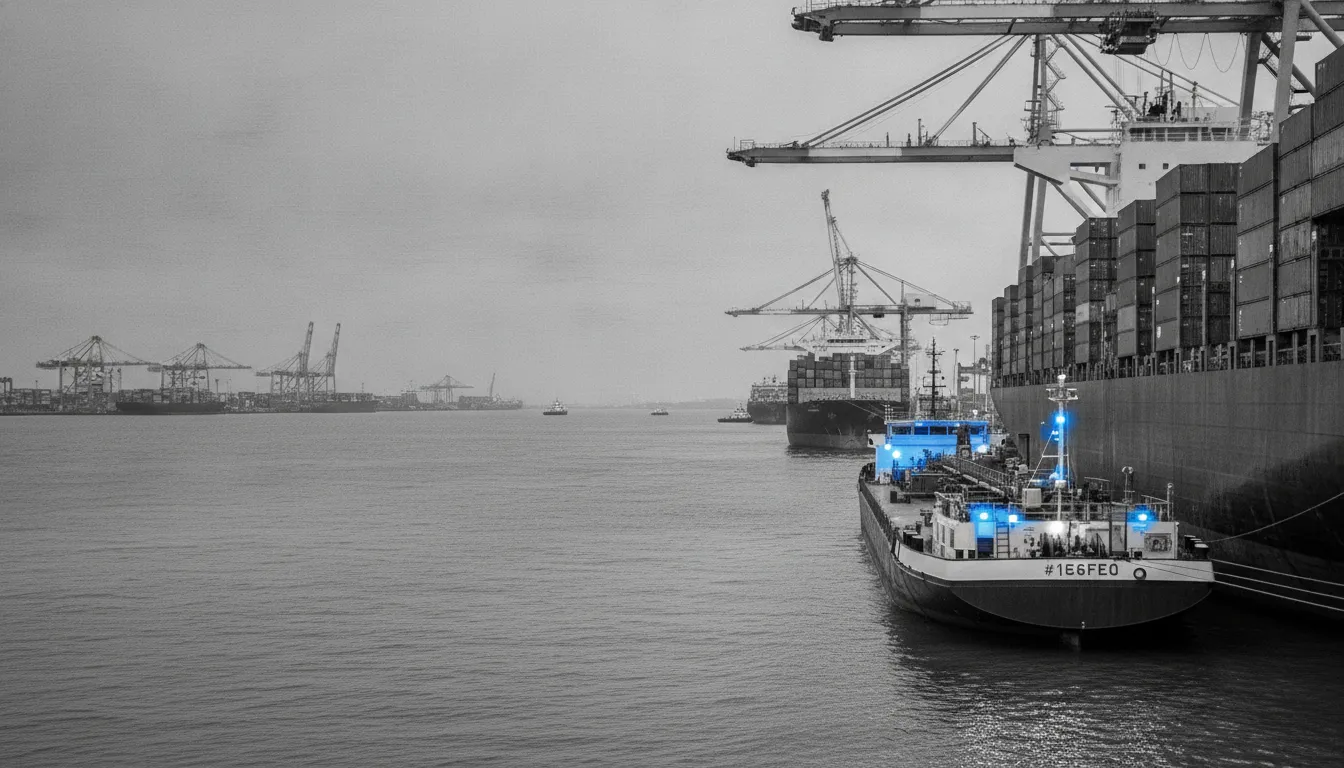
Container operators have reported that arranging bunker supplies has become increasingly fraught, with spreads widening and availability windows contracting sharply. Industry guidance now mandates extended lead times, avoidance of chronically short ports, and maintenance of wider alternative-port networks. The practical effect: procurement windows for marine fuel have compressed from the historical 21–30-day baseline to just 7–15 days. This creates acute scheduling pressure. Bunker fuel shortages feed through to shipping costs more quickly than many other cost pressures; the cumulative effect of higher shipping costs can ripple across supply chains and ultimately influence consumer prices across broad sectors. For time-sensitive shipments targeting retail peak season (back-to-school, Black Friday, year-end), missing the bunker procurement window forces either forward-buying at premium spot prices or outright service failure. Demurrage penalties ($800–$1,500 per rolled vessel per day) and lost inventory windows for retail promotions exceed any fuel surcharge savings from waiting.
Forward-Buying Disciplines and Regional Hub Diversification
Prudent shipowners and procurement teams are shifting strategy fundamentally: instead of reactive spot-market bunker tenders, they are securing blocks of marine fuel 4–8 weeks ahead of departure, even at 3–5 per cent premiums above forward market curves. This pre-commitment eliminates procurement uncertainty and locks in fuel costs independently of vessel routing decisions. Buyers are simultaneously expanding their bunkering hub footprint beyond Singapore to reduce single-point-of-failure risk. Regional alternatives—Port Said (Suez transit), Rotterdam (Europe-bound), Fujairah (Red Sea/Indian Ocean hub), and emerging supply points on the Indian Ocean rim—are being operationalised to distribute procurement across multiple supply sources and route-specific staging grounds.
For container operators, the operational implication is stark: forward bunker procurement must now precede cargo booking windows by 2–3 weeks, inverting traditional procurement sequences. This forces larger safety-stock reserves and extended supply-chain lead times. Shippers relying on just-in-time scheduling face compressing margins; those consolidating shipments and building 10–15-day buffer inventory into their purchasing calendars can absorb volatility and maintain service reliability. The cost calculus is unambiguous: a single rolled vessel, missed retail window, and combination of Red Sea premium ($800–$1,500 per container) plus demurrage makes forward bunker discipline non-negotiable. Regional diversification also insulates operators from localised supply shocks; securing 30–40 per cent of bunker requirements from a second hub provides tactical flexibility if primary sources tighten unexpectedly.
August Peak-Season Spot Volatility: Rate Unpredictability and Capacity Allocation Chaos
Container spot rates from Shanghai to Los Angeles dropped 6 per cent to around $5,878 per 40-foot equivalent unit by mid-to-late July, prompting market commentary that rates were cooling. Carriers, however, treated this minor dip as a strategic reset window before applying August peak-season surcharges. Aggressive General Rate Increases ranging from $2,000 to $3,000 per 40-foot container followed swiftly, driven by strong booking demand for Q3 retail inventory (back-to-school, promotional goods, holiday inventory). Spot rates on Asia-US West Coast lanes remain elevated throughout August, with forward bookings now filling vessels only one to two weeks ahead instead of the three to four weeks seen during early summer front-loading.
This volatility masks deeper capacity dysfunction and non-linear rate formation. Spot rates during August are normally supported by predictable seasonal demand, but the dual-route hedging and bunker supply constraints have rendered traditional rate seasonality unreliable. Some Asia-Europe services may stabilize compared with sharp increases seen earlier in summer, but shipping lines continue carefully managing available capacity through schedule adjustments and blank sailings to prevent significant rate declines. For buyers, this means booking 2–4 weeks in advance is essential to secure vessel space; delaying booking decisions by even one week risks vessel rolling or allocation clawbacks. Building flexibility into shipping schedules is mandatory to survive transit disruptions and unexpected port congestion. August remains a seller's market for ocean freight, particularly on Asia–North America routes, with ongoing geopolitical uncertainty, elevated fuel prices, and carrier capacity management expected to keep freight rates above historical averages throughout the month and into early autumn.
What This Means for You
The August 2026 peak season is not a traditional seller's market—it is a fragmented, dual-supply-chain bottleneck where route selection, bunker lead-time windows, and forward procurement discipline now determine margin and service reliability. Shipowners must secure bunker blocks 4–8 weeks ahead and diversify bunkering hubs across at least two regions to insulate against localised shortages. Container buyers must book cargo 2–4 weeks in advance and treat bunker procurement as a preceding, not trailing, process; forward fuel commitment must anchor the vessel scheduling timeline. Freight forwarders and logistics planners must assume 7–15-day bunker lead times and plan vessel scheduling around fuel-supply windows, not the reverse. Those betting solely on Suez reopening or Cape-route normalisation will face rolled sailings, demurrage penalties, and compressed margins. Those hedging both routes, forward-securing fuel across multiple regional hubs, and building buffer inventory will navigate the compression without margin loss and deliver service reliability through peak season and beyond.