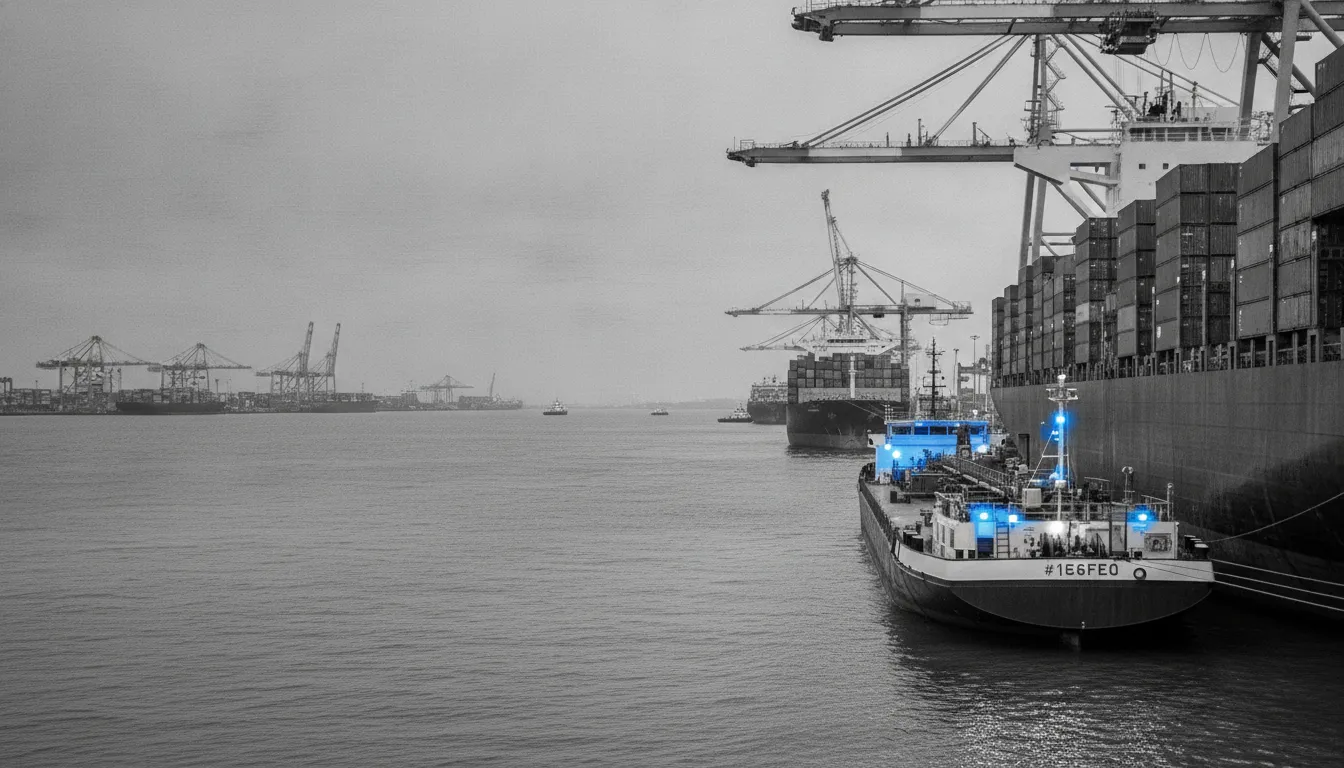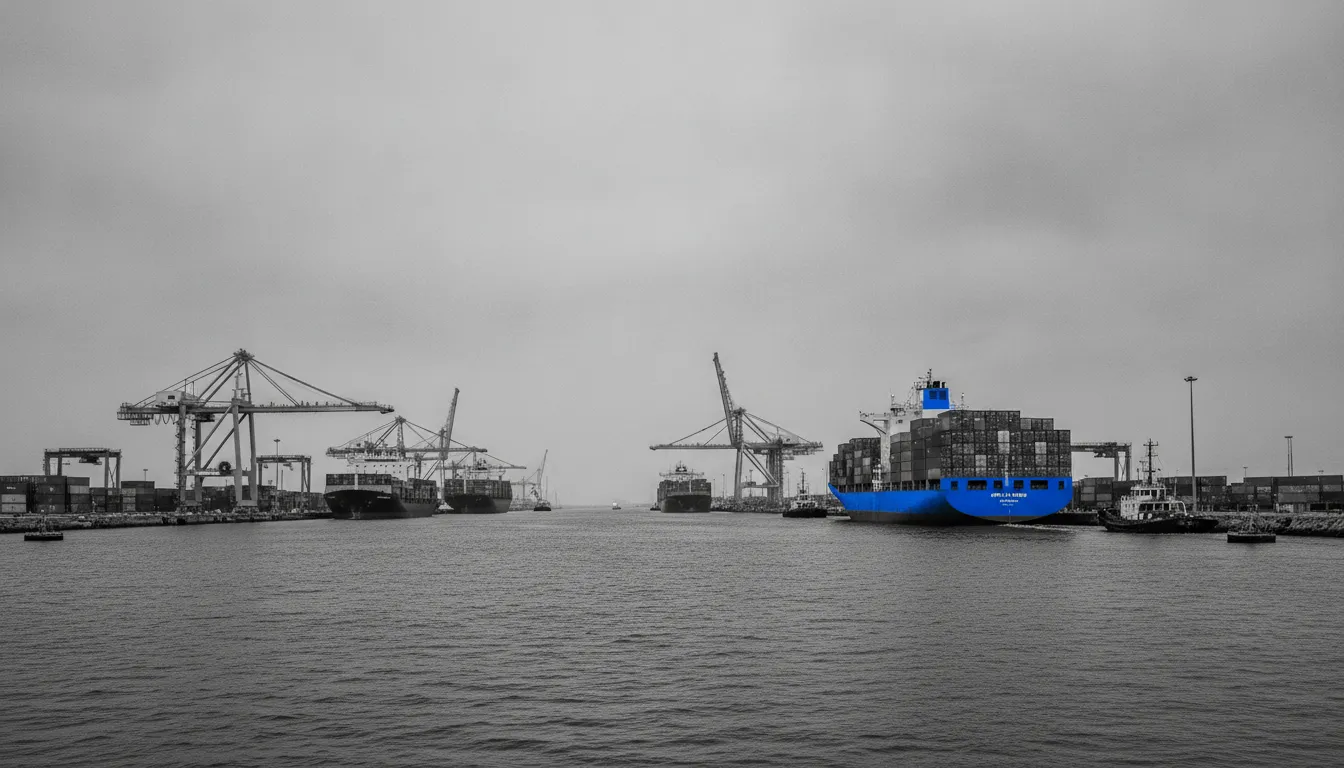

"The main objectives are to widen the quays to accommodate more berths, therefore more ships for the Port of Cotonou, as well as deeper quays to be able to accommodate larger and heavier vessels, such as 353-metre Post-Panamax container ships."
Lagos Targets Triple-Digit Capacity Expansion by 2031
Nigeria's $1 billion port modernization programme, approved by the Federal Government in October 2025, is concentrated on Lagos's Apapa and Tin Can Island terminals—the country's two largest commercial entry points. The Lagos port system is now split into a "triple-port" dynamic: Apapa (handling 1 million TEU capacity), Tin Can Island (650,000 TEU annually), and the fully automated Lekki Deep Sea Port, which commenced full commercial operations in April 2023 with annual container capacity of 2.5 million TEU. Together, these three terminals form a consolidated infrastructure ecosystem designed to raise Lagos's total handling capacity and competitiveness against rival West African hubs. The rehabilitation project includes a Port Community System (PCS)—a digital "single window" launched in early 2026—that has already cut customs clearance time from weeks to 48–72 hours. Denmark's APM Terminals (part of Maersk Line) has invested $1.2 billion in green shipping infrastructure, making Lagos one of Africa's greenest ports through electrified container handling equipment. A broader $1.1 billion rehabilitation programme has also been secured for Eastern Nigerian ports (Onne, Rivers, Calabar, and Warri). Procurement demand is immediate: vessel operators, terminal equipment manufacturers, and ship supply chains must align with these new digital systems, safety protocols, and capacity targets.
The expansion trajectory reflects Nigeria's ambition to restore its role as a West African maritime hub amid rising competition from Cotonou and Lomé. Hapag-Lloyd recently launched a weekly service at Nigeria's Onne Port, connecting Eastern Nigeria to global routes and enhancing transshipment capabilities under the AfCFTA framework. At Onne's West African Container Terminal (WACT), a public-private partnership has advanced Terminal B expansion (Berths 7 and 8) to 62% completion with over $110 million invested as part of a $2.9 billion Onne Port Expansion Phase 4B—the largest port investment in Africa over the past decade. Ship suppliers must now prepare for scaled logistics demand: provisioning, spare parts, lubricants, repair and maintenance contracts, and waste management services will all grow exponentially as vessel throughput increases.
Cotonou Terminal 5: 20-Hectare Bulk Gateway Opening Regional Landlocked Access
The Port of Cotonou is undergoing its most ambitious modernization since independence. The African Development Bank signed a €80 million funding agreement in February 2025 to support the port's 2021–2026 Master Plan, with €55 million mobilized by the Bank and €25 million from the Africa Growing Together Fund (supported by the People's Bank of China). Terminal 5, a dedicated 20-hectare bulk terminal, is central to this agenda. Works began in 2023 and are currently ongoing; China Harbour Engineering Company (CHEC) holds the construction contract. The project includes a 350-metre extension of the existing breakwater and an 891-metre revetment protecting the new terminal's backfilled area. As of July 2026, the Port Authority reports 69% physical progress and 72% overall progress on Terminal 5. The basin extension and renovation of northern and southern quays are 72% and 85% complete respectively and will accommodate vessels drawing more than 15 metres—enabling larger Post-Panamax container ships and 240-metre bulk carriers. The port handles 80–90 merchant vessels monthly and in 2022 processed 12.5 million tonnes of goods; projections suggest cargo could nearly double to 23 million tonnes by 2038. Cotonou handles 90% of Benin's international trade and 49% of transit traffic to landlocked Sahel nations: Niger (37%), Burkina Faso (4%), Mali (3%), and Nigeria (5%). The port serves approximately 100 million consumers across the landlocked corridor. Suppliers focused on bulk logistics—cement, fertilizer, grain, ores—face exceptional demand growth. Automated gate systems and digitized truck parks (the Zongo facility) will require specialized RFID and customs-integration software vendors. Regional sourcing networks for port operations, maintenance crews, and provisioning services will expand significantly.
The challenge lies in executing terminal works without interrupting port revenue generation. Terminal 5's opening will create new berths and warehousing capacity that will attract competing regional carriers and secondary transhipment operators. Suppliers must position themselves to serve this influx: bunkering operations, pilot services, stevedoring equipment leases, fumigation and certification services, and container depot management all present long-term contract opportunities. The Cotonou port functions as a logistical gateway to 100 million consumers in the Sahel; suppliers who establish vendor relationships during this expansion phase will capture a decade of regional growth.
Luanda's $380 Million Transformation: Ad Ports Group and the Central-West Africa Hub
AD Ports Group (the Abu Dhabi–based ports and logistics operator) broke ground on the Noatum Ports Luanda Terminal in September 2025 under a 20-year concession agreement signed in April 2024 with the Luanda Port Authority. The concession is extendable until 2055. Initial investment is $250 million over the first three years, with total spending projected to reach $380 million over the full 20-year term, depending on market demand. Construction will span 18 months and is scheduled for completion in Q3 2026. AD Ports holds 81% of the multipurpose terminal joint venture and 90% of a separate logistics joint venture with local partners Unicargas and Multiparques. The Port of Luanda handles more than 76% of Angola's container and general cargo volumes and serves as a critical transhipment hub for Central and West Africa, facilitating trade with landlocked Democratic Republic of Congo and Zambia. Container volumes are projected to grow at 3.3% annually over the next decade. The redevelopment will surge container-handling volumes from 25,000 to 350,000 TEU and roll-on/roll-off (RoRo) volumes to over 40,000 vehicles. Infrastructure upgrades include quay wall improvements, enlargement of the concession area by 14,000 square metres, expanded draft (6.5 metres deeper), new ship-to-shore cranes, gantry cranes, and modernized IT systems. Luanda's transformation positions it as a leading maritime and logistics hub in Central and West Africa, attracting new shipping lines and integrating Angola into key international logistics corridors. For suppliers, the scope spans container handling equipment, refrigerated transport (Noatum Unicargas Logistics includes fleet modernization), customs and cargo-tracking software, marine fuel supply, and integrated logistics services for landlocked regional markets. The concession model creates predictability for long-term vendor contracts and maintenance agreements.
The Port of Luanda's role as a regional transhipment centre multiplies the commercial opportunity: suppliers serving feeder operations to DRC and Zambia markets will find sustained demand for specialized equipment, documentation services, and consolidated-cargo aggregation support. Additionally, Angola's projected 3.3% annual container-volume growth over ten years ensures multi-year revenue visibility for capital equipment and consumables suppliers. Noatum Logistics will require integrated provisioning support—fuel, lubricants, catering, crew services, and spare parts—from multiple vendors positioned to deliver at scale and meet international standards.
AfCFTA Acceleration: Intra-African Trade as Demand Catalyst
The African Continental Free Trade Area (AfCFTA) entered into force in 2019 and commenced trading in January 2021. The agreement aims to increase intra-African trade by eliminating import duties; the Economic Commission for Africa estimates a 33.5% growth in intra-African trade by 2045, with major expansion projected in agrifood and industrial products. UNCTAD estimates the agreement could boost intra-African trade by about 33% and cut Africa's trade deficit by 51%. However, success depends on modern logistics infrastructure, harmonised standards, and digital ecosystems that allow businesses to operate seamlessly across borders. Transport infrastructure—particularly ports and rail—is identified as critical to unlocking AfCFTA benefits. The three West/Central African port projects directly enable AfCFTA implementation: enlarged container terminals and bulk facilities increase throughput; digital port-community systems streamline customs and origin documentation for AfCFTA-eligible goods; and expanded RoRo capacity supports vehicle manufacturing and distribution across the region. Nigeria has already expanded AfCFTA-linked air cargo corridors through RwandAir partnerships, connecting Lagos to Kigali, Lusaka, Harare, and other regional hubs. Maritime supply chain acceleration follows. Suppliers who position themselves as "AfCFTA-ready" vendors—capable of meeting origin-certification requirements, documentation standards, and rapid customs clearance protocols—will capture contracts from intra-African traders seeking reliable, compliant service partners. The window to establish these credentials and vendor relationships is now: procurement teams at Lagos, Cotonou, and Luanda are finalizing authorized-supplier lists and multi-year service agreements as construction and commissioning phases accelerate.
The interconnection between port infrastructure and regional trade creation is direct. As Lekki Deep Sea Port, Terminal 5 Cotonou, and Luanda's Noatum facility come online at scale, they will handle significantly increased intra-African container volumes and bulk trade flows. Suppliers embedded in these ecosystems—through authorized-vendor status, long-term service contracts, or equipment-supply agreements—will benefit from decade-long revenue streams tied to structural regional trade growth, not cyclical shipping demand.
The Procurement Imperative: Moving from Bid Response to Strategic Positioning
Port projects of this scale typically proceed in phases: mobilization (2025–2026), construction acceleration (2026–2027), handover and commissioning (2027–2028), and operations scaling (2028–2030). Procurement windows follow each phase. However, the most valuable supplier opportunities emerge during the planning and early commissioning phases, when port authorities and terminal operators establish authorized-vendor frameworks, negotiate multi-year service contracts, and define operating standards. For ship suppliers, chandlers, and equipment vendors, strategic positioning now means: (1) direct engagement with port authorities and concessionaires on vendor-certification requirements; (2) assessment of equipment and service standards aligned with new digital systems (Lekki's automation, Lagos PCS, Cotonou's digitized truck parks, Luanda's IT infrastructure); and (3) regional supply-chain planning to meet rapid demand scaling from 2027 onwards. Vendors who secure "authorized supplier" status during this window will gain preferential access to multi-year provisioning contracts, maintenance agreements, and fleet support services. Competing for these slots requires proof of regulatory compliance, financial stability, technical capability, and supply-chain resilience—but the upside is long-term revenue visibility and first-mover advantage in a region projected to see 33%+ intra-African trade growth by 2045.
Suppliers operating in ship provisioning, spare parts, marine fuels, waste management, documentation services, and integrated logistics must act now. Port modernization timelines are compressed; concession agreements lock in long-term operator expectations; and AfCFTA implementation is accelerating regional trade flows. The $27 billion in cumulative capital investment across Lagos, Cotonou, and Luanda will generate proportional demand for operational supplies, maintenance services, and specialized logistics support. First-movers who establish authorized-vendor relationships during 2026–2027 will capture these multi-year contracts before competitors recognize the opportunity.
What This Means for You
If your business supplies vessels, terminal operations, or logistics services, West and Central Africa's port modernization cycle is reshaping your procurement landscape. Lagos's triple-port ecosystem, Cotonou's Terminal 5 bulk gateway, and Luanda's transhipment hub are transitioning from congested legacy operations to digitized, high-capacity facilities serving 1.4 billion AfCFTA consumers. The procurement window is now: direct engagement with port authorities, concessionaires (APM Terminals, CHEC, AD Ports), and regional logistics partners to establish authorized-vendor status will unlock multi-year contracts and predictable revenue streams. Port infrastructure modernization is a rare, long-cycle asset play in maritime B2B. Suppliers who secure vendor slots during this 2026–2030 expansion phase will benefit from structural regional trade growth, not transient shipping cycles. The competition is global, but the first-mover advantage is regional. Act strategically, move decisively, and capture your share of Africa's continental trade opportunity.