"After nearly two years of operating under these conditions, it is increasingly hard to describe our setup as a temporary measure. It has instead become an adaptation to a new operational reality." — Bhavan Vempati, Head of Asia Market for Ocean, Maersk
The Scale of Permanent Rerouting
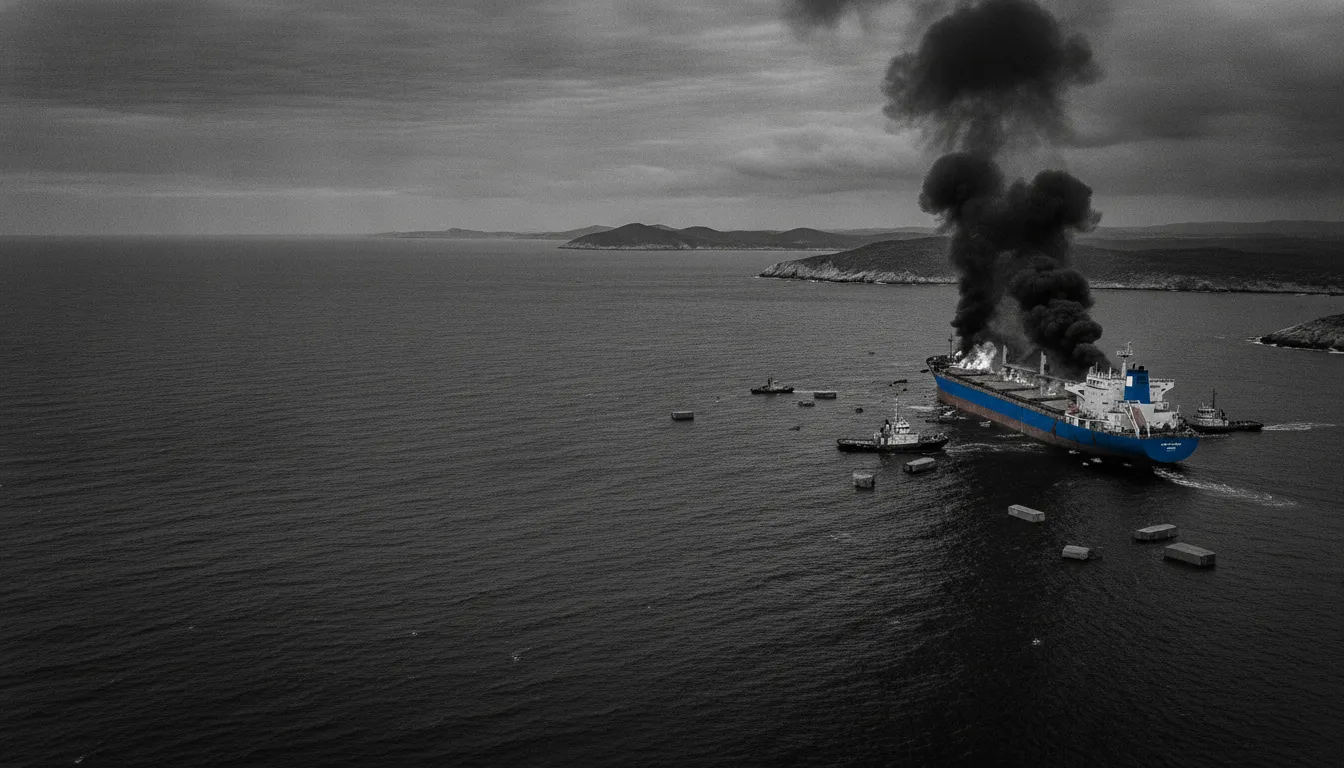
On 28 February and 1 March 2026, the industry's largest container carriers suspended trans-Suez operations in response to escalating Middle East security risks. CMA CGM announced suspension of Suez Canal passage due to deteriorating security in the Middle East, followed by Maersk and Hapag-Lloyd on March 1st. Within weeks, the Cape Chamber of Commerce and Industry confirmed that diversions had risen 112% as of early March, signalling what carriers now view as a lasting operational change rather than temporary disruption. A structured rerouting pattern has emerged: where the Suez Canal would save 7–14 days on Asia–Europe journeys, the Cape route adds 3,500–4,000 nautical miles and 10–14 extra days, but now dominates the schedules of major liner operators across all vessel classes.
Data from project44 documented the unprecedented scale of this shift: total weekly container traffic (measured in TEU) across five Cape-route ports grew from roughly 147,873 TEU per week in early January to a peak of 252,792 TEU on 6 April 2026—a near 2.5× increase in under four months. The week of 6 April surpassed the 220,032 TEU recorded on 30 March and exceeded the December 2025 pre-holiday surge. Durban alone accounted for roughly 45% of five-port throughput, with its peak of 110,770 TEU on 30 March exceeding pre-conflict baseline levels by more than two standard deviations. Every post-conflict week from 2 March onward exceeded the pre-conflict average, with two weeks setting all-time records. This is not cyclical volatility; it reflects the permanent embedding of Cape routing into carrier schedules, driven by persistent geopolitical risk that shows no sign of immediate resolution.
Emerging African Bunkering Hubs and Market Winners
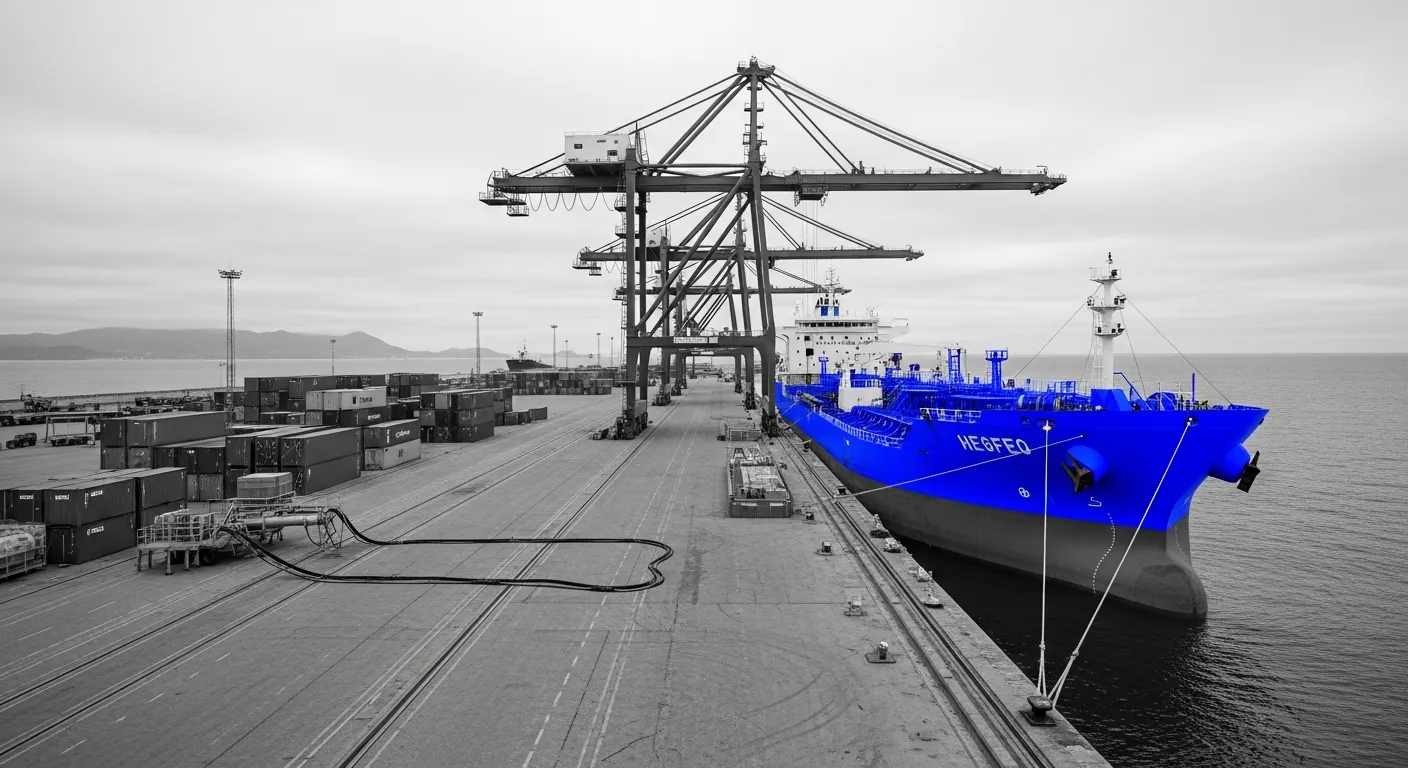
Extended voyage times on the Cape route force vessels to refuel at African ports that previously handled only tactical or secondary calls. This fundamental change in voyage structure has created immediate commercial opportunity for established and new bunker suppliers. Monjasa, a Denmark-registered operator that has worked in West Africa for nearly two decades and also supplies fuel at Fujairah in the Persian Gulf, confirmed that "volumes have been positively impacted by the Red Sea security situation causing more vessels to reroute south of Africa." The company reported further increases in bunkering activity during the first week of the Iran war in March 2026, with no expectation of immediate normalcy: "No matter the outcome of the conflict, we expect overall volatility to remain high for a considerable period of time," Monjasa spokesperson Thorstein Andreasen stated.
New entrants are now committing capital to the region at an accelerating pace. In November 2025, Dubai-based Flex Commodities launched physical bunkering operations at Namibia's Walvis Bay and Luderitz, explicitly targeting Cape route traffic. "We are targeting the growing volume of traffic moving around the Cape and the offshore market around the region, offering an alternative to traditional bunkering stops in the region," Flex's managing partner Rakesh Sharma said, noting the company's initial focus on West Africa where supply remains materially below demand, particularly in offshore bunkering zones. Vitol, Bunker Partner, Peninsula and Global Fuel Supply have all announced or executed African expansion plans. In West Africa specifically, operators including Misa Energy in Ghana are scaling volumes to meet offshore bunkering demand, with Ghana's operations manager Moses Komodatam forecasting that bunkering volumes could triple over the next decade. Mauritius has already captured significant market share: Port Louis recorded 929,043 metric tonnes of bunker sales in 2024, nearly double the 509,837 tonnes in 2023—a year-on-year increase of 82%.
Structural Winners and Losers Across African Ports
Regulatory and tax volatility has created sharply uneven winners across the continent, reshaping the geography of African bunkering. South Africa, historically the continent's largest bunkering hub, has lost material market share to regional competitors: bunker volumes in South African ports fell to approximately 80,000 tonnes per month in 2024 from roughly 130,000 tonnes in 2023, according to a PwC report released in March 2026—a 38% year-on-year decline. This steep contraction stems directly from a late-2023 tax crackdown in South Africa's Algoa Bay, which reduced operational capacity at what was previously a flagship international refuelling point. The regulatory disruption occurred precisely when global shipping networks were reorganising around the Cape route, forcing vessels to seek alternative supply points rather than wait for normalised South African policy.
Walvis Bay (Namibia) and Port Louis (Mauritius) have captured this displaced volume and emerged as the primary Cape-route bunkering hubs. Engine.online reported in April 2026 that bunker enquiries have increased across Southern and West African locations including Durban, Port Louis, Walvis Bay and Lome, but supply dynamics remain tight. West African ports including Lome (Togo), Dakar (Senegal) and Abidjan (Ivory Coast) are now active physical bunkering locations for rerouted traffic, with Bunker Partner launching its first physical location in Abidjan during 2025 and Aurelio establishing operations in Dakar. Vitol started offering VLSFO and LSMGO in both Dakar and Lome from May 2025. However, expansion has outpaced supply: VLSFO pricing at Walvis Bay exceeded $1,400 per metric tonne as of late April 2026, with availability constraints limiting uptake at multiple ports.
Supply-Chain Tightness and Immediate Headwinds
Paradoxically, surging demand has collided directly with constrained supply across all African bunkering hubs. The Strait of Hormuz closure has curtailed Middle Eastern crude oil production and refinery throughput, tightening fuel oil availability at a moment when Cape-route diversions are peak. Emril Jamil, a senior analyst at LSEG, stated that "given the loss of crude supply and refinery run cuts, fuel oil supply is expected to tighten across all bunkering hubs." Engine.online documented specific supply failures: bunker suppliers in Angola's Luanda reported running out of VLSFO entirely, with replenishments expected only in the second week of April. HSFO availability became tight in South Africa's Durban, where supplier delivery windows stretched to two weeks out.
Infrastructure bottlenecks compound the constraint substantially. Port Tema in Ghana, a key West African hub, faces ongoing congestion that limits intake and throughput. High product costs driven by tax regimes and import duties remain structural challenges that deter vessel calls: traders reported that high prices are actively discouraging ships from picking up fuel at West African ports, with vessels electing to source supplies elsewhere rather than accept African pricing. Piracy risk and limited deep-water salvage capabilities along the route add operational risk and insurance premiums that increase total cost of supply. Bunker supplier Monjasa acknowledged having "flexible local product sourcing" and 10 active tankers to arrange supplies throughout West Africa, but cautioned that "it is too early to conclude whether new supply patterns are emerging in West Africa," expecting the market to "remain highly volatile for quite some time, even after the crisis ends, as supply lines need to be reestablished."
Long-Term Growth Beyond Geopolitical Crisis
Supply chain professionals and industry bodies expect African bunkering demand to remain elevated even if Middle East tensions ease materially. Tahra Sergeant, Africa Regional Manager at the International Bunker Industry Association, noted that longer-term growth prospects stretch "beyond geopolitical disruption, with regional and intra-African trade, port infrastructure investment and Africa's positioning on global shipping routes supporting demand." The Cape route has become structurally embedded in carrier planning and network economics: reversing these schedule changes requires not just a cessation of regional conflict but a complete recalibration of operational models—a process that typically takes 18–24 months even under optimal security conditions. Container ship capacity on the Cape route declines approximately 20% per vessel annually compared to Suez routing (a 20,000 TEU vessel conducting 15 Suez voyages per year yields only 12 Cape voyages), representing $3–5 million per vessel in forgone annual revenue and embedding economic incentives for sustained alternative routing.
Carriers including Maersk now conduct routine bunkering at West African and North African (Tangiers) ports as standard practice within published schedules, not emergency procedure triggered by crisis. This normalisation of African refuelling stops is accelerating logistics house investment in fuel trading, storage infrastructure and local supply chain partnerships across the region. Growth is no longer speculative; it is embedded in carrier capex planning and multiyear fuel contracts.
Practical Imperatives for Regional Suppliers and What This Means for You
For ship suppliers and chandlers in West and Southern Africa, the immediate priority is threefold: secure reliable forward contracts with regional refineries, fuel traders and cargo consolidators to de-risk supply gaps and lock in margins; invest in inventory buffers and storage capacity to manage congestion and price volatility at congested feeder ports; and build direct relationships with the logistics and procurement arms of major carriers—Maersk, Hapag-Lloyd, CMA CGM—now planning extended Cape routes as operational baseline, not temporary exception. Regulatory clarity is essential: transparent, predictable tax treatment and streamlined licensing for foreign fuel traders will attract sustained capital from global suppliers and prevent the regulatory arbitrage that has shifted market share away from South Africa toward competing jurisdictions.
The 112% surge in Cape diversions represents a durable structural shift in global shipping geographies, with profound implications for African port infrastructure, supply-chain financing and regional energy trade. For nimble suppliers and jurisdictions willing to invest in transparent, cost-competitive fuel supply chains, the opportunity is substantial and likely to persist across multiple years of elevated Cape routing. Conversely, suppliers in jurisdictions that maintain opaque or punitive tax regimes face erosion of market share to competitors in lower-cost jurisdictions, even as absolute bunker demand on the continent rises sharply.