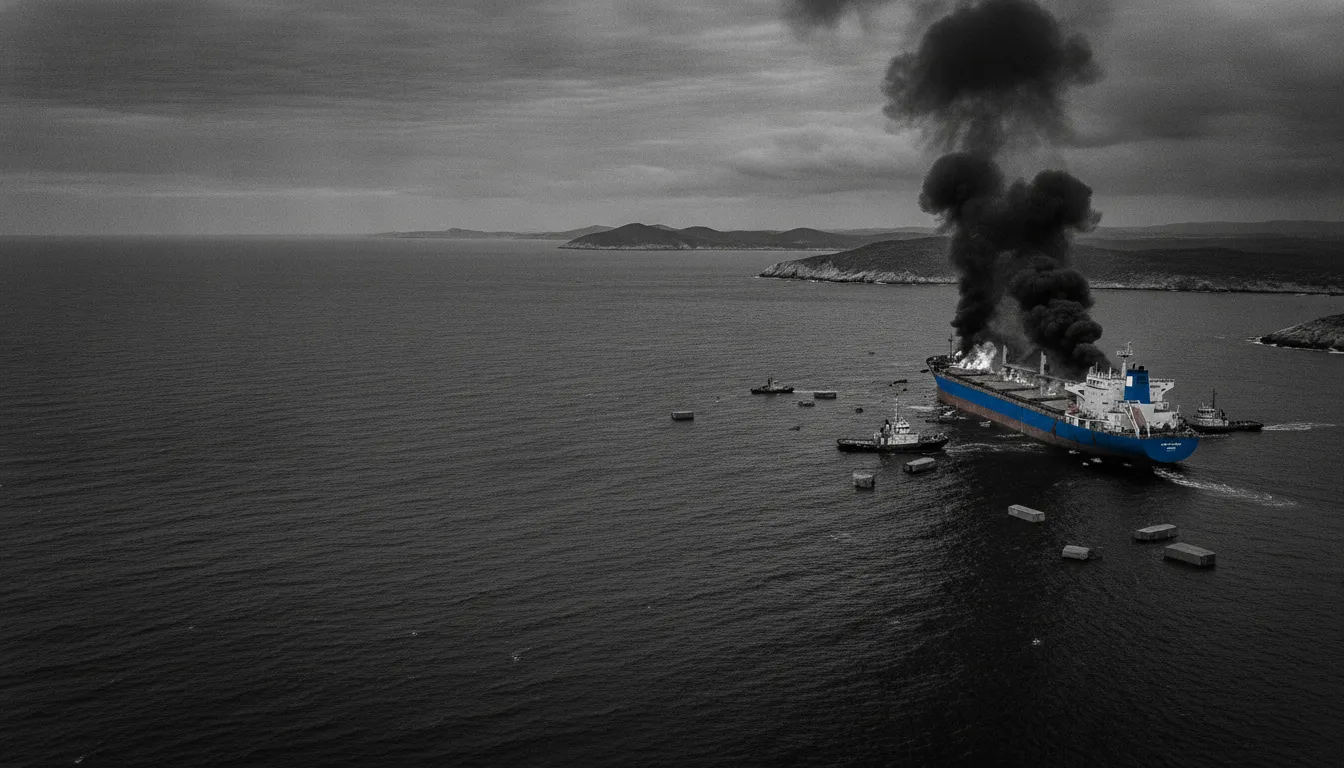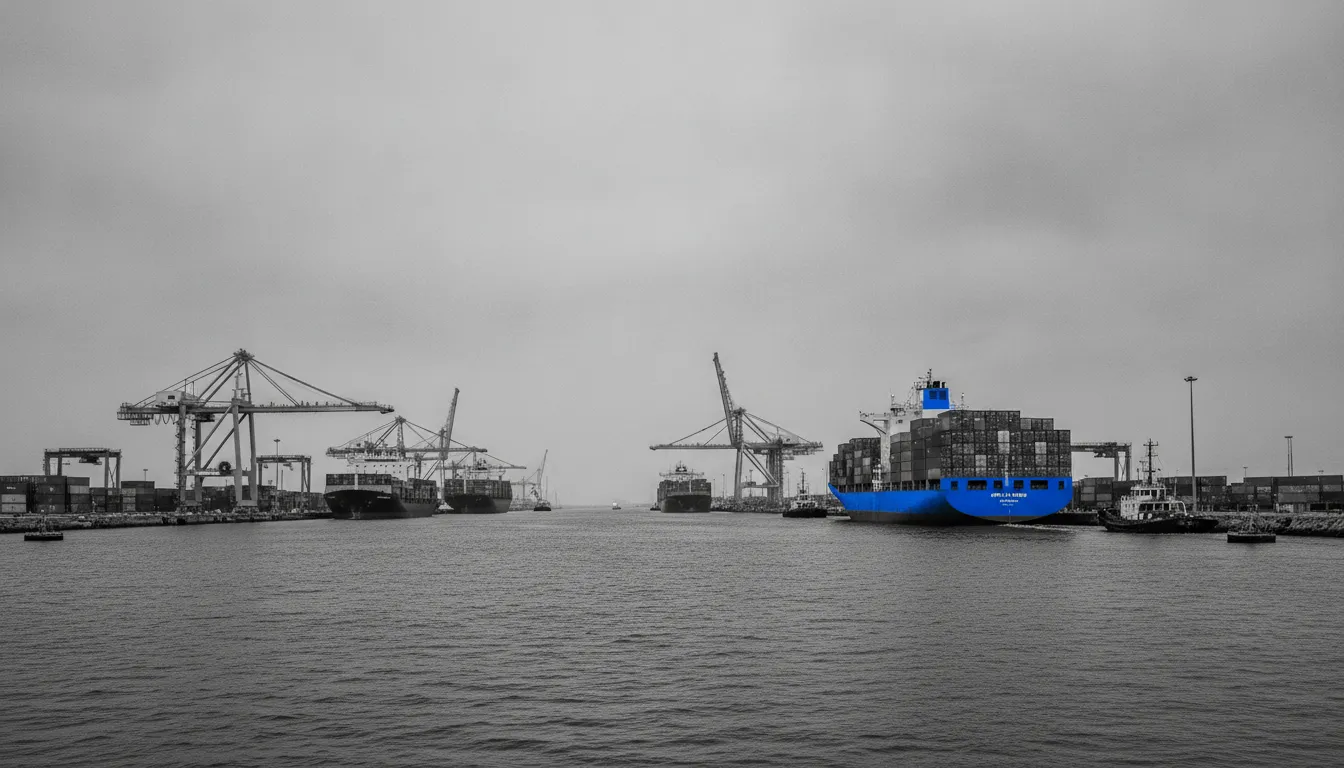
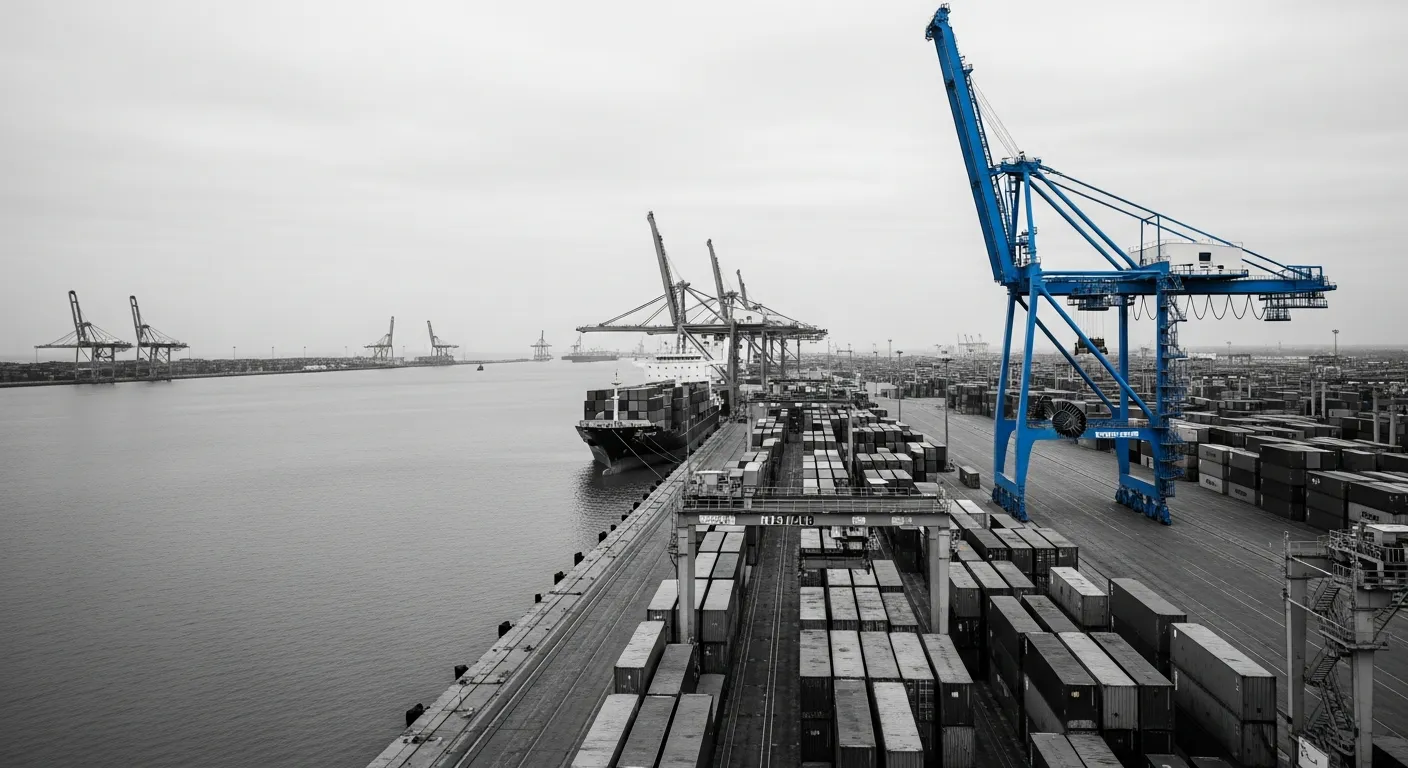
"Vessel turnaround times are extended to 7–10 days, with yard utilisation at critical levels of around 93% and severe road congestion and urban traffic delaying cargo evacuation."
West African Bottleneck: Abidjan and Tema Locked in Congestion
The Port of Abidjan, Côte d'Ivoire, has emerged as West Africa's primary congestion flashpoint. As of late June 2026, the port's 7-day average vessel waiting time stood at 8.56 days, with vessel turnaround times extending to 7–10 days and yard utilisation reaching critical levels near 93%. High container volumes, road congestion, power outages, and terminal crane maintenance issues remain persistent operational constraints. These delays have proved significant enough that major shipping lines have introduced Port Congestion Surcharges; CMA CGM, for instance, announced a surcharge of USD 300 per TEU effective 8 June 2026, reflecting the economic cost imposed by extended dwell periods.
The Ghana Ports Authority reported that Tema's 7-day average vessel waiting time stood at 5.83 days as of late June 2026. Although lower than Abidjan, Tema faces ongoing operational challenges. Crane outages, berth constraints, and yard congestion continue to impact vessel schedules, with turnaround times averaging five days and extending to seven days for off-window vessels. Despite Tema's historical reputation as West Africa's best-performing container terminal, the current infrastructure bottleneck is forcing carriers to report schedule amendments and berth substitutions. Terminal operators have begun deploying additional rubber-tyred gantries (RTGs) and ship-to-shore cranes, but this remedial work itself introduces short-term capacity constraints during installation phases.
Why Abidjan Remains the Regional Chokepoint
Abidjan's traffic volumes reflect its role as a critical transhipment hub for West Africa. Heavy import flows, regional transhipment demand, and insufficient inland evacuation capacity have compounded the congestion cascade. The port handles approximately 93% yard utilisation, with cargo remaining landlocked due to delayed truck despatch, security checkpoints on urban routes, and intermittent gate closures. The combination of weather disruptions, labour constraints at the terminal, and insufficient empty container repositioning creates a self-reinforcing congestion spiral. Ship operators now face queuing periods that stretch beyond their scheduled service windows, resulting in cascading delays across the region's feeder networks.
Recent infrastructure investments, including new crane commissions, have not yet translated into sustained capacity gains. The port's crane deployment has been offset by equipment maintenance cycles, road-side congestion, and electrical supply disruptions that periodically suspend terminal operations. For procurement professionals working with West African distribution networks, this persistent bottleneck means that supply windows for critical inventory (spare parts, consumables, provisions) must now account for 8–10 day port delays plus additional hinterland transit time, shifting effective lead-time requirements upstream.
East African Diversion: Dar es Salaam's Rapid Absorption of Rerouted Traffic
The Port of Dar es Salaam, Tanzania, has experienced a marked shift in regional traffic patterns. As of late June 2026, the port reported a 7-day average vessel waiting time of 3.5 days, significantly lower than both Abidjan and Tema. However, this headline figure masks underlying congestion pressure from cargo diversions originating at the Port of Mombasa, Kenya. Cargo volumes destined for landlocked countries—Rwanda, Malawi, Zambia, and the Democratic Republic of Congo—have increasingly routed through Dar es Salaam following Mombasa's operational constraints. In 2024/25, Dar es Salaam achieved 27.7 million tonnes of throughput, a 16.2% increase from the previous year, whilst simultaneously handling over 70% of Rwanda's imports and substantial transit loads for the Copperbelt region.
The Tanzania Ports Authority invested USD 421 million in infrastructure modernisation, deepening berths to 14.5 metres and deploying new gantry cranes capable of handling 30 containers per hour—compared to 18 with previous equipment. Vessel turnaround time has dropped from an average of 10 days to approximately 3 days. Nevertheless, the rapid growth in throughput has begun to strain capacity; operational reports indicate an average of 20 vessels waiting offshore each day, with berth limitations constraining simultaneous berthing. Tanzania's port expansion roadmap targets 30+ million tonnes annual capacity and plans to increase total berths from 12 to 22, including four new berths numbered 12–15, to accommodate ongoing diversions and regional demand.
Mombasa's Competitive Pressure and Regional Market Share Loss
The Port of Mombasa experienced 7-day average vessel waiting times of 5.33 days as of late June 2026, with persistent congestion, vessel queues, and high yard utilisation continuing to impact operations. Kenya Ports Authority reported that equipment imbalances, customs clearance delays, flood-damaged road infrastructure, and truck shortages are restricting throughput and inland cargo movements. Mombasa's 2025 throughput reached 45.45 million tonnes with container volumes at 2.11 million TEUs, representing a 10.9% increase year-on-year, but its regional market share has faced documented pressure. Uganda has shifted a significant portion of petroleum imports through Dar es Salaam, driven by faster turnaround, lower storage costs, and improved efficiency metrics. Rwanda and Malawi have similarly diversified away from Mombasa toward Dar es Salaam, signalling a structural rebalancing of East African gateway preferences.
KPA's competitive response has included extended free storage periods—extended from 9 to 15 days in 2023, with 30-day free periods at the Naivasha Inland Container Depot—and ongoing infrastructure investments including a USD 31.5 million gantry crane procurement and Berth 19B expansion with 300,000 TEU capacity. However, Mombasa's congestion profile remains elevated, with customs bottlenecks and truck driver disruptions continuing to extend cargo dwell times and increase demurrage risk. For regional procurement teams, Mombasa's reliability has become unpredictable, necessitating contingency routing through secondary gateways.
Multi-Gateway Procurement Strategy: The New Operating Model
Ship suppliers and procurement professionals now face a fundamental shift in inventory planning. The cascade of delays across West African and East African gateways means that single-port strategies no longer mitigate supply chain risk. Organisations working with vessel operations across West Africa increasingly pre-position inventory at Tema and alternative secondary ports (such as Cotonou and Casablanca) to offset Abidjan's extended dwell times. In East Africa, suppliers are establishing parallel supply windows through both Mombasa and Dar es Salaam, with preference shifting toward Dar es Salaam for landlocked-nation-destined cargo and for regional transhipment feeds. This geographical diversification requires dual relationships with freight forwarders, customs brokers, and inland logistics providers at multiple ports, increasing operational complexity but reducing single-port dependency.
Lead-time planning must now incorporate a 7–10 day port delay buffer as a baseline assumption for West African gateways and 3–5 day contingency buffers for East African ports experiencing rapid traffic absorption. Organisations procuring fuel, spare parts, provisions, and crew supplies must submit orders 10–14 days before required delivery, rather than the historical 5–7 day window. This compressed procurement window demands earlier demand signal visibility, more frequent order cycles, and greater reliance on just-in-time supply partnerships that can meet accelerated delivery requirements. Suppliers capable of maintaining redundant stock positions at multiple African hubs, or those with rapid replenishment networks, will command competitive premium positioning as vessel operators seek to mitigate delay-related operational risk.
Looking Forward: Infrastructure Investment, Tariff Reforms, and Operational Discipline
Dar es Salaam's success in reducing vessel turnaround times reflects the tangible benefits of coordinated infrastructure investment and private-sector terminal management. The Tanzania Ports Authority reports that operating costs have fallen approximately 57% following private operator involvement, with profit margins rising from 66% to 78%, suggesting that efficiency gains can be achieved without prohibitive public investment cycles. The port's updated tariff structure—published 9 January 2026—and the recent launch of upgraded customs systems (NTANCIS) in January 2025 have further supported operational discipline and cargo velocity. For West African ports, similar structural reforms—including private terminal operator involvement, customs digitisation, and inland logistics coordination—remain essential to break the current congestion cycle. CMA CGM's surcharge announcements, whilst economically punitive for shippers, reflect carrier acknowledgement that port-side infrastructure and operational execution remain the binding constraint on service reliability in these gateways.