
"By the time we complete the expansion next year, we expect to import over two million tonnes of raw materials through Port Harcourt annually. To achieve that, we need a modern terminal and efficient facilities."
— Abdul Samad Rabiu, Chairman, BUA Group
BUA's Expansion: Scale and Strategic Intent
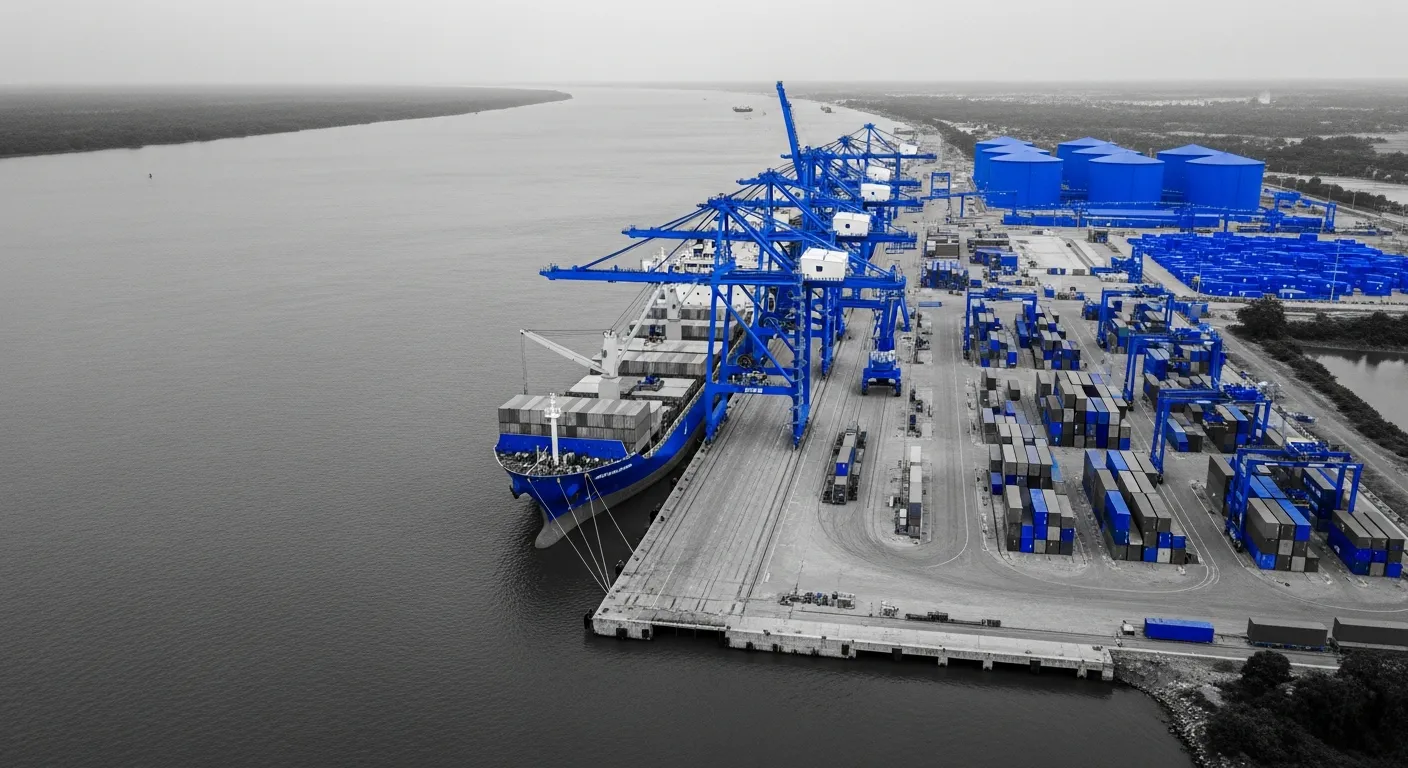
On 31 July 2026, Abdul Samad Rabiu, Chairman of BUA Group, visited the Nigerian Ports Authority (NPA) headquarters in Lagos to brief Managing Director Dr Abukakar Dantsoho on the progress of the $85 million Port Harcourt expansion. The project, already at an advanced stage, is expected to reach completion in 2027. The terminal will add approximately 600 metres of quay frontage, substantially increasing cargo-handling capacity. This investment is not speculative: it directly supports BUA Foods' rapid expansion in food processing, including sugar, flour, pasta, noodles and edible oil lines, all dependent on imported raw materials.
The scale matters. Once operational, the expanded facility is projected to handle 6–7 vessels per month, converting Port Harcourt into a dedicated gateway for one of West Africa's largest integrated agribusiness operations. Rabiu stressed that prior terminal acquisition rights had once been revoked but were restored under the current NPA administration, highlighting both the operational risks and political prerequisites of major port infrastructure bets in Nigeria. The project now enjoys explicit institutional backing, a critical signal to other private investors eyeing eastern port opportunities.
NPA Forecasts Double-Digit Cargo Growth
The Nigerian Ports Authority has projected that the BUA expansion could drive between 13 and 14 per cent growth in cargo throughput and revenue. Dr Dantsoho, the NPA Managing Director, described the investment as "a major step towards strengthening Nigeria's eastern ports and improving national trade capacity." In a broader context, Nigeria's maritime sector has already recorded significant momentum: total cargo throughput surged by 24.8 per cent in 2025, rising from 103.6 million metric tonnes in 2024 to 129.3 million metric tonnes. That uptick reflects reforms in port automation, digital trade procedures and private-sector participation.
For ship suppliers and procurement teams operating across West Africa, NPA growth forecasts suggest expanded sourcing opportunities in Port Harcourt. When larger volumes of raw materials flow through a single dedicated terminal, the economics of supply clustering improve. Chandlers, spare-parts distributors and provisioning agents already operating in the region can anticipate increased vessel traffic and, by extension, more frequent requests for marine supplies, crew services and technical support.
Competitive Pressure from Tema, Abidjan and Lomé
Port Harcourt's expansion occurs within intense West African port competition. The Port of Abidjan handled 46.6 million metric tonnes in 2025, up 16.1 per cent from 2024, cementing its position as West Africa's leading port by overall volume. However, Abidjan's dominance is narrow: it trails regional rivals in container traffic. Tema in Ghana and Lomé in Togo compete fiercely for transshipment business, with Tema processing 1.2 million TEUs in 2022 post-expansion and Abidjan and Lomé each capable of processing around 2.1–2.2 million TEU annually.
Port Harcourt historically operated in the shadow of Lagos, Nigeria's dominant cargo hub. The BUA terminal represents a deliberate decentralisation play—both by the conglomerate and by the NPA itself, which is repositioning eastern ports (Port Harcourt, Onne, Warri, Calabar) to relieve congestion in Lagos. By offering modern, dedicated cargo infrastructure outside the competitive scrum of Lagos and the regional heavyweights, Port Harcourt can capture price-sensitive sourcing flows and regional Sahel-bound traffic that previously routed through Tema or Abidjan.
Ship Supply and Procurement Gateway for Eastern Nigeria
The expansion reshapes procurement logistics for maritime operators serving West Africa. Buyers sourcing provisions, spare parts and stores for vessels transiting the Gulf of Guinea have historically relied on Lagos-based suppliers or regional alternatives in Accra, Abidjan and Cotonou. A modern, efficient Port Harcourt terminal creates a new procurement node, particularly for operators focused on eastern Nigeria, the Niger Delta and the Cameroon-Nigeria corridor.
BUA's own supply chain—requiring dedicated berths for raw-material imports—will drive ancillary demand: bunkering services, cargo handling, port agency, documentation and customs brokerage. Smaller suppliers can establish local depots at or near the terminal, reducing supply response times for nearby manufacturing zones in Port Harcourt, Calabar and along the Cross River corridor. The barge shuttle service already linking Onne to Port Harcourt (operated by WACT and Max Shipping Services) signals that feeder connectivity is being addressed, further de-risking investment in the facility.
Broader Port Modernisation Momentum and NPA Strategy
The BUA expansion sits within a larger NPA modernisation agenda. In 2025, the Authority secured government approval for Nigeria's first comprehensive port upgrade in over 50 years. Terminal rehabilitation at Apapa, Tin Can Island, Rivers, Onne, Warri and Calabar is underway or planned. The NPA generated N894.86 billion in revenue in 2024 and projects N1.28 trillion for 2025, revenue now reinvested into infrastructure and digital systems. Federal investment priorities—strengthening eastern ports, reducing Lagos congestion, and positioning Nigeria as a regional logistics hub—align squarely with BUA's private investment.
For ship suppliers and freight buyers, this alignment matters. It signals institutional stability, reduced permitting risk, and commitment to infrastructure that benefits all terminal users, not just BUA Foods. Apapa and Tin Can Island ports in Lagos were recently ranked by S&P and the World Bank among the 20 most-improved ports globally, validating the NPA's reform credibility. Port Harcourt's expansion, backed by private capital and public authority support, extends that credibility eastward.
What This Means for You
The $85 million BUA expansion fundamentally reshapes supply-chain geography for West African maritime operators. Ship suppliers and procurement teams must now account for Port Harcourt as a viable, modern alternative to Tema, Abidjan and Lomé for sourcing routes targeting Nigeria's eastern industrial zones, the Niger Delta and trans-Sahel corridors. The terminal's capacity (600 metres quay, 2+ million tonnes annually) and projected completion in 2027 offer both opportunity and timing risk: early-mover suppliers establishing local presence will capture premium margins and first-call relationships with inbound vessel operators. Conversely, suppliers still dependent on Lagos infrastructure face margin pressure from growing eastern competition. The NPA's 13–14 per cent growth forecast and Nigeria's actual 24.8 per cent 2025 cargo surge indicate that demand for port-adjacent services—bunkering, provisions, repairs, agency—will rise sharply. Strategic positioning in Port Harcourt over the next 12–18 months will determine whether your supply business captures this momentum or cedes it to local and regional competitors already moving in.


