
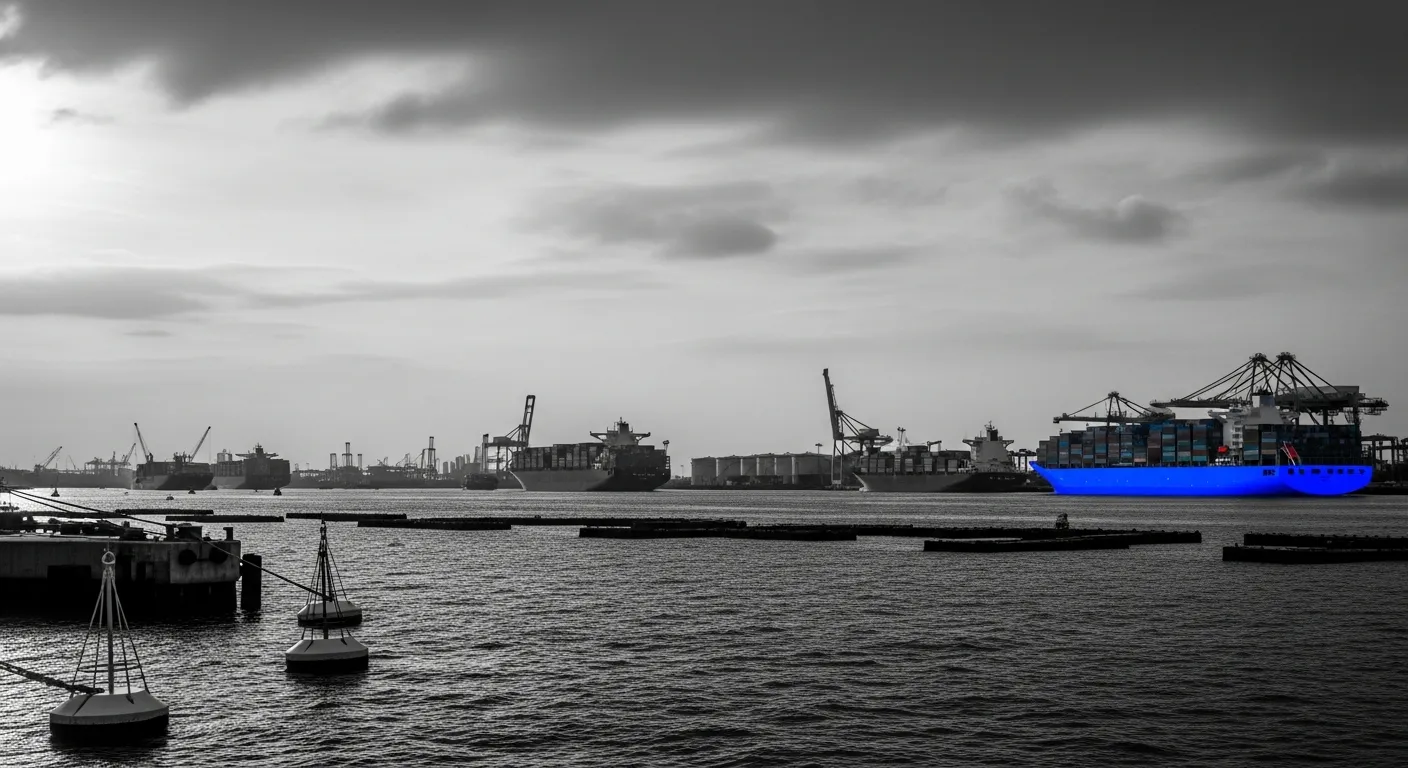
"VLSFO availability in Singapore remains tight, with suppliers recommending lead times of 12–24 days, compared with 16–20 days last week." – ENGINE, 6 August 2026
Singapore Inventories: 15–20% Shortfall vs. Pre-Conflict Baseline
Enterprise Singapore data tells a stark story. Fuel oil stocks stood at approximately 23 million barrels in March 2026, but declined to below 18 million barrels by June and remained below 19 million barrels in July. The gap persists not because of unexpected demand spikes, but because the Strait of Hormuz—through which a substantial portion of Singapore's historical bunker cargo flows—remains disrupted by renewed US–Iran hostilities that began in late February 2026. Cargo arrivals remain constrained, leaving storage depleted and availability squeezed.
For buyers and operators accustomed to nominating bunker lifts 5–7 days in advance, this inventory squeeze translates directly into procurement risk. Suppliers have begun prioritising existing contractual commitments over spot inquiries and are reluctant to accept new tenders. Small parcels under 500 metric tonnes now command additional premiums. The port's residual fuel oil inventory level—the primary feedstock for VLSFO, HSFO, and blended fuels—has not recovered despite six months of operational exposure since March.
Lead-Time Expansion: From 14–19 Days to 12–24 Days in Four Weeks
The acceleration is noteworthy. On 22 July 2026, ENGINE reported VLSFO lead times at 14–19 days. By 4 August, the range had widened to 12–24 days—a 40% upper-bound extension within two weeks. HSFO tightened similarly, moving from 12–15 days to 10–24 days. LSMGO, traditionally more available, moved from 5–10 days to 10–12 days. The widening spread (now 12 days of variance) reflects two competing dynamics: some suppliers are attempting to release stock faster to redeploy cash in a volatile price environment, while others are hoarding to secure inventory during the supply crunch.
Parallel tightness across East Asian hubs reinforces the pattern. Zhoushan recorded VLSFO lead times at approximately 12 days as of early August, up from 9 days two weeks prior. South Korea's Busan, Ulsan, Masan, Onsan, Yeosu and Kwangyang ports recorded 3–10-day lead times for VLSFO in June, but conditions have deteriorated. Port Klang in Malaysia maintained moderate availability for smaller prompt requirements, though tightness persists for LSMGO and HSFO. The regional tightness indicates this is not a Singapore-specific anomaly but a structural supply-chain compression across Asia-Pacific.
Stratified Market Response: Contractual Priority, Spot Rationing, and Risk Repricing
Supplier behaviour has visibly stratified. Large integrated majors—Shell, Vitol, BP—are fulfilling existing direct-sale contracts with major container lines and bulk operators first, typically locked in at negotiated rates covering 6–12-month periods. Spot and broker markets, by contrast, are experiencing cascading availability and bid-offer widening. Traders have reported that distributors are reducing large purchasing commitments due to violent price swings linked to Persian Gulf supply disruption risk.
The practical result is a two-tier market. Operators with established contracts secure supply at predictable lead times. Newcomers and smaller operators face either extended waiting periods or spot premiums. Additionally, suppliers are increasingly skeptical about market recovery timelines. Since negotiations through mid-August 2026 are ongoing regarding Strait of Hormuz normalisation, many are unwilling to forward-book large volumes at fixed rates. This hesitancy further reduces available spot capacity and raises the effective cost of procurement flexibility for uncontracted buyers.
Regional Hub Diversification: Port Klang, Zhoushan, and Sri Lanka as Contingency Outlets
Procurement teams must now treat Singapore as a primary hub of choice, not default. Port Klang in Malaysia captures spillover demand from Singapore anchorage congestion. As of June 2026, VLSFO availability remained broadly stable there, particularly for smaller prompt requirements, though LSMGO and HSFO remained under pressure. Zhoushan—the fourth-largest bunkering port globally—offers competitive VLSFO pricing and is expanding LNG and green methanol infrastructure. Chinese government support for VLSFO export quotas and tax incentives on bunkers (reversed in February 2020) have incentivised local refineries to produce and supply Zhoushan at parity or discount levels to Singapore.
Sri Lanka's ports (Colombo and Hambantota) offer adequate stocks of all major bunker fuel grades with stable lead times of approximately 7 days as of late July, substantially shorter than Singapore. For vessels on India–Africa routes or trans-Indian Ocean services, West Coast Indian ports (Kandla, Sikka, Pipavav) offer VLSFO and LSMGO in 3–4 days. The monsoon season creates operational disruption risk (weather-related delays forecast July–August), but availability outpaces Singapore's current squeeze. Diversification across these hubs requires forward route planning and updated logistics coordination, but it directly mitigates procurement risk during the Q3 2026 supply tightness.
Forward Contracting and Extended Planning Windows: Shifting from Spot to Procurement Cycles
The operational imperative is clear: shift procurement timelines from 5–7-day nomination to 12–21-day forward purchase windows. Direct suppliers (Shell, Vitol, Inchcape Shipping Services, Integr8) are actively engaging operators on structured quarterly and semi-annual contracts to reduce bid-offer spreads and secure allocations. Container lines and bulk operators already managing 50,000+ tonnes per month have begun locking in 60–70% of estimated consumption via forward contracts, covering delivery windows of 3–6 months ahead. Spot purchases now cover only residual and contingency volumes.
For smaller operators and one-off voyages, this represents a material operational shift. Procurement teams must forecast fuel requirements further in advance, coordinate with vessels for earlier nomination timelines, and build buffer inventory on board where vessel stability and regulations permit. Digital procurement platforms (mentioned in sourcing literature for 2026) are compressing price discovery cycles from days to hours, enabling faster deal closure once commercial terms align. Early engagement with suppliers—nominating 14–21 days ahead rather than 5–7 days—is now a competitive prerequisite, not a courtesy.
What This Means for You: Risk Mitigation and Procurement Roadmap
Buyers and shipowners must act now on three fronts. First, audit current fuel consumption patterns and nominate 14–21-day forward forecasts to primary suppliers, locking in quarterly or semi-annual allocations at published rate cards to avoid spot volatility and allocation rationing. Second, conduct route-by-route contingency mapping: identify fallback hubs (Zhoushan, Port Klang, Sri Lanka, West Coast India) and pre-qualify suppliers at each, including quality assurance protocols (testing, ISO 8217:2022 compliance) to avoid fuel specification disputes during supply crunch. Third, revise procurement KPIs—moving from lead-time averages to worst-case resilience metrics. A 24-day lead-time window in September 2026 is foreseeable; plan vessel schedules and bunker nominations accordingly. Suppliers prioritise long-term partners with predictable demand and early coordination. Early, transparent communication with procurement partners now directly translates to allocation security and cost predictability in Q3 and Q4 2026.


