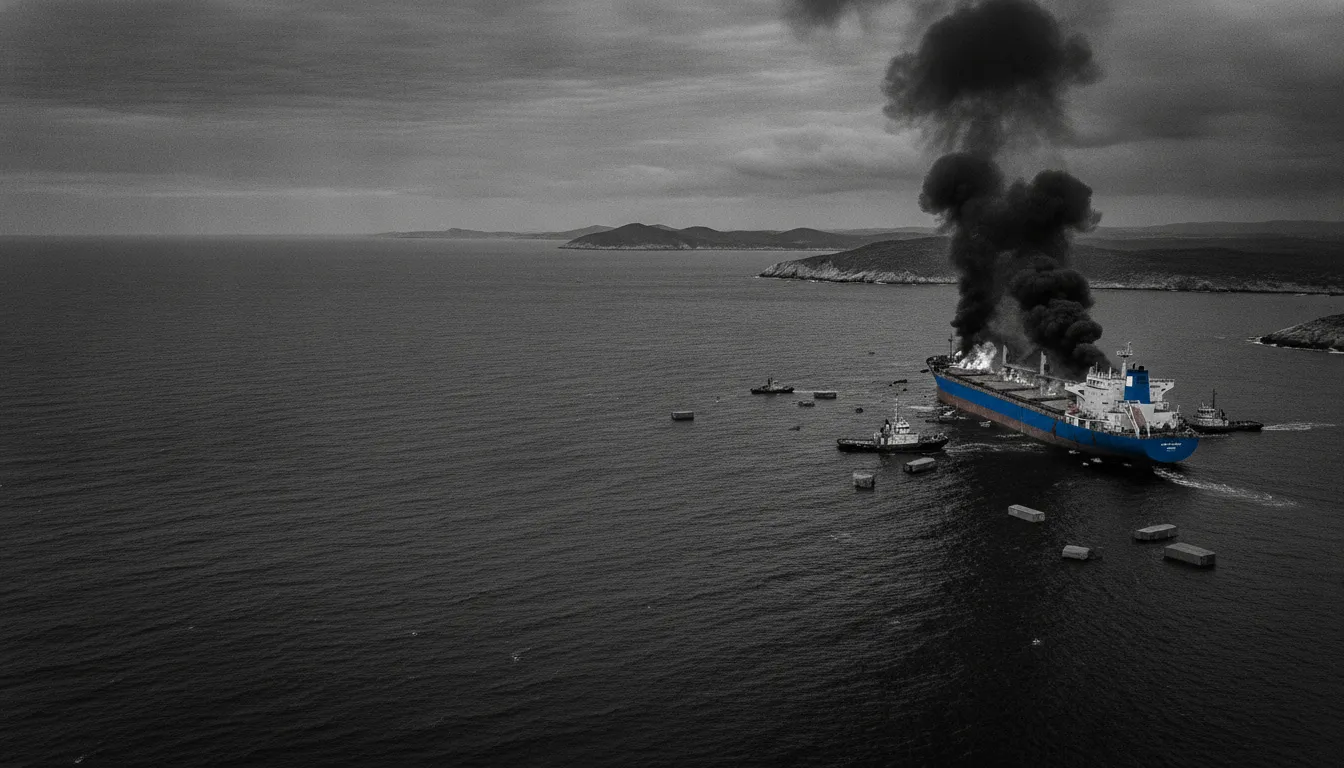
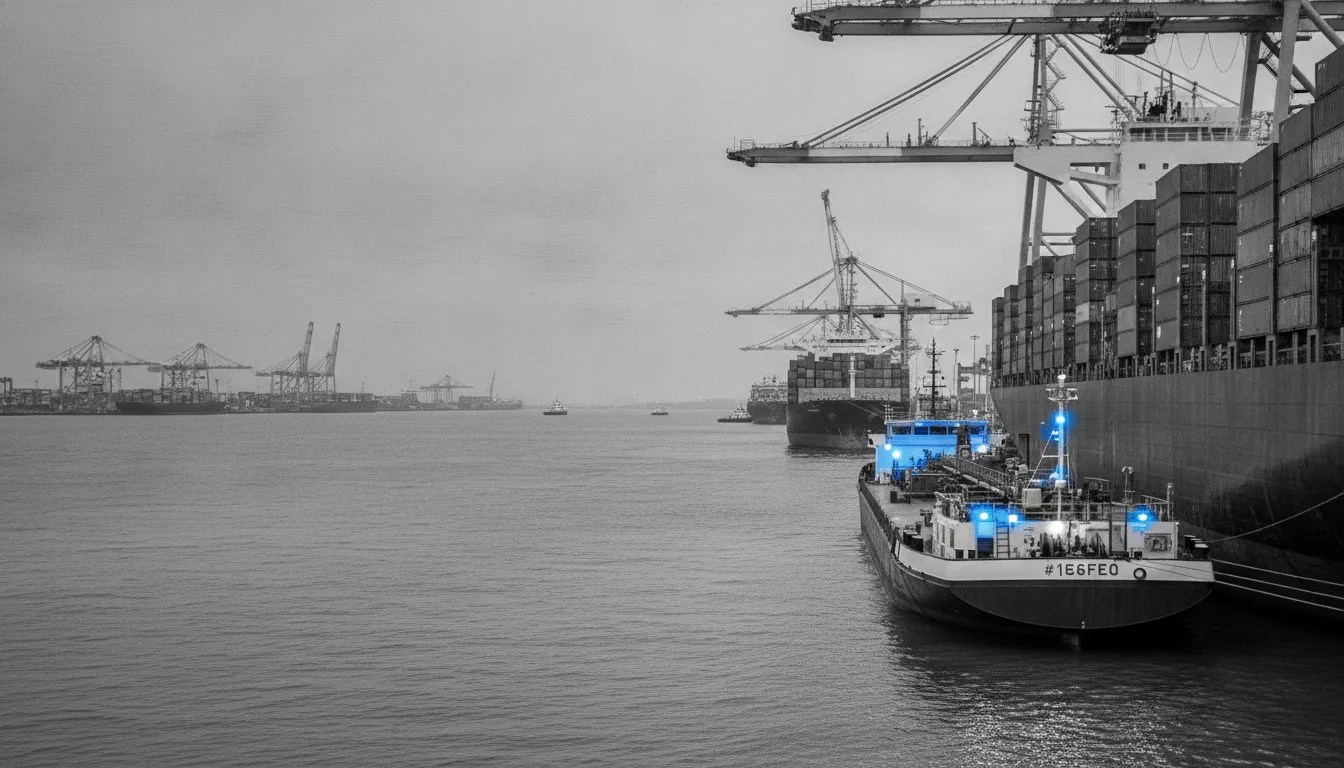
"Ships are struggling to refuel. Lead times for marine bunker fuel are stretching across Europe and Africa. Vessels are queuing at chokepoints like the Strait of Gibraltar just to top up their tanks."
ARA Availability Compressed to 5–7 Days
Northwest Europe's Amsterdam–Rotterdam–Antwerp complex, traditionally the world's most liquid bunker hub, has tightened significantly. As of mid-October 2026, fuel availability for prompt supplies is tight, and traders report buyers must book VLSFO and HSFO stems 5–7 days in advance to get competitive offers from suppliers. This is a substantial compression from mid-May 2026, when lead times stood at 4–5 days. Hamburg offers marginally better conditions, with five days typical, but this offers little comfort for vessels on tight schedules.
The compression reflects two simultaneous pressures: loading delays at ARA refineries and disrupted blending of VLSFO and HSFO components. Bunker supplier Peninsula has observed increasing strain in the ARA market, reporting that tighter availability of blending components is impacting the ability to produce on-spec fuels consistently. LSMGO deliveries require approximately six days of notice, underscoring the region-wide tightness.
Durban and Port Louis Shift to 10–15 Day Windows
Southern African bunkering hubs face far more severe constraints. In Durban, South Africa, fuel availability is extremely tight as demand picks up across the country's ports. Buyers must book 10–15 days in advance for bunker supplies according to traders sourced by ENGINE as of 14 October. Port Louis, Mauritius, is even more constrained: buyers are now advised to place orders 10–14 days ahead to secure supplies, with availability described as very tight across all fuel grades.
This 10–15 day window represents a fundamental shift in procurement planning for vessels transiting the Indian Ocean or anchoring in southern African waters. The lead times have held consistently since at least May 2026, signalling structural tightness rather than temporary disruption. For regional supply chains—particularly those servicing African trade lanes and Indian Ocean shipping—this shift demands immediate revision of bunker procurement calendars and advance scheduling with suppliers.
Mediterranean and Gibraltar Congestion Creates Supplier Delays
The Strait of Gibraltar and wider Mediterranean corridor are experiencing acute congestion. As of mid-October, Gibraltar shows prompt availability remains tight, with buyers recommended 7–10 days' lead time for good supplier coverage. Vessel queuing is active: approximately 13 vessels were queued for bunkering on 14 October due to barges not being ready. Port agent MH Bland reported suppliers are delayed on deliveries by 24 hours, while others run 16–18 hours late on supplies. Neighbouring Algeciras suppliers face delays of 2–12 hours. Weather disruption—wind gusts above 25 knots and waves higher than 1.5 metres—has further restricted bunkering operations.
In Las Palmas, the Canary Islands bunkering hub serving transatlantic traffic, prompt fuel availability is tight; buyers are advised lead times of 7–8 days to secure fuel. Barcelona requires around one week for deliveries of any fuel grade. This Mediterranean-wide tightness reflects both local demand and the onward cascading effect of ARA supply constraints pushing vessel demand toward southern European alternatives.
East Asian VLSFO Tightness Driven by Middle East Disruption
Singapore's bunker market remains tight despite average demand, with VLSFO lead times extending to 11–18 days as of 13 October. Most suppliers are holding low inventories, and delays in cargo arrivals amid the ongoing Middle East conflict have further tightened availability. HSFO lead times have also increased to 11–17 days. The tightness is direct: disruption around the Strait of Hormuz—where the 2026 conflict has restricted nearly all traffic—has cut off conventional Middle Eastern supply flows, forcing Singapore-based and regional refiners to reduce output of VLSFO blending components. A Middle East-based trader noted: "The situation is still unstable [in the Middle East], with increasing security risks, vessel attacks and separate incidents affecting commercial shipping."
In South Korea, bunker availability has tightened across southern ports—Busan, Ulsan, Masan, Onsan, Yeosu and Kwangyang—with lead times for all major grades increasing to 7–10 days from 4–6 days a week earlier. Port Klang in Malaysia shows constrained supply across multiple grades, with prompt VLSFO availability particularly tight. This regional strain cascades toward Indian Ocean and Red Sea routes, directly impacting vessels planning Cape of Good Hope transits or calling at African ports.
Dual-Route Congestion and Hormuz-Fed Supply Collapse
The supply-side foundation of the current lead-time crunch is the 2026 Strait of Hormuz disruption. The International Energy Agency has characterised the closure as the "largest supply disruption in the history of the global oil market," with nearly 20 million barrels per day of crude and petroleum products normally moving through Hormuz now stopped. Refiners are rationing blending components for VLSFO and HSFO, particularly in Asia and the Gulf itself. Fujairah, the world's third-largest bunkering hub situated outside Hormuz, has seen inventories recover partially but remain well below pre-war levels: September onshore residual fuel inventories averaged 4.5 million barrels per week, down from pre-war levels of approximately 9 million barrels per week.
Simultaneously, vessel rerouting around the Cape of Good Hope via southern Africa has displaced supply expectations. Vessels avoiding the Suez Canal and Bab el-Mandeb Strait are now calling in greater numbers at African hubs—Durban, Port Louis, Lomo (Togo)—which lack the refining capacity and logistical infrastructure to handle the surge. This dual-route compression—Suez/Red Sea disruption pushing traffic to the Cape and Hormuz closure restricting global VLSFO production—has created a scissors-cut squeeze on African and Mediterranean hubs. Togo's Lomo requires 5–7 days lead time for VLSFO and LSMGO, reflecting the broader West African tightness.
Procurement Teams: Lock Regional Strategies Now
For procurement managers and logistics teams, the October 2026 lead-time landscape demands immediate action. ARA remains the most reliable hub for prompt coverage, but the 5–7 day window is tight by historical standards and leaves no margin for carrier delays or scheduling conflicts. For vessels transiting to southern Africa or the Indian Ocean, booking 10–15 days in advance is now standard operating procedure—not contingency planning. Mediterranean callers must factor 7–10 days for Gibraltar/Algeciras coverage and 5–7 days for Las Palmas.
Suppliers report that B100 (biodiesel blends) in Rotterdam are trading at significant discounts to LSMGO, offering a cost-mitigation lever for compliant vessels. For those locked into premium VLSFO or HSFO, sourcing via Fujairah (despite elevated prices and tight VLSFO availability) or rotating East Asian supply chains offers alternatives, though both carry premium costs. The consensus from shipping trade sources is clear: the current tightness is structural, tied to Middle East geopolitics and Suez rerouting, and will persist through Q4 2026 and into 2027. Regional diversification is no longer optional; it is mandatory.