"Shipowners are facing an increasingly fragmented fuel market as disruptions triggered by the Middle East conflict raise concerns about the availability and quality of supply."
The October Sinkings: Scope and Severity
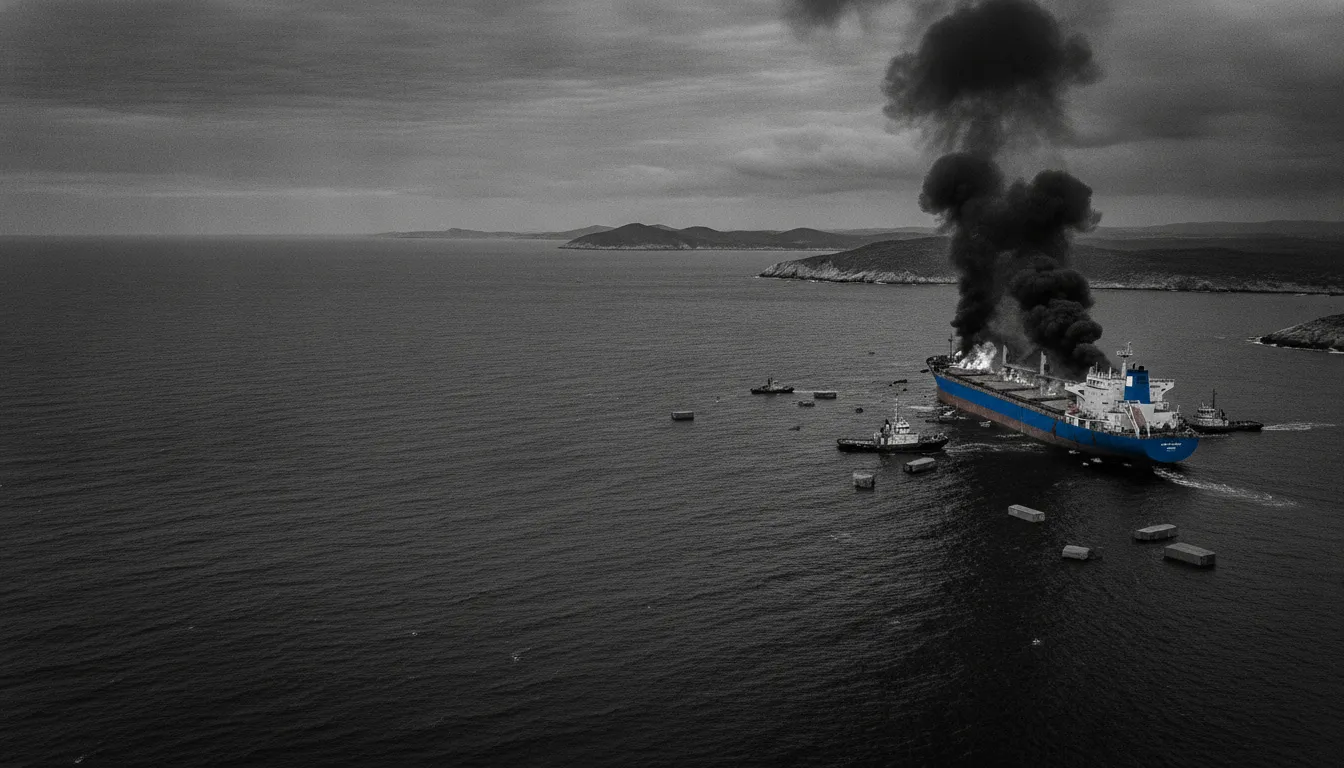
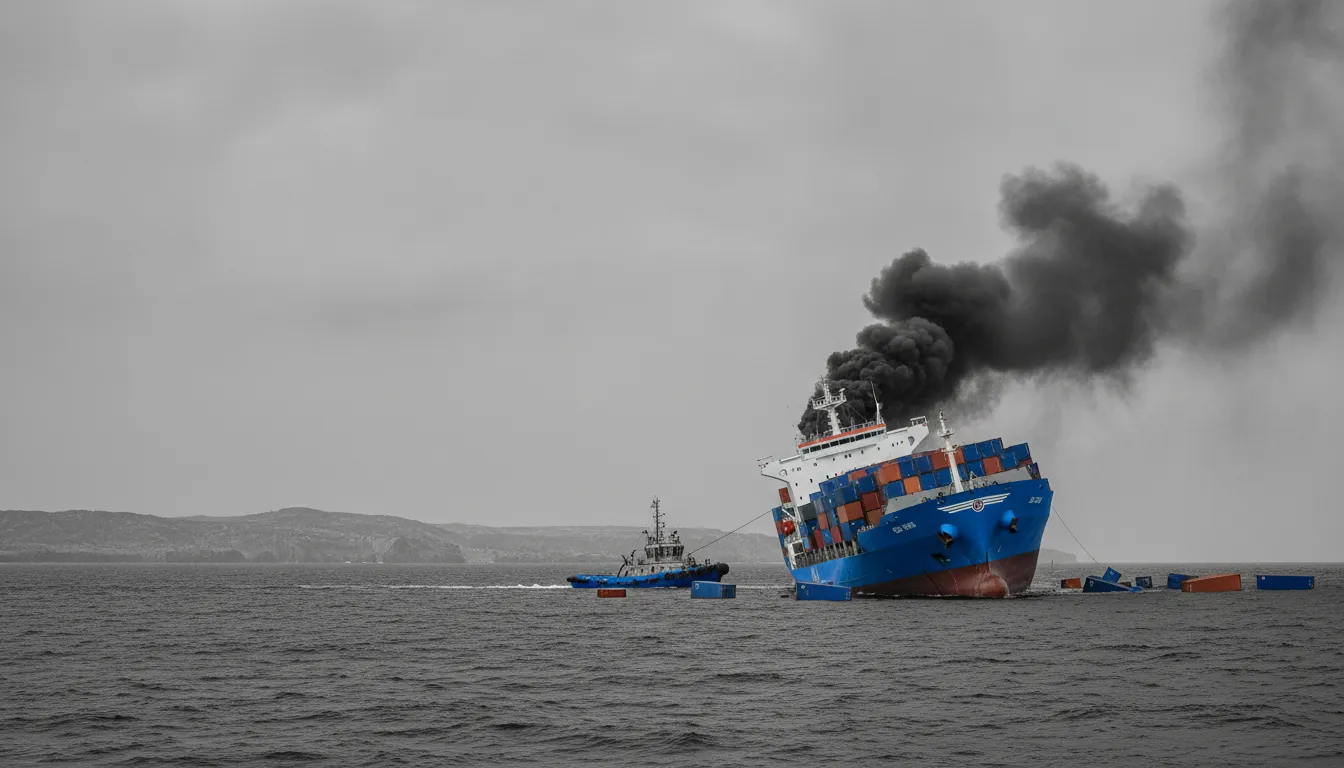
The GFS Pride, a Singapore-flagged container vessel operated by UAE-based GFS Ship Management FZE, was attacked on 13 October whilst transiting the Strait of Hormuz eastbound. The vessel carried 2,824 TEU and a cargo of over 2,500 containers, representing typical small-to-mid-range containership operations. After being struck by unknown projectiles, it caught fire and sank; all 21 crew members were evacuated safely by regional maritime authorities. The Antigua and Barbuda-flagged Cape Dao subsequently sank on 14 October, weeks after being struck on 23 September; one Indian crew member was killed and the remainder evacuated. A second Singapore-registered vessel, the GFS Giselle, sustained hull damage in the same wave but reached safe anchorage with all 22 crew safe.
The sinkings represent the second and third large commercial losses during the 2026 Iran war conflict, according to the International Maritime Organization (IMO). More than 20 vessels, primarily oil tankers but increasingly container and general cargo ships, have come under attack this month in the Hormuz, Persian Gulf and Gulf of Oman region. The Maritime Joint Information Center (MJIC) classified the threat level in the Strait of Hormuz as "severe." Six separate vessels were struck in a single day on 11 October alone, demonstrating the accelerating pace and tactical shift toward all commercial shipping classes. These incidents mark a dramatic acceleration from baseline conditions: before the conflict, approximately 130–140 vessels transited the Strait daily under normal commercial patterns.
Transit Paralysis and the Immediate Supply Shock
Current intelligence reports cite IMF PortWatch data showing daily ship transits through Strait of Hormuz have plummeted from an 85-vessel baseline to just two, representing a 97% collapse in traffic flows. With 151 ships idling outside Hormuz awaiting safe passage and critical Saudi energy infrastructure damaged, the physical supply balance remains exceptionally fragile. Crude oil exports through the Strait averaged only 8.5 million barrels per day in the week ending 12 October, nearly 40% below normal pre-war levels according to Kpler analytics. The Strait remains the transit route for approximately one-fifth of global oil consumption and a significant share of liquefied natural gas exports, making this disruption a chokepoint crisis of historic proportions.
Over the same period, only approximately 20 older, smaller LNG carriers managed to navigate outbound from Hormuz, proving that Western naval escorts cannot guarantee commercial transit volumes through contested chokepoints. Iran has stepped up strikes in response to US blockade of its ports and tougher sanctions introduced in recent months, with one senior Iranian official warning that vessels "would be safe nowhere, even outside the Strait of Hormuz," signalling potential escalation beyond the waterway itself. The World Bank has described the broader conflict as a historic commodity-market shock, with April 2026 projections forecasting a 24% rise in average energy prices this year and a 16% increase in overall commodity prices.
Bunker Hub Fragmentation and Geographic Realignment
The closure of Hormuz has fundamentally altered the geography of bunkering demand and supply. Bunker Holding, the world's largest marine fuels firm by volume, confirmed in March 2026 that it is working on alternative bunker supply options outside the Arabian Gulf as escalating tensions affect vessel movements and insurance availability. Bunker Holding's Chief Operating Officer stated in October 2026 that the company expects annual volumes slightly below 2025 levels, reflecting the fragmented market environment caused by sustained Hormuz disruption.
Dan-Bunkering market reports from late March pointed to significantly increased activity at alternative ports including Port Louis, Durban and Walvis Bay as vessels considered circumnavigation routes and avoided higher-risk Gulf regions. The data revealed much higher demand than pre-crisis levels at Port Louis, selective fixing by suppliers in Durban, and tightening availability in Walvis Bay. Fujairah, the Middle East's largest bunkering hub on the UAE east coast and historically outside the Strait, experienced catastrophic demand collapse within the first weeks of the conflict, with Bunker One estimates suggesting the vast majority of port demand has migrated elsewhere as ships no longer enter the Gulf to refuel. A Bunker One executive confirmed that ships are no longer sailing into the Gulf refueling on alternative ocean routes, fundamentally restructuring established supply patterns developed over decades.
Route Diversions, Cost Escalation and Quality Risk
Vessels forced onto longer journeys around Africa and diverted to the Atlantic Basin to avoid escalating hostilities now cannot refuel at familiar ports. This geographic shift has turned alternative locations into so-called bunkering hubs and driven up fuel prices significantly. Regional disruptions are fragmenting bunker supply access globally, leaving some regions flush with inventory whilst others face acute shortages, adding approximately EUR 4.6 billion in additional costs to the industry since the war began according to tracking data.
Bunkering at less familiar ports exposes shipowners and operators to smaller or less reputable sellers, wider price disparities between locations, and potential quality compliance risks. Differences in fuel sourcing, access to on-specification feedstock and availability of support services create quality assurance challenges. Bunker availability has become particularly tight in Gibraltar, Las Palmas, Durban, Lome, and Lagos ports, with suppliers requiring seven to ten days' advance notice to prepare bunkering operations. South Africa's Durban port, acutely short of bunkers as container vessels continue rerouting around the Cape of Good Hope, exemplifies regional concentration pressure. This concern is familiar to the bunker sector: in high-price markets, buyers face pressure to accept unfamiliar counterparties, shorter notice periods or alternative specifications, increasing the importance of supplier vetting, representative sampling, independent testing and clearer contractual language on quality and delay.
Singapore's Expanded Role and Alternative Fuel Strategies
The Maritime and Port Authority of Singapore (MPA) announced on 14 October that it is expanding the world's largest bunkering port's ability to supply a wider range of fuels as shipping firms diversify fuel sources away from Gulf dependency. MPA will invite bids by end-2026 for licences to operate liquefied natural gas floating storage units (FSU) in Singapore anchorages, expanding storage capacity to meet rising LNG bunkering demand. Singapore is conducting its first ethanol bunkering operation at PSA's Pasir Panjang Terminal and has launched technical references setting safety and custody transfer standards for ammonia bunkering in partnership with Enterprise Singapore.
Longer disruptions force bunker hubs reliant on Gulf-linked flows to source from alternative markets. Singapore's inventories have built as authorities stockpile and shipowners delay purchases at elevated prices, but that buffer is expected to erode quickly, with several Singapore-based petrochemicals suppliers already issuing force majeure notices. The longer-term challenge for procurement teams and ship suppliers is whether the industry's supply chains, credit arrangements and risk-management systems are robust enough for a prolonged crisis. IMO Secretary-General Arsenio Dominguez told member states on 24 April that there was "no safe transit anywhere" in the Strait of Hormuz, with increased focus on diversification, alternative fuels, and longer-term structural changes in how bunker supply and demand are organised.
Procurement Strategy and Operational Resilience Going Forward
Shipowners and operators are now securing fuel earlier and tracking availability and lead times at key ports, recognising that risk is now as much about prompt access as about price alone. Vessel diversions are shifting fuel demand to other locations with unpredictable intensity, forcing procurement teams to maintain wider alternative port networks and extend lead times. The fragmentation means buyers must extend planning horizons, avoid trouble ports, and maintain contingency arrangements across multiple regional hubs simultaneously—a departure from the established Gulf-centric procurement model.
For marine fuel buyers and suppliers, the immediate concern remains price volatility, but the wider structural issue is whether supply chains, credit arrangements and risk-management systems remain robust under prolonged disruption. Supplier selection now demands heightened due diligence: margin compression—with typical profit margins no higher than 2% for competitive suppliers—means counterparties may reduce service quality or financial resilience under stress. The industry faces a critical transition: short-term emergency sourcing tactics must evolve into medium-term supply chain architecture that can absorb repeated geopolitical shocks whilst maintaining operational reliability and cost discipline across procurement, logistics and inventory management functions.