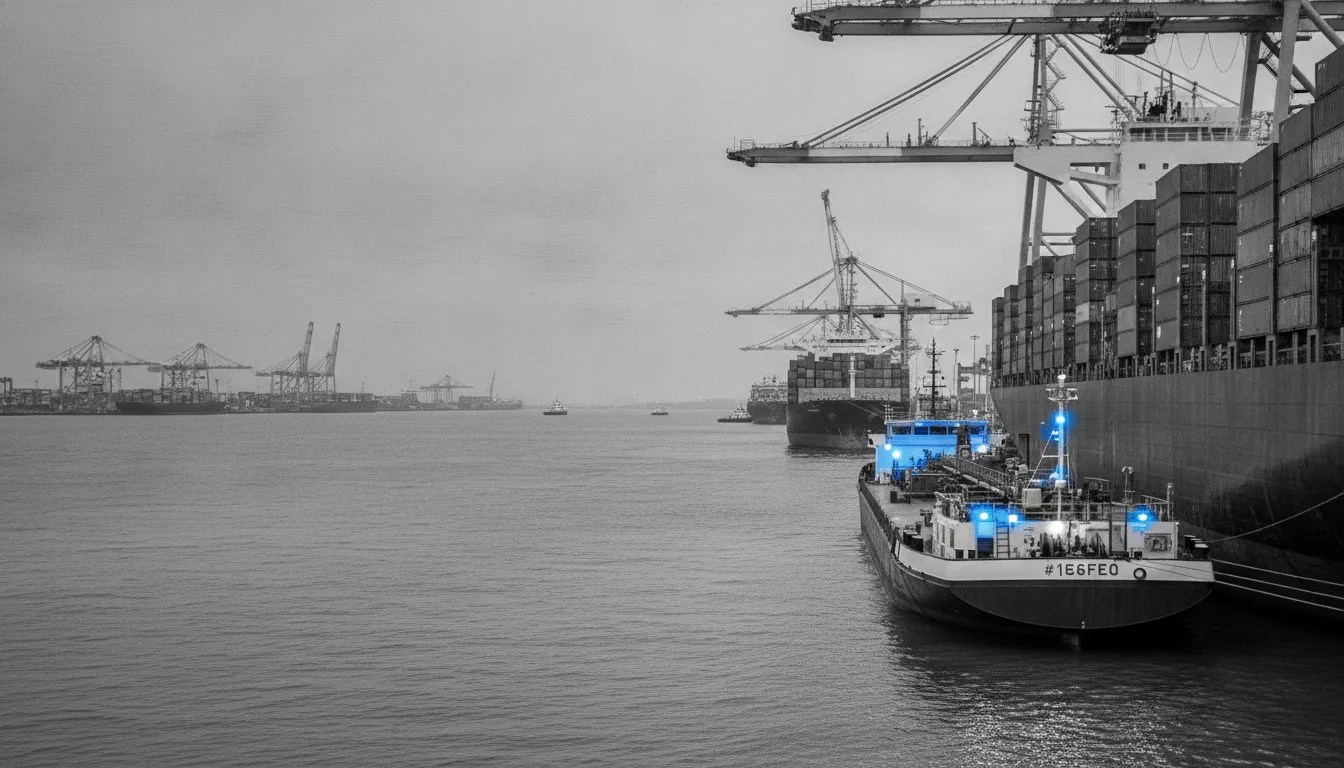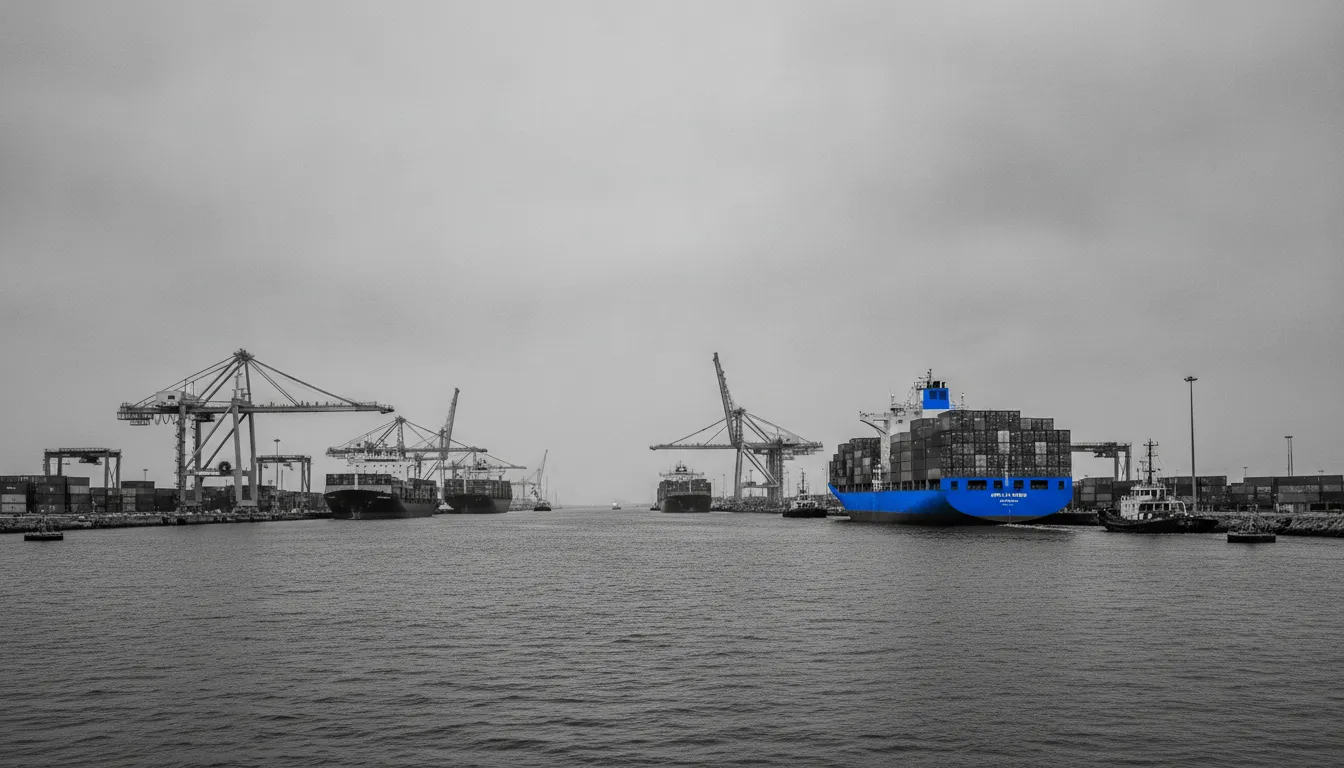
"More than 20 vessels, mostly oil tankers, have come under attack this month in Hormuz, the Persian Gulf and Gulf of Oman"—marking a scale of disruption that fundamentally reshapes bunker procurement risk and forces buyers to abandon traditional single-hub supply strategies.
Two Vessels Lost in 24 Hours: The October Crisis Point
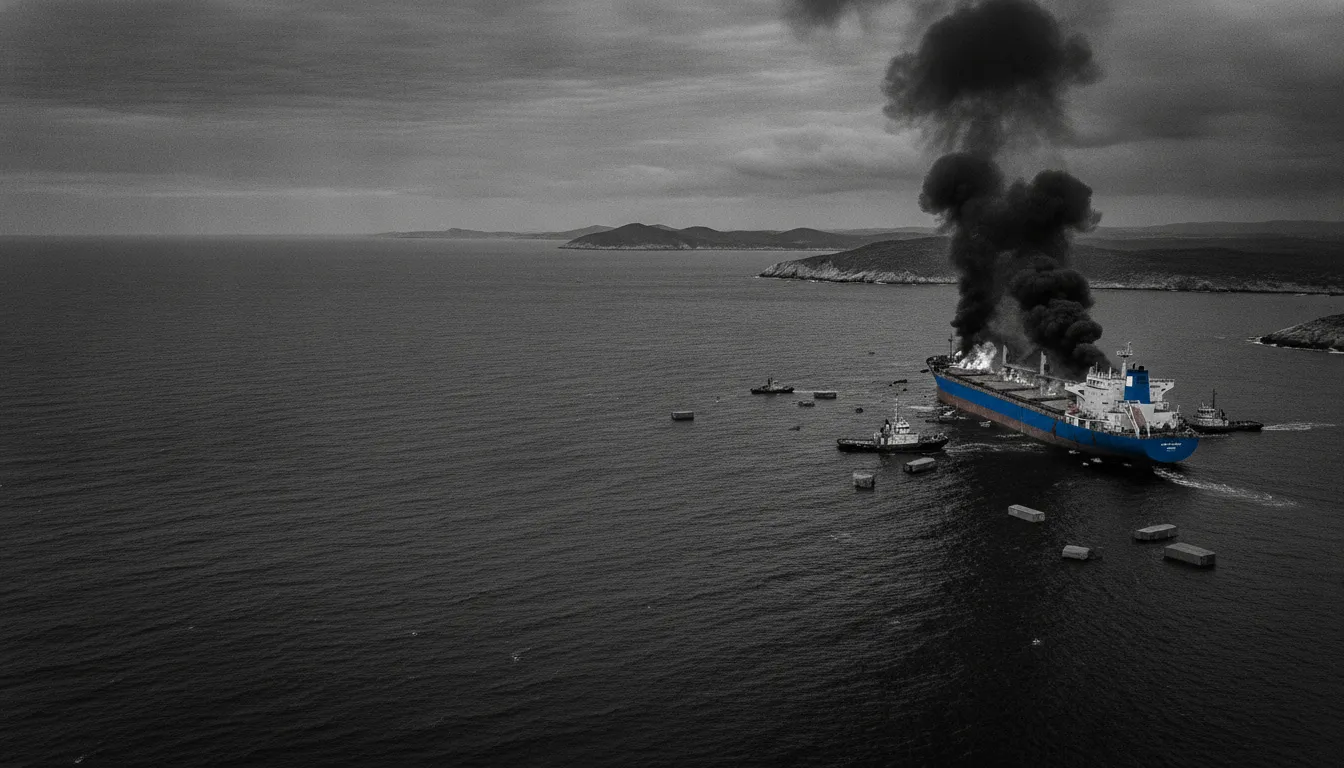
On 13–14 October 2026, the Singapore-flagged GFS Pride—a 2,824-TEU container vessel—sank after being struck by an unknown projectile whilst transiting the Strait of Hormuz. "GFS PRIDE sustained damage and a fire on board, and has since sunk. All 21 crew members were safely evacuated," the Maritime and Port Authority of Singapore confirmed. In a separate incident, the Antigua and Barbuda-registered Cape Dao, a dry bulk carrier initially struck on 23 September, finally sank weeks later; one Indian crew member was killed. These losses mark the third and fourth commercial vessels sunk during the 2026 Iran war cycle.
Attacks around the Hormuz corridor have surged dramatically over the past 10 days, with Iran explicitly stating it is stepping up strikes in response to US port blockades and tougher sanctions introduced in September 2026. The UK Maritime Trade Operations (UKMTO) issued four verified attack warnings on 13 October alone, describing three containerships and one tanker struck by unknown projectiles. At least six vessels were struck on 11 October in a single day. The scale—over 20 attacks in October alone, targeting tankers, containers, and bulk carriers indiscriminately—indicates a new phase in which vessel type no longer determines targeting patterns.
Emergency Bunker Sourcing Under Siege: The Dual-Route Crunch
The collapse of reliable Hormuz passage forces operators to fragment their fuel procurement across two geographically separated supply hubs: the Gulf (now inaccessible) and West African bunkering points (Las Palmas, Cape Verde) serving the Cape of Good Hope detour. Modern container vessels consume approximately 200 tonnes of very low sulphur fuel oil per day at typical service speed; a Cape-routed voyage burns roughly 30% more fuel than a Suez transit per round trip, adding $1.5 to $2.5 million in additional bunker costs per voyage before war-risk premiums are factored in.
Bunker procurement windows are collapsing as carriers shift to Cape routing. Lead times for time-sensitive shipments targeting retail peak season (back-to-school, Black Friday, year-end) have extended to 7–15 days, forcing buyers to either forward-buy at premium spot prices or accept service failure. West African bunkering ports now face congestion as 5–7% of the global container fleet—equivalent to 1.3–1.8 million TEU—has been pulled clean out of market and redeployed to Cape-routed Asia–Europe and Asia–US services. The scarcity premium on tanker-supply services compounds the fuel cost shock: a Cape-routed barrel faces an extra $4–7 on freight, an extra $1–3 on tanker-supply scarcity premium, and an extra $1–2 on Bab el-Mandeb and East Africa war-risk insurance.
War-Risk Surcharges Harden: The Repricing Cascade
Major ocean carriers have imposed war-risk surcharges ranging from $1,500 to $4,000 per container on Gulf-bound and Red Sea cargo. Effective 5 March 2026, MSC implemented a surcharge of $2,000 per 20-foot container, $3,000 per 40-foot container, and $4,000 per reefer container. Hapag-Lloyd imposed $1,500 per TEU for standard containers and $3,500 for reefer and special equipment on all Upper Gulf, Arabian Gulf, and Persian Gulf cargo. CMA CGM levied emergency conflict surcharges ranging from $2,000 per 20-foot container to $4,000 per reefer container. Maersk raised its emergency fuel surcharge to 20% effective in October, whilst CMA CGM revised its surcharge effective 1 October to $265 per 20-foot container on head hauls.
The underlying insurance mechanics amplify these fees. War-risk premiums for Hormuz transits have spiked to 3–10% of hull value as of early September 2026, adding roughly $7 to $8 per barrel of crude according to market participants. By comparison, the Cape route carries approximately 0% war-risk premium, yet the economic tipping point favours Cape routing only when Red Sea war-risk premiums approach $1 million per transit on a $120 million hull—a threshold now repeatedly tested and exceeded. For VLCCs carrying high-value crude cargoes, additional operational costs of $1.5 to $2.5 million for the Cape route become economically rational when war-risk premiums spike.
Cape Route Premiums Solidify: The Hidden Cost Stacks Up
The visible Cape Route cost is 10–14 extra transit days; the load-bearing costs are bunker fuel, tanker-supply scarcity, compounding insurance, and working-capital finance. A Shanghai–Rotterdam voyage via Suez runs 25–34 days; the same voyage via Cape runs 38–50 days. The freight differential is $200–$400 per TEU once fuel, crew, and vessel positioning are counted. For vessels above 20,000 TEU, this translates to $400,000 to $800,000 in additional bunker cost per single voyage.
Canal toll differentials add further pressure: large container ships pay roughly $0.7–1.2 million at Suez in 2026 (though Suez canal tolls have risen 12% as of 15 July 2026 for laden tankers and 10–22% for dry bulk). The 14 extra Cape-routed days compound working-capital exposure at approximately $15,300 per month on a $5 million monthly revenue vessel at 8% financing cost. When Suez transits carry war-risk premiums approaching $1 million plus an $850,000 canal toll, the Suez-versus-Cape equation tips decisively toward the detour despite the aggregate Cape cost.
Bunker Inventory Planning Fractures: Dual-Hub Strategy Emerges
Buyers managing procurement strategies must now assume persistent Hormuz closure and plan bunker inventory across at least two geographically separated sourcing points. The traditional model—spot procurement at a single Gulf hub (Fujairah, Jebel Ali, Ras Laffan)—is no longer operationally reliable. Forward-contracting at West African ports (Las Palmas, Cape Verde) locks in higher unit costs but guarantees supply availability for Cape-routed sailings. Simultaneously, residual Gulf operations (limited to non-Hormuz routes: UAE, Saudi, Kuwait anchorages) retain value for shorter-haul or regional trades but now carry prohibitive war-risk premiums (3–10% of hull value per transit).
Ship operators are institutionalizing Cape routing for the foreseeable future; most major carriers (Maersk, MSC, CMA CGM, Hapag-Lloyd) have implemented selective portfolio approaches favouring Cape services for Asia–Europe and Asia–US lanes. This shift directly constrains bunker supply windows: modern fast-moving vessels cannot absorb 14-day delays between scheduled refuelling points. Procurement teams must now simulate supply-chain shock scenarios—including multi-day port congestion at West African bunkering hubs—and build inventory buffers that were unnecessary when Gulf hubs operated at full capacity.
What This Means For You: Repricing the Entire Logistics Stack
Buyers and shipowners must immediately audit their dual-route inventory assumptions. If your procurement strategy relies on Gulf bunkering for any portion of Asia–Europe or Asia–US volume, that assumption is no longer operationally sound. Forward-contract at Las Palmas or Cape Verde for October–March sailings to lock in availability and avoid spot premiums. Simultaneously, confirm with your carriers and insurers whether war-risk surcharges are being charged on a per-voyage or per-container basis, and whether those premiums are contractually capped or subject to weekly repricing. Emergency fuel surcharges (now 20% at Maersk, $265 per TEU at CMA CGM on head hauls) are being passed directly through to shippers; verify whether your freight contract language permits this pass-through or whether you are absorbing the premium. For operators managing reefer cargo, expect surcharges to reach $4,000 per container on any Middle East or Red Sea routing. Plan accordingly, or reroute via Cape to eliminate the premium entirely—a trade-off now economically clearer than it was 18 months ago.