"Several vessels were disabled or required towage. The absence of catastrophic outcomes should not obscure the underlying operational risk." — Gard report, June 2026
The 50% Jump: Scale, Geography and Timing
Between January and May 2026, Gard handled 70+ bunker-quality claims—a marked departure from prior-year patterns. The claim volume distribution reveals a decisive inflection point: early 2026 claim numbers rose sharply between January and February, then accelerated further from March through May, precisely mirroring geopolitical escalation in the Middle East. On 28 February 2026, after US-Israel attacks on Iran, the Strait of Hormuz closure severed product import flows from Kuwait's al-Zour refinery (615,000 barrels per day capacity) and other Gulf producers, creating acute physical scarcity in downstream bunkering markets.
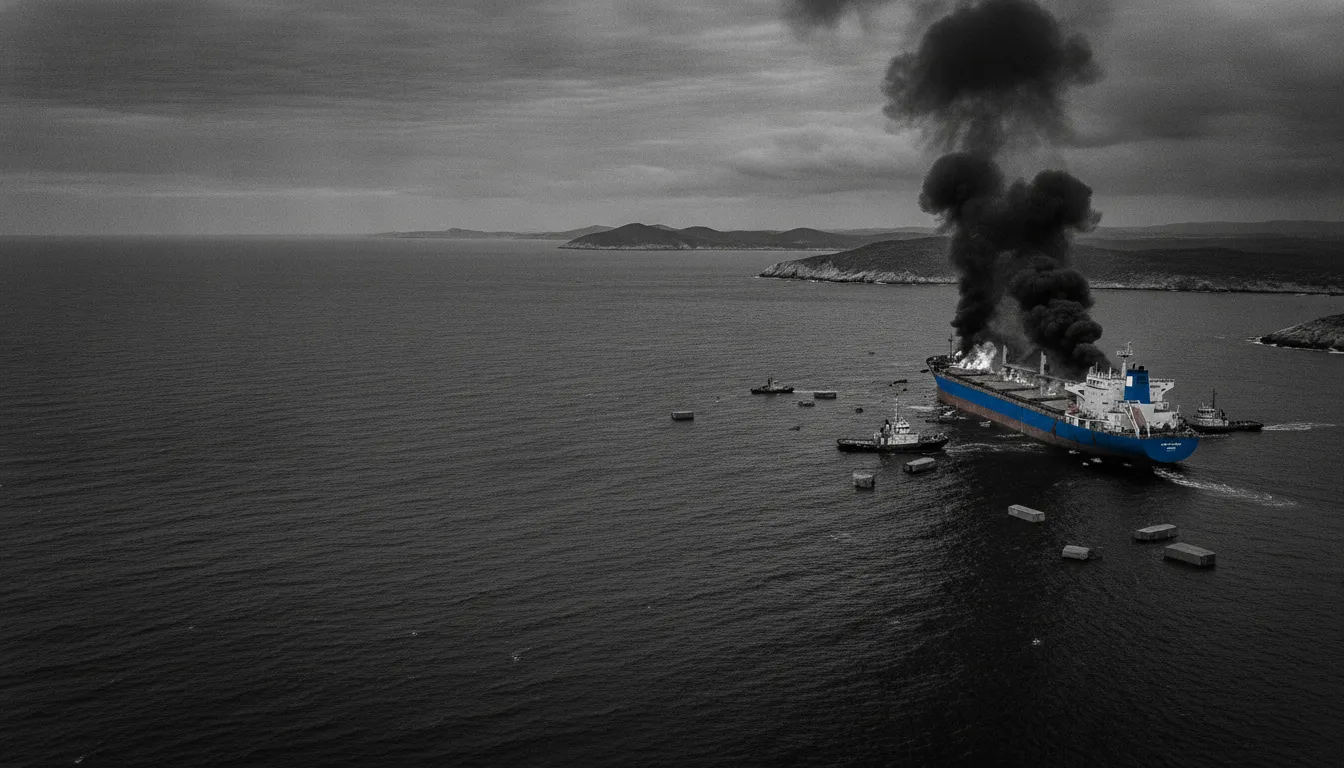
Gard's global risk profile shows claim concentration in high-volume hubs: Singapore, Houston and the ARA region (Amsterdam-Rotterdam-Antwerp) feature most prominently, though this reflects bunkering throughput rather than localised quality failure rates. Off-specification fuel was recorded worldwide, confirming a broadly dispersed risk environment rather than a regional anomaly. The operational impact, while not producing catastrophic casualties in this dataset, included multiple vessel disablements and towage requirements—incidents carrying disproportionate exposure in congested or coastal waters.
VLSFO's Complex Chemistry: Why 85% of Claims Point to One Fuel
VLSFO accounted for more than 85% of all bunker-quality claims in the first five months of 2026, a pattern consistent with the fuel's prevalence since IMO 2020 implementation but amplified by its technical fragility. VLSFO is a complex blend of multiple components—lighter distillates, vacuum residue, cutter stocks and additives—which increases compositional variability and susceptibility to contamination. Unlike stable heavy fuel oil (HSFO), VLSFO's blended nature means that feedstock availability, refinery configuration and supplier discipline directly determine spec consistency.
Global off-specification rates have worsened: in 2025, the off-spec rate stood at 6.8%; by early 2026, it rose to 8.5% across ISO 8217 parameters. VPS fuel testing data for January–May 2026 shows globally 8.8% of fuels are off-specification for at least one test parameter. During supply crises, the economic pressure to maintain output volumes has compressed quality assurance procedures. Crisis-driven expedited production schedules and limited feedstock availability created potential quality risks that enhanced testing protocols could barely manage.
Beyond ISO 8217: When Specification Compliance Means Nothing
A critical insight from Gard's claims: a significant proportion of disputed fuels met ISO 8217 Table 2 testing parameters yet still caused operational problems, machinery damage and contamination incidents. This gap between standard compliance and operational fitness is not new, but it has widened. The insurer emphasised ISO 8217 Clause 5 protection—which requires fuel to be fit for use and free from harmful substances—as increasingly important, as standard test parameters alone fail to detect unusual chemical contaminants.
Evidence from June 2026 bunker testing in Singapore illustrates this precisely. Maritec-Naias flagged multiple VLSFO samples with catalytic fines (Aluminium + Silicon) concentrations between 61–68 mg/kg—exceeding the ISO 8217 spec limit of 60 ppm but within the 72 ppm tolerance under ISO 4259 for a single test result. These levels are considered high-risk for engine damage, yet fuel would pass standard acceptance criteria. Enhanced testing methods—GC-MS (Gas Chromatography-Mass Spectrometry) using solid-phase extraction—are required to identify specific contaminants such as Cashew Nut Shell Liquid (CNSL) and phenolic compounds known to damage fuel system equipment.
Contractual Misalignment and Dispute Resolution Breakdown
Gard identifies both technical and contractual drivers of claims escalation. Bunker disputes are inherently complex due to misaligned contractual relationships between owners, charterers and suppliers. Critical friction points include binding sample protocol definition, specification of which test parameters trigger disputes, time bars on claims (typically 30 days), and evidentiary requirements. Issues here frequently complicate or prevent claims resolution entirely.
Weak contractual language is a leading cause of claim denial. Shipowner and charterer contracts must align on fuel specification standards (including which ISO 8217 version applies—older versions provide less protection), sampling and testing rights, supplier liability for off-spec fuel, and MARPOL compliance obligations. Many operators still lack binding-sample protocols: clear designation of which sealed sample holds contractual authority, custody procedures, and notification windows to suppliers and P&I insurers. Without these, disputes devolve into parallel technical and legal contests with no obvious resolution.
Supply Chain Fragility and Geopolitical Vulnerability
The timing of claim acceleration—precisely aligned with Strait of Hormuz disruption beginning 28 February 2026—demonstrates how geopolitical shocks penetrate procurement risk. Fujairah, the world's fourth-largest bunkering port, experienced catastrophic supply collapse: spot VLSFO premiums surged from $15/t weekly averages to peaks exceeding $500–700/t against Singapore benchmarks by early June. Major suppliers completely withdrew from the market, reporting zero availabilities. An estimated 1,550 vessels became idle in the Arabian Gulf region for approximately 90 days.
Supply disruption forces blending discipline to relax. When feedstock becomes scarce, refiners blend unusual components or accept marginal cutter stocks to sustain output volumes. Expedited production, reduced inventory buffers and use of alternative feedstocks introduce quality variance that standard blending protocols cannot accommodate. By mid-June 2026, expected arrival of straight-run residuals (LSSR) from Nigeria's Dangote refinery offered partial relief, but only after weeks of constrained supply and elevated prices pushed operators into emergency procurement decisions with limited supplier vetting.
Operational Risk Within the 30-Day Claim Time Bar
Fuel deterioration in idle vessels—caused by time, temperature, water ingress and inactivity—presents a secondary quality risk that contracts typically do not address. During the Strait of Hormuz closure, bunker tank temperatures on unshaded anchored vessels in the Arabian Gulf regularly reached 50–55°C (June–September period), accelerating fuel instability. Fuels that met specification at delivery can degrade during storage, becoming off-spec weeks later—well after the typical 30-day time bar in bunker supply contracts, making damage claims effectively unrecoverable.
Operators must test fuel quality before it is fully consumed. Quarterly Fuel System Check (FSC) sampling—drawing samples before and after fuel treatment/purification systems—is best practice for detecting catfine levels above 40 mg/kg that signal immediate intervention. A single main engine damage incident costs USD 650,000–USD 1.2 million per claim; preventive fuel analysis and systematic purifier monitoring represent a 1,000x cost advantage over engine failure recovery.
Procurement and Contractual Response for 2026 and Beyond
For operators and chandlers, the immediate actions are contractual and operational hardening. Charter parties and bunker supply contracts must explicitly require: (1) pre-delivery surveys by certified independent surveyors; (2) binding-sample protocols with sealed dual samples (one for owner/charterer, one for referee in dispute); (3) clear specification of test parameters and standards (latest ISO 8217 version, not legacy editions); (4) supplier liability caps and dispute time bars aligned across all tiers (owner–charterer–supplier); (5) notification procedures within 72 hours of suspected off-spec delivery; and (6) MARPOL sample retention for three years from fuel delivery.
Build supplier performance databases tracking fuel quality from specific ports and sources. Request Certificates of Quality (CoQ) prior to loading. Implement onboard fuel testing for density, viscosity, pour point, cloud point and water content using portable apparatus before consumption, then send manifold samples to accredited laboratories for full ISO 8217 analysis and advanced contaminant screening. Define acceptable mixing ratios (80/20 new/old bunkers minimum) if blending becomes necessary onboard. Train crew on fuel handling, sample integrity and early warning signs of engine performance degradation.