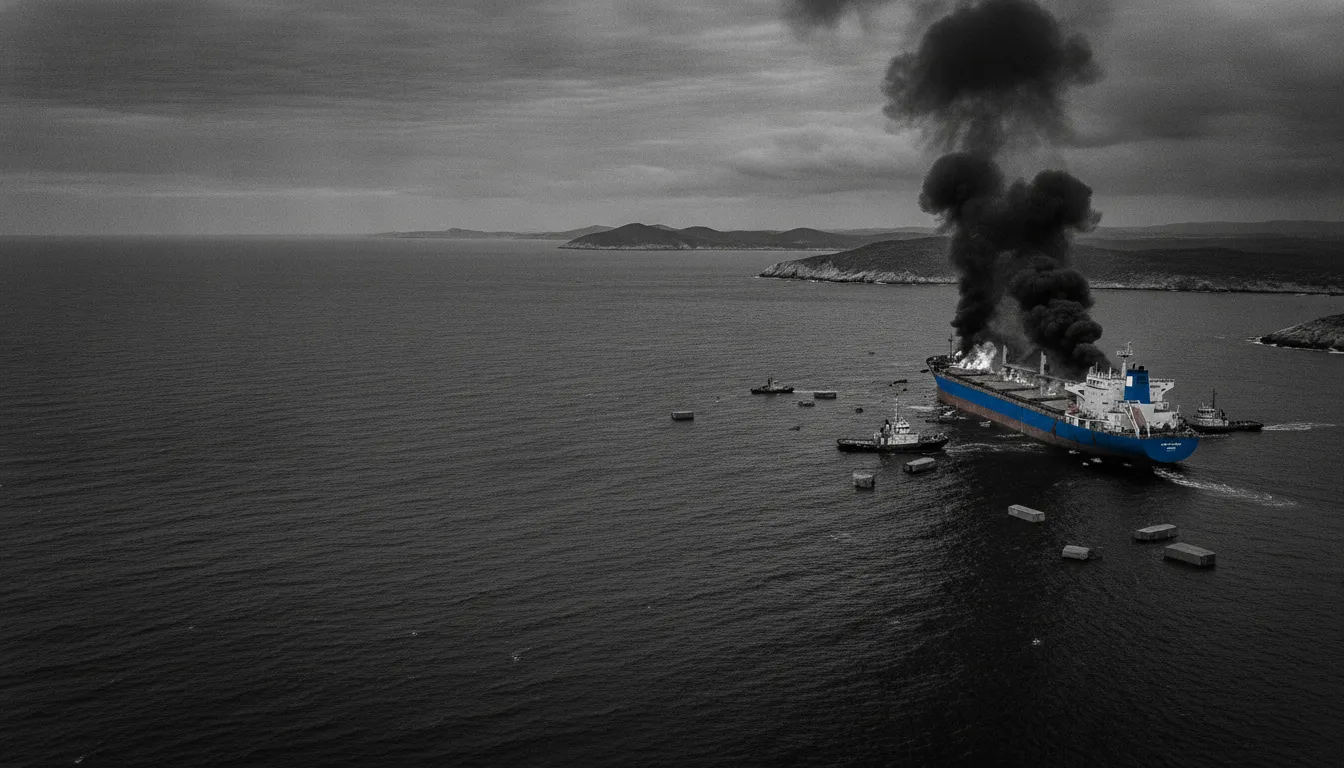
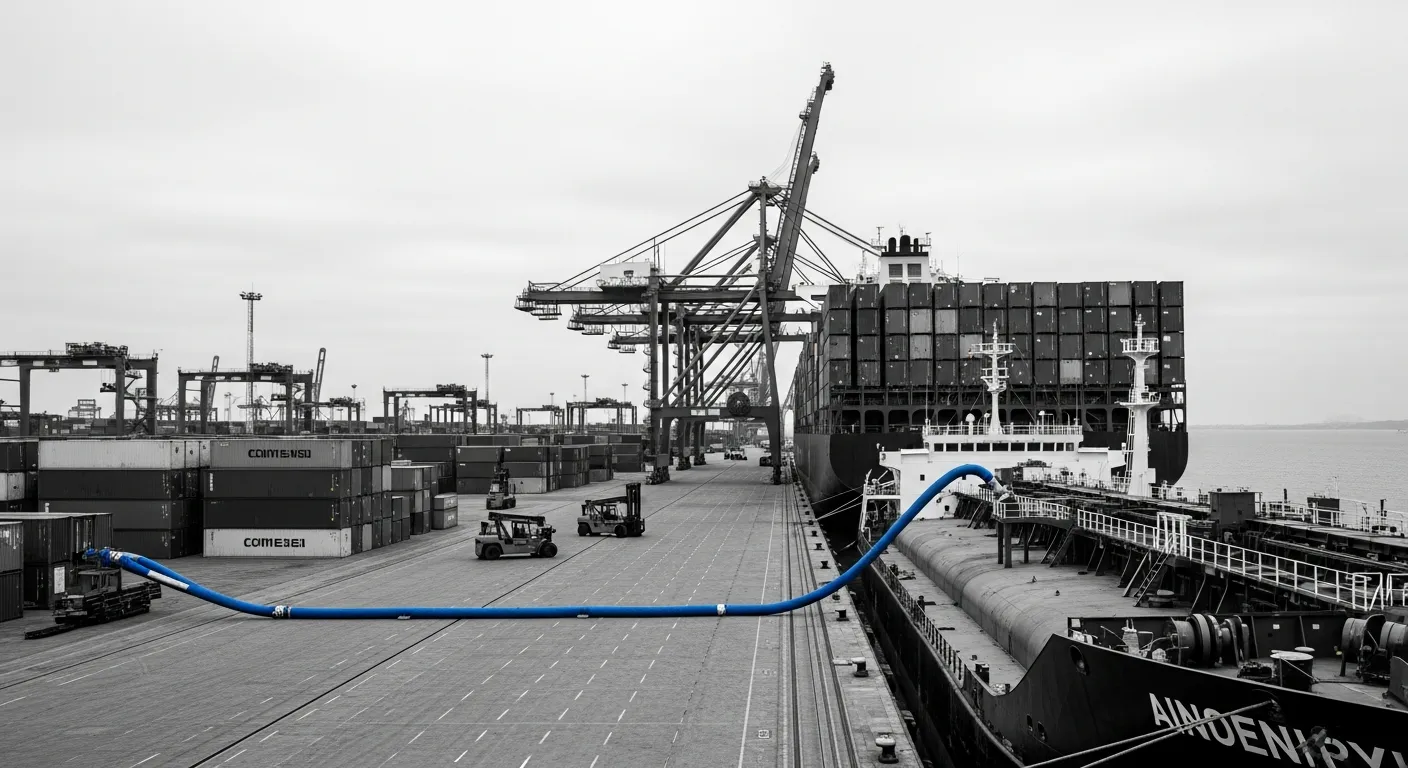
Bunker availability is tight for prompt deliveries in South Africa's Durban and off Algoa Bay, with buyers advised to book stems at least 5–7 days ahead; in Mozambique's Nacala and Maputo, suppliers recommend lead times of around 7–10 days for VLSFO; and in Namibia's Walvis Bay, buyers should allow roughly ten days for delivery due to strong demand.
The African Bunker Crunch: Lead Times Across Three Pillars
From early July 2026, the ENGINE platform has documented a consistent tightening of VLSFO and LSMGO availability at Africa's busiest bunkering hubs. Durban, South Africa's flagship port, now requires buyers to book 5–7 days in advance for all grades; Walvis Bay, Namibia's growing offshore alternative, has moved to 7–10 days (shortened from 10 days in late June, but still substantially elevated); and Mozambique's Nacala and Maputo ports demand 5–7 days notice as of 8 July 2026, a dramatic tightening from the 7–10 day range reported just days earlier. These lead times reflect not merely logistical friction, but a genuine supply deficit: traders report that suppliers face terminal loading delays, inventory depletion, and competing demand from vessels diverting around the Horn of Africa. The pattern is clear: buyers who do not commit to purchases a week or more ahead risk both unavailability and steep spot premiums.
Comparatively, Mauritius' Port Louis stands at the extreme end, with lead times stretching to 7–15 days as of early July—down marginally from the 10–15 days advised in late June but still among the tightest in the region. Even Angola's Luanda, typically a more liquid market, now requires 3–4 days for VLSFO and LSMGO deliveries. The pattern across Southern Africa tells a story of compressed supply and competing claims: demand has surged as shipping lines reroute around the Suez-Red Sea corridor, while terminal capacity and refinery output have struggled to keep pace, leaving buyers with increasingly narrow procurement windows.
Why the Squeeze? Supply, Demand, and Terminal Constraints
The root causes of the African bunker crunch combine supply-side limitations with demand shocks. Terminal loading delays—already cited by traders as a key constraint at major global hubs—are manifesting acutely in Africa's ports. The ARA region, for instance, saw terminal delays nearly double lead times from 4–5 days to 10 days in late May 2026, and although inventories in the ARA have rebounded slightly by June (up 13% versus May), Africa's ports lack comparable inventory buffers. Southern Africa's refinery capacity, particularly in South Africa, has not expanded sufficiently to match the surge in throughput demand. Second, Red Sea diversions have created sustained incremental demand: vessels rerouting around the Cape of Good Hope now cluster at African anchorages for bunkers, extending the queue and compressing supply windows. Some suppliers report strong demand in Namibia and Mozambique precisely because South Africa's Durban has become congested and because operators seek to spread risk across multiple ports. Finally, VLSFO specifications—now mandatory for most commercial shipping under IMO 2020 and MARPOL regulations—leave little flexibility: buyers cannot easily substitute HSFO or alternative grades, and thus have no alternative pathway when VLSFO supplies tighten.
Inventory scarcity compounds the picture. Global fuel oil stocks have fluctuated, with Singapore's inventory falling below 18 million barrels in June 2026 (a 24% decline in net imports), and the ARA's stocks hitting multi-year lows in May before modest recovery. Africa, which relies heavily on imports and transshipment, is particularly vulnerable to these global swings. Terminal congestion in loading ports affects not just spot premiums but also scheduled stems; a buyer booking five days ahead still faces the risk that a supplier's loading schedule slips, cancelling the delivery window and forcing a renegotiation—often at worse terms.
Spot versus Contract: Strategy in a Tight Market
In tight supply conditions, the spot-versus-contract decision becomes critical. Spot purchasing accounts for roughly 89% of bunker transactions globally, offering flexibility for operators without fixed routes. However, spot markets are vulnerable to price spikes when availability is constrained; industry data shows that tight port availability can increase spot premiums dramatically, and industry shocks can trigger premiums rises of $20/mt or more in the space of a day. In the current African environment, a buyer entering the spot market without advance notice risks facing a supplier's full list price—or even a refusal to quote. Contracts, by contrast, typically secure a premium discount (often 3–8 dollars per metric tonne below Platts) and guarantee supply, provided the buyer commits volume and nominates 5–7 days ahead. The downside: contracts tie operators to one supplier, prevent benefit from falling spot premiums, and impose penalties for late nomination. Given Africa's current lead times, many buyers are rethinking the classic 89% spot / 11% contract split: operators with predictable routes are locking in baseline contracts to avoid supply blackouts, whilst maintaining spot flexibility for opportunistic upside.
Hybrid procurement—baseline contracts for 60–70% of volume and spot purchases for the remainder—is gaining traction. This approach preserves supply certainty whilst capturing savings if spot premiums drop or if better offers emerge. Brokers and traders advise that buyers must monitor market trends continuously and nominate early to a contract supplier if they anticipate delayed arrival; late nomination (within 48 hours) can trigger the supplier's right to charge the full spot price instead of the contract rate, eroding the contract's value. The key discipline: effective communication between operations and procurement teams to maximise lead time, as even a 24-hour earlier nomination can mean the difference between a contract fill and a spot rejection.
Inventory Management and Forward Booking: A New Urgency
The compression of lead times has elevated inventory management from a cost-minimisation exercise to a risk-mitigation imperative. Shipowners with tighter fuel tank capacity or longer inter-port distances now face genuine supply risk if they defer booking beyond 5 days. For instance, a vessel en route to Durban with marginal fuel reserves cannot afford the old luxury of spot-shopping; it must request a firm commitment from a supplier at day 7–10 ahead of arrival. Some operators are responding by expanding tank capacity where feasible—a capital investment typically justified by the ability to bunker opportunistically and hedge against port-specific squeezes. Others are pre-positioning vessels at secondary hubs (Walvis Bay, Nacala) to split inventory purchases and reduce reliance on Durban's congested terminal. Inventory carrying costs—storage, insurance, finance charges—traditionally discouraged large on-board reserves, but in a tight market, a small premium held in fuel is often cheaper than the risk of port delays or high spot prices. Buyers should establish a threshold (e.g.,