"South Africa's ports handle over 60% of Southern Africa's containerised import and export traffic, and their chronic inefficiency has placed them consistently at the bottom of global rankings."
The Queue That Became Structural Problem
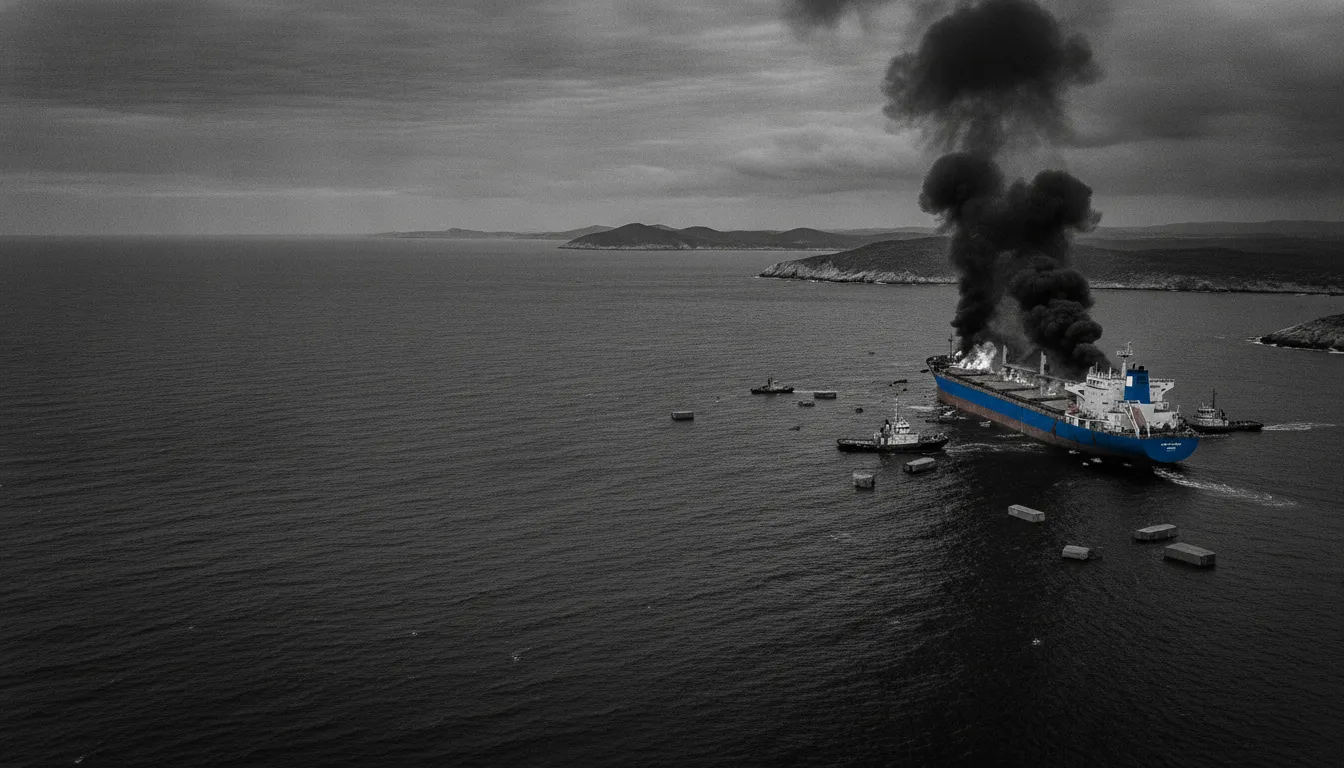
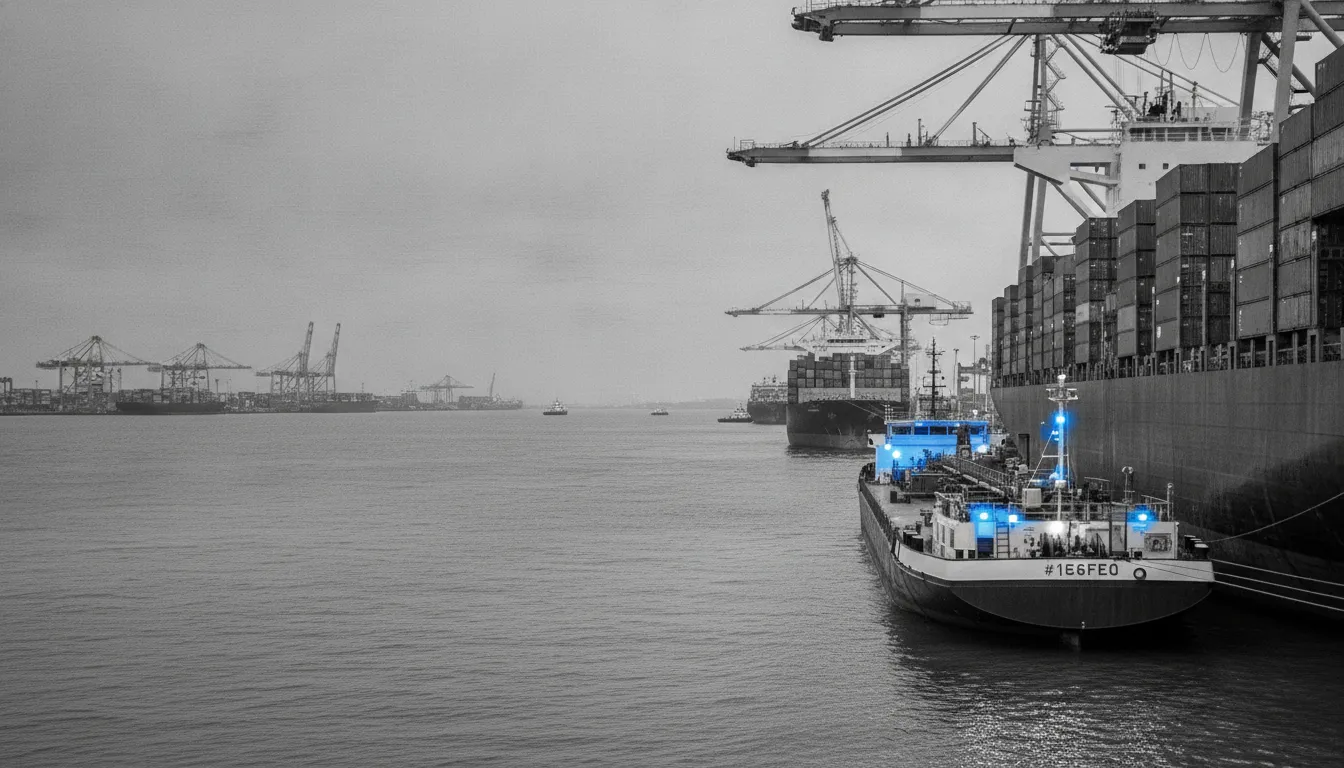
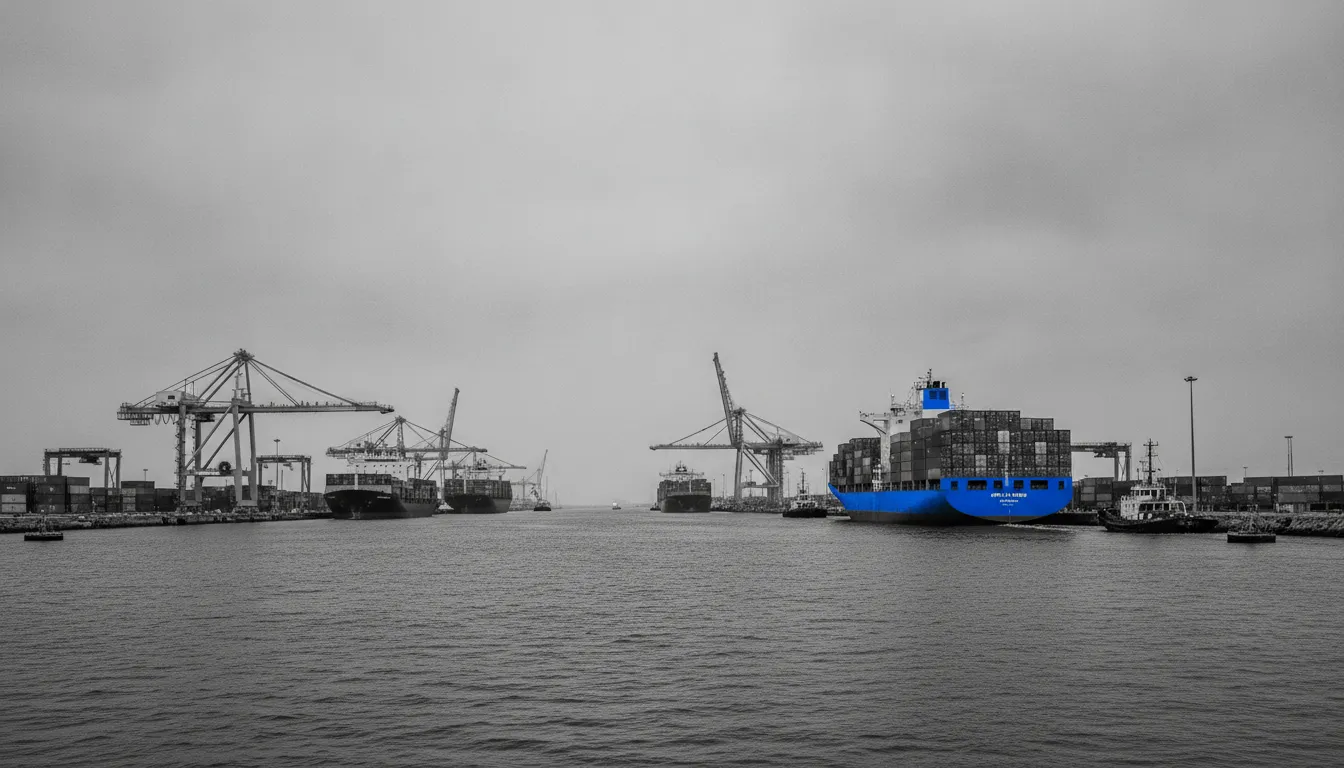
In mid-February 2026, Transnet Port Terminals released unprecedented real-time vessel schedules across ten South African facilities, exposing the scale of the congestion crisis. The data, analysed by Container Management, revealed a stark reality: 79 ships carrying approximately 145,000 containers were queuing for berths within a three-week window. This was not seasonal volatility or temporary weather disruption. It represented the culmination of years of underinvestment in equipment maintenance, persistent energy instability, and declining rail freight capacity that had forced increasing volumes onto congested road networks. The concentration of traffic was unprecedented in scope and duration.
The figures signalled a structural failure, not a cyclical spike. Durban's annual throughput peaked at approximately 2.9 million TEU in 2019 but subsequently declined by more than 20% under the combined weight of pandemic disruptions, aging equipment, and management inefficiency. For buyers and operators accustomed to predictable berth windows, this queue became an intolerable cost: vessels waiting 1–5 days at Durban, and significantly longer at Ngqura, where some vessels experienced waiting times approaching 9 days. The queue remained visible week after week, with no rapid clearance mechanism in place. Transnet itself had previously warned that clearing similar backlogs would take until February to resolve, signalling the depth of systemic constraint rather than temporary congestion.
112% Surge in Cape Diversions Exceeds Port Capacity
The trigger was geopolitical: Red Sea security risks forced major container lines—Maersk, Hapag-Lloyd, CMA CGM, and COSCO—to abandon the Suez Canal for the 6,000-to-9,000-kilometre detour around southern Africa. This rerouting adds approximately 10–15 additional sailing days to Asia–Europe routes, with some estimates suggesting 7–10 days depending on vessel type and speed profile. A Very Large Crude Carrier or 20,000-plus TEU containership can incur USD 400,000 to 800,000 in additional bunker costs per voyage, depending on fuel prices, vessel size, and speed profile—a financial penalty compounding schedule delays.
By early March 2026, the Cape Chamber of Commerce and Industry reported vessel diversions had risen 112%—a staggering volume surge into ports never designed to absorb it. Cape Town alone experienced waiting times of 6+ days, with some vessels delayed up to 10 days before securing a berth. The shift has evolved from emergency response into operational permanence. As Bhavan Vempati, head of Asia Market for Ocean at Maersk, noted: "After nearly two years of operating under these conditions, it is increasingly hard to describe our setup as a temporary measure. It has instead become an adaptation to a new operational reality." This permanence means carriers are now investing in infrastructure and calling patterns based on the assumption that the Cape route is structural, not temporary.
Infrastructure Constraints Force Carrier Redesign
That surge should have benefited South Africa's economy through port fees, bunkering, crew changes, and supply services. Instead, carriers learned to avoid the congestion. The India-Middle East-Africa Mesawa service, operated jointly by Maersk and CMA CGM, began rerouting vessels such as the Maersk Iyo to Ngqura rather than Cape Town—essentially bypassing South Africa's primary container gateway. Export bookings from Cape Town were reassigned to the Maersk Cubango, whilst import containers from Ngqura were redirected to their intended destinations via alternative routes. Other carriers shifted schedules altogether, treating South African ports as liabilities rather than opportunities.
The rerouting paradox is simple: vessels passing around the Cape of Good Hope were supposed to call at South African ports for bunkering, crew changes, repairs, and supplies. Instead, bottleneck costs and unpredictable delay windows forced logistics managers to redesign calling patterns entirely. Cape Town, the critical refuelling hub for the Cape route, reported double-digit increases in ad hoc port service calls but faced critical capacity constraints. Its nearby Astron Energy refinery could supply necessary fuel, yet bunkering capacity remained congested. Repair facilities and crew-change infrastructure, whilst available, became overwhelmed. Vessels experienced double-digit increases in ad-hoc port service calls compared with pre-diversion patterns, straining dockside resources that were already stretched.
ICTSI Takeover Begins Amid Peak Congestion Crisis
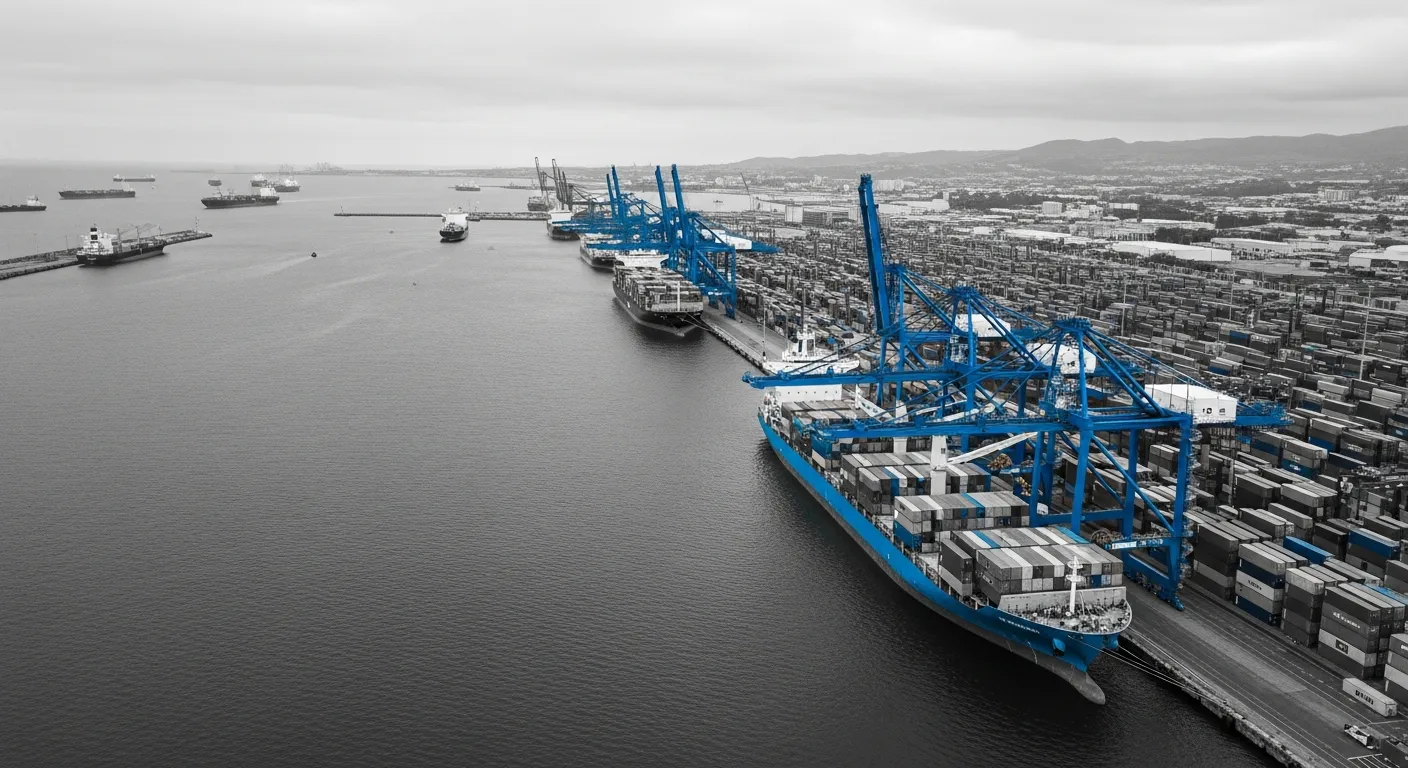
In January 2026, amid the congestion peak, the Philippine terminal giant ICTSI formally commenced operations at Durban's Pier 2 under a 25-year partnership with Transnet. This was meant to be South Africa's answer—ICTSI operates 34 terminals across 20 countries and has proven expertise in emerging-market environments, with track records in Manila, Suape (Brazil), and Basra (Iraq). Official January 2026 throughput data confirmed that 305,775 TEU were handled across the South African system during ICTSI's first complete month of operations. The partnership aims to increase Pier 2's capacity from 2 million to 2.8 million TEU and raise crane moves per hour from 18 to 28, whilst improving ship working hours from 60 to 120.
However, ICTSI enters at precisely the wrong moment: with 79 vessels queuing and carriers already redesigning routes to avoid the ports entirely. The firm's long-term development programme is in early stages, meaning immediate productivity gains remain minimal during this critical window. ICTSI has committed approximately R11 billion (USD 638 million) to upgrade Pier 2, yet the benefits will take months to materialise. The question facing the industry is whether ICTSI can reverse trajectory fast enough to recapture rerouted volume before carriers lock in alternative calling patterns—and whether South Africa's wider logistics network (rail, customs, inland trucking) can support the promised capacity uplift without comparable bottlenecks upstream and downstream of the port.
Missed Windfall: Competing Ports Fill the Void
As South African terminals struggled, overflow traffic migrated to Port Louis in Mauritius, which has emerged as a critical trans-shipment hub for carriers avoiding South African congestion. Mauritius launched its own digitisation and infrastructure modernisation plan, effectively siphoning revenue that should have accrued to Durban and Cape Town. East African ports—Mombasa, Dar es Salaam, and Lamu (operationalised in February 2026 as part of the LAPSSET corridor)—also captured diverted traffic. Kenya's operationalisation of Lamu Port marked a critical milestone for the broader region, integrating smart logistics technologies expected to reduce transit times from East Africa to landlocked interior nations.
For South Africa's broader economy, the timing is costly. The freight and logistics market grew from $14.7 billion in 2025 to $15.55 billion in 2026 and is projected to reach $20.59 billion by 2031 at a compound annual growth rate of 5.78%. Yet South African ports are failing to capture proportional value from the Cape-route traffic that was meant to be their structural advantage. Carriers are learning to operate without calling South Africa at all—bunkering at West African hubs, where new entrants like Flex Commodities launched physical bunkering at Namibia's Walvis Bay and Luderitz, trans-shipping through Mauritius, and avoiding the delay cost of South African port windows entirely. Ghana's Misa Energy expects bunkering volumes to triple within the next decade, signalling where new traffic growth is concentrating.
What This Means for Shippers and Operators
For procurement teams, shipowners, and supply-chain managers, the lesson is immediate and operational. The Cape route adds 10–15 days and $400,000–800,000 in additional fuel costs per voyage for large vessels. South African port congestion now adds a second penalty layer—delay, demurrage, and the need for contingency scheduling. The rational response is to avoid South African port calls where possible, trans-ship in Mauritius, or diversify bunkering to West African hubs. Dwell times at Durban have risen to 11.3 days due to rerouted traffic, compounding the schedule risk. ICTSI's presence at Durban is necessary but insufficient; without coordinated improvement across rail access, customs processing, and landside logistics, carrier behaviour will not reverse. South Africa holds a geographical advantage on the Cape route that should translate to sustained revenue growth; instead, it is squandering the opportunity through infrastructure fragmentation and operational delay. The window to recapture rerouted volume narrows as alternative calling patterns become embedded in carrier operations.