'The repercussions of the joint military operation will see the further weaponisation of trade and shatter hopes of a large-scale return of container shipping to the Red Sea in 2026.'
— Peter Sand, Xeneta chief analyst
Fragile Gains Reversed Within Weeks
When the Gaza ceasefire took effect on 10 October 2025, and the Houthis formally halted their attacks on international shipping, the container industry exhaled. Maersk Line tested the Suez route in January 2026 with successive successful transits by the Maersk Sebarok and Maersk Denver, signalling cautious confidence that the 2.5-year disruption might be ending. By February, that resumption seemed to be gaining traction across the industry. Shippers anticipated a large-scale release of 2.5 million TEU back into an already oversupplied market as carriers unwound their Cape diversions, freight rates would stabilise at lower levels, and Egypt's Suez Canal Authority would begin recovering lost revenue. The Baltic and International Maritime Council warned of elevated war-risk premiums but did not forecast imminent resumption of attacks. Industry sentiment had shifted from defensive to cautiously optimistic.
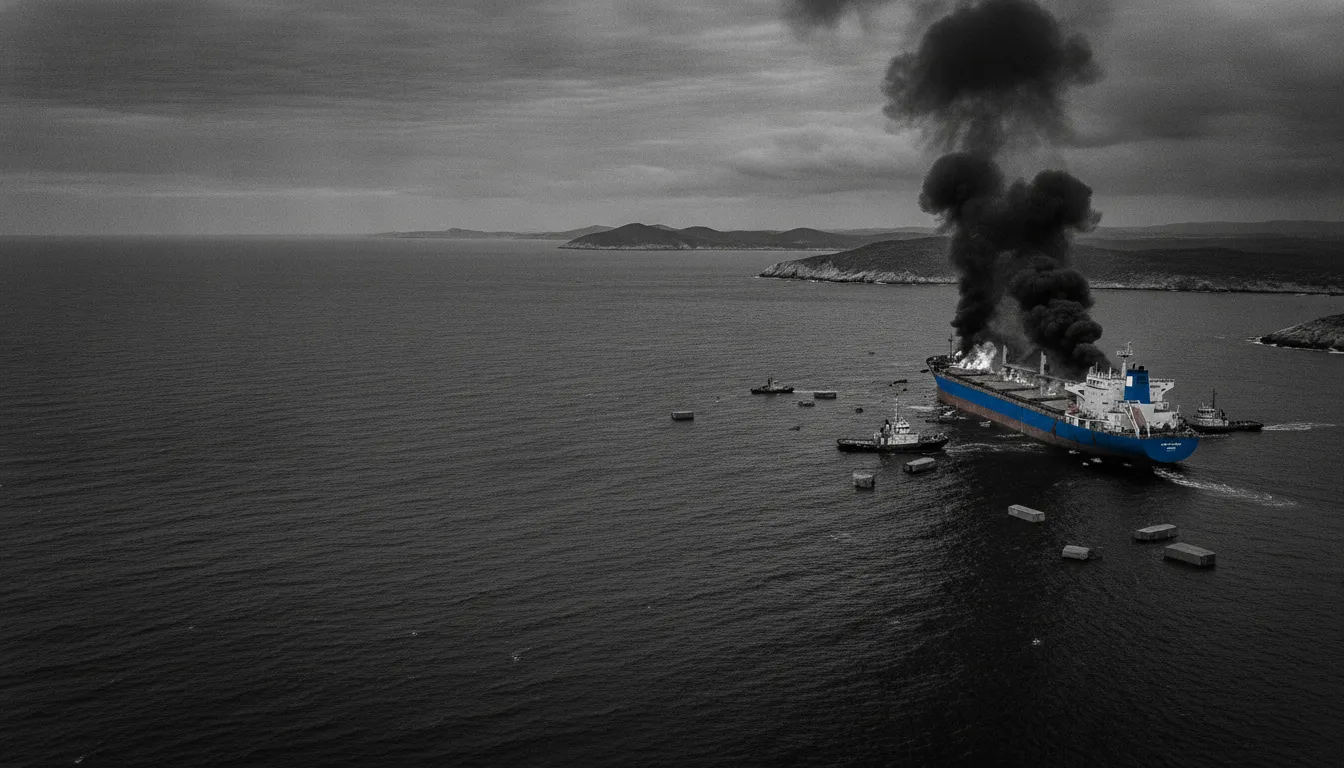
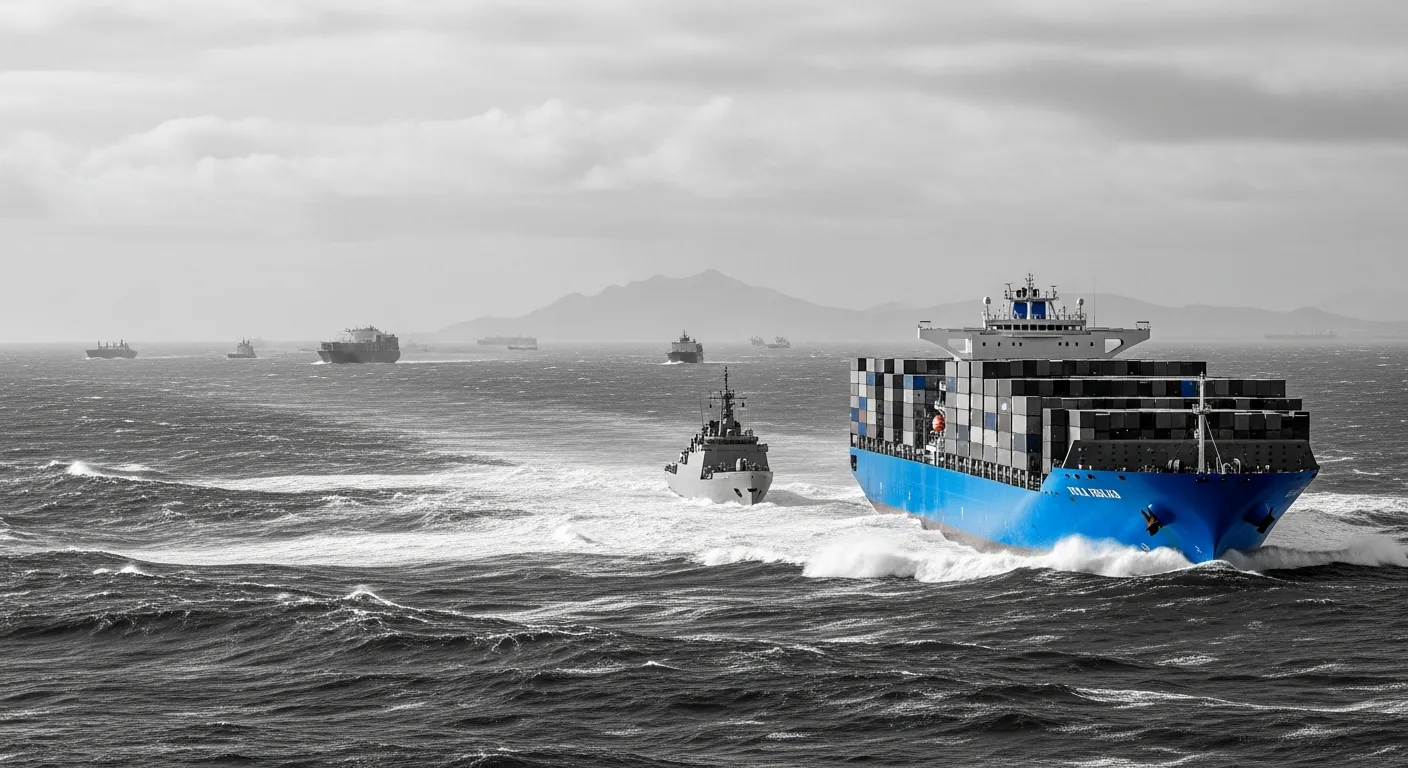
That pause lasted three weeks. On 28 February 2026, in response to confirmed United States and Israeli airstrikes on Iran—strikes that killed Iran's Supreme Leader, Ayatollah Ali Khamenei—Houthi officials announced their intention to resume missile and drone operations against shipping in the Red Sea and Gulf of Aden. The group signalled that attacks could begin imminently, targeting shipping routes previously struck during the 2024–2025 campaign and extending operations across the southern Red Sea and into the Bab el-Mandeb Strait. By 1 March 2026, the retreat was complete. Maersk cancelled its planned return to the Suez route, issuing formal instructions to pause all Trans-Suez sailings on its ME11 (Middle East–India to Mediterranean) and MECL (Middle East–India to US East Coast) services. CMA CGM instructed all vessels in the Persian Gulf and those heading there to "proceed to shelter", suspended all services via Suez, and rerouted back around the Cape of Good Hope. MSC issued standing orders to avoid both the Bab el-Mandeb and the Strait of Hormuz, temporarily pausing all Middle East region bookings. Hapag-Lloyd followed with identical instructions. Within 72 hours, the structural retreat was complete.
The Houthi Arsenal and Asymmetric Reach
The Houthis employ a hybrid arsenal combining state-like capabilities with traditional insurgent methods. Their weapons inventory includes ballistic and anti-ship cruise missiles, long-range attack drones, uncrewed surface vehicles (USVs), uncrewed underwater vehicles (UUVs), naval mines, air-defence systems, and conventional ground weapons. From November 2023 to October 2025, the group executed more than 100 separate attacks on commercial vessels flagged to over 60 nations. In the 2026 escalation cycle, the group has demonstrated capacity to strike across the entire southern Red Sea and northern Bab el-Mandeb region with sufficient precision to target specific vessel classes and affiliations. Houthi commanders have threatened closure of the strait itself if regional escalation sharpens, particularly if Gulf Cooperation Council states join the conflict or Israeli and Iranian confrontation intensifies further.
What makes the Houthi campaign consequential is not firepower alone but targeting unpredictability. Earlier attacks struck vessels with no declared affinity to Israel or Western interests—hitting ships flagged to neutral states, operated by companies with no regional footprint, and carrying cargo with no Israeli connection. This inaccuracy—whether tactical, operational, or deliberate—forced carriers to treat the entire corridor as systemically high-risk, not merely Israeli-linked tonnage. War-risk premiums, which had moderated during the November 2025–February 2026 pause, spiked immediately upon the resumption signals in late February. Underwriters have made clear that any confirmed kinetic incident—a successful strike on a commercial vessel—will trigger sharp upward revisions to policy rates. During previous Houthi campaigns, additional war-risk premiums for Red Sea transits rose significantly, in some cases adding hundreds of thousands of dollars to individual voyages.
Capacity Drain and the 6 Per Cent Supply Shock
The extended Cape of Good Hope route absorbs approximately 6 per cent of global container shipping capacity simply by lengthening voyage duration. A typical Asia–Europe service via the Cape adds 10 to 14 days to the round voyage compared to the Suez route. For a vessel transiting between Shanghai and Rotterdam, Cape rerouting increases total sailing distance by 29 per cent and total round voyage time by 17 per cent on a typical weekly Asia–North Europe service. To maintain the same weekly departure frequency and arrive-on-time performance standards, carriers must deploy additional vessels at a minimum: two extra ships per Asia–Europe service are required to sustain weekly sailings and meet customer committed delivery windows.
Those additional vessels do not carry incremental cargo; they exist only to absorb the time cost of the longer route. This capacity drain is invisible in headline freight rates but manifests acutely in supply chain planning. Shippers have adjusted safety stock levels upward, negotiated longer lead times with raw material suppliers, and diversified sourcing geographies to hedge delivery uncertainty. Warehousing strategies have shifted to accommodate goods in transit for 3–4 weeks longer than pre-November 2023 norms. For automotive and electronics supply chains, the impact cascades: a single container's arrival delay destabilises assembly schedules weeks downstream. The financial cost is absorbed not in freight expense—which carriers have formalised as surcharges—but in working capital tied up longer and inventory carrying costs spread across the supply chain. Customers have effectively internalised the operational cost of geopolitical risk.
The Suez Canal Revenue Crisis and Egyptian Isolation
The Suez Canal Authority earned a record $9.4 billion in fiscal year 2022–2023. Projections for fiscal 2025–2026 stand at $5.5 billion, representing a 41 per cent decline in annual revenue. The drop reflects a 40–50 per cent fall in traffic across the calendar year. The number of vessels transiting fell from 2,068 in November 2023 to 877 in October 2024, and by May 2026, daily traffic through the Bab el-Mandeb Strait remained significantly below pre-crisis levels. Commercial traffic around the Cape of Good Hope, by contrast, has more than tripled since November 2023. The authority charges $750,000–$1,000,000 per transit for an 18,000 TEU laden container ship, yet even at that cost, carriers are choosing the 4,575-nautical-mile detour around southern Africa and absorbing additional fuel, crew, and charter costs. The economics work only because volatility—the risk of attack, detention, unexpected closure, or political escalation—exceeds the certainty of higher direct voyage costs.
Egypt faces a structural fiscal challenge tied entirely to geopolitical risk factors beyond its control. The Suez Canal's role as a national revenue source cannot be recovered whilst the Red Sea remains contested. No reopening date is credible absent a durable regional ceasefire monitored by international agreement and a credible international security presence capable of guaranteeing freedom of navigation for all vessels regardless of flag, cargo origin, or corporate affiliation. Interim returns—such as the brief Maersk resumption in January–February 2026—have proven fragile and trust-eroding; each reversal reinforces carrier caution and extends the expected timeline for full normalisation.
Institutionalised Diversion and the New Operating Model
Carriers have moved beyond temporary contingency planning into permanent operational restructuring. Surcharges for the Cape route have been formalised as line-item charges on customer invoices, no longer justified as temporary premium but as standard service cost. War-risk insurance premiums remain elevated and are now embedded as baseline policy assumption in all Asia–Europe and Middle East-origin service pricing. Vessel scheduling no longer treats the Suez as a primary route; the Cape is now the baseline configuration, with Suez crossings treated as occasional exception requiring explicit customer security clearance and premium surcharge acceptance. Service contracts have been rewritten to reflect 40–43 day Asia–Europe transit times as standard rather than 33 days. Customer booking agreements now specify Cape routing as default and Suez as contingent alternative—the reverse of the pre-November 2023 paradigm.
This represents a fundamental shift in how global container supply chains operate and plan. The industry has absorbed the longer route as permanent, factored the extended cost into long-term pricing models, and planned vessel schedules around Cape-first deployment. A return to pre-crisis norms would require not just an end to attacks but sustained, credible evidence of security durable enough to justify the execution risk and reputational cost of retesting the Suez route. Maersk's brief resumption and rapid pullback in January–March 2026 has taught the market that every return attempt carries operational, commercial, and customer confidence costs. The industry has learnt that hesitation is more costly than sustained abandonment, and volatility is more disruptive than delays. Carriers now plan for the Cape route to remain in place through 2026 and beyond.
What This Means for You
If your supply chain relies on Asia–Europe or Asia–Middle East connectivity, extended lead times and higher landed costs are now locked in through 2026 and likely beyond. War-risk insurance premiums will remain elevated as long as the Red Sea remains contested. Diversification of sourcing, increase in safety stock, and repositioning of inventory buffers closer to consumption markets are no longer optional—they are now operational baseline. For procurement teams, the structural shift means planning for 10–14 additional days in transit as permanent, with surcharges formalised in contract terms. For ship suppliers and chandlers, increased port calls at South African terminals—particularly around Cape Town and other servicing ports—present new opportunities for bunkering, provisions, spare parts, and crew welfare services. For shipowners, the drain on global capacity and the institutionalisation of higher utilisation rates support asset values, but only if geopolitical containment prevents sudden reversions to Suez routing that would release 2.5 million TEU back to the market in weeks, collapsing freight rates and requiring rapid fleet redeployment. The current situation is sustainable only if the Red Sea conflict remains at its present intensity; escalation or surprising de-escalation equally threaten carrier profitability, supply chain stability, and the financial viability of Egypt's economy.