"Achieving the new target would require close collaboration between the public and private sectors," said a TPA operations official, noting that current road congestion is "a sign of port efficiency, not failure."
The Ambition: Nearly Doubling Capacity in Five Years
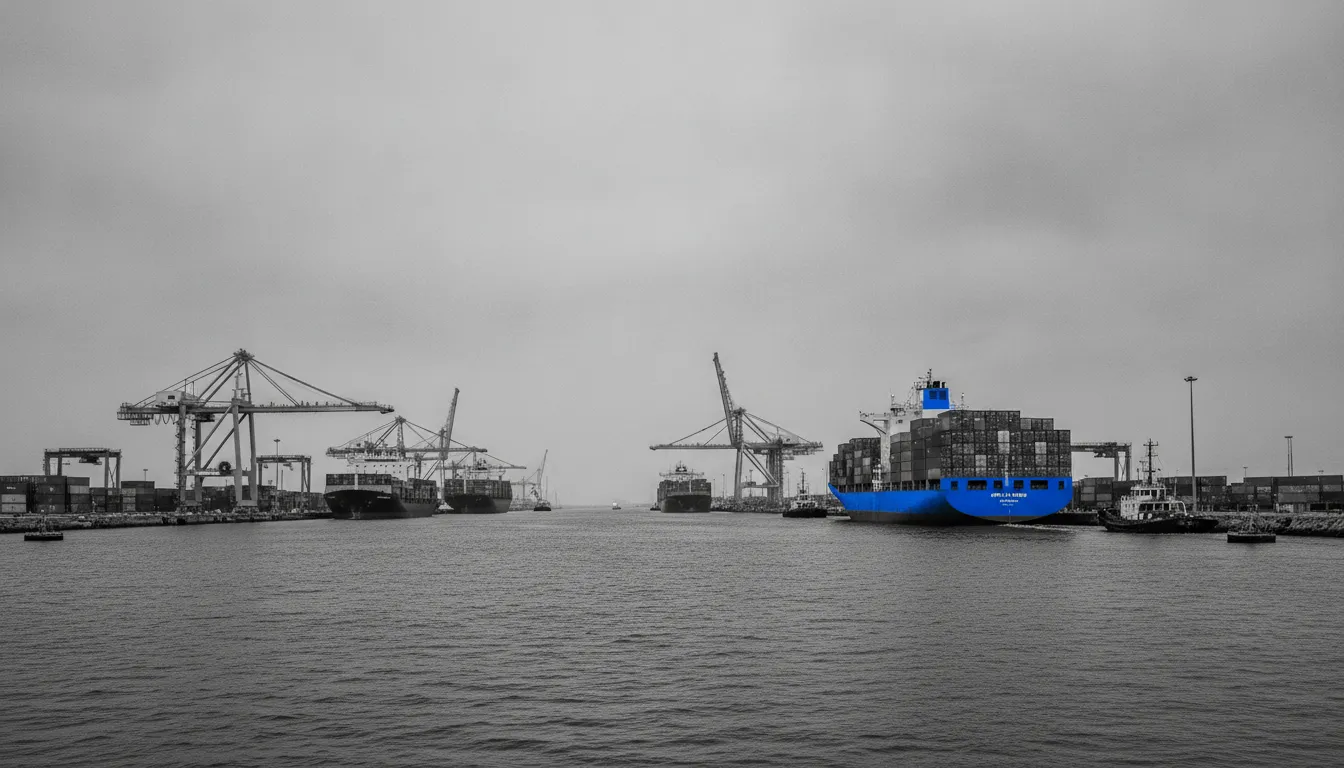
On 30 December 2025, the Tanzania Ports Authority's Operations Coordination Manager Josephat Lukindo announced a target of 54.59 million tonnes by 2030/31—a striking leap from the 27.7 million tonnes handled in 2024/25 and the 17.18 million tonnes processed in 2020/21. While official TPA statements cite a more conservative 30 million tonnes target, Lukindo's declaration signals a more aggressive internal ambition that reflects confidence in both infrastructure and private sector delivery. This growth trajectory is already underway: between July 2025 and April 2026, container traffic surged to 1,084,719 TEUs, a 25 per cent increase year-on-year, driven by demand from Zambia, the DRC, Malawi, Zimbabwe, Uganda, Rwanda, and Burundi. The port has become East Africa's busiest gateway, handling approximately 90 per cent of Tanzania's international cargo and serving as the primary entry point for six landlocked nations. For regional supply chains and hinterland operators, this acceleration means both unprecedented opportunity and the urgent need to prepare inland infrastructure and clearing capacity.
Critical metric: Between July 2025 and November 2025 alone, Dar es Salaam handled 13.97 million tonnes, up 34 per cent from 10.4 million tonnes in the same period the previous year. This velocity underscores that the 54.6-million-tonne goal is not mere aspiration; it reflects real momentum in cargo diversion and regional trade rebalancing.
Infrastructure: The Maritime Gateway Project and Berth Expansion
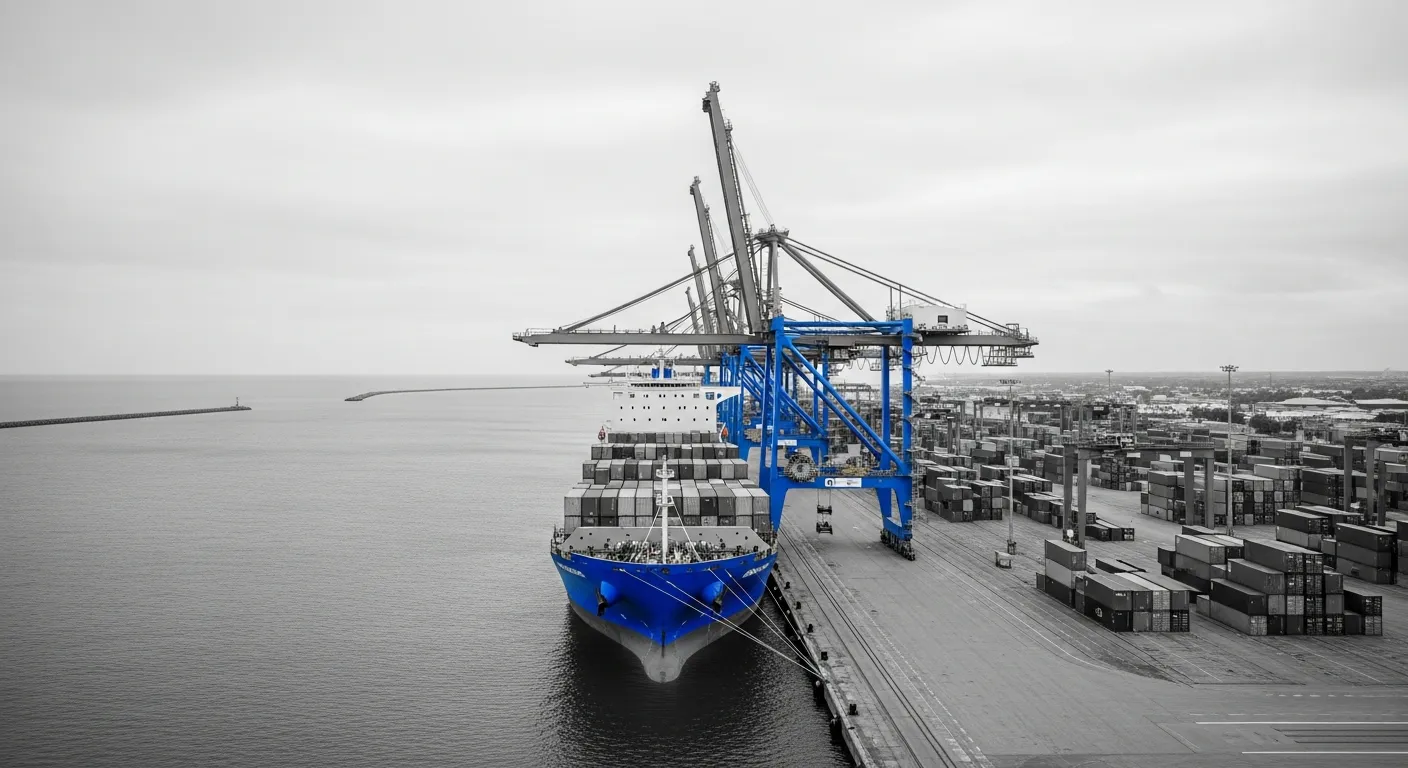
The Dar es Salaam Maritime Gateway Project, financed largely by the African Development Bank, has deepened the entrance channel and berths to 14.5 metres, enabling Panamax-class vessels to berth with heavier loads. The result is dramatic: average container vessel turnaround time has fallen from approximately 10 days to roughly 3 days, a shift that reduces demurrage exposure and improves schedule reliability for cargo owners across the region. Bulk operations have expanded too; grain vessels now discharge up to 65,000 tonnes per call, compared with around 15,000 tonnes previously. Expansion plans call for four new berths (numbered 12 to 15) plus two additional berths with a combined length of 500 metres, and two further berths in the Malindi area, bringing the total from 12 to 22 berths. These upgrades are backed by new gantry cranes capable of handling 30 containers per hour, up from 18 with older equipment. The 2024/25 financial year closed with a 15 per cent year-on-year increase in throughput, validating the infrastructure investment case.
For terminal operators and ship suppliers, rapid berth expansion creates both demand surge and competition pressure. Fixed berthing windows have been introduced to offer shipping lines guaranteed arrival slots and predictability, a feature that attracts larger vessel calls and reduces idle time at anchorage. Suppliers of mooring equipment, towage, bunkering, and vessel services should expect sustained call frequency increases, particularly among container and multipurpose operators serving the landlocked hinterland.
Split-Terminal Model: DP World and Adani Transform Operations
Dar es Salaam now operates under a split-terminal concession model. DP World, under a 30-year concession signed in October 2023, manages berths 0–7 and has committed to invest over $500 million in modernisation. The company now handles up to 30,000 containers per month, a substantial increase from the 7,000 previously handled by the public TPA. Adani Ports and Special Economic Zone Ltd (APSEZ), in partnership with UAE-based AD Ports Group, secured a 30-year concession in July 2024 to operate the Second Container Terminal (berths 8–11), which it acquired through its Tanzania East Africa Gateway Limited joint venture. TEAGTL now handles as many as 75,000 containers monthly—a sevenfold jump from historical volumes. Public investment in cranes and digital systems supports the model, while performance-based contracts are designed to enforce consistency and productivity. The engagement of global operators has already improved confidence among cargo owners and shipping lines, with container traffic at DP World increasing 57 per cent in May 2026 compared to May 2025.
This dual-operator structure mirrors successful precedents in West Africa and globally, where competing terminals drive efficiency gains. For suppliers and service providers, the split model means multiple decision-makers and procurement pathways, but also clearer performance accountability and faster capital deployment cycles. Ship chandlers and provisioning agents should prepare for increased vessel frequency and mixed procurement preferences across the two terminals.
Inland Logistics: The Critical Bottleneck and Kwala Depot Response
While port-side gains have been dramatic, inland clearance and evacuation remain the binding constraint on sustainable growth. TPA Director General Plasduce Mbossa emphasised that "a port succeeds when the whole chain moves," and that customer experience is determined not just by vessel turnaround but by clearance and evacuation speed. The Tanzania Revenue Authority introduced NTANCIS (the New Tanzania Customs Integrated System) in January 2025, replacing the legacy TANCIS system in use since 2014. This digital upgrade aims to accelerate clearance, though implementation challenges persist. In response, TPA has invested in the Kwala Inland Container Depot in Kibaha, connected to the port by rail, which is designed to handle 3,500 containers per day and over 300,000 containers annually—roughly 30 per cent of Dar es Salaam's container traffic. The TAZARA railway rehabilitation agreement between Tanzania and Zambia is set to begin in June 2026, which will increase rail capacity for transit cargo. For inland operators, clearing agents, and transport providers, this is the critical window: overloading of road networks, customs delays, and insufficient dry-port capacity are now the real limits on growth, not the port itself. The pressure on Dar es Salaam's streets is a symptom of efficiency at the quay, not failure.
Inland constraint metric: Existing dry-port infrastructure in Dar es Salaam can only accommodate approximately 37,000 containers, far below the growing demand. This mismatch is a major driver of road congestion and logistics cost inflation across the supply chain.
Public Revenue and Tariff Evolution
Growth is translating into government revenue. Customs collections from the port have risen from TZS 7.3 trillion in 2020 to TZS 12.3 trillion in the 2024/25 fiscal year. In January 2026, TPA published revised port tariffs under Government Notice No. 03 of 2026, following stakeholder consultation with the Tanzania Shipping Agencies Corporation (TASAC) and industry bodies including the Tanzania Freight Forwarders Association (TAFFA). The revised tariff affects vessel dues, container handling charges, storage and demurrage fees, and transit cargo charges for landlocked countries. For importers and freight forwarders, cost structures have shifted; transparency and clearing-agent competence in calculating new tariff liability are now competitive advantages. The investment in customs digitisation and fixed berthing windows has reduced container costs by 62.5 per cent compared to earlier years, a significant improvement for price-sensitive regional trade.
The tariff environment is now subject to regular review and government stakeholder consultation, creating both clarity and periodic adjustment. Suppliers and operators should factor annual tariff reviews into medium-term cost models, particularly for high-volume transit cargo serving Zambia, Uganda, Rwanda, and the DRC.
Regional Trade Rebalancing and the Landlocked Dependency
Dar es Salaam serves as the vital gateway for six landlocked nations: Zambia, Malawi, Uganda, Rwanda, Burundi, and the Democratic Republic of Congo. Transit cargo now represents over 42 per cent of throughput destined for the DRC and significant shares for Zambian copper, agricultural products, and Ugandan imports. The Central Corridor—connecting Dar via the Tanzania-Zambia Highway and rail links—remains the primary trade artery. Studies by the East African Community and TradeMark East Africa suggest that up to 40 per cent of Rwanda-Burundi transit traffic could shift from Kenya's Northern Corridor to Tanzania's Central Corridor by 2030, particularly if the Central Corridor Standard Gauge Railway is completed. A $3.9 billion investment programme (backed by a $696 million African Development Bank guarantee) aims to connect Tanzania to Burundi and the DRC. For regional suppliers, this signals that Dar es Salaam is becoming the preferred gateway for East and Central African landlocked markets, with cost and speed advantages that are now locking in traffic diversion away from Mombasa and other competitors.
Trade flow metric: DP World handled 44,001 TEUs in May 2026, a 57 per cent increase from 27,953 TEUs in May 2025; roll-on/roll-off cargo rose 88 per cent to 30,442 units in May 2026 from 16,177 in May 2025, reflecting strong vehicle import activity.
What This Means for You
If you are a port supplier, ship chandler, or terminal services provider, the doubling of Dar es Salaam's ambition to 54.6 million tonnes by 2030 presents a multi-year revenue opportunity. Berth expansion, equipment procurement, and bunkering demand are all accelerating. If you operate inland logistics, clearing or transport services, the critical challenge is capacity: road congestion, dry-port limitations, and customs processing speed are now the real constraints. Invest in digital integration with NTANCIS, secure berth slots via fixed-window agreements, and build partnerships with Kwala and emerging inland depots. If you manage regional trade for landlocked markets, cost advantages via Dar are now structural, and route reliability has improved dramatically. The port is no longer a bottleneck; the hinterland is. Plan accordingly.