"Dar es Salaam demonstrates superior operational resilience. While Mombasa maintained 94% waiting incidence throughout our analysis period, Dar es Salaam reduced its waiting incidence from 84% to 64%."
A Tale of Two East African Hubs: Performance Divergence
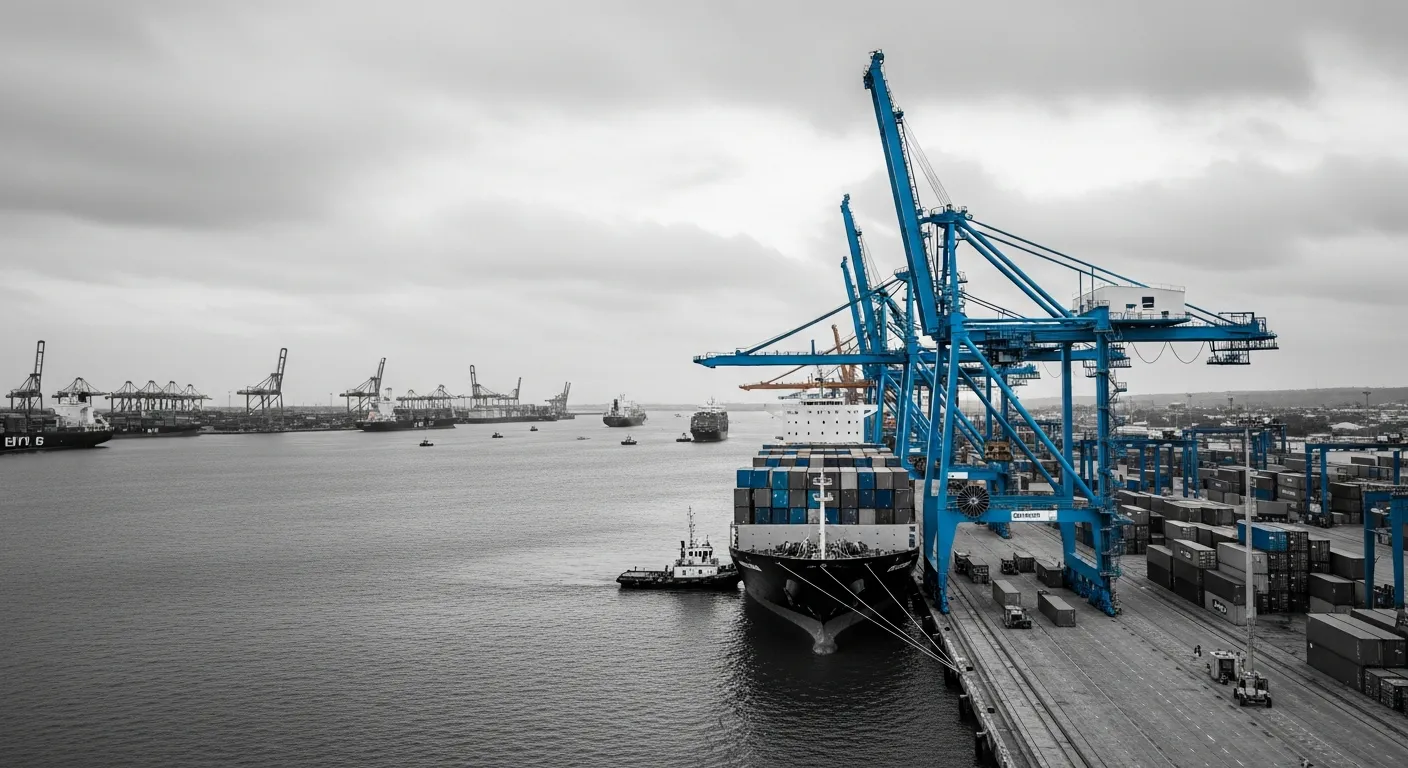
The two ports that anchor East Africa's trade corridors are following opposite trajectories. Dar es Salaam has consolidated operational improvements into measurable scheduling gains, recording a median 7-day average vessel waiting time of 3.25 days as of June 2026. Mombasa, by contrast, remains caught in structural congestion: the port recorded a 5.33-day average wait time in the same period, with persistent vessel queues and high yard utilisation compounding delays. The performance gap widens when examining waiting incidence—the proportion of vessels that experience delays regardless of throughput volume. Dar es Salaam reduced its waiting incidence from 84% to 64%, demonstrating operational efficiency gains despite rising cargo volumes. Mombasa maintained a 94% waiting incidence throughout the analysis period, meaning nearly every vessel faces some delay, a marker of terminal-level structural congestion rather than seasonal pressure.
This divergence reflects operational choices and infrastructure investment. Dar es Salaam's improvement came through operational efficiency rather than volume contraction, suggesting that modernisation initiatives—including customs system upgrades rolled out in January 2026 and the Kwala Inland Container Depot handling over 300,000 containers annually—are beginning to yield scheduling discipline. Mombasa, by contrast, faces compounding pressures: truck driver strikes, empty container imbalances, and infrastructure constraints at legacy terminals have created chronic delays. The KPA Container Terminal alone shows structural congestion with vessels waiting at 100% incidence in recent periods, regardless of throughput levels. For operators routing cargo between Asia and East Africa, the choice between ports now hinges on reliability rather than geographical proximity.
Hormuz Reroutes Flood African Capacity
The effective closure of the Strait of Hormuz following U.S. and Iranian military escalation in February 2026 has rewritten global shipping logistics overnight. Major carriers—CMA CGM, Hapag-Lloyd, MSC, and A.P. Moller–Maersk—continue to reroute vessels around the Cape of Good Hope, adding 10–14 days to transit times and forcing unprecedented cargo flows through African ports. Between March and April 2026, an average of 20 commercial vessels transited the Cape of Good Hope daily, compared with six during the same period in 2023—a more than threefold increase. By May 2026, an estimated 70% of freight traffic that previously passed through the Red Sea had been rerouted, marking one of the most significant disruptions to global trade routes in recent years.
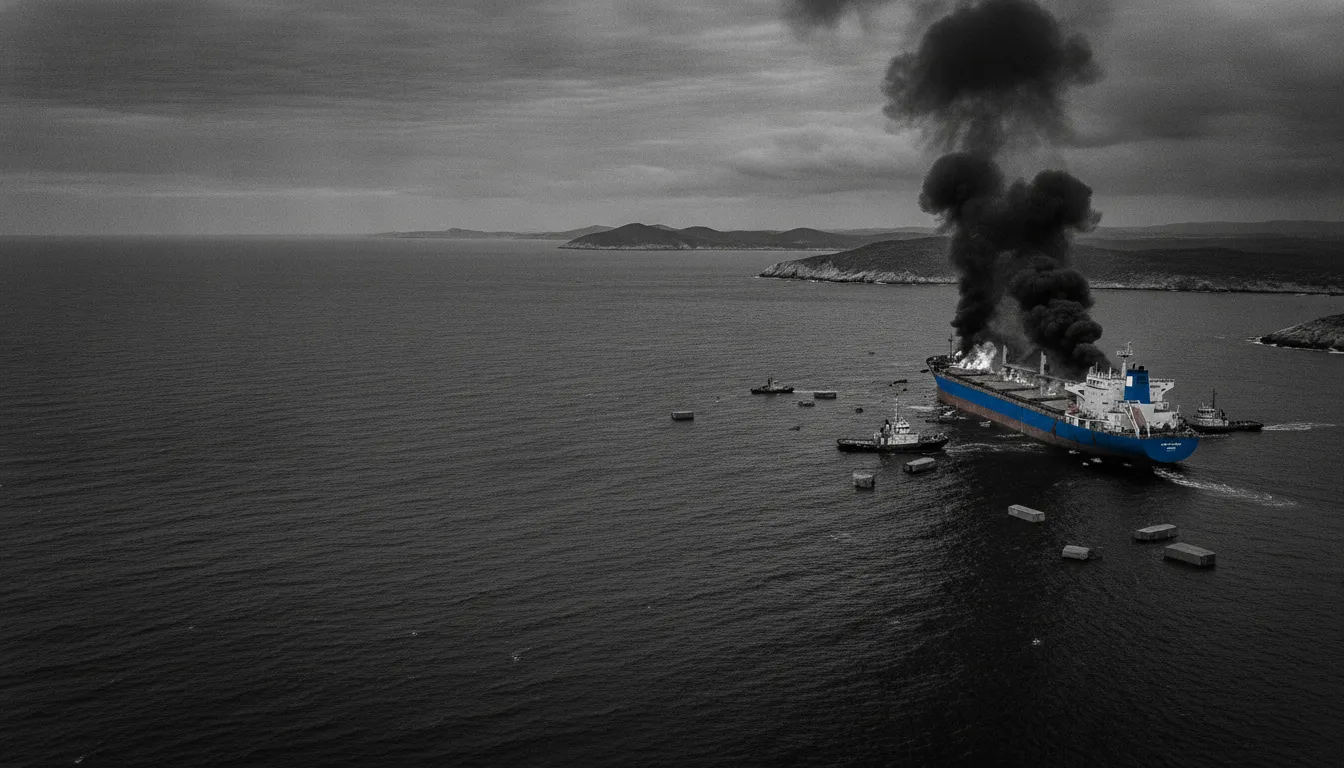
East African ports, already stressed by seasonal demand and legacy infrastructure constraints, are now absorbing this diverted cargo without proportional berth or yard capacity. Dar es Salaam and Mombasa are the primary beneficiaries of this rerouting within the region, yet both remain operationally strained. Dar es Salaam's moderate terminal congestion persists despite handling increasing cargo volumes driven by diversions from Mombasa and Horn routes. Mombasa saw 28 vessels queued offshore in December 2025 during peak season—a steep jump from normal conditions—as landlocked cargo destined for Uganda, Rwanda, South Sudan, and the DRC pivoted northward from the Central Corridor (Dar-based) due to prior political disruption. The cascade effect demonstrates a critical operational truth: congestion does not isolate at a single port; it migrates across terminals, inland corridors, and regional hubs, creating systemic strain rather than localized delay.
The African Port Congestion Benchmark
Africa's broader port system is groaning under rerouted demand. According to April 2026 data, Conakry (Guinea) recorded average waiting times of 15 days, establishing a regional benchmark that underscores the depth of capacity constraints. Beira (Mozambique) faced 15.7-day average waits in June 2026, with operational constraints extending recovery timelines to weeks 32–33. Banjul (The Gambia) reported 7.67-day waits in the same period. By this metric, Dar es Salaam's 3.25-day performance is genuinely competitive—outpacing most African hubs and only moderately above efficient ports like Tema (Ghana) at 5.83 days.
The regional picture, however, masks underlying fragility. Port congestion results from multiple factors converging simultaneously: empty container imbalances creating yard saturation, customs and documentation delays compounding berthing times, and infrastructure constraints at legacy terminals. African ports were not designed to absorb simultaneous diverted traffic from Middle East closures and seasonal peak cargo. Many facilities remain in disrepair even before traffic increased, requiring time for reconfiguration and modernisation. The investment gap is significant: whilst Tanger Med (North Africa) handles 11.1 million TEUs annually by leveraging location near Europe and major trade routes, sub-Saharan African ports lack equivalent scale or digital integration. South Africa's Durban, which handled 4.5 million TEU, fell out of Lloyd's List's 2025 global top 100 container ports because congestion, vessel delays, and weak rail connectivity dragged down performance.
Cascading Delays and Inland Bottlenecks
Vessel congestion is only the visible symptom; the real operational crisis lies inland. When Dar es Salaam port operations were disrupted following political unrest in late October 2025, diverted vessels fled to Mombasa en masse. Around 28 vessels queued offshore Mombasa by early December, straining both berthing capacity and landside infrastructure. Customs clearance delays, truck access bottlenecks, and limited inland carrier capacity transformed a berthing problem into a supply chain cascade affecting landlocked nations throughout the region.
For South Sudan, Rwanda, Burundi, eastern DRC, and Zambia, cargo originally routed via Dar es Salaam's Central Corridor pivoted to Mombasa's Northern Corridor. Yet Mombasa's road and inland transport system could not absorb the traffic spike. Shipping lines reported turnaround costs exceeding $38,000 per day for a single vessel waiting offshore. By mid-February 2026, the Kenya Revenue Authority's system maintenance triggered a 36-hour port suspension, compounding delays and trapping cargo at depots whilst trucks queued for more than 24 hours. Vessels that were technically berthed experienced extended inland handoff delays—demurrage charges continued to accrue even after the vessel had discharged. This landside-to-maritime coupling means that berth slot allocation alone is insufficient visibility; operators must now monitor customs processing, inland trucking capacity, and hinterland rail connectivity as integral delay drivers.
Strategic Shifts and Shippers' Responses
Faced with structural delays and unreliable scheduling, landlocked nations and major shippers are actively rerouting. South Sudan formalised agreements to utilise Dar es Salaam and Tanga as primary gateways from December 2025 onward, integrating revenue systems with Tanzania to bypass escalating costs and congestion of the Northern Corridor. This represents a deliberate shift away from geographical proximity: Mombasa sits closer to Juba, yet shippers now prioritise operational efficiency and predictable transit times over distance. For regional traders, Tanzanian ports have become a vital bargaining chip, particularly as Dar es Salaam offers extended free storage periods and lower landside transport fees relative to Mombasa's 122% surge in Mombasa-Kampala corridor transport fees reported in early 2026.
For operators and procurement teams, this environment demands structural changes to planning horizons and supplier relationships. Shippers can no longer rely on port-wide averages or carrier estimates; real-time monitoring of terminal-level performance has become essential. Pre-positioning containers and crews 6+ weeks in advance—rather than the standard 4-week lead time—is now standard practice to absorb potential delays. Carriers increasingly use independent terminal-level data to negotiate service contracts with performance-based metrics rather than fixed transit time commitments. Long-lead procurement of specialised equipment, spare parts, and crew provisions must now account for extended dwell times and unpredictable inland connectivity, particularly for any shipment touching Mombasa or relying on Northern Corridor overland logistics.
What This Means for You
The divergence between Dar es Salaam and Mombasa is not a temporary scheduling anomaly—it reflects fundamental capacity and operational discipline differences that will persist. Route diversification is no longer optional. Operators shipping to East Africa must maintain active alternatives to Mombasa, with Dar es Salaam as the primary counter-risk, backed by contingency arrangements for Tanga or Djibouti depending on cargo destination. Procurement and crew planning must extend lead times by 2–4 weeks to absorb unexpected port or inland delays. Container pre-positioning contracts should now include performance-based incentives tied to terminal-specific metrics rather than carrier-published schedules. Finally, monitor real-time terminal congestion data—not port-wide averages—to identify optimal gate-in windows and avoid demurrage accumulation. The ports that offer the fastest turnaround today may not tomorrow; agility and data-driven decision-making are the new competitive edge in East African trade.