
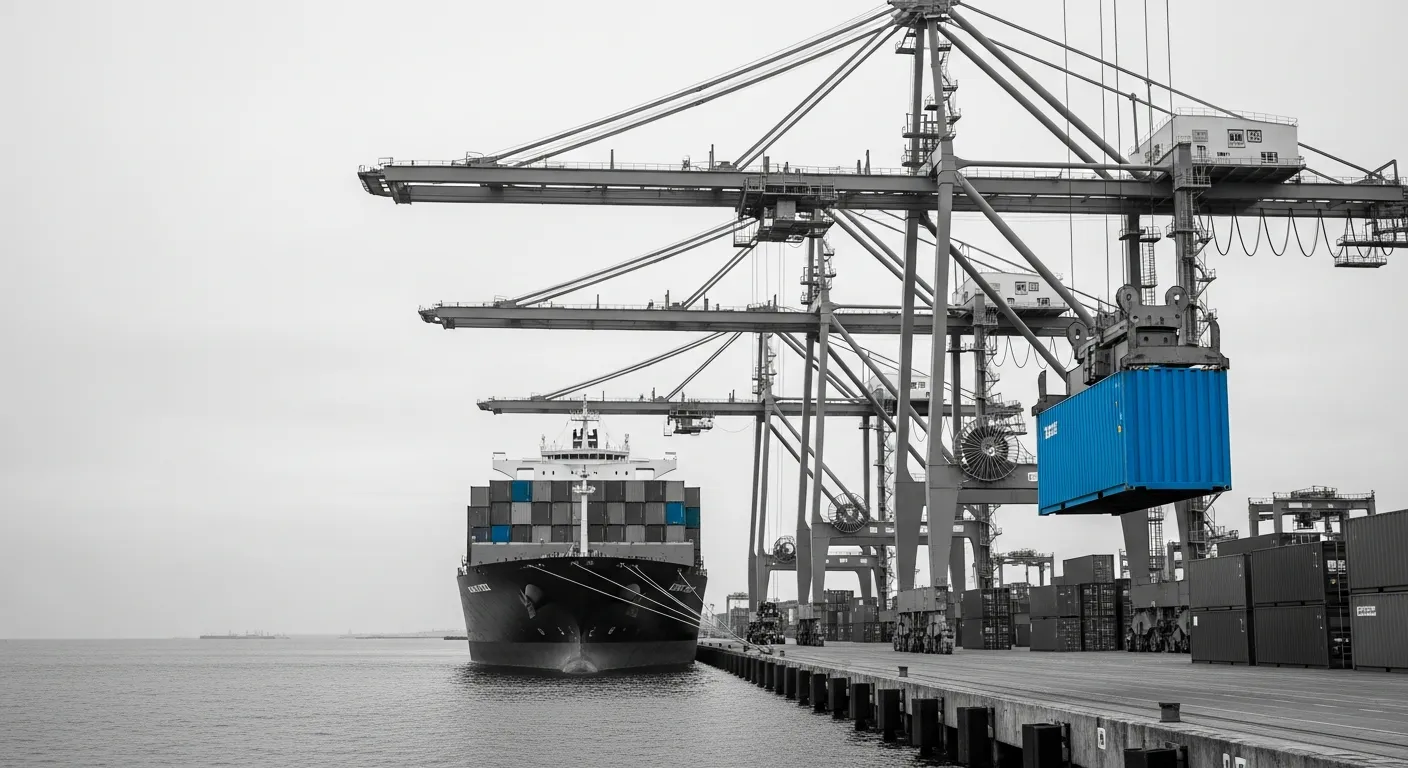
"Private-sector participation in ports has the potential to positively influence efficiencies, export processes and global competitiveness," Transnet Group Chief Executive Michelle Phillips said at the December 10 signing ceremony. That efficiency promise is driving measurable gains, yet the shift raises sharp questions for regional procurement teams.
The Scale and Urgency of Durban's Handover
Durban Container Terminal Pier 2 handles 72% of the Port of Durban's throughput and 46% of South Africa's national port traffic. Management responsibility transferred to ICTSI on January 1, 2026, marking the formal end of nearly three years of legal and procurement delays. ICTSI was awarded the concession in July 2023 by Transnet but faced a challenge from rival APM Terminals (a Maersk affiliate) that contested the solvency calculation methodology. The KwaZulu-Natal High Court dismissed that challenge on October 10, 2025, clearing the path for the December 10 partnership signature and immediate January 1 operational commencement.
The 25-year agreement establishes a new special-purpose vehicle (Newco) in which Transnet retains 51% ownership and ICTSI holds 49%, with ICTSI assuming operational responsibility for DCT Pier 2. The structure preserves state control while placing execution responsibility with ICTSI, the Philippines-based operator of 34 terminals across 19 countries. The concession represents ICTSI's first East African foothold and underpins its continental African expansion strategy, complementing existing operations in Nigeria, Madagascar, and Cameroon.
Crane Productivity and Capacity Lift: The Hard Numbers
Planned upgrades target gross crane moves per hour (GCH) to rise from 18 to 28 moves—a 56% improvement. Ship working hours will increase from 60 to 120 per vessel. Terminal capacity is forecast to expand from 2 million to 2.8 million twenty-foot equivalent units (TEUs) annually, a 40% growth enabled by new container handling equipment, additional rubber-tyred gantry cranes (28 new units with anti-sway technology), and advanced scheduling systems. ICTSI committed approximately USD 650–670 million in capital investment over the partnership's initial phase.
By June 2026, after six months of operations, field reports confirmed tangible gains: crane productivity climbed toward the 28-move target, vessel turnaround times compressed, truck throughput at terminal gates increased, and the queue of vessels waiting at anchorage outside Durban port diminished measurably. These improvements ripple across South Africa's supply chains—exporters report that years of bottleneck delays are yielding to faster container releases and reduced gate congestion, directly benefiting agricultural exports (particularly citrus and other perishables seasonal to South Africa's export calendar).
Supplier Access Redefined: Terminal Vendor and Gate Protocol Shifts
ICTSI's takeover introduces standardised gate and vendor management protocols modelled on the operator's global portfolio. This includes tighter truck appointment systems, digital booking, and compliance with ICTSI's preferred supplier frameworks. For traditional chandlers and regional suppliers accustomed to ad-hoc access during the state-operated era, the new regime demands pre-registration, digital-first interfaces, and alignment with ICTSI's procurement standards—barriers that exclude smaller, informal, or non-digitalised suppliers.
Regional supply chains from southern Africa (Lesotho, Eswatini, Botswana, Zimbabwe, and Mozambique) that historically bypassed formal vessel supply chains now face consolidated purchasing models. ICTSI's technology ecosystem favours containerised module efficiency over spot-market chandlery. Procurement teams must plan voyage supply requirements (fresh water, provisions, fuel sludge handling, lube oil certification) to conform to ICTSI's vendor lists and lead times, shifting advantage toward multinational ship suppliers with digital credentials and away from local operators without formal accreditation.
Port Economics and the Procurement Trade-Off
The efficiency gains (faster turnaround, reduced demurrage, lower vessel waiting costs) offset higher port tariffs and vendor markups for compliant supply chains. Durban's 5.9% general rate increase effective January 1, 2026, and ICTSI's operational cost structure mean per-move costs at Pier 2 remain higher than legacy state pricing. Buyers of ship supply must weigh vessel call economics: shorter dwell times reduce daily port costs, but mandatory premium supply vendors and digital compliance costs create new per-call overheads.
For regional shipowners managing tight margin trades (intra-African, Indian Ocean feeder services), the efficiency gain translates unevenly. Large containerised export operations (citrus, automotive parts) and transshipment traffic enjoy maximum benefit from tighter turnarounds. Break-bulk, project cargo, and regional feeders encounter steeper supplier switching costs and may find alternative ports (Cape Town, East London, or regional alternatives) more competitive once supply-chain compliance penalties are calculated.
Regional Competitive Dynamics and the Chandlery Realignment
ICTSI's regional footprint (Nigeria, Madagascar, Cameroon, now Durban) creates a continental leverage point for procurement standardisation. Suppliers seeking preferential rates or access across ICTSI's African network must align with group-wide compliance, digital capability, and pricing frameworks. This consolidation advantage favours multinational ship supply houses (Bunkering companies, major provisioning platforms, spare-parts logistics) but narrows space for independent chandlers that have operated in Durban's fragmented supply ecosystem.
The competitive realignment is already visible: Q1 2026 traffic data show rail cargo volumes out of Durban up 63% week-on-week (partly seasonal for citrus), reflecting confidence in faster turnarounds. Yet supplier feedback from independent provisioning operators reports increased pressure to align with ICTSI systems or lose port-call access. Regional trade associations have called for transparent service-level agreements and measurable KPI frameworks to prevent monopolistic vendor control—a signal that procurement teams perceive risk in the efficiency-access trade-off.
What This Means for Procurement Teams and Regional Operators
For shipowners and managers routing calls through sub-Saharan Africa, Durban Pier 2 now represents a high-efficiency, high-compliance port ecosystem. Procurement leaders should conduct vessel-call cost modelling (total move costs, supply vendor markups, digital compliance overhead) before confirming calls. Engagement with ICTSI's preferred supplier lists and early registration in its digital systems (truck appointment, vendor accreditation, payment gateways) is no longer optional. Regional supply chains must invest in digital capability and formal accreditation to maintain competitiveness; informal suppliers face exclusion.
Strategically, the Pier 2 shift signals ICTSI's intention to rationalise procurement across its African network. Shipowners should monitor comparable efficiency gains (and supplier consolidation) rolling out at ICTSI's other African terminals. For procurement teams managing multi-port regional strategies, supplier diversity and direct relationships must be preserved at ports not yet subjected to private terminal operator control—preserving optionality as the African container market consolidates. The Durban Pier 2 concession is a landmark in privatisation, not a cautionary tale, yet it underscores that port efficiency and supplier access are not always aligned.


