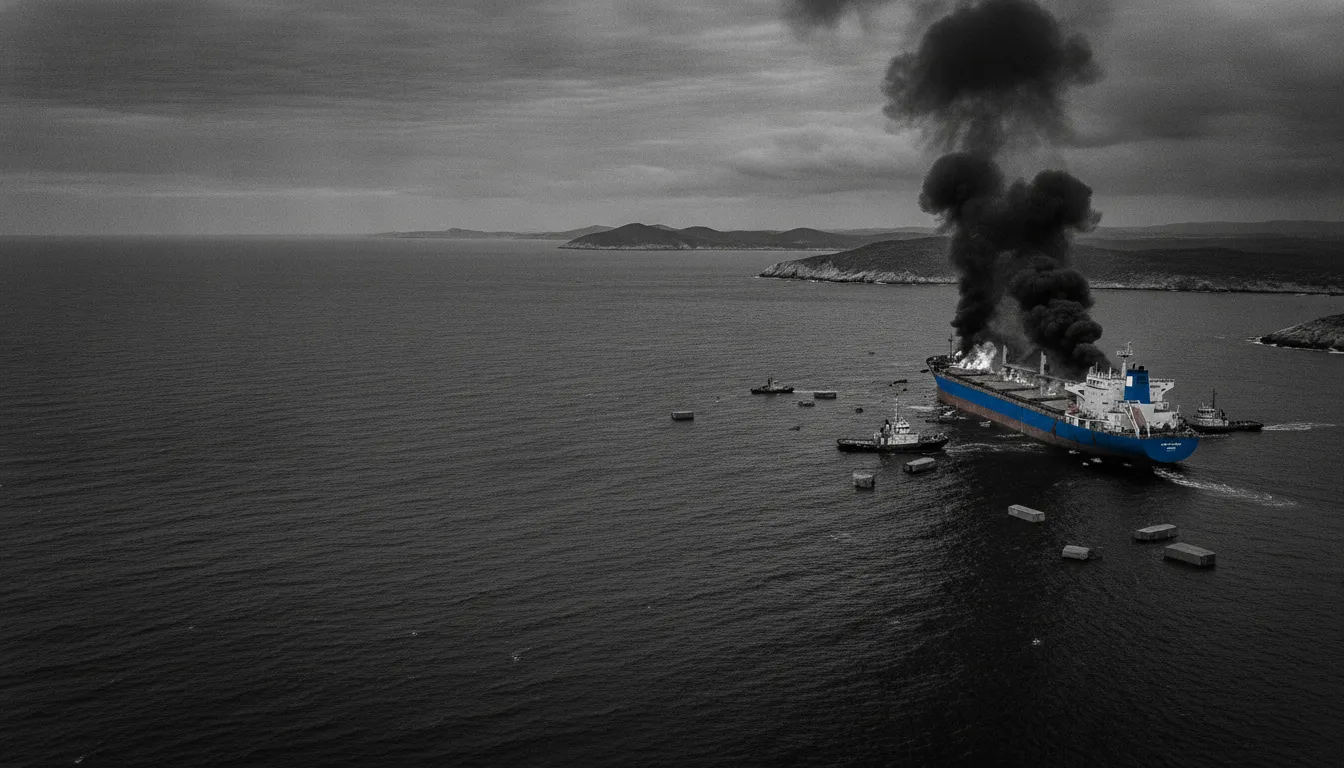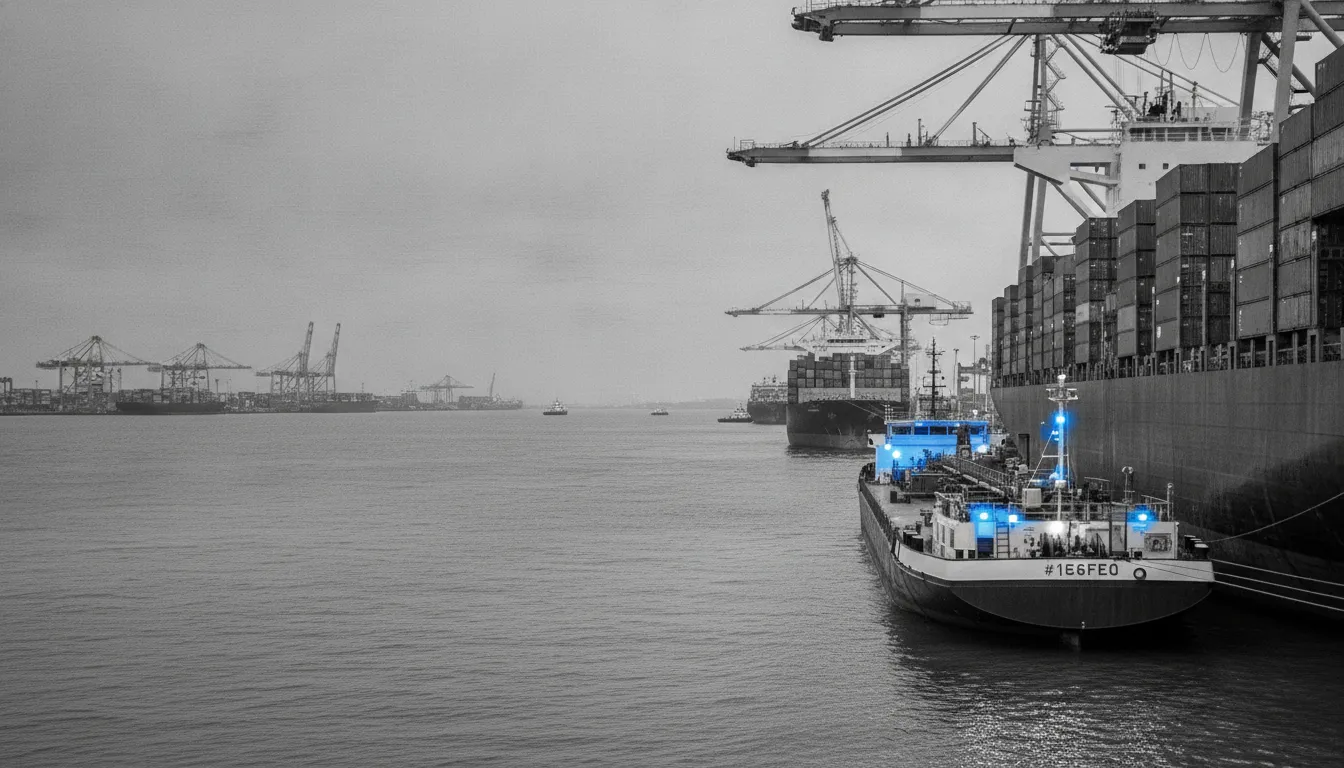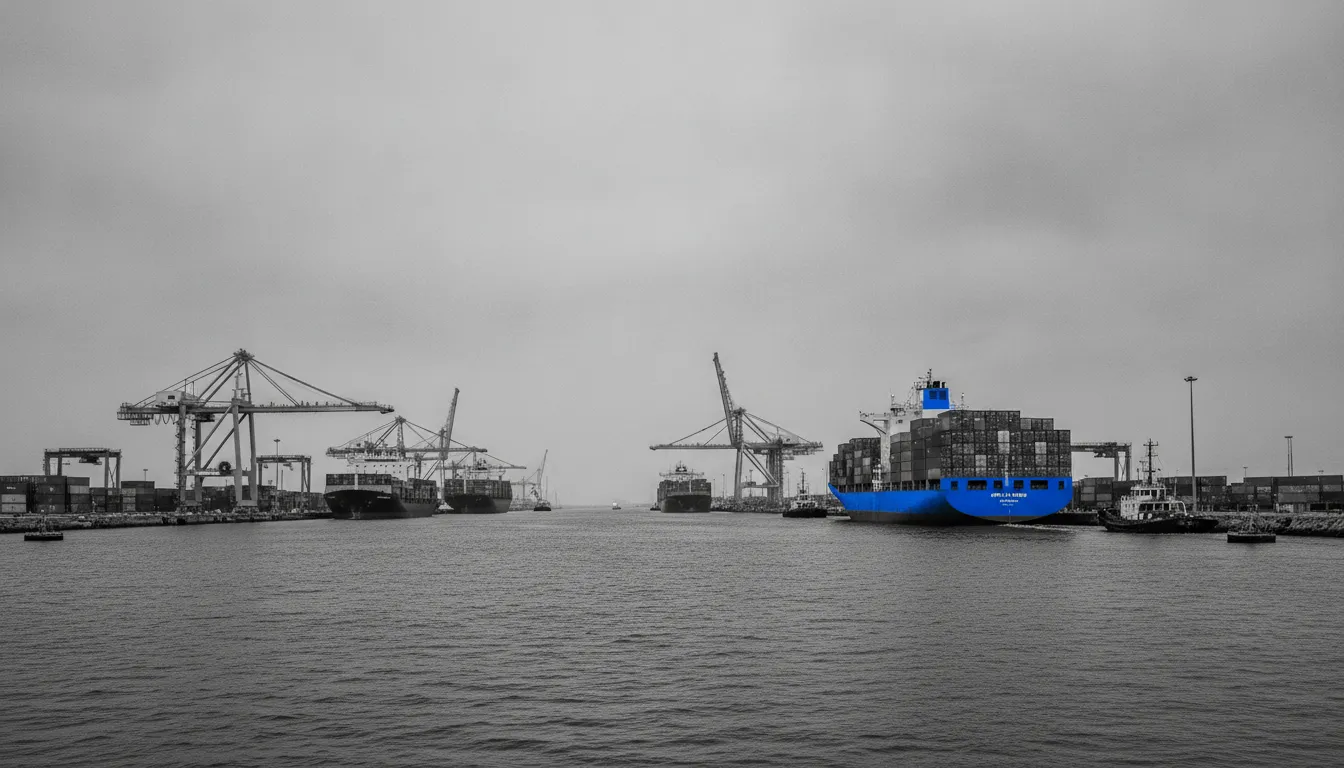
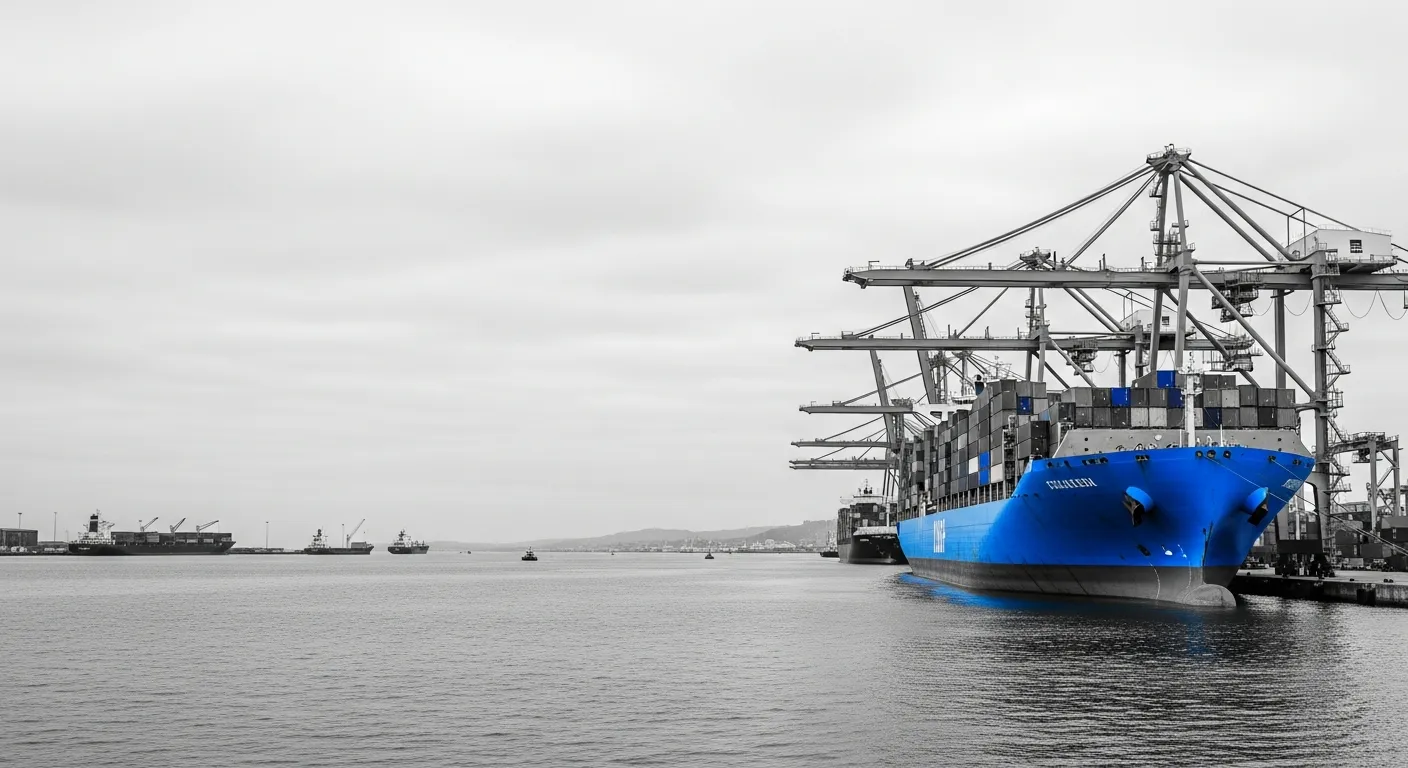
"Feeder vessels form somewhat of a 'feeder network' by transporting cargo between smaller ports and larger regional hubs. While this is beneficial for global supply chains, it is also hugely beneficial from an economic perspective, due to the employment and trade provided to regional ports."
From Throughput to Hub Status: The Private Concession Catalyst
Durban's container operations have undergone structural change. In late 2025, International Container Terminal Services Inc. (ICTSI) took a 25-year concession of Pier 2, committing R11 billion in upgrades. The operator targets capacity growth from 2 million to 2.8 million TEUs, with crane moves per hour climbing from 18 to 28 and tightened vessel turnaround times. This is not merely efficiency—it is a repositioning. Paired with Transnet National Ports Authority's KZN Logistics Hub strategy, which envisions Durban as an international container hub with planned capacity of 11.4 million TEUs, the port is pivoting from congested gateway to structured transshipment centre.
The private investment signals confidence in feeder-driven growth. Feeder services link smaller regional ports to major transshipment hubs, enabling remote ports to access global trade networks while reducing pressure on congested terminals. Durban currently handles transshipment cargo, but the deliberate uplift in terminal efficiency suggests a strategic bet on frequency, reliability and the ability to absorb regional intra-African flows. For ship suppliers and crew change agents, this means more vessels remaining in port longer—not idle, but actively loading and discharging feeder containers. That window creates revenue for provisioning, crew rotation and waste handling.
The June 2026 Vulnerability: Landside Disruption Exposed
On 19 June 2026, Durban's landside infrastructure came under severe stress. A nationwide socio-economic protest by the Congress of South African Trade Unions (COSATU) focused on the cost of living crisis and unemployment triggered planned marches along Bayhead Road and Langeberg Road between 08:00 and 13:00. Although waterside operations continued uninterrupted, Transnet Port Terminals warned that landside operations would face "significant delays due to potential access constraints and congestion in affected areas."
The episode was sobering. Exporters Western Cape noted that the disruption exposed "the fragility" of supply chain recovery in South Africa. The broader protest was a Section 77 protected action under the Labour Relations Act, spanning all nine provinces and targeting retrenchment practices and economic policy. Durban's vulnerability lay not at berth but in ground access—trucking, rail co-ordination and documentation processing. For ship suppliers and chandlers, that translated into delayed crew provisioning, postponed waste collection and interrupted supply schedules. The incident underscores that transshipment hub status cannot rest on waterside efficiency alone.
Regional Feeder Networks: Cargo Diversification Beyond South African Imports
Durban's pivot toward feeder networks reflects a shift in regional strategy. Global carriers including Maersk, MSC, CMA CGM and Hapag-Lloyd call Durban and employ it as a transshipment node for East African and Indian Ocean trade. United Africa Feeder Line, for example, operates weekly routes including GISA (Jebel Ali via Mundra, Nhava Sheva, and Durban) and services linking Mombasa and Zanzibar. MSC's African shipping model explicitly connects Durban to regional ports through feeder services and inland transport, tapping landlocked and remote markets in Southern Africa and beyond.
This architecture creates cascading demand. Vessels arriving to discharge mainline import containers also stage regional feeder cargo for reload. That reload cycle—consolidation, storage, re-documentation—stretches dwell time and requires labour-intensive terminal operations. It also necessitates provisioning for crew on extended calls, spares delivery, waste offloading from regional feeder vessels, and bunkering adjustments as small feeders rotate through faster than mainline mega-ships. The diversification away from pure South African import/export dependency strengthens resilience to local demand shocks and opens ancillary revenue streams for maritime service providers.
Crew Change and Ship Supply: The Overlooked Revenue Stream
Durban established itself as a crew change port early. Crew changes are now permitted at all nine commercial South African ports, with Durban hosting multiple nationalities—Indian, Filipino, Russian, Latvian, South African, Romanian and others. Specialist agencies including Envision Maritime, Axxess Shipping, and others co-ordinate joiners and off-signers, managing immigration, PCR documentation and transport from airport to berth.
However, crew change revenue remains latent. Extended vessel time-at-port during feeder operations creates demand for crew provisioning, medical services, telecommunications, and shore leave co-ordination. National Ship Chandlers, Provimar Ship Suppliers, Chandling International and other established suppliers operate in Durban but have historically focused on mainline calling patterns—fast turnarounds driven by schedule adherence. Transshipment dwell stretches that window. A vessel waiting two to three days for feeder consolidation generates incremental provisioning orders: fresh vegetables, frozen provisions, deck stores, lube oils and spare parts that would not appear on a 24-hour call. Waste management—sludge, oily residue, food waste—also scales with extended port time, creating opportunities for specialist waste handling firms.
Landside Infrastructure and the Durban-Gauteng Corridor: Resilience Through Inland Hubs
Durban's transshipment vision depends not only on berth efficiency but on inland connectivity. The R10 billion Insimbi Ridge logistics precinct under development at Cato Ridge on the Durban-Gauteng freight corridor is material. Breaking ground in June 2026, the precinct will provide warehousing, cold storage and intermodal capacity for cargo flows between Durban and inland Gauteng markets. Phase 1 includes 33,000 m² of logistics facilities, with operations commencing in 2027. This infrastructure buffers transshipment operations from the landside disruption witnessed in June—cargo can be pre-staged inland, decoupling port labour constraints from throughput.
Parallel to this, the Bayhead Road Rehabilitation Project reinforces inbound and outbound arteries to the container terminal. For port agents, reduced congestion means timelier crew changes and spares delivery. For suppliers, it ensures consistent access for provisions and waste removal. The regional logistics vision—not just Durban as a port but Durban plus Gauteng hinterland as a unified system—reduces vulnerability to single-point landside disruptions and creates stable demand for ship supply services distributed across extended dwell windows.
What This Means for Chandlers and Suppliers: Shifting Demand Patterns
Durban's transshipment pivot reshapes the buyer-supplier relationship. Traditional mainline calling ships—mega-container vessels on fixed schedules—demand rapid provisioning and minimal service intervention. Transshipment-oriented operations, including feeder vessel rotation and regional cargo consolidation, create fundamentally different supply profiles. Vessels remain longer, requiring larger and more varied provisions. Crew changes lengthen, driving demand for medical support, crew accommodations and recreational arrangements. Waste streams grow and diversify—feeder operations generate more handling-related sludge and packaging residue. Bunkering windows expand, allowing optimisation rather than emergency top-up.
Suppliers positioned to offer integrated services—provisioning, crew logistics, waste management and spares logistics—will capture disproportionate value from the transshipment shift. The June 2026 COSATU disruptions demonstrated that landside vulnerability affects supply chain reliability directly. Chandlers and ship suppliers who invest in pre-positioning stock inland (leveraging new Insimbi Ridge capacity or similar hubs), co-ordinate with port agents on extended dwell forecasts, and establish redundancy in delivery logistics will differentiate themselves in a market increasingly defined by frequency, certainty and cargo mix complexity rather than pure volume throughput.