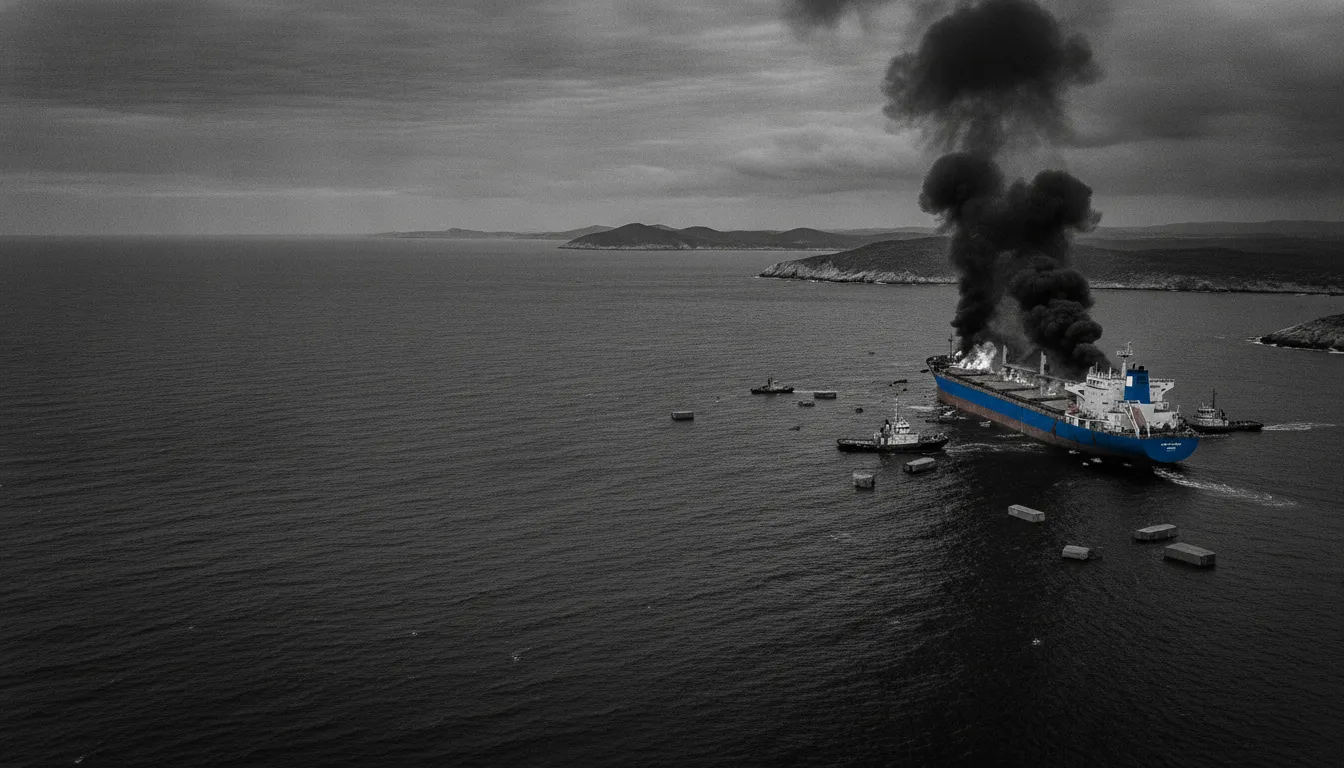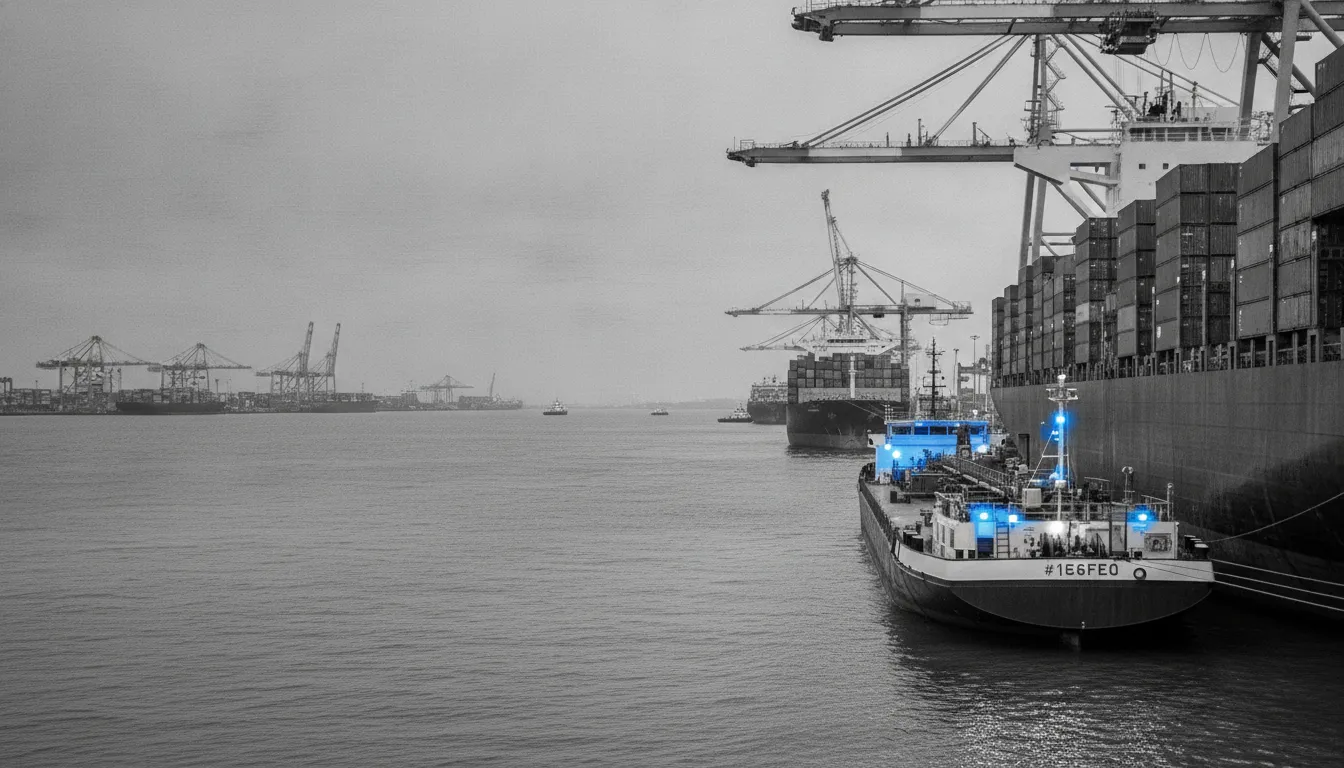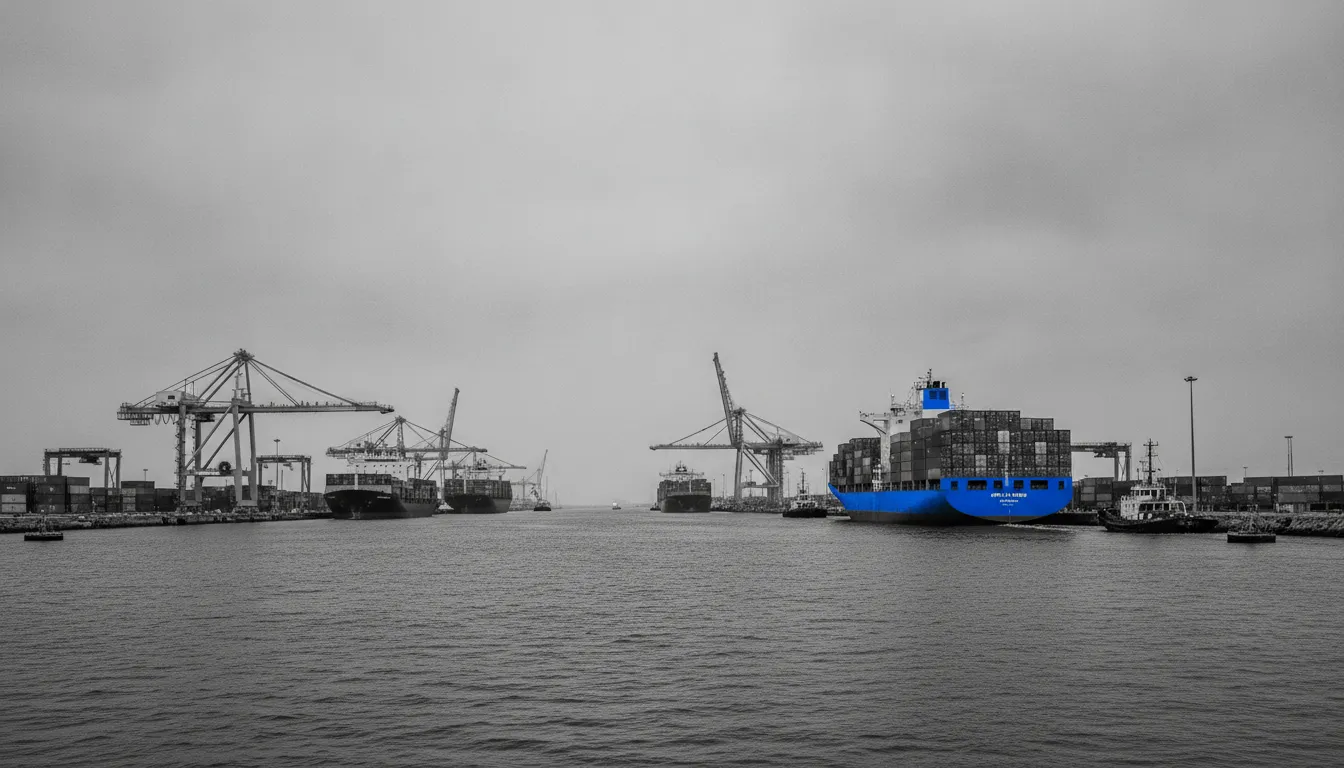
"Early peak season demand, capacity compression, and Middle East geopolitical disruption converge to tighten ocean freight markets."
June Surge Driven by Tariff Frontloading
June 2026 container volumes into North America hit 2.25 million TEUs, marking the early arrival of peak season—typically expected in July or August. The 14.3% year-on-year increase was driven by multiple concurrent shocks: importers accelerating shipments before the Section 122 tariff deadline (expiring 24 July at the 150-day mark), anticipated July bunker adjustment factor (BAF) surcharge increases, and manufacturer price rises scheduled for July. Maersk's North America market update confirmed retailers were frontloading merchandise to protect fall inventory under tariff uncertainty.
The tariff deadline is particularly acute. Section 122 allows the U.S. President to impose temporary import surcharges up to 15% for 150 days—meaning cargo arriving after 24 July faces a material cost jump. Section 301 tariffs on transpacific goods, now proposed at 10–12.5% on 60 countries including China, the EU and India, create a second-order compression effect. Supply chain teams modelled multiple tariff scenarios, but many lacked formal contingency plans as of June.
Rate Spikes Across East-West Corridors
Spot rates have climbed sharply across all major east-west lanes. On 2 July 2026, Drewry's World Container Index surged 9% to $4,530 per 40ft container, driven by rate increases on transpacific and Asia–Europe routes. Transpacific East Coast rates reached $7,400/FEU, whilst West Coast prices stood just above their 2025 peak-season highs. Shanghai to New York spot rates climbed 20% to $5,870 per 40ft, while Shanghai to Los Angeles increased 3% to $4,683 per 40ft. Carriers implemented peak season surcharges of $1,000–$2,000 per 20ft and 40ft container, effective mid-June. Asia-Europe rates showed similar stress, with Shanghai-to-Rotterdam rates rising to $4,392 per 40ft (+1% week-on-week). Maersk explicitly introduced seasonal transpacific capacity injections and peak season surcharges in response to frontloading demand and tariff uncertainty.
The rate increases compound additional surcharges: emergency fuel surcharges (EFS), war risk premiums from Middle East disruptions, terminal handling charges (THC), and currency adjustment factors (CAF). Importers face bundled costs substantially higher than planning assumptions made three months earlier. One logistics provider noted that a delay of one or two weeks in booking may expose shipment to a new rate level, a peak season surcharge, a less convenient sailing, or a longer transit route—eroding landed cost predictability at precisely the moment supply chains demand stability.
Blank Sailings & Capacity Compression
Despite structural fleet overcapacity (over 7 million TEUs of new capacity delivered between 2024 and 2026), carriers are tightening available space through selective blank sailings. Drewry's Container Capacity Insight reported only three to four blank sailings scheduled on transpacific routes for some weeks in late June—significantly fewer than earlier in the year, but still enough to signal capacity management discipline. The Ocean Alliance reported a 19.9% sailing cancellation rate as of May, whilst MSC (15.9%) and Premier Alliance (17.1%) deployed more targeted blanked sailing strategies to prop up pricing. The Gemini Alliance, led by Maersk, showed the lowest rate at 2.8%, partly reflecting deteriorating earnings and market share pressures in Q1 2026. Rolled containers—cargo bumped from one sailing to a later departure—have been reported at Far East origins, signalling that booking demand is outpacing available slot inventory. Carriers communicate blanked sailing schedules with minimal advance notice; some announcements arrive days before scheduled departures, leaving shippers with limited rerouting options and forcing acceptance of higher rates or alternative services.
Capacity tightness is concentrated on profitable main lines. Carriers shifted capacity from secondary and regional lanes to transpacific and Asia-Europe services where demand and tariff-driven frontloading support premium pricing. This leaves shippers on lower-volume routes facing longer wait times and reduced scheduling flexibility. Port congestion, driven by surging volumes at Far East hubs (Shanghai, Singapore) and North American gateways (LA, NY), further compresses effective vessel capacity by extending dwell times and reducing port productivity.
Geopolitical Disruption & Fuel Cost Tailwinds
The Strait of Hormuz remains under elevated tension following the interim U.S.–Iran agreement and subsequent Middle East reignition of hostilities. Most carriers continue routing around the Cape of Good Hope, adding 10–14 days and $800–$1,500 per container in extra costs on Asia-Europe and Asia-US East Coast lanes. War risk premiums remain embedded in rates. Bunker fuel costs, whilst easing slightly after the Hormuz interim agreement announcement, remain elevated by historical standards and are set to spike further in July when carriers implement scheduled quarterly BAF increases. One freight-rate data provider noted that an 80% increase in BAF may be implemented in July—a material cost shock that shippers are trying to frontload their way past.
Geopolitical rerouting has extended transit times beyond normal peak-season compression, creating a double squeeze: rates are rising and delivery windows are shrinking. Supply chains designed around predictable 30–35 day Asia-US East Coast transits now face 40–45 day windows. For time-sensitive retail, automotive and electronics shipments, the loss of schedule certainty forces either premium air freight alternatives or acceptance of inventory arrival delays.
Procurement & Contracting Impact
The early peak season is dismantling conventional procurement playbooks. Shippers operating under annual contract frameworks negotiated in December 2025—when rates were lower and less volatile—are now exposed to spot-market conditions 20–30% higher than contract terms. Carriers have implemented floating rate clauses and surcharge escalation mechanisms, transferring volatility risk onto importers. Procurement teams that delayed freight bookings, hoping for seasonal rate stabilisation, now compete directly with early movers for available capacity. A June 2026 supply chain intelligence report noted that freight markets are tightening faster than anticipated, creating winners (companies that booked early) and losers (those that delayed). The result is portfolio-level cost variance: some shipments move at negotiated rates, others at spot-market premiums, complicating landed cost forecasts and margin planning. Section 122 and Section 301 tariff contingency planning remains fragmented across many organisations; 65% of respondents cited sourcing-pattern changes as a mitigation strategy, but documented tariff-to-logistics playbooks remain rare.
The National Retail Federation shifted its June 2026 peak season forecast one month earlier than the 2025 projection, signalling confidence in frontloading volumes but creating operational strain on ports, inland trucking and warehouse infrastructure. Drayage capacity is visibly constrained; appointment availability, rail coordination and container flow have become increasingly volatile. Maersk and other carriers are signalling that shippers should plan for additional surcharges and expect longer inland execution windows as post-port supply chains absorb compressed discharge windows and uneven cargo flow.
What This Means for You
The compression of peak season into June and early July is not a cyclical hiccup—it is a structural reshaping of procurement timelines driven by tariff deadlines, fuel cost uncertainty and geopolitical disruption. For shipowners and vessel operators, this early and intense demand front creates a narrow margin for margin capture before tariff-driven demand evaporates post-24 July. For freight buyers and logistics providers, the immediate imperative is rate certainty: lock in space and pricing now, build flexibility into surcharge exposure, and plan for schedule disruption via blank sailings and port congestion. For supply chain planners, the lesson is clear: assume future peak seasons will not follow historical calendar patterns. Tariff expiration dates, regulatory deadlines and fuel surcharge cycles are now the clock. The companies that survive 2026 will be those managing all procurement signals simultaneously, not waiting for a single event to resolve.