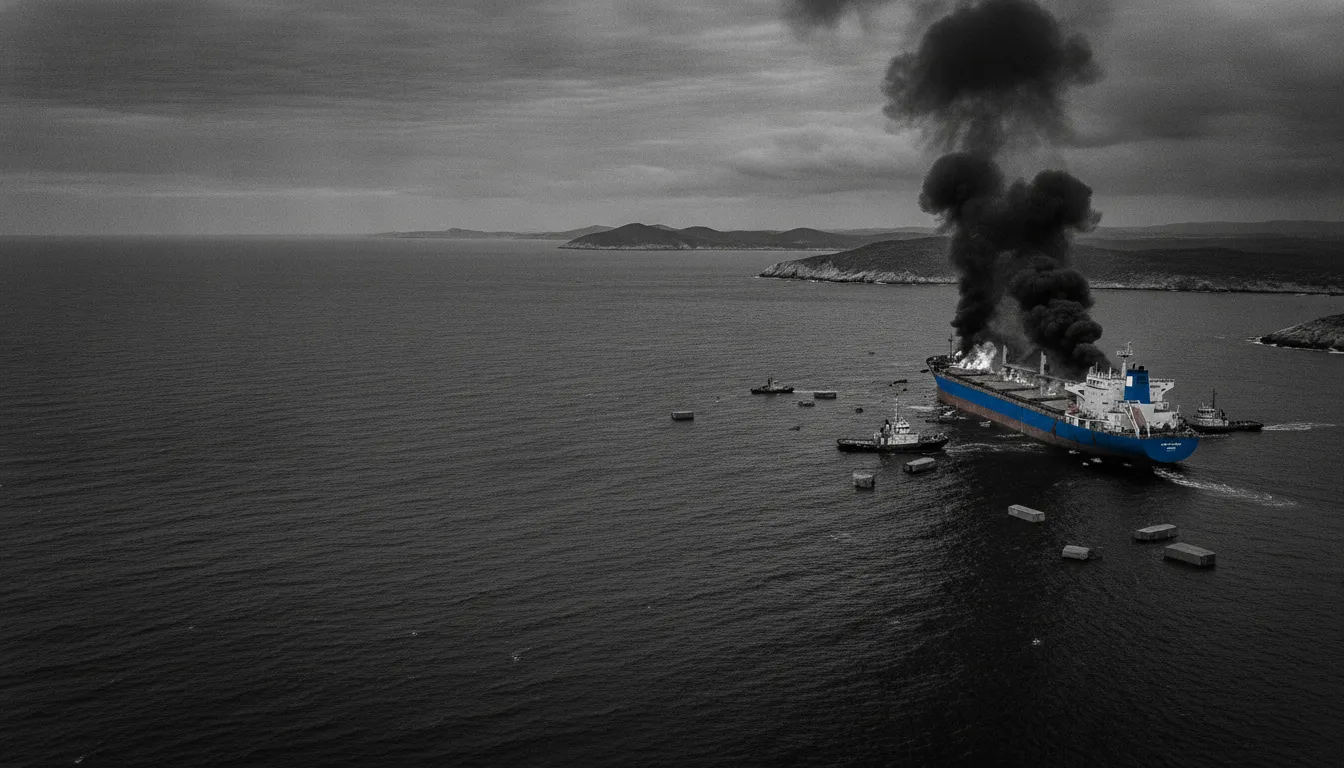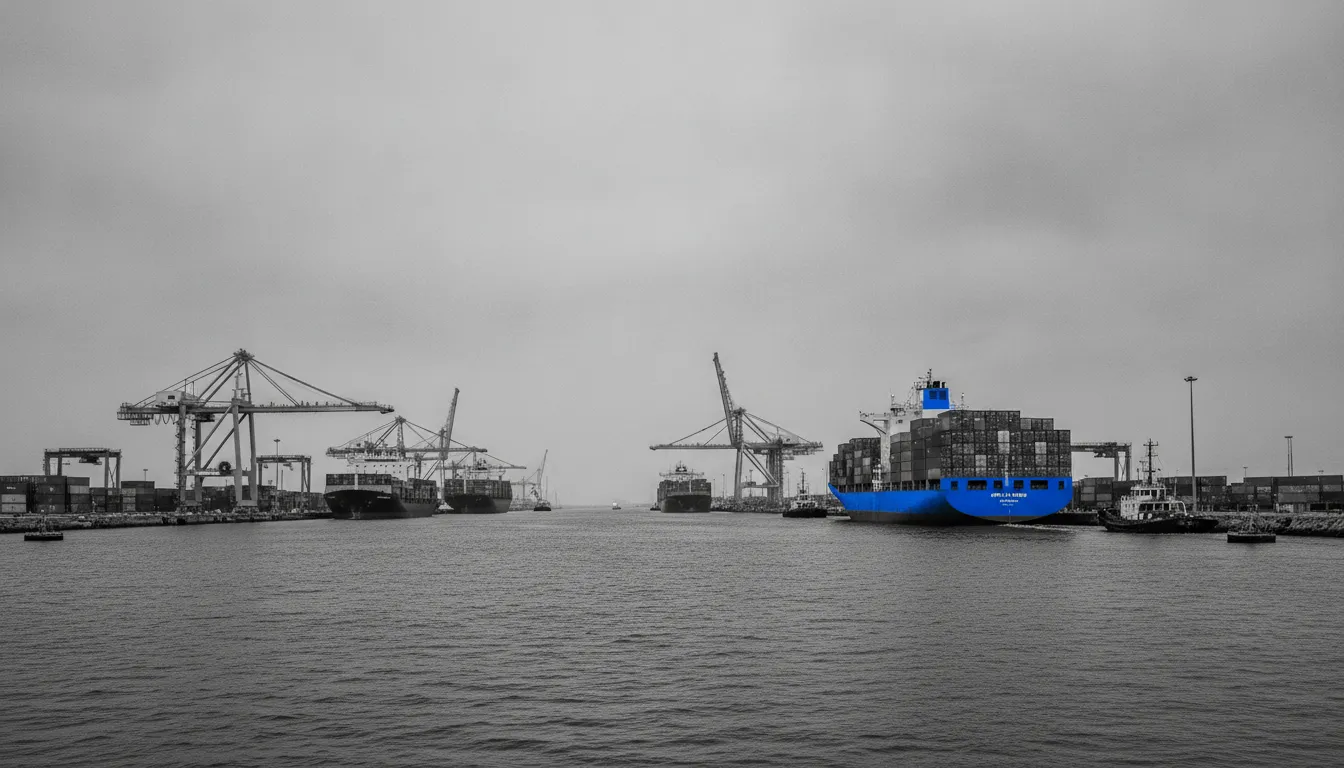
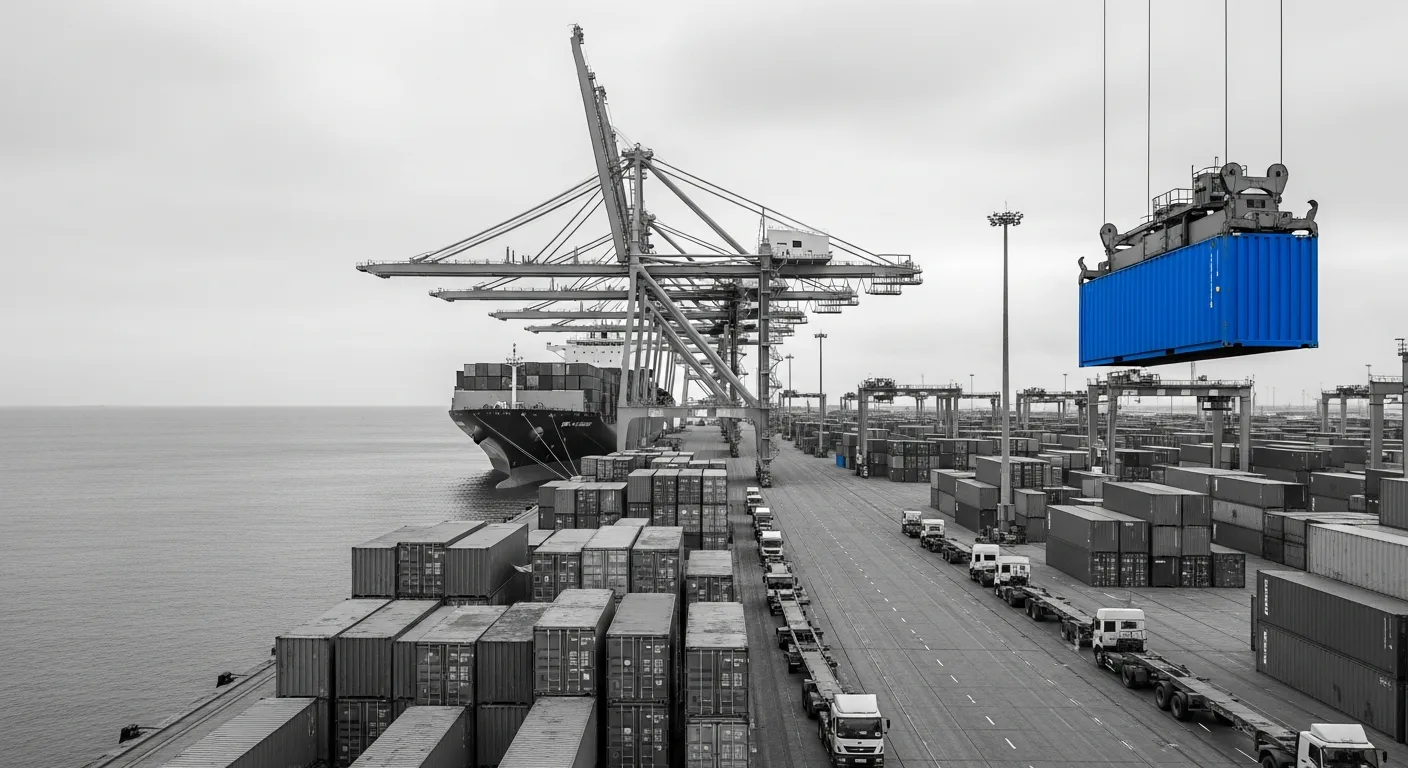
"Dar es Salaam demonstrated superior operational resilience, reducing waiting incidence from 83.67% to 63.64%, whilst Mombasa maintained near-universal waiting incidence of 94.12%." — Kpler Container Intelligence, March 2026
Dar es Salaam Emerges as the Efficiency Choice
Since early 2025, the Port of Dar es Salaam has pivoted from chronic congestion to operational resilience. Data from Kpler's container tracking platform reveals a marked turnaround: vessels experienced average waiting times of approximately 26–27 hours by early 2026, a stark improvement from the 45-hour average recorded mid-2025. Critically, this improvement stems not from volume contraction but from operational efficiency gains. The port's waiting incidence—the proportion of vessels facing any delay—has dropped from 83.67% to 63.64%, signalling genuine capacity adaptation rather than deflated demand. This metric matters because it reflects the reliability operators can expect: a 63% waiting incidence means roughly four out of every ten vessels berth within schedule, a material improvement for scheduling feeder services and managing demurrage exposure.
Container throughput at Dar has surged substantially. By October 2024, the port was handling approximately 100,000 TEU per month, representing a 50% increase from earlier that year, with Mombasa losing 17% of its transit cargo to the Tanzanian gateway. Much of this gain reflects deliberate policy: Tanzania's government has actively courted traders through competitive tariffs and aggressive port promotion, directly challenging Mombasa's historical dominance. Dar es Salaam's strategic reach extends far beyond Tanzania itself. The port serves as the critical maritime gateway for multiple landlocked nations—Rwanda, Burundi, Zambia, Malawi, and the eastern Democratic Republic of Congo all depend on Dar for approximately 95% of their seaborne trade. South Sudan has formalised agreements to use Dar es Salaam and the secondary port of Tanga as primary gateways, redirecting the Central Corridor's traffic away from the Northern Corridor via Kenya. This shift, documented by shipping intelligence firm Kpler in March 2026, underscores a fundamental reorientation in East African trade infrastructure, driven not by cost alone but by the realisation that operational predictability commands a premium over geographic proximity.
Mombasa's Structural Congestion Crisis
Mombasa's operational position has deteriorated sharply and shows no signs of rapid recovery. By December 2025, the port recorded 28 vessels waiting at berth and anchorage, with average dwell times reaching 4.5 days—a chronic condition rather than a seasonal bottleneck. Kenya Ports Authority (KPA) projections for mid-December expected 56 vessel calls within 14 days, straining capacity further. The waiting incidence remains persistently high at 94.12%, indicating that nearly all arriving vessels face delays regardless of schedule window or cargo type. This uniformity of delay is itself a warning signal: it suggests that bottlenecks are structural (berth availability, yard space, gantry capacity) rather than operational (labour, crane availability, which can be more readily resolved).
The congestion stems from multiple reinforcing failures: insufficient container yard space, chronic equipment shortages, labour constraints, and the cumulative impact of empty container returns from regional networks. Shipping lines operating at Mombasa report turnaround costs exceeding USD 38,000 per 24-hour period, prompting carriers to implement 'cut and sail' operations—departing berth before all cargo is loaded or discharged. A December 2025 report documented two vessels leaving over 300 containers at the port in a single week, amplifying yard congestion and forcing traders to incur storage fees at inland container freight stations. The Kenya Ship Agents Association has attributed the crisis partly to new regulatory burdens, including mandatory phytosanitary inspection mandates that slow container evacuation and impose labour costs on handlers already stretched thin. The port's Container Port Performance Index (CPPI)—a metric reflecting time efficiency and fuel/emissions savings potential—recorded negative scores every year from 2020 through 2024, ranging from -11 to -89, reflecting systemic inefficiency in vessel turnaround. KPA has allocated Ksh 41 billion for port expansion including Terminal 19 redevelopment, but such capital projects typically require 18–36 months to yield operational gains. In the interim, Mombasa's competitive position will continue eroding.
Beira's Crisis: 13+ Days and Rising
Whilst East Africa fragments between Dar and Mombasa, Beira in Mozambique faces an acute capacity collapse that threatens Southern African trade networks. Median waiting times at Beira have reached 13.51 days as of May 2026, with recorded peaks of 14.56 days in December 2025 and individual anchorage stays for container vessels exceeding 19.1 days. These figures reflect not temporary surges but sustained structural gridlock. Maersk implemented a Congestion Fee Destination effective 1 December 2025 for shipments from the Far East and Middle East into Beira, signalling carrier acceptance of structural congestion as a permanent business reality requiring cost recovery through supplementary charges.
Beira's crisis is compounded by severe hinterland friction: the Machipanda border crossing with Zimbabwe, critical to the Beira Corridor serving landlocked southern Africa, recorded average cross-border queuing times of 16.6 hours as of September 2025, with median waiting on the EN6 road connecting port to border at 16.3 hours. This dual friction—port and hinterland—makes Beira an increasingly unattractive gateway despite its geographic proximity to interior markets. Mozambique's Transport Minister identified direct port access and border efficiency as systemic bottlenecks in July 2025, pledging to construct a dedicated access road and implement single-stop border posts, yet these projects remain in early stages. For traders routing cargo through Zimbabwe, Zambia, or the Democratic Republic of Congo, Beira's deterioration redirects traffic further south towards Durban (South Africa) or northward to East African ports, fragmenting regional consolidation and undermining Mozambique's role in the AfCFTA (African Continental Free Trade Area) logistics ecosystem.
The Mechanics of Diversion and Demand Drift
Port competition in East Africa is no longer driven by proximity alone. Kpler's detailed analysis reveals that by March 2026, operational reliability and predictability have decisively superseded distance considerations in routing decisions. South Sudan, which historically relied on Mombasa due to geographic proximity and established trucking corridors, has formalised arrangements with Dar es Salaam and Tanga, recognising that longer haulage times are preferable to unpredictable port delays and catastrophic downstream demurrage exposure. Shippers now experience a documented 122% increase in landside transport fees on persistently congested routes, making the calculation of 'efficiency premium' increasingly rational even where geography initially favours the congested port.
The mechanism is straightforward: feeder operators and freight forwarders continuously adjust service design based on terminal performance data. CMA CGM, MSC, and Maersk have all increased direct feeder capacity into Dar es Salaam whilst rationalising or constraining service frequency to Mombasa. Global Feeders Shipping operates FAD (China to Dar) and FAM (China to Mombasa) services; carriers' scheduling increasingly favours the Tanzania call-pattern to manage berth and turnaround risk. This cascading effect—real-time congestion metrics driving carrier decisions, which then shape importer and exporter routing, which then shift feeder schedules—creates a self-reinforcing divergence that no single port authority can reverse without fundamental operational reform.
Demurrage and Detention Exposure Reshapes Buyer Risk Management
For importers and exporters, congestion-driven delays translate directly to demurrage and detention (D&D) charges, the hidden tax on inefficiency. Buyers routing container cargo through Mombasa now face extended holds in yard facilities, with dwell times frequently exceeding 5–7 days before rail or truck evacuation is possible. Detention on import containers accrues daily once free time expires, typically after 3–5 days at Mombasa; a 20-foot container held for an additional week can incur USD 150–300 in detention fees. By contrast, Dar es Salaam's improved throughput—average 26–27 hours waiting plus accelerated yard processing—reduces average dwell and detention exposure, making it the lower-risk gateway for time-sensitive and cost-conscious shipments.
The divergence in D&D exposure has become material enough to influence sourcing and routing decisions. Fresh produce exporters—a segment hypersensitive to both speed and spoilage risk—have begun selectively routing through Mombasa (despite longer inland distances to growing regions) to avoid Dar's residual peak-season yard congestion. Conversely, container-load consolidators and traders moving slower goods (textiles, dry goods, heavy machinery) have redirected bookings to Dar, accepting longer haulage but avoiding Mombasa's cost penalties. This bifurcation by cargo type and urgency is now visible in terminal-level statistics: Dar's general cargo mix has become more balanced, whilst Mombasa's transshipment ratio has increased, indicating carrier preference for hub-and-spoke logistics rather than direct port calls.
What This Means for You: Strategic Gateway Diversification and Active Congestion Management
For regional buyers and feeder operators, the 2025–2026 congestion rebalancing demands immediate operational reassessment. Mombasa's chronic delays are no longer temporary; they reflect structural capacity constraints that port expansion (Terminal 19 redevelopment, yard expansion) will take years to resolve. Dar es Salaam's efficiency gains are real but fragile—recent tariff adjustments (effective January 2026) and newly mandated minimum clearing agent fees (effective March 2026 under the TASAC 2026 Fees Order) may increase port costs, offsetting operational speed advantages. Beira remains uncompetitive for time-sensitive cargo and should be reserved for bulk, project, or ultra-distant hinterland (south-central Africa) movements where speed is less critical than volume economics.
Recommended actions: (1) Diversify gateway bookings—do not concentrate volume at a single port; segment cargo by urgency and route time-critical shipments through Dar, slower cargo through Mombasa where rates may soften; (2) build D&D buffer margins into pricing and lead-time estimates, particularly for Mombasa-routed shipments; (3) negotiate service level agreements (SLAs) with carriers specifying maximum dwell commitments and demurrage liability caps; (4) monitor real-time congestion metrics via tracking platforms (Kpler, Portcast, vessel trackers) and adjust routing month-to-month as terminal conditions shift; (5) engage directly with feeder operators and freight forwarders to secure alternative routing options if primary gateway delays spike. The era of predictable East African port hierarchy is over. Operational flexibility, data-driven routing, and active congestion management have become competitive necessities.