"A single ship delayed outside Mombasa costs operators about $60,000 per day, while each container trapped in the system represents an opportunity cost of $100 per day." — Kenya Ships Agents Association
Mombasa's Structural Crisis: From Seasonal Disruption to Chronic Constraint
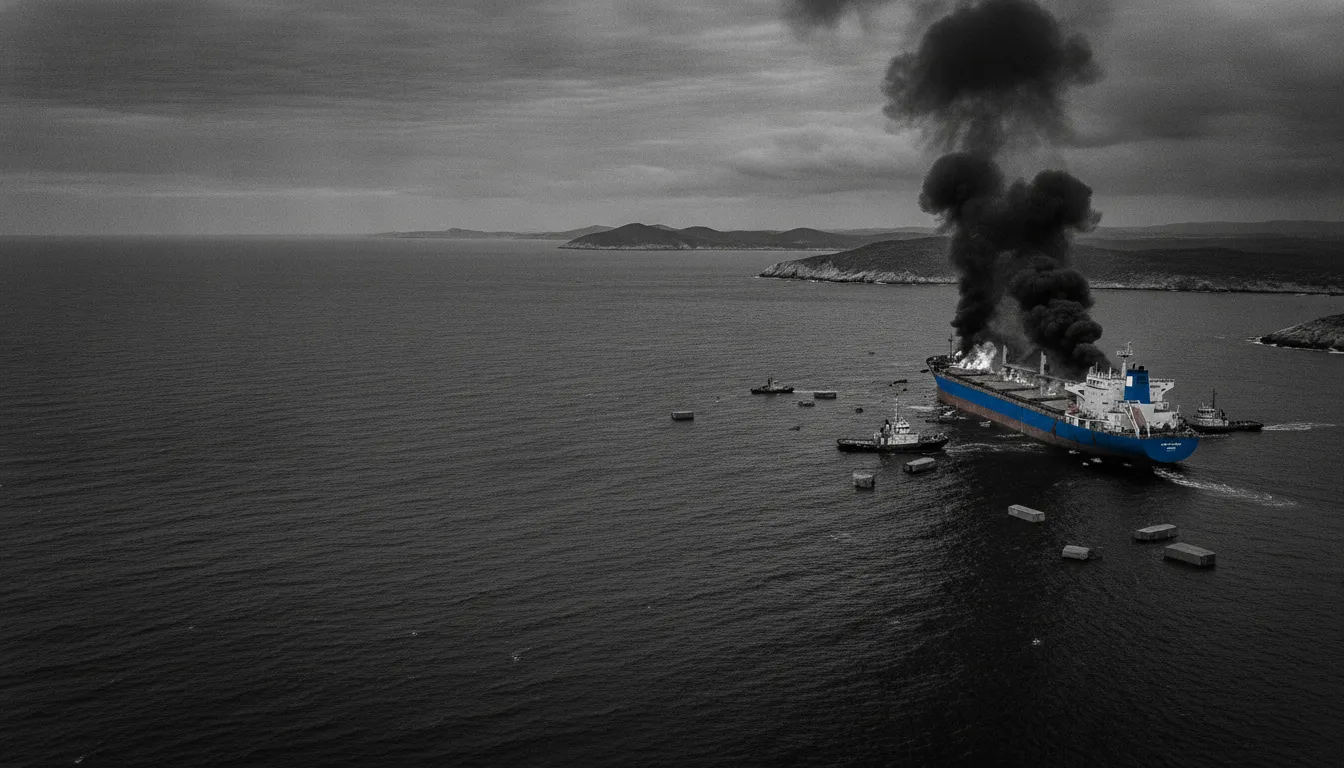
Since September 2025, the Port of Mombasa has deteriorated into a chronic operational crisis that transcends the cyclical congestion cycles East African supply chains have historically absorbed. Current vessel waiting times average 5.33 days as of June 2026, with over 20 vessels regularly idling at anchorage and berth delays stretching to 14 days. This represents not a temporary surge but a fundamental shift: the KPA Container Terminal shows 100% vessel waiting incidence regardless of throughput, indicating structural anchorage congestion that persists even when volumes contract. The port's 2025 performance reached 45.45 million tonnes, up 10.9% from 2024, yet container traffic grew only 5.5% to 2.11 million TEUs, revealing that throughput gains are not translating into faster cargo movement.
The Kenya Ships Agents Association (KSAA) has quantified the financial bleeding: a single delayed vessel costs shipping operators $60,000 daily, while each container in the system incurs $100 daily opportunity cost. With 600+ lorries stuck in empty container depots awaiting offloading space, truck queues routinely exceed 24 hours, and equipment imbalances compounding the gridlock. The association has explicitly warned that further deterioration threatens Mombasa's reputation as a viable East African gateway, noting that if the port becomes synonymous with $60,000-per-day losses, carrier networks will reroute to competitors.
Dar es Salaam's Contrasting Path: Terminal Privatisation and Predictability
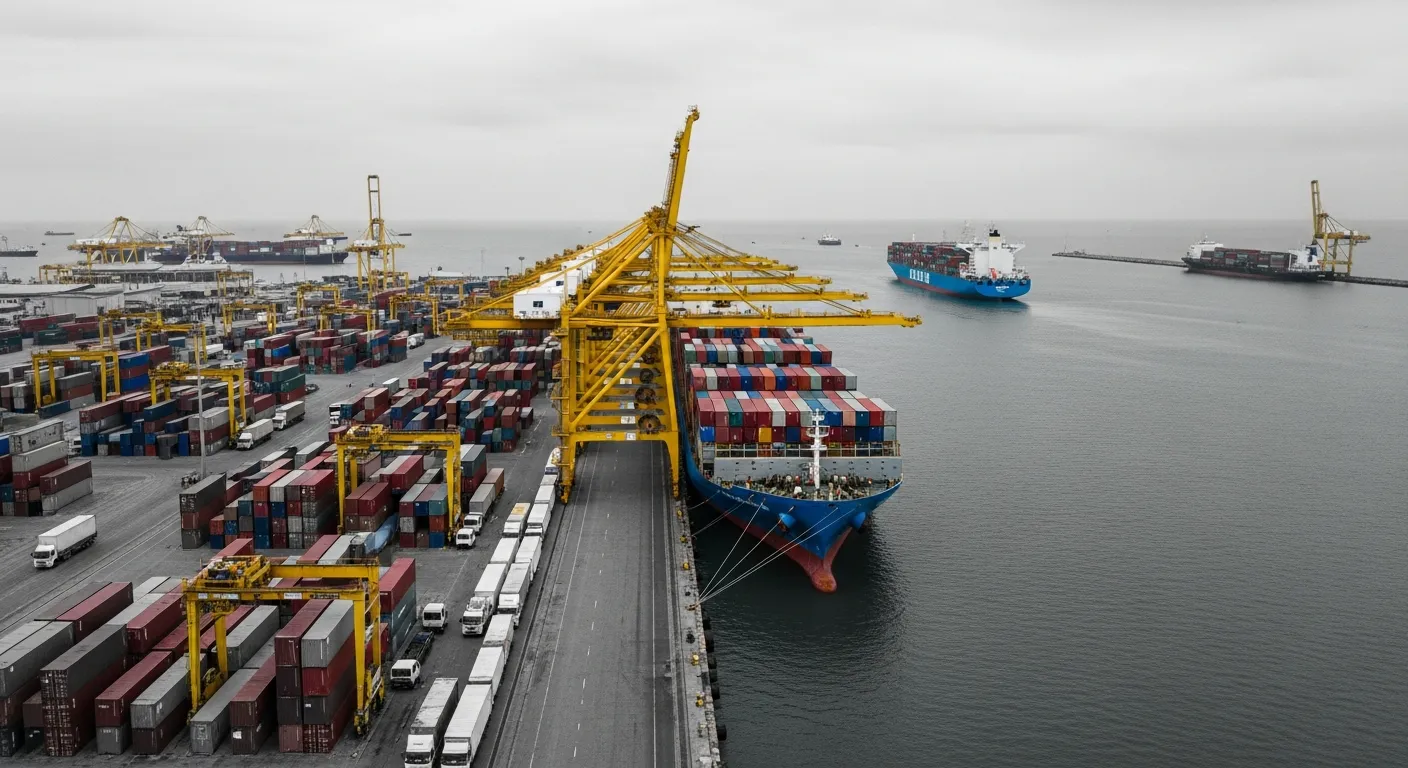
Tanzania's Port of Dar es Salaam has charted a markedly different trajectory, reducing waiting incidence from 84% to 64% between mid-2025 and early 2026 whilst maintaining throughput growth. The harbour channel deepened to 14.5 metres now accepts Panamax-class container vessels; gantry cranes capable of handling 30 containers per hour have cut vessel turnaround from 10 days to approximately 3 days. These gains stem from a deliberate operational model: DP World operates berths 0–7 under a 30-year concession, handling up to 30,000 containers monthly; Tanzania East Africa Gateway Terminal Limited (TEAGTL) manages berths 8–11, processing up to 75,000 containers monthly. Performance-based contracts and fixed berthing windows provide shipping lines with guaranteed arrival slots, dramatically improving predictability for importers planning supply chains.
The Tanzania Ports Authority (TPA) set a 54.59 million tonne cargo target for 2030–31, grounded in infrastructure investment and private sector partnerships rather than public-only operations. To decongest the main port, TPA invested in the Kwala Inland Container Depot, rail-linked in Kibaha and capable of handling 300,000+ containers annually—roughly 30% of Dar's container throughput. This offshore processing model, advocated by KSAA for Mombasa, reduces port dwell times and demurrage exposure by routing cargo away from the quay earlier.
Empty Container Chaos and Customs Bottlenecks Amplify Delays
The congestion architecture at Mombasa is multifaceted. Empty container imbalances create yard saturation: lorries carrying empty containers await 72-hour mandatory holding periods before port entry, creating a revolving bottleneck. In February 2026, a Kenya Revenue Authority (KRA) system shutdown triggered massive gridlock; KRA's Integrated Customs Management System (iCMS) maintenance operations were subsequently rescheduled and deferred due to stakeholder pressure, underscoring how customs infrastructure failures become force multipliers for port congestion. February's iCMS shutdown and the customs clearance backlog at Kenya-Uganda borders rippled across the Northern Corridor, extending container clearance times sharply and stranding equipment in prolonged turnaround cycles affecting Uganda, Rwanda, Burundi and the DRC.
Additional regulatory creep has worsened the situation: the Kenya Nuclear Regulatory Authority announced from May 1, 2026, all cargo entering or exiting Mombasa must undergo mandatory screening for radioactive materials. Combined with returning agencies such as the National Environment Management Authority and Kenya Plant Health Inspection Services, this re-proliferation of government touchpoints reverses efficiency gains from previous streamlining efforts. Stakeholders warn that non-tariff barriers and duplicated inspections add cost and delay to cargo clearance, threatening to clog operations along the Mombasa–Malaba highway.
Landlocked Countries Pivot Away from the Northern Corridor
Since December 2025, landlocked nations have begun deliberately engineering alternatives. South Sudan formalised agreements with Tanzania to utilise Dar es Salaam and Tanga as primary gateways, integrating revenue systems to bypass escalating costs and congestion on the Northern Corridor. For regional traders, Tanzanian ports have become a vital bargaining tool: geographical proximity no longer dictates port choice when operational efficiency and predictable transit times are available elsewhere. While Mombasa sits nearer to trade hubs like Juba, shippers now prioritise operational reliability and cargo availability timelines over vessel transit days alone.
This corridor realignment has profound implications for East African trade flow patterns. Landlocked hinterlands—Uganda, Rwanda, Burundi, the DRC, and Zambia—depend absolutely on seaports. When Mombasa loses reliability, these nations absorb the cost penalty through extended dwell times, demurrage charges, and delayed access to inventory. Dar es Salaam's demonstrated ability to achieve operational improvement through private terminal operators and fixed berthing windows now offers a measurable alternative, reshaping the investment and logistics decisions of multinational shippers and regional traders alike.
Intra-African Trade Ambitions Stalled by Port Infrastructure Mismatch
Tanzania's ambitious 54.59 million tonne target by 2030–31 sits at odds with broader intra-African trade potential. Afreximbank projects intra-African trade reaching $230 billion in 2026, representing 16% of continental commercial activity, yet infrastructure deficits remain a binding constraint. Logistics costs in Africa range from 25–30% of trade value, compared to 8–10% in OECD economies. While Dar es Salaam now demonstrates that modern infrastructure, private terminal concessions, and rail-linked inland depots can accelerate cargo movement, Mombasa's structural congestion signals that Kenya's gateway is not scaling with regional demand.
The AfCFTA framework and digital trade protocols adopted in 2025–26 promise to reduce foreign exchange costs by 20–30% through the Pan-African Payment and Settlement System, but these gains are negated if port chokepoints delay physical cargo movement. Border crossing delays at Nakonde/Tunduma and Kasumbalesa routinely stretch 36–48 hours due to manual customs processes and infrastructure gaps. Without addressing Mombasa's terminal congestion and customs delays in parallel with AfCFTA trade facilitation, the Northern Corridor risks further diversion toward Southern and Central corridor routes through Dar es Salaam and Walvis Bay.
What This Means for You: Port Selection as Core Strategy
Effective shipment planning in East Africa now requires terminal-level performance monitoring rather than reliance on carrier schedules and port-wide averages. Comparing Mombasa and Dar es Salaam based on full cargo availability timelines—including terminal handling, customs release, and inland delivery—yields materially different cost and risk profiles. Chandlers and ship suppliers must map alternative discharge ports and ship-to-shore strategies immediately: diversion to Dar es Salaam or secondary gateways at Tanga, Dongo Kundu (under development in Kenya), and Lamu now forms part of prudent supply chain risk management. For importers and exporters, Dar es Salaam's fixed berthing windows and rail-linked inland depot reduce demurrage exposure, while customs digitalisation under Tanzania's new NTANCIS system (launched January 2026) provides greater processing transparency than KRA's fragmented agency model at Mombasa. The bifurcation between Mombasa's legacy terminal model and Dar's privatised, performance-based approach signals a permanent competitive realignment: supply chain professionals must treat port selection not as a cost centre, but as a strategic lever for protecting landed costs and delivery reliability across East African trade corridors.