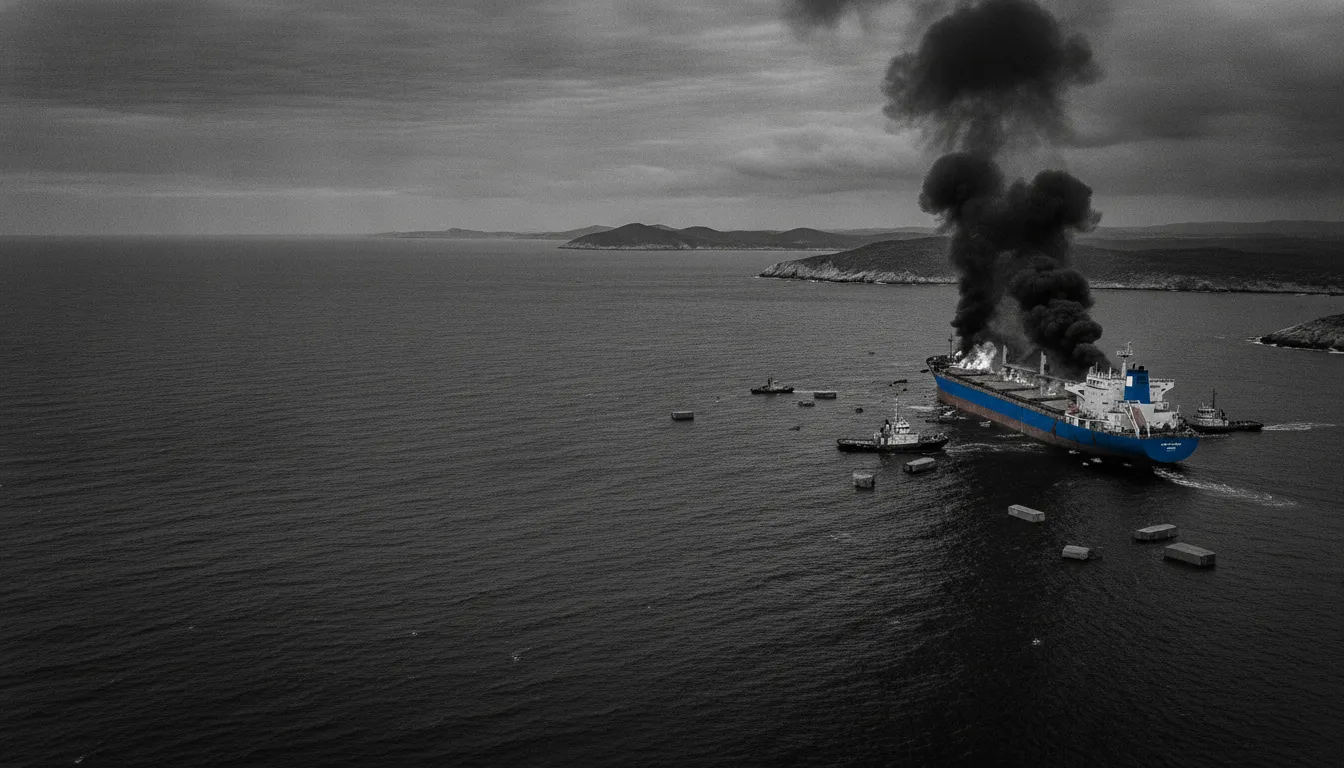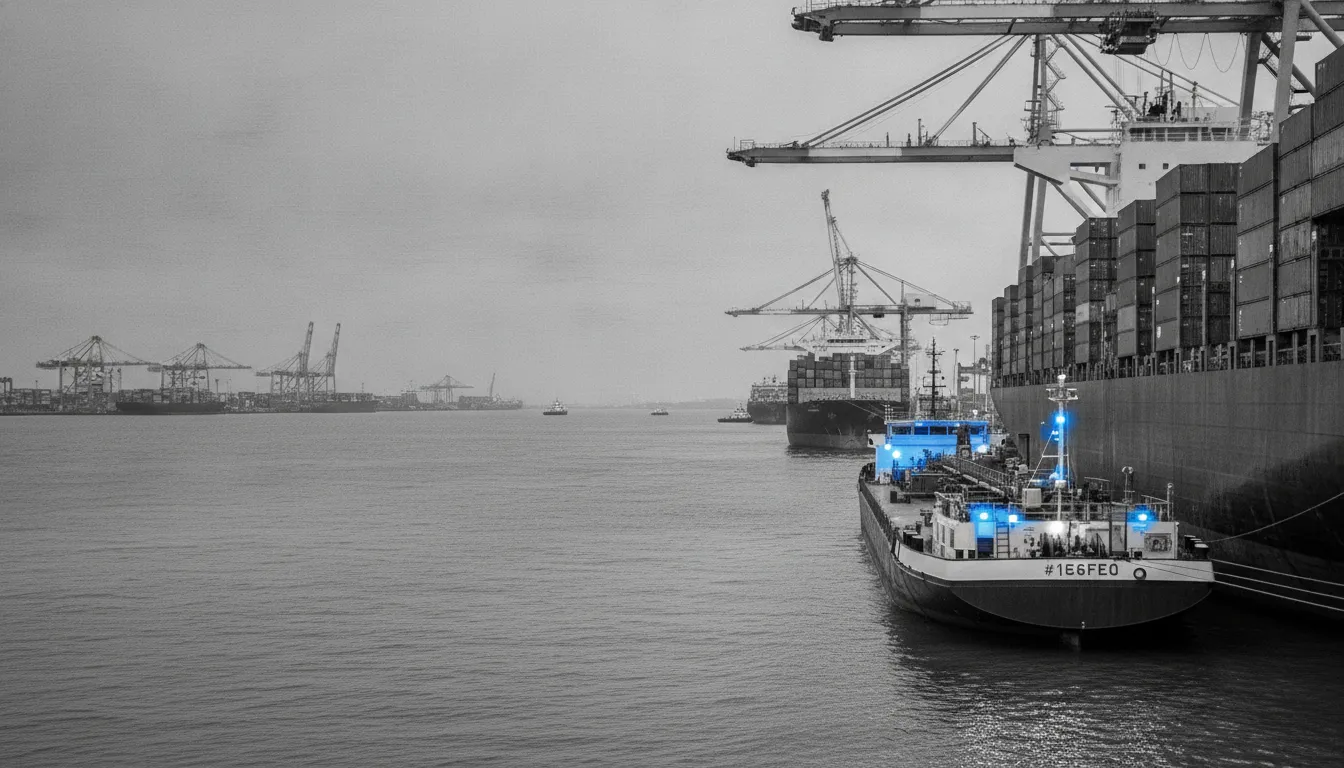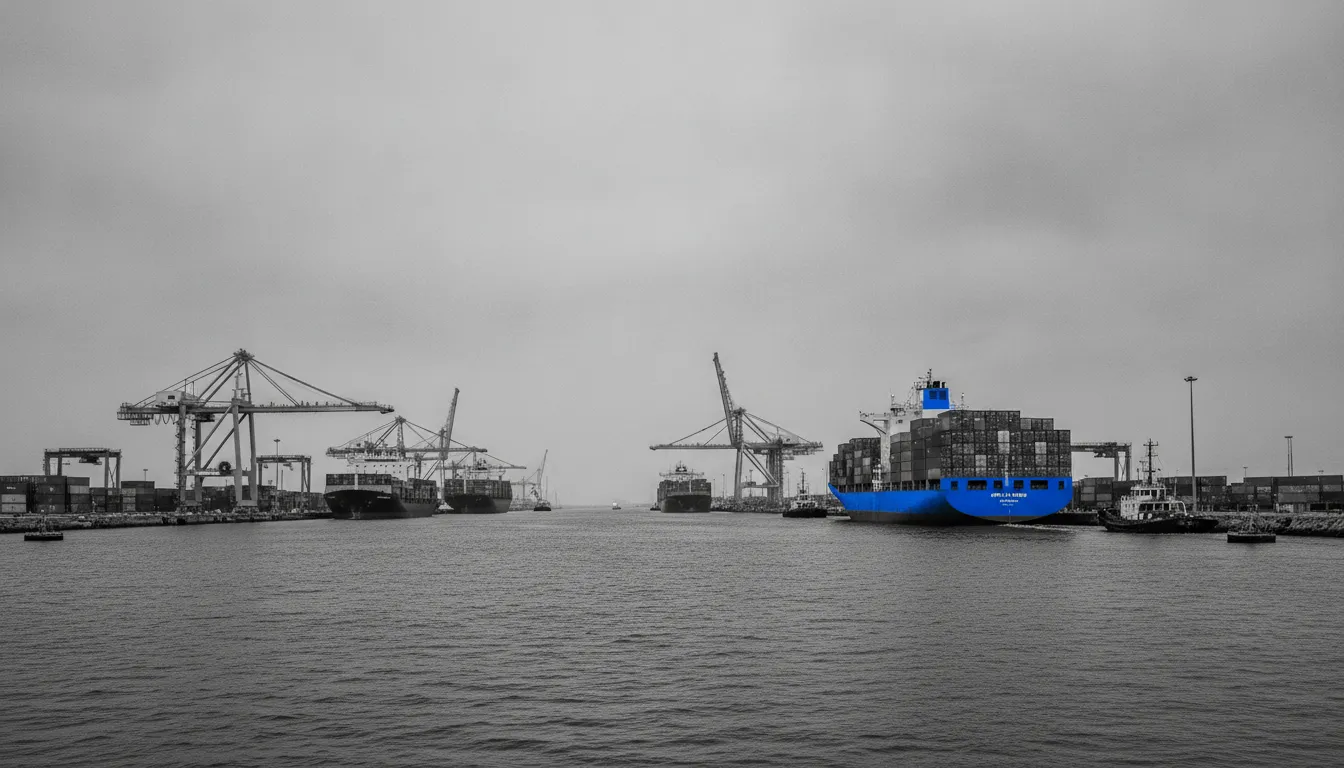
MPS gained exclusive rights to handle any vessel with more than 50 TEUs, sidelining other operators from participating in container handling at Tema Port. This monopolistic control was very bad for Ghana's interest in the long term, as it restricted competition and allowed foreign companies to dominate Ghana's key maritime gateway.
Terminal 3's Scale and Regional Dominance
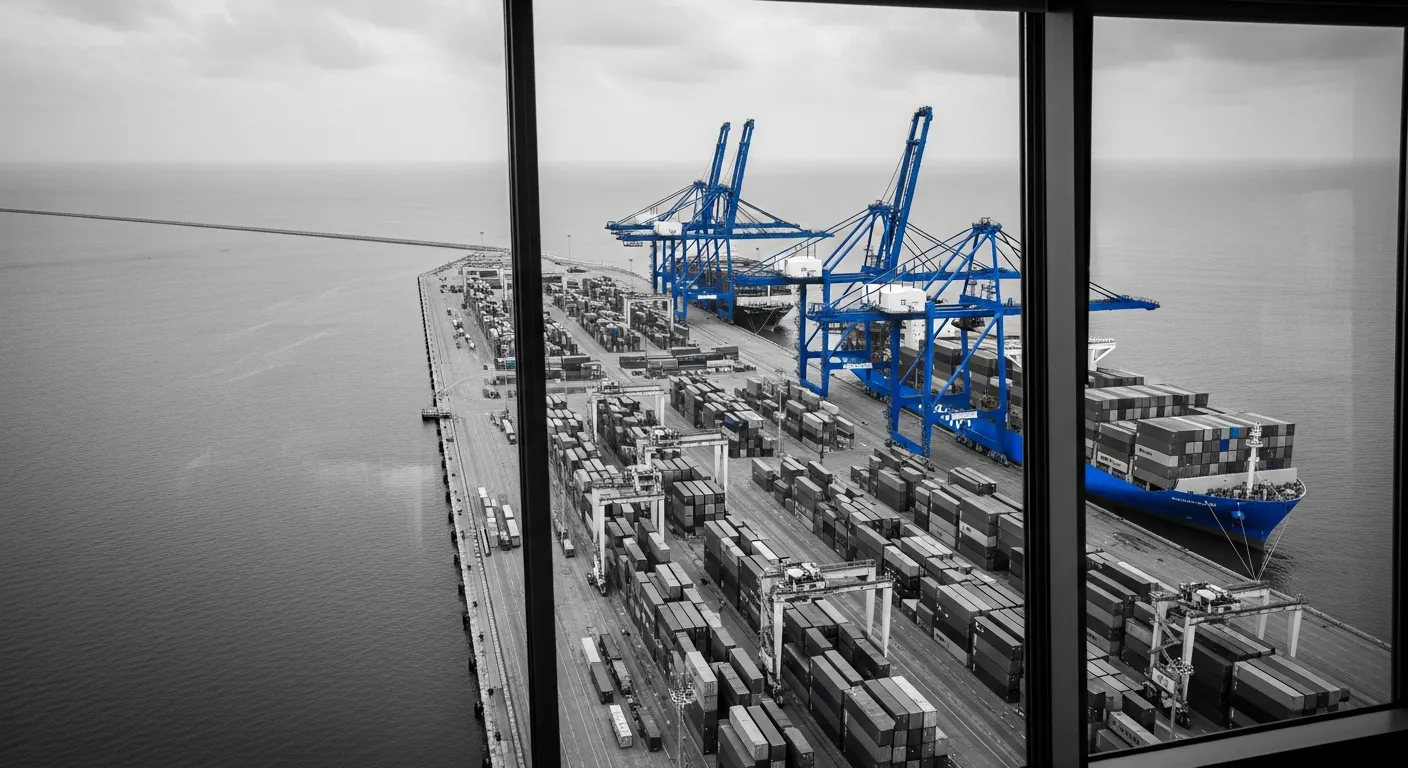
Terminal 3, formally inaugurated in November 2025, represents one of Africa's most advanced container facilities. The terminal spans 127 hectares, features a 1.4-kilometre quay with four deep-water berths capable of accommodating vessels up to 18,000 TEUs, and boasts a 16-metre draft—deeper than rival ports in the region. The facility includes 15 ship-to-shore (STS) cranes, 51 electric rubber-tyred gantry (RTG) cranes, and 41 electric terminal trucks, all deployed to boost capacity from 800,000 to 3.7 million TEUs annually. The infrastructure reclaimed 1,270,000 square metres of land from the Atlantic Ocean and incorporated state-of-the-art digitalised processes recognised as international best practice.
Hapag-Lloyd, the world's fifth-largest shipping line, designated Tema as its transshipment hub for West Africa in 2024, routing cargo flows between Europe and southern Africa through the port. Transshipment traffic—negligible a decade ago—surged past 4.4 million tonnes in 2024, validating the terminal's appeal to major carriers. The facility has also been recognised as a "Green Terminal" by Bureau Veritas, combining cutting-edge infrastructure with sustainable practices. Tema now ranks as the third-busiest container port in West Africa by traditional throughput and is poised to become the region's primary transshipment gateway, offering a 21-day transit time from Malaysia—the shortest for any African port connecting Far East routes.
Governance Tensions: Unsolicited Bids and Concession Exclusivity
Terminal 3's expansion was structured differently from Ghana's first container terminal deal. When GPHA concessioned Terminal 2 in 2004, the authority built the terminal first, then negotiated from a position of strength, securing a 30% equity stake alongside APM Terminals and Africa Global Logistics, with meaningful state oversight retained. Terminal 3, by contrast, was negotiated through an unsolicited proposal from a foreign-led consortium rather than a competitive bidding process. GPHA's equity stake was initially diluted to 15%, only being restored to 30% after sustained protest from the Maritime and Dockworkers Union under what became known as the "Dubai Agreement."
The concession granted MPS exclusive container-handling rights for vessels carrying 50 TEUs or above, shutting out GPHA's own terminals and local stevedores from the port's most profitable container business. This monopoly clause created ripple effects: the GPHA projected it would be left with excess equipment and approximately 1,400 excess labourers if terms were not renegotiated. Inland Container Depots (ICDs) at the port received notice that they would no longer receive container imports from GPHA and faced closure or the need to develop alternative business strategies. The concession structure privileged foreign capital recovery over local competition and governance balance, a pattern that policy analysts argue undermines national development across the African continent.
Labour Disputes and the Cost of Expansion
Terminal 3's completion has coincided with acute labour tensions that exposed the limits of infrastructure without worker engagement. The Maritime and Dockworkers Union (MDU) protested that approximately 1,200 jobs were put at risk due to the monopoly arrangement. Although the union secured restoration of GPHA's 30% stake under the Dubai Agreement, labour unrest resurfaced in late 2025, triggered by compensation disputes between unskilled dockworkers and port management over rates for offloading vessels. These workers walked off the job following failed wage negotiations, and although temporary labour was engaged to bridge the gap, the Food and Beverages Association of Ghana (FABAG) characterised the intervention as "minimal" and insufficient.
In December 2025, FABAG issued warnings that persistent delays at Tema were forcing businesses to consider diverting bulk and bagged cargo to the Port of Lomé in Togo, where container handling charges are between 44% and 58% lower than Tema's. The Food and Beverages Association specifically blamed labour shortages for delays in offloading goods, which threatened staple food supplies and risked driving importers toward Lomé despite the port's longer hinterland reach. For suppliers and ship chandlers attempting to service vessels at Tema, labour uncertainty translated into unpredictable turnaround times and demurrage exposure—factors that erode the port's competitive advantage despite its superior infrastructure.
Supplier Access and Procurement Barriers
Terminal 3's expansion has created divergent outcomes for ship suppliers and regional chandlers. For large, multinational ship supply firms with global networks and capital to navigate customs bonding and long procurement lead times, the increased throughput and vessel calls represent genuine opportunity. Local and regional suppliers, however, face structural barriers. MPS's exclusive container-handling mandate means that all provisioning, bunkering support, and equipment offloading for larger vessels flows through a single terminal operator with no obligation to extend preferential terms to local vendors. Suppliers must obtain accreditation, meet compliance documentation, and operate within MPS's approved vendor ecosystem—a gatekeeping function that favours established international firms over emerging Ghanaian and West African chandlers.
Ship supply services at Tema—provisions, bonded stores, technical equipment, and spare parts—remain fragmented across independent vendors competing for berth-side access. The short turnaround times for berthed vessels (a competitive advantage of Terminal 3's design) mean that delays in supply can directly impact port fees and voyage schedules, pressuring shippers to contract with vendors pre-positioned at the terminal and able to guarantee rapid delivery. For suppliers based in neighbouring ports or smaller West African hubs, this operational geography favours consolidation around Tema at the expense of more dispersed, lower-cost regional supply chains. The expansion thus reinforces Tema's hub status—benefiting bulk suppliers and international chandlers—while marginalising smaller regional players that lack the capital to establish permanent Tema operations.
Competitive Pressure on Regional Ports and Trade Diversion Risk
Terminal 3's advanced infrastructure and capacity have intensified competition within West Africa's container market. Lomé and Abidjan, historically Ghana's main rivals, now face pressure from Tema's deeper draft, larger cranes, and faster vessel turnarounds. Yet this competition coexists with a cost disadvantage: Tema's higher tariffs—itself a point of contention between MPS and the shipping community—have already prompted cargo diversion. The 44–58% cost differential with Lomé has not gone unnoticed by importers, particularly those handling bulk commodities where handling charges represent a material line item. GPHA handles approximately 72% of Ghana's total cargo volume and over 1,500 vessel calls annually, but the loss of even 5–10% of container volume to Lomé or Abidjan would represent millions in foregone revenue and erosion of Ghana's trade gateway status.
For ship suppliers, this dynamic creates a tension between hub consolidation and market fragmentation. Tema's dominant position attracts primary vessel calls and major shipping lines, concentrating demand for premium, rapid-turnaround supply services. However, cost-conscious importers diverting containers to Lomé or Abidjan reduce potential supply orders at Tema and may seek lower-cost provisioning at rival ports. Regional suppliers based in Togo, Côte d'Ivoire, or Nigeria may thus find that Tema's expansion has not increased their addressable market proportionally, whilst forcing them to invest in Tema credentials merely to remain competitive. The expansion, paradoxically, may reinforce West African port competition rather than creating a rising-tide scenario for the region's logistics ecosystem.
What This Means for Suppliers and Operators
Ship suppliers, chandlers, and procurement managers navigating Tema's expansion must balance infrastructure opportunity against governance and cost headwinds. The port's capacity increase is real and strategically important for West Africa's containerised trade. However, suppliers must secure accreditation within MPS's vendor network, absorb higher tariffs passed through by terminal operators, and hedge against labour disruption that can quickly erase turnaround-time advantages. For regional suppliers, the path forward requires either consolidation at Tema—a capital-intensive move—or specialisation in niche markets (breakbulk, offshore services, or smaller competing ports) where multinational terminal operators have not yet achieved monopoly control. Concession governance, labour stability, and tariff transparency are not abstract policy concerns; they directly affect the cost, speed, and reliability of vessel provisioning. As Ghana pursues its "24-Hour Economy" policy and AfCFTA integration ambitions, bridging the gap between infrastructure investment and worker welfare, competitive pricing, and inclusive procurement remains essential to realising Terminal 3's full potential.