"Seafarers are the backbone of global trade, yet we are often the most affected by regional geopolitical conflicts," said Captain ArunKumar Rajendran, stranded with his crew in the Persian Gulf for months. The Hormuz crisis has exposed both the fragility of crew supply chains and the speed at which insurance markets reprice risk when war enters a global chokepoint.
The Scale of Crew Detention: 6,000 Trapped, 2,000+ Vessels Affected
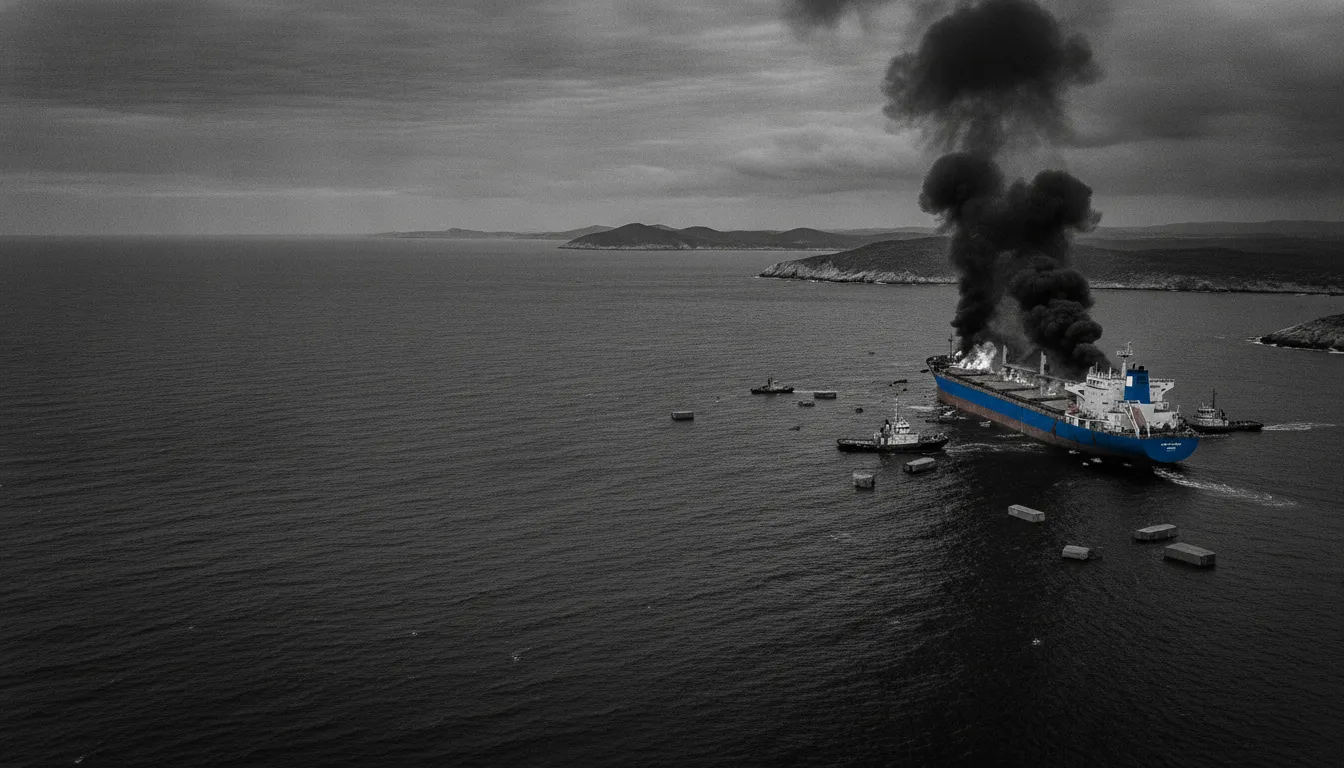
Since hostilities erupted on 28 February 2026, approximately 6,000 seafarers remain stranded in the region, according to the International Maritime Organization. The underlying fleet is staggering: around 2,000 vessels—including oil and gas tankers, bulk carriers, container ships and even cruise liners—are confined in the Persian Gulf and unable to transit the Strait of Hormuz. The IMO completed the evacuation framework in June 2026 and managed to evacuate nearly 3,000 seafarers, yet persistent military escalation has slowed progress.
These crew members, predominantly from India, the Philippines, Indonesia, and Egypt, are working on contracts typically ranging from four to nine months. Many are now beyond their original sign-off dates, yet remain trapped onboard with no clear release. Vessel traffic through the strait has collapsed from around 150 transits per day pre-war to only four to five in March, rising to roughly 80 per week in mid-April. No open corridors mean no crew reliefs—a labour welfare crisis that extends supply chains and escalates stress on both serving personnel and shore-side suppliers managing provisions.
Crew Welfare in Crisis: Provisions, Repatriation, and Retention Risk
The International Transport Workers' Federation reported that more than 2,000 seafarers contacted the organisation in the first two months seeking repatriation, describing acute shortages of food, provisions, and clean water. Some seafarers reported eating once a day. Beyond physical deprivation, crews have witnessed missile launches and drone interceptions from their decks. The ITF's Mohamed Arrachedi stated that "seafarers are just exposed and absolutely vulnerable," with reports of mental deterioration, isolation, and an "enhanced state of fear" as psychological strain accumulates.
Unpaid wages compound the crisis: some crews have gone without salary for eight to eleven months. Regarding future operations, shipowners are now forced to offer bonuses and higher salaries to attract crew back to the strait once conditions stabilise—a cost escalation that procurement teams must forecast. Ship suppliers operating in the Gulf region, such as AVS Global Ship Supply, have emphasised that crew welfare support now includes not just fresh provisions and water, but catering management services, culinary consultants, and dedicated wellbeing channels to keep seafarers connected to families and reduce psychosocial strain during detention.
War Risk Insurance: A 40-Fold Spike, Now Entrenched at 3–10%
Pre-war, war risk premiums for Hormuz transits stood at 0.25% of hull value—roughly $250,000 for a $100 million tanker. As of July 2026, current rates have climbed to 3–10% of hull value, with a $100 million vessel facing $3–10 million per single transit. This is a 40-fold increase. In March, some stranded tankers paid premiums as high as 10% of hull and machinery value; one Suezmax crude tanker's war premium hit $7.5 million, exceeding the freight cost to its destination.
The Joint War Committee's designation of the Persian Gulf and adjoining waters as a listed high-risk area triggered automatic suspension of annual hull war policies and forced negotiation of Additional War Risk Premiums on a voyage-by-voyage basis. The Lloyd's Market Association confirmed that war insurance remains available, but capacity remains uneven and premiums oscillate sharply with each attack and ceasefire announcement. These costs cascade through the supply chain: Hapag-Lloyd, for example, implemented a war risk surcharge of up to $3,500 per container on Gulf-touching shipments, directly passing the insurance bill to buyers and logistics partners.
Insurance Capacity and the Role of Government Intervention
Private insurers initially faced severe capacity constraints in March 2026. Within 72 hours of the conflict's onset, major P&I clubs (Gard, Skuld, North-Standard, London P&I Club) issued cancellation notices for non-mutual entries and fixed P&I policies. However, capacity gradually stabilised, with 88% of Lloyd's war underwriters confirming appetite for hull cover and over 90% for cargo cover by late March. Nonetheless, the US government intervened: the Trump administration directed the US International Development Finance Corporation (DFC) to establish a $40 billion reinsurance facility providing hull, cargo, and liability coverage, underscoring how geopolitical risk now falls partly on sovereign balance sheets when private markets cannot absorb the load.
Ship supplies and procurement teams must now navigate a two-tier insurance environment: commercial quotes for standard routes, and government-backed coverage for strategic or forced transits. This fragmentation complicates planning. IMO Secretary-General Arsenio Dominguez stated that "continued high cost of maritime insurance is itself compounding strain on operators," a signal that underwriters must balance commercial discipline with economic sustainability in a way that does not throttle all trade.
Procurement Response: Emergency Sourcing, Compliance Overhead, and Route Selection
Procurement teams operating in the region are now managing multiple overlapping constraints. First, crew logistics have become unpredictable: delayed sign-offs mean crew change operations are stalled or rerouted through costly alternate ports in Oman or Saudi Arabia, extending supply costs and vessel idle time. Suppliers must maintain redundant local sources in Fujairah, Jebel Ali, and Duqm to ensure access to provisions even as some alternative ports fall within war-risk zones. Duqm and Salalah, key bypass ports, were struck by drones in March, expanding the insurance zone and further raising sourcing costs.
Second, routing compliance and sanctions screening have become operational necessities. Northern (Iranian) routes through the strait present compliance exposure and regulatory risk, whilst southern (Omani) routes carry interdiction and attack risk. Brokers and underwriters now charge differential premiums based on route selection; northern transits carry higher regulatory uncertainty, whilst southern routes face heightened physical threat. Third, procurement buyers must lock in insurance premiums far in advance, as spot market repricing can shift cargo economics overnight. Many operators are adopting locked-policy frameworks or government-backed coverage where eligible, trading away commercial flexibility for rate certainty.
What This Means for Suppliers, Operators, and Buyers
For ship suppliers and chandlers: crew welfare is no longer a secondary CSR concern—it is an operational bottleneck and a regulatory obligation under the Maritime Labour Convention. Suppliers in Gulf hubs must expand capacity for emergency catering, mental health support, and communication channels. For operators: war insurance is now a voyage-critical cost variable, not a line-item afterthought. Locking in coverage early, diversifying underwriter relationships, and evaluating government-backed alternatives are essential. For procurement buyers: accepting delivery risk must account for 3–10% additional insurance cost plus extended transit times, crew change disruptions, and alternate routing complexity. The cost floor for a Hormuz-touch shipment is no longer 0.25% + freight; it is now 3–10% + freight + crew logistics overhead. Negotiating fixed-price offtake agreements with supplier banks or indexed hedging strategies will become standard. The crisis has reset the baseline for maritime risk pricing, and recovery will be gradual even after military hostilities cease.