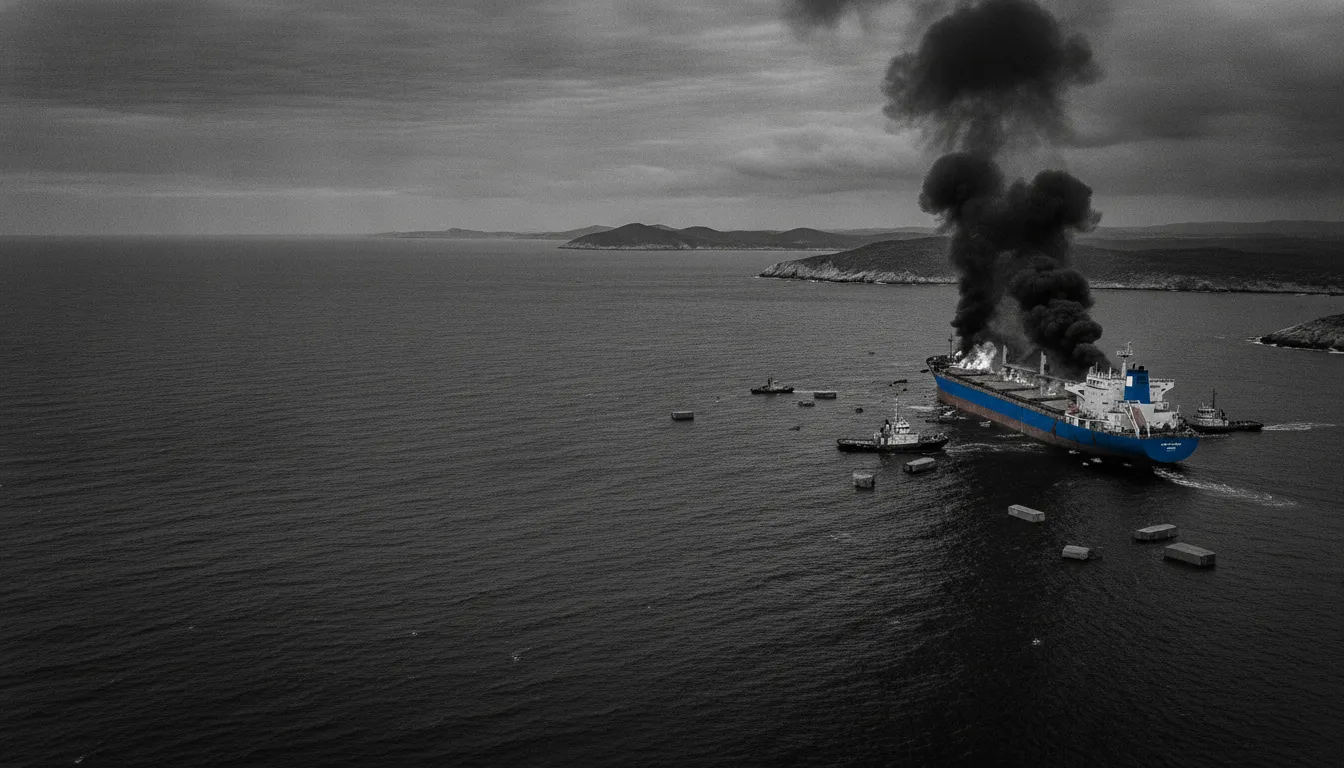
"The disruption is both rapid and unprecedented," said Dimitris Ampatzidis, a maritime risk manager at Kpler. With 1,550+ vessels stranded and only 191 transiting the entire strait in April 2026, commercial operators face a new calculus: unreliability has become indistinguishable from closure.
The Collapse of Daily Transits and Insurance Withdrawal
Prior to 28 February 2026, the Strait of Hormuz carried approximately 138 vessels daily, a critical chokepoint for roughly a quarter of global seaborne oil trade alongside significant volumes of liquefied natural gas and fertilisers. The disruption did not unfold as a sudden military blockade but rather as a cascading systems failure driven by geopolitical escalation between Iran, the United States, and Israel. Following failed nuclear negotiations in Geneva and a prior 12-day air conflict in 2025, tensions escalated sharply. On 28 February, US and Israeli forces launched surprise airstrikes, and in response, Iran moved to block the Strait. By 5 March, major maritime insurers withdrew war-risk insurance coverage entirely, rendering physical access commercially unnavigable. War-risk premiums, which had increased from 0.125% to between 0.2% and 0.4% of insurable value per transit, added approximately a quarter of a million dollars to very large oil tanker crossings. Major carriers—Maersk, CMA CGM, MSC, and Hapag-Lloyd—suspended Hormuz bookings irrespective of whether the strait remained theoretically passable. By 2 March, the Iranian Revolutionary Guard Corps confirmed the closure, and by 6 May, open transits had fallen to near zero vessels per day, representing a 97% decline from the pre-crisis baseline of 120–140 daily transits. The Joint Chiefs of Staff warned that an attack could prompt Iran to close the strait; by May, it had.
The operational consequences cascaded immediately. By early April, Carra Globe reported that 1,550+ vessels remained stranded across the Persian Gulf and Gulf of Oman, with 600+ vessels and 325 tankers locked in the Gulf awaiting a reopening that never materialised at commercially viable terms. Jebel Ali Port in Dubai, the largest container port in the Middle East and a critical transshipment hub serving the entire region, experienced acute congestion from diverted vessels seeking alternative routing. QatarEnergy declared force majeure on all LNG shipments on 4 March 2026, following Iranian attacks on its Ras Laffan facilities. For ship supply networks—bunker dealers, ship chandlers, and spare parts suppliers—this congestion meant delayed bunkering windows, provisioning bottlenecks at secondary ports, and uncertainty over whether vessels would be able to onload supplies at scheduled port calls. Berth availability issues at congested hubs forced provisioning teams to negotiate extended waiting periods, compressing the window available for procurement and delivery.
Cape of Good Hope Rerouting: Time, Cost, and Supply Chain Extension
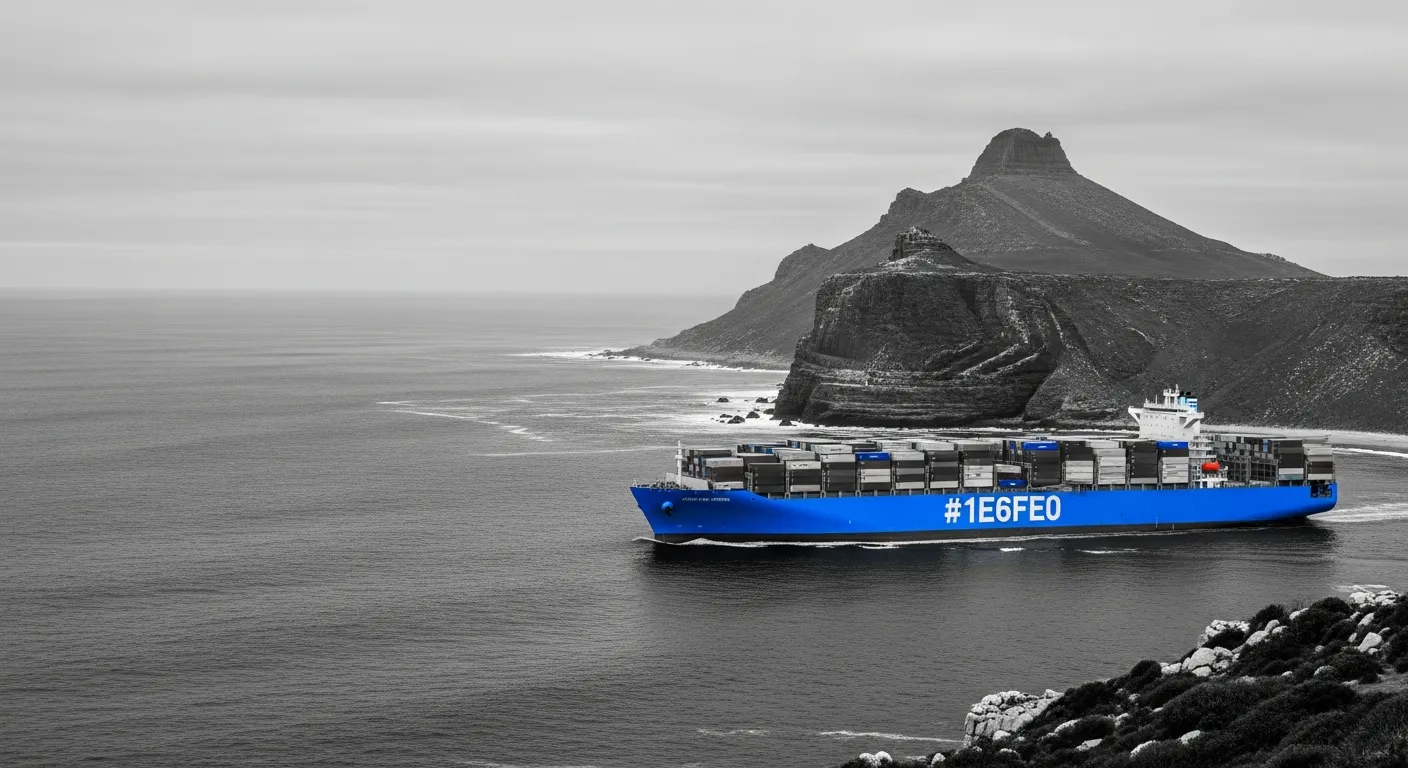
By early March 2026, in response to the Hormuz closure and concurrent Red Sea threats from Houthi forces, major carriers committed decisively to the Cape of Good Hope routing. Maersk announced the immediate rerouting of its ME11 (Middle East–India to Mediterranean) and MECL (Middle East–India to East Coast US) services around the southern tip of Africa. The Cape route adds approximately 3,000 to 3,500 nautical miles compared to the combined Suez Canal and Strait of Hormuz route, translating to 10–14 additional days at sea per voyage. For a standard Asia–Europe service travelling at modern speeds of 18–22.5 knots, the journey extends from approximately 22 days via Suez to 28–31 days via the Cape—a materialisation of lost time that directly compresses procurement windows at every port of call. Freight rates on affected lanes climbed 30–50%; fuel surcharges rose 15–25%, adding an extra $100–$200 per container. Emergency surcharges of up to $3,000 per forty-foot equivalent unit were imposed across Gulf-linked corridors. For a vessel on six round-voyage cycles per year between Asia and Europe, this represents 36,000 to 42,000 additional nautical miles annually—a scale of operational extension that fundamentally alters the economics and timing of provisioning, bunkering, and spare parts procurement. As of April 12, 2026, analysts at SeaVantage projected the disruption would persist through Q3 2026, with industry observers expecting Cape routing to remain the default routing into 2027.
The extended transit time compounds vulnerability in spare parts logistics. Vessels departing Asian ports with nominally four-week provisioning stocks arrive at European and African discharge ports with depleted reserves if supply chains along the voyage have been disrupted. A vessel requiring bunker top-ups or emergency provisions now cannot reliably access Gulf suppliers and must plan purchases from alternative sources—South Africa, Mauritius, West Africa, or Indian Ocean ports—each with different supply reliability, pricing, and compliance certifications. Analyst Uday Bhaskar, a former Indian Navy officer, observed that despite ceasefire announcements in early April, only 5–7 vessels crossed per day during the supposed reopening window, with the situation marked by persistent uncertainty and anxiety over transits.
Port Congestion and Secondary Hub Bottlenecks
The rerouting of 470,000 TEUs of container capacity around the Cape created a compounding congestion effect at alternative transshipment hubs. SeaVantage analysts highlighted that while media attention focused on Hormuz itself, the operational pain for most shippers concentrated at secondary congestion points—Colombo (Sri Lanka), Singapore, Nhava Sheva (India)—where diverted vessels competed for berth space over 60–90-day periods. Brent crude prices surged above $90 per barrel, reaching $105.30 by late April, reflecting both energy supply shock and elevated transport costs. The IEA characterised the 2026 disruption as the largest supply shock in modern oil market history, with Gulf oil exports collapsing by over 60% from normal volumes. For ship supply networks, secondary port congestion meant delayed discharge windows for bunker barges, extended waiting times for ship chandler provisioning teams, and uncertainty over whether provisions and spare parts arriving via alternative routing would clear customs and documentation in time for vessel calls. High-traffic ports already faced berth availability issues under normal conditions; the surge of diverted tonnage further compressed available windows for non-containerised cargo such as bunker fuel, provisions, and spare parts.
Extending Supply Buffers: From 2–3 Weeks to 4–6 Weeks
Prior to the Hormuz crisis, industry standard practice maintained procurement buffers of 2–3 weeks for spare parts, bunker fuel, and provisions, calibrated to predictable Suez-routed transit times and established Gulf port supply networks. The Cape rerouting and extended transits now require buffers of 4–6 weeks minimum, effectively doubling the inventory carrying cost and lengthening the planning horizon for vessel operators. Buyers must now account for extended lead times on specialised components, compliance certification delays at alternative ports, and the risk of supply disruptions at secondary hubs. Global supply chain analysis from 2026 confirms that 78% of manufacturers cite trade uncertainty as a major concern, whilst input costs are expected to rise by approximately 5.4% on average. For maritime procurement teams, this translates to higher inventory acquisition costs, extended working capital requirements, and strategic decisions about whether to consolidate stock at fewer high-reliability ports or to decentralise inventory across multiple regional suppliers—a shift from efficiency-driven centralisation to resilience-focused diversification.
Procurement Strategy: Diversification Across Multiple Port Networks
In response to Hormuz closure and extended Cape rerouting, procurement teams are now tasked with qualifying suppliers across geographically dispersed port networks: Sub-Saharan Africa (Port Louis, Walvis Bay, Cape Town), Indian Ocean hubs (Colombo, Mauritius, Nhava Sheva), and Southeast Asian ports (Singapore, Port Klang) in addition to traditional supply sources. This diversification incurs additional vetting costs, compliance review for different regulatory regimes (IMO 2020 bunker fuel regulations, local environmental standards), and often premium pricing from suppliers with lower throughput or higher operational costs. Bunker suppliers and ship chandlers previously optimised for Middle Eastern sourcing now must assess alternative suppliers' ability to deliver on compressed timelines. Quality assurance for bunker fuel becomes critical;