"War-risk premiums have moved as risk has moved," said Neil Roberts, head of marine and aviation at the Lloyd's Market Association. "There was softening when the memorandum of understanding between the United States and Iran was signed in June, but an uptick after three vessels were attacked this week."
Missile Strikes Unravel Three-Week Ceasefire, Vessel Damage Confirmed
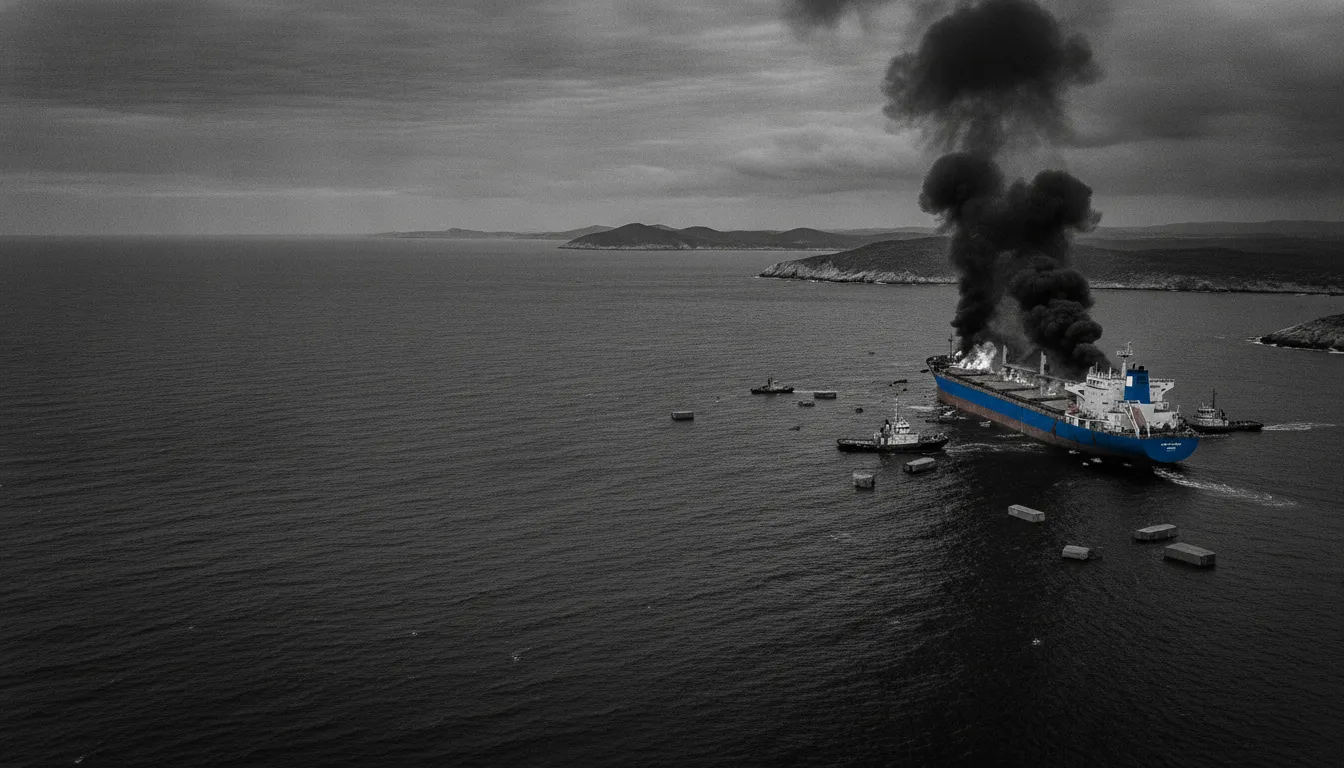
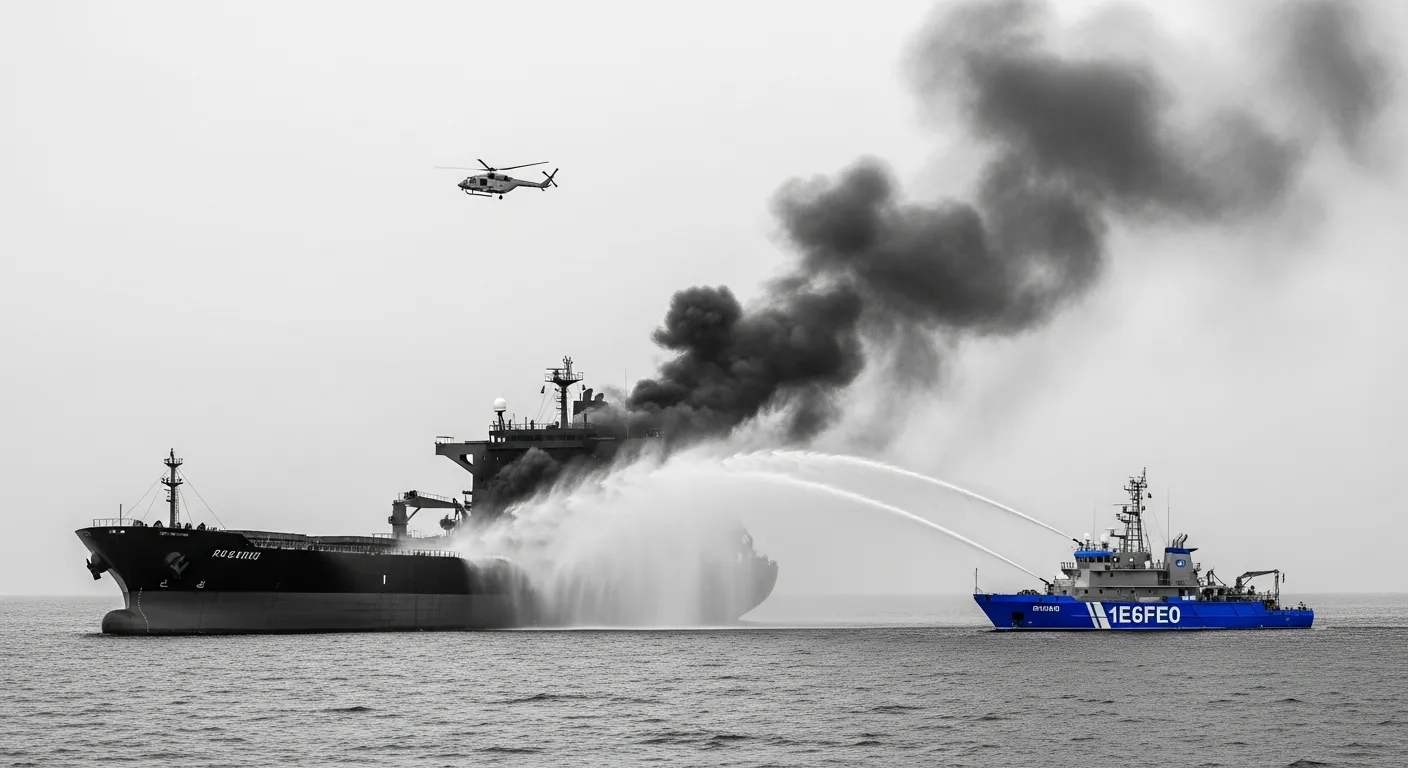
On 7 July, Iran's IRGC fired at least two missiles at commercial ships transiting near Oman in the Strait of Hormuz, with reports of a tanker struck by unknown projectile causing fire, according to the United Kingdom Maritime Trade Operations. A second wave of attacks on 13 July confirmed two UAE-flagged tankers—al-Bahiya and Mombasa—struck by Iranian cruise missiles in Omani territorial waters. The Mombasa's crew included one Indian national killed and six Indians plus two Ukrainians wounded; both vessels caught fire before crews regained control. Material damage was sustained by both tankers, with fires later brought under control by UAE Defence Ministry response teams. The attacks shattered a memorandum of understanding signed 17 June between the US and Iran, in which Tehran had agreed to halt strikes in exchange for sanctions relief and reopening protocols. The interim truce, described as fragile at its inception, lasted just 19 days before Iranian strikes resumed. On 8 July, the IRGC Navy declared the strait closed after claiming warning shots at unauthorised transits. By 13 July, the US military concluded its third consecutive night of strikes against Iranian targets, targeting coastal defence systems, missile sites, and maritime capabilities across Bushehr, Chah Bahar, Jask, Konarak, Abu Musa and Bandar Abbas—a geographic sweep designed to degrade Iran's ability to mount further attacks on commercial shipping.
Traffic metrics reveal severe disruption: crossing confirmations fell 52 per cent week-on-week for 10–12 July, with vessels reverting to defensive routing, according to Kpler. The Cyprus-flagged container ship GFS Galaxy also sustained heavy engine-room damage in a reported strike, with crew abandoning ship; one Indian crew member from Pune was confirmed dead on 14 July when recovered by the Omani Navy. These cascading incidents—multiple flag states, mixed cargo types spanning tankers to containers—signal neither selective targeting nor de-escalation, but systematic capacity degradation designed to reassert Iranian leverage over Hormuz control and toll mechanisms. Before the war erupted on 28 February 2026, an estimated 120–140 vessels crossed through the strait each day, with roughly half being oil tankers moving approximately 20 million barrels per day. The 7–13 July attacks reversed weeks of fragile recovery, collapsing daily transit confirmations from 35 in late June back towards single-digit levels and signalling to shipowners that sustained stability remains a mirage.
War-Risk Insurance Spike Erodes Voyage Economics, Lloyd's Market Re-rates on Escalation
Following the 13 July attacks, war-risk hull premiums jumped from approximately 2 per cent of vessel value (post-ceasefire baseline) to around 5 per cent per seven-day voyage, according to market estimates cited by the Lloyd's Market Association on 11 July. For a very large crude carrier (VLCC) valued at USD 100–150 million, this translates from USD 2–3 million per voyage to USD 5–7.5 million—a cost swing that eliminates profitability on many charter routes and forces immediate fleet-utilisation decisions. In normal peacetime conditions, war-risk premiums average 0.15 per cent of a VLCC's value per voyage, or roughly USD 150,000–225,000; the July spike represents a 30–50 fold increase and renders traditional tanker economics unviable. By early June, Howden Re had documented an insurance industry shift to voyage-by-voyage underwriting, with annual policies removed from the market and pre-existing covers honoured but not renewed at old terms; the reappearance of 5 per cent premiums confirms structural re-pricing has persisted rather than normalised.
Neil Roberts, head of marine and aviation at the Lloyd's Market Association, stated on 10 July: "War-risk rates have moved as risk has moved. There was softening when the memorandum of understanding between the United States and Iran was signed in June, but an uptick after three vessels were attacked this week." As of June, the Lloyd's Market Association survey found 88 per cent of underwriters retained appetite for international hull war risks and over 90 per cent for cargo, signalling availability rather than market withdrawal—yet execution costs have widened the gap between theoretical capacity and practical affordability. Brent crude surged 9.59 per cent to USD 83.30 per barrel on 13 July—its highest settle since 12 June and the largest single-day percentage gain in over six years—reflecting trader repricing of Hormuz-channel risk into energy futures. For procurers booking tanker tonnage in Q3, this insurance cost explosion forces immediate decision: reroute via Cape of Good Hope, accept 5 per cent insurance overhead, or idle vessels in anchorages until terms ease.
Bunker Supply Tightens at UAE Hubs; Fujairah and Khor Fakkan Face Supplier Withdrawal
Bunker availability at the UAE's primary hubs—Fujairah and Khor Fakkan—tightened sharply in late June before the July escalation, with only a limited number of suppliers remaining active. As of 23 June, the supply crunch was most severe for VLSFO (very-low-sulphur fuel oil) and LSMGO (low-sulphur marine gas oil) in Fujairah, where available stocks were confined to a small group of suppliers; only two suppliers were offering HSFO (high-sulphur fuel oil). Khor Fakkan faced similar challenges across all major bunker grades, with suppliers assessing enquiries case-by-case before issuing quotations rather than offering open-book availability. The root cause: shortage of incoming cargoes leaving bunker barges without sufficient replenishment volumes. Bunker demand in Fujairah had picked up following the 17 June ceasefire and arrival of small batches of fresh cargo, easing some availability constraints; however, the 7 July missile strikes and 8 July closure declaration have disrupted inbound logistics again. HSFO remains comparatively tight at Fujairah despite recent improvements, whilst VLSFO supply conditions depend entirely on cargo vessel schedules arriving from refining centres—schedules now subject to geopolitical uncertainty.
Fujairah, the world's third-largest bunkering hub, lies outside the Strait of Hormuz proper and serves as a critical workaround energy and storage node—but only if risk perception around the port remains acceptable to insurers and shipowners. If attacks occur near Fujairah, or if risk premiums extend to the port or its approaches, one of the region's most important bypass options loses its viability, forcing suppliers and buyers to source from alternative regional hubs or distant markets like Singapore. Port operations at Jebel Ali, Hamriyah, Dibba and Sharjah continued without reported disruption as of 30 June, but escalation risk extends to the broader UAE maritime infrastructure, creating latent risk that has not yet materialised but occupies contingency planning. Insurance underwriters have expanded high-risk area designations; if Fujairah or UAE approaches are added to the Joint War Committee Listed Areas, insurers will automatically trigger premium escalations or require additional cover, compounding supply-chain costs further.
Buyers Pivot to Singapore, Oman Sohar, and Cape-Route Staging Ports for Q3/Q4 Sourcing
With Hormuz closure and insurance costs spiking, procurement teams are urgently identifying and locking bunker supply chains beyond the Gulf chokepoint. Singapore remains stable in short-term availability but faces underlying pressure from inventory depletion; residual fuel oil stocks averaged 27 per cent lower in June compared to May, slipping below 15 million barrels—multi-year lows—according to Enterprise Singapore data. VLSFO lead times vary from nine days to over three weeks depending on supplier, compared to 10–14 days the prior week. For buyers accustomed to prompt Fujairah loading, this represents a significant execution delay and cash-flow drag on procurement cycles that typically operate on 2–3 week settlement windows. Oman's Sohar port, positioned outside Hormuz and served by Total and Oman National Oil Company's planned 1 million tonne-per-annum LNG bunkering terminal (operational intent circa 2025), offers strategic alternative positioning, but terminal status remains in-flight and subject to security risk from drone strikes that damaged storage tanks at Duqm and Salalah in March. Cape-route staging ports (South Africa, West Africa) see growing inquiry from rerouted vessels needing bunker top-up before southern African transit, but lack of deep salvage capability and port inefficiency along the Cape limit attractiveness for routine supply, creating a marginal-economics barrier for premium bunker grades.
Turkish ports—notably Iskenderun and Mediterranean hubs—are being evaluated for biofuel blending and low-carbon bunker alternatives as EU FuelEU compliance pressures align with supply-chain resilience strategies. AD Ports Group and International Renewable Hydrogen Partnership signed a memorandum in June outlining collaboration on LNG bunkering, alternative fuels, and fuel-testing capabilities at Abu Dhabi's Khalifa Port, signalling intent to rebuild UAE bunkering infrastructure and diversify beyond crude-oil-dependent streams. However, execution timelines remain uncertain under ongoing conflict conditions, and projects originally planned for 2025 completion now face 2026–2027 pushout risk. For short-term Q3/Q4 procurement, this means buyers cannot rely on new infrastructure capacity and must work within legacy supply networks—networks now under geopolitical strain.
Cape of Good Hope Route Absorbs 5–7% of Global Fleet Capacity; Bunker Demand Cascades to Alternative Hubs
The Hormuz crisis compounds the ongoing Red Sea diversion triggered by Houthi attacks since November 2023. Vessels locked into Cape routing add 3,000–3,500 nautical miles and 10–14 days to Asia-Europe and Asia-US East Coast voyages, consuming additional bunker inventory at each port-of-call and reducing round-trip frequency. Current estimates place 5–7 per cent of global container fleet capacity absorbed by the longer round-trip, equivalent to 1.3–1.8 million TEU of effective capacity removed from the market. This fleet absorption means carriers have redeployed tonnage from less-profitable routes (Intra-Asia, Latin America, Africa) to lucrative Asia-Europe lanes, creating secondary capacity squeezes on regional services. For bunker suppliers, the cascading effect is acute: longer voyage durations require more fuel per container and consume additional bunker inventory at each port-of-call, stretching supplier capacity and creating spot-market premiums for prompt loading. Vessels transiting Cape routes increase calls at alternative bunkering nodes—East African ports, West African terminals, South African hubs—where supplier infrastructure is underdeveloped compared to Gulf hubs.
Freight rates on affected lanes jumped 30–50 per cent over pre-crisis baselines; fuel surcharges alone climbed 15–25 per cent, adding USD 100–200 per container on Asia-Europe and US East Coast routes. For ship suppliers sourcing lube oil, spare parts, provisions, and stores bundled with bunker contracts, route elongation and port-call multiplication demand inventory repositioning, extended credit terms, and multi-hub supplier relationships that were unnecessary when Hormuz-Suez transit was the standard. Q3/Q4 procurement budgets must absorb both Cape-route fuel uplift and bunker-availability premiums, compressing working-capital margins for operators without hedging or supply-contract diversity.
IMO Advises Against Hormuz Transit; Procurement Teams Lock Hedges and Alternative Supplier Contracts by August Deadline
On 12 July, the International Maritime Organization advised vessels to avoid transiting the Strait of Hormuz until safety and security of crews could be assured. This recommendation effectively codifies operational avoidance and triggers contract-law cascades: time charters reference IMO guidance; war-risk clauses reference Joint War Committee listed areas; bunker procurement agreements reference nominated ports-of-supply. When IMO publicly advises avoidance, procurement teams face imminent renegotiation of supply agreements, price-adjustment mechanisms, and contingency sourcing. Q3/Q4 2026 procurement cycles—typically locked in June or early July for August-through-December delivery—now face mid-execution revision. Buyers holding supply agreements for Fujairah, Jebel Ali, or Khor Fakkan loading must notify suppliers of force-majeure contingencies, secure price caps or fixed-term alternatives at Singapore or Oman, and renegotiate delivery schedules and demurrage terms. Suppliers, in turn, must decide whether to absorb insurance cost escalation, pass it through to customers, or exit Hormuz-dependent supply lanes entirely. The practical window for locking alternative bunker supply and re-hedging fuel costs closes within weeks; buyers delaying renegotiation risk blank sailings, inventory shortages, and emergency procurement at spot-market premiums 15–20 per cent above contract rates. Savvy procurement teams are implementing dynamic hedging models that treat war-risk insurance and bunker pricing as correlated inputs, not independent cost buckets, and are building 4–6 week buffer inventory at alternate hubs to cushion execution disruption.
What This Means For You: Strategy Resilience Over Hope for Normalization
Hormuz escalation in July 2026 is not a brief flare; it signals structural reassertion of Iranian control ambitions coupled with ongoing US military presence and blockade protocols. Ceasefire attempts—like the 17 June MoU—remain vulnerable to tactical reinterpretation and operational reversal within weeks. For procurement buyers and ship suppliers, the operational lesson is clear: Hormuz-dependent supply chains (Fujairah bunker, Gulf port calls, direct MENA sourcing) must be treated as high-risk optionality, not core strategy. Build redundancy: lock alternative supplier contracts at Singapore, Oman, and Cape-route staging ports; review vessel-flag and insurer appetite quarterly as war-risk premiums shift; model procurement scenarios that isolate Hormuz cost inflation from broader commodity hedges; and maintain 3–4 week buffer inventory at resilient hubs outside declared conflict zones. Concurrently, monitor IMO and Joint War Committee area designations closely—formal listing of the Persian Gulf or Red Sea expands insurance obligations and can trigger automatic contract-renegotiation clauses. Finally, diversify sourcing geography and supplier relationships; concentration risk in a single hub or flag state amplifies exposure to geopolitical shocks. The Cape of Good Hope route is no longer an alternative—it is now the operational baseline for Asia-Europe and Asia-US trade. Bunker and supply procurement must reflect that structural shift, with Hormuz serving as a supplementary (not primary) option dependent on insurance normalization, crew-safety assurance, and sustained de-escalation that, as of mid-July 2026, remains elusive.