"War-risk rates have moved as risk has moved. There was a softening when the memorandum of understanding between the United States and Iran was signed in June, but an uptick after three vessels were attacked this week." — Neil Roberts, head of marine and aviation at the Lloyd's Market Association, 10 July 2026
From Ceasefire Hope to Escalation: The July Crisis
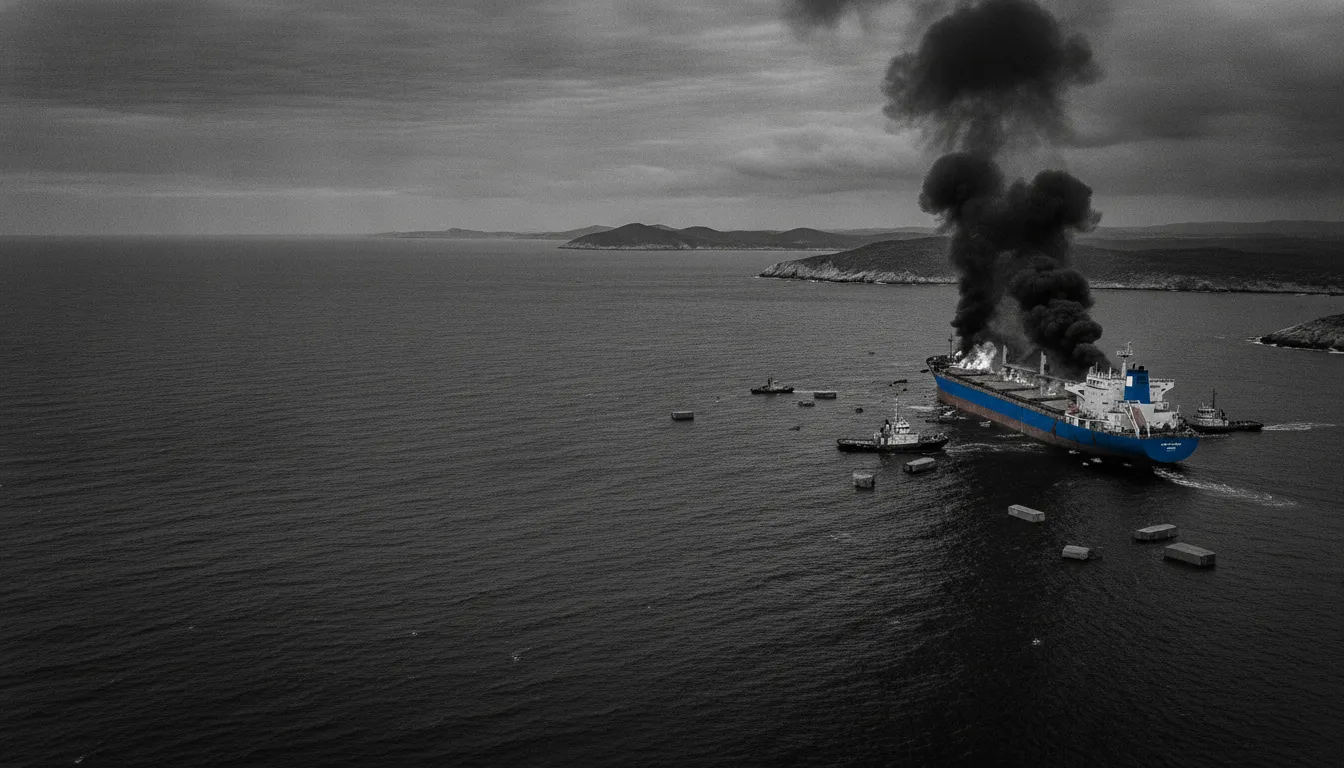
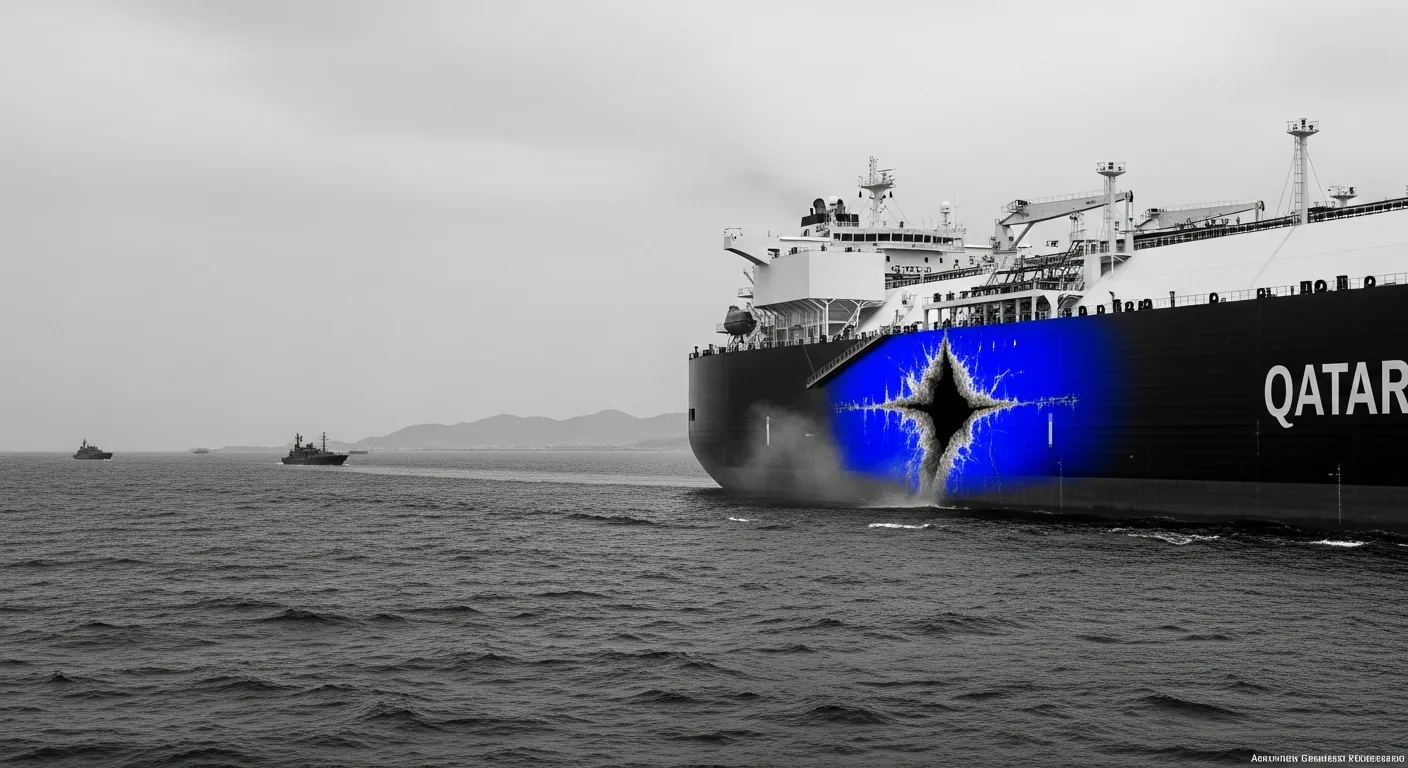
On 28 February 2026, US and Israeli airstrikes on Iran triggered an immediate closure of the Strait of Hormuz by the Iranian Islamic Revolutionary Guard Corps (IRGC). After months of partial blockade, negotiated passages, and a June memorandum of understanding that briefly lowered tensions, the recent missile attacks have unravelled the fragile arrangement. Between 7 and 8 July, at least three commercial vessels were struck: the Al Rekayat suffered a fire to its engine room and was evacuated; the Saudi-flagged crude carrier Wedyan sustained damage; and a third vessel was attacked within 24 hours. These incidents, occurring just days after the expiration of a one-week agreement between the US and Iran, represent the most significant escalation since early summer and have prompted CENTCOM to respond with over 300 targets struck across Iranian military infrastructure.
The immediate signal was unmistakable: the insurance market repriced within hours. War-risk premiums that had softened to approximately 2% following the June memorandum surged back to around 5% of vessel value—where they now settle as "the new market norm," according to market estimates from 11 July. For a Very Large Crude Carrier (VLCC) valued at $100–150 million, this translates to a single-transit insurance cost of $5–7.5 million, compared to the pre-February baseline of $150,000–225,000. The swing is not theoretical: it forces immediate recalculation of voyage economics and fundamentally changes whether shipping a cargo through Hormuz remains viable at all.
Insurance Mechanics: How Premium Spirals Cascade Through Supply Chains
Standard marine hull and cargo insurance explicitly excludes war, terrorism, mines and military action. Shipowners must purchase separate war-risk cover, quoted as a percentage of insured vessel value and negotiated on a per-voyage basis by reinsurance panels at Lloyd's of London. Prior to February 2026, premiums for Hormuz transits typically ranged from 0.15% to 0.25% of hull value per week. By early March, they had climbed to 1–3%; by mid-crisis they reached 5–10%. Today, following the July attacks, the market has re-anchored at 5% as the baseline expectation.
What makes this cost structure particularly punitive is that insurance premiums are not absorbed by shipowners alone. Under BIMCO charter clauses (CONWARTIME), shipowners pass the Additional Premium (AP) directly to charterers, who in turn embed the cost into freight rates charged to cargo owners. Major container carriers have applied explicit War Risk Surcharges (WRS): Hapag-Lloyd charged $1,500 per TEU in March; CMA CGM imposed $2,000–4,000 per container; Ocean Network Express applied Emergency Fuel Surcharges. These are not profit margins—they are cost pass-throughs mandated by insurance capacity withdrawal and repricing. A single high-value container shipment from the Gulf to North Europe now carries an additional $3,000–6,000 in fees layered atop base freight.
The Insurance Availability Cliff: Capacity Withdrawal and Reinsurance Limits
Beyond price, the critical constraint is availability. In early March 2026, major Protection & Indemnity (P&I) Clubs—including Gard, Skuld, NorthStandard, the London P&I Club and the American Club—issued blanket cancellations of war-risk coverage for vessels operating in the Persian Gulf. The Joint War Committee of Lloyd's expanded its "Listed Areas" classification to encompass the broader Arabian Gulf and Gulf of Oman. When a region enters JWC Listed Areas status, annual hull war-risk policies are automatically suspended; shipowners must negotiate new cover on a voyage-by-voyage basis, with rates set by each underwriting layer independently. This means no guaranteed pricing, no bulk discounts and no certainty that cover can be obtained at any price until minutes before departure.
The reinsurance market—which ultimately absorbs the largest losses—has become the binding constraint. As of March 2026, at least 7–15 tankers had been hit, with aggregate losses estimated at $1.75 billion before cargo. Energy infrastructure insurers covering Gulf offshore platforms, refineries and LNG terminals reported that offshore platforms adjacent to the Strait zone have become "effectively uninsurable at standard market terms." Political Violence & Terrorism cover for Middle East energy assets was being quoted at up to 10% of value—an extreme tightening that signals reinsurers are withdrawing capacity rather than simply repricing it. The July attacks have reinforced this dynamic: underwriters are now scrutinising "individual risk factors" more closely, vessel flag, cargo type and perceived geopolitical alignment all influence final quotes.
Timing the Market: Lock Long-Term Contracts Now Before Peak-Rate Periods
For procurement teams and shipowners, the operational lesson is stark: insurance premiums no longer track diplomatic statements on a 24-hour lag. They move on the hour. On 10 July, less than 72 hours after the attacks, insurance brokers at McGill and Partners reported that underwriters had shifted from "relative stability" pricing to re-examining "individual risk factors," effectively widening the bid-ask spread and forcing shipowners to accept less competitive quotes or wait in queue. Policies, when issued, are valid for only 3–7 days before requiring renegotiation—a commercial tyranny that makes long-term freight contracts nearly impossible to honour without margin compression.
The practical implication: buyers and procurement teams must act now to lock supply contracts at current rates before the next escalation phase. Pre-March 2026, spot freight rates on East-West container lanes were stable; by June, Shanghai-to-US East Coast rates had risen 75%, North Europe routes 51%, and transatlantic lanes 57% on top of pre-conflict baselines. A procurement delay of two to three weeks in the current environment risks commodity costs rising 3–5% on insurance and bunker surcharges alone. Suppliers operating on fixed-price commitments are disappearing; those still offering them are factoring Hormuz uncertainty into baseline quotes. Buyers waiting for clarity will be the last to negotiate—and will pay for it.
Geopolitical Hedging: US Government Backstop and Market Fragmentation
In April 2026, facing mass withdrawals of private war-risk coverage, the Trump administration directed the US International Development Finance Corporation (DFC) to establish a reinsurance facility providing up to $40 billion in coverage on hull, cargo and liability risks. This public-sector intervention was unprecedented: a sovereign government effectively becoming the insurer of last resort for commercial shipping because the private market could not absorb correlated loss risk. However, significant questions remain about coverage scope—will the facility extend to non-US-flagged vessels? Will European-flagged tankers shipping crude to China be eligible?—and the geopolitical implications are profound. When governments directly absorb shipping risk, they simultaneously exert leverage over who can use critical trade routes and under what terms.
The July attacks have amplified this fragmentation. Some insurance brokers report that vessels with perceived links to Israel, the US or allied nations face higher premiums; others face outright refusal of cover. Iran has also exploited transit as a revenue stream, reportedly demanding "service fees" as high as $2 million per ship in exchange for safe passage at certain points. The Strait of Hormuz is no longer simply a shipping choke point; it is now a zone where insurance, military force and geopolitical rent-seeking converge. Shipowners face a three-layer cost: insurance, bunker surcharge, and the political-risk premium embedded in their charterer's freight quote.
What This Means for You: Procurement and Operational Readiness
For buyers and logistics teams, the window for action is narrow. Container freight rate increases will accelerate if the Strait remains unstable; bunker costs will follow oil-price moves driven by risk premium, not supply fundamentals. Lock in long-term supply contracts for critical inputs now at current rates, securing multi-month commitments from carriers before insurance premiums reset again. Audit your all-in freight costs—headline base rates are only 40–60% of actual landed cost; WRS, bunker surcharges, port congestion fees and rerouting charges add thousands per container. Build 14-day transit-time buffers into inventory models; pre-crisis schedules no longer apply. If your supply chain depends on Gulf-origin cargo (oil, gas, petrochemicals, refined products), diversify sourcing immediately. Alternative routes via Cape of Good Hope add 10–12 days and $2,000–3,000 per container, but they insure operational continuity if Hormuz escalates further. Most critically: assume 5% war-risk premiums are structural, not cyclical. Until a durable political settlement emerges—not a temporary ceasefire—insurance costs will remain elevated and subject to intraday repricing based on news flow.