
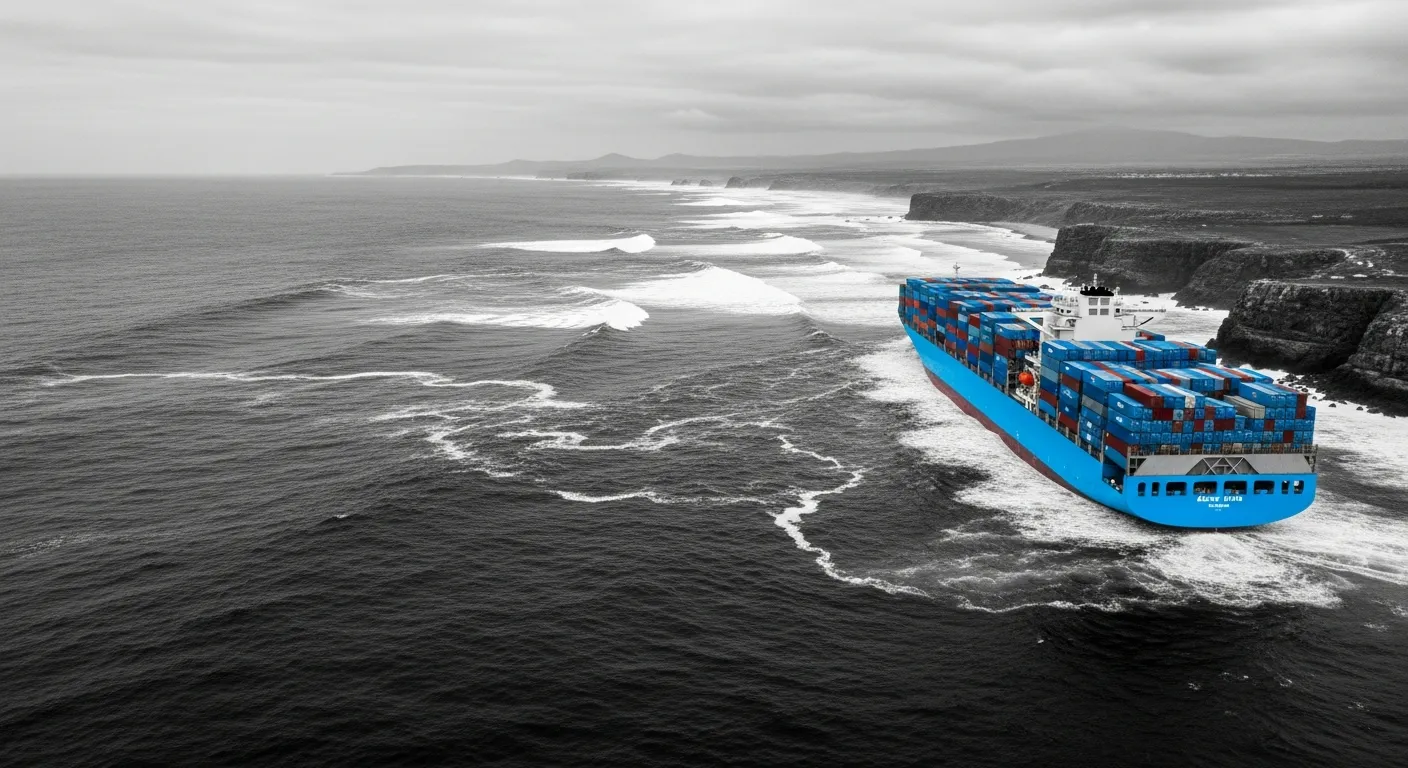
"On August 5, Yahya Saree, the Houthi military spokesman, claimed that the group launched a ballistic missile attack on the Wafa, a Saudi oil tanker located near Yanbu, the kingdom's Red Sea energy export hub about 1,000 km north of Yemen that exports around 4 million barrels per day (bpd)."
Northern Red Sea Under Threat: The Yanbu Gambit
The August 5 claims mark a material tactical shift in Houthi targeting. Previous Red Sea and Gulf of Aden strikes, dating back to late 2023, concentrated on vessels transiting the Bab al-Mandeb Strait—a 33-kilometre chokepoint connecting the Arabian Sea to the Red Sea. By targeting tankers operating near Yanbu, approximately 1,000 km north of Yemeni territory, the Houthis demonstrate extended ballistic range and deliberate intent to disrupt Saudi Arabia's primary oil export infrastructure. On the same day, UKMTO received a report from a tanker master stating "a loud explosion in close proximity to the vessel" near the Bab al-Mandeb; separately, an uncrewed surface vessel attack was reported just north of the Strait.
Yahya Saree separately claimed a strike on the tanker Daisy using ballistic missiles, though Saudi Arabia did not publicly confirm either attack—a standard practice when facing Iranian proxy strikes. The shift northward signals that even vessels avoiding Bab al-Mandeb transits no longer guarantee safety, compelling operators to extend rerouting precautions far beyond traditional chokepoint avoidance. Buyers and voyage planners must now assume that the entire eastern Red Sea corridor, from the strait to Suez-bound lanes, remains under active targeting risk until geopolitical conditions fundamentally change.
The Houthis' Declared Blockade: Strategic Intent Beyond Tactical Strikes
On 20 July 2026, the Iran-backed Houthis formally declared a maritime blockade of Saudi Arabia, described as part of a "siege for a siege" campaign in response to Saudi Arabia's restrictions on maritime and air travel to Yemen—restrictions implemented to prevent Iranian weapons smuggling. The Houthis have since claimed attacks on eight Saudi-linked vessels transiting the Red Sea. This declaration transforms the August 5 strikes from isolated incidents into components of a stated, ongoing blockade strategy. Yahya Saree, in announcing the northern attacks, explicitly cited Saudi Arabia's diversion of ships away from Bab el-Mandeb as the rationale for extending strikes to northern waters.
The blockade language establishes a political-military objective, not a finite operational campaign. Procurement teams should interpret this as a signal that disruption is now structural rather than episodic—the threat is not expected to resolve within weeks or even months. Operators and buyers accustomed to periodic Red Sea closures and seasonal reopenings must now plan supply chain architecture for sustained dual-route operation. This requires procurement strategies that decouple from short-term volatility expectations and instead invest in permanent, redundant supplier networks and inventory buffers across both traditional (Suez) and alternative (Cape) logistics architectures.
Cape Route Immobilizes Global Bunker Demand: African Hubs Accelerate
The cascading effect of persistent Red Sea threats is a structural reallocation of bunker consumption geography. Container carriers including Maersk, Hapag-Lloyd, and CMA CGM announced in March 2026 that they continue rerouting around the Cape of Good Hope, extending voyage times by 10–15 days on Asia–Europe routes and adding 6,000 to 9,000 kilometres to journeys. Each additional rerouted voyage incurs USD 400,000 to 800,000 in additional bunker costs for very large crude carriers (VLCCs) or 20,000-plus TEU containerships. By March 2026, bunker fuel demand at Mauritius' Port Louis had doubled to 1 million metric tons annually as ships refuelled en route around the Cape.
This geographic shift has accelerated investment by new African bunker entrants and expanded existing supplier capacity. Monjasa, Denmark's established African bunker supplier, reported in March 2026 that "volumes have been positively impacted by the Red Sea security situation causing more vessels to reroute south of Africa." New suppliers including Vitol, Bunker Partner, Peninsula, Flex Commodities (which began physical operations at Namibia's Walvis Bay and Luderitz in November 2025), and Global Fuel Supply have announced expansion plans. Procurement teams must integrate African bunkering hubs—Port Louis (Mauritius), Durban (South Africa), Walvis Bay (Namibia)—into standard supplier portfolios and inventory forecasts, not as emergency fallbacks but as permanent route infrastructure.
Supplier Diversification and Inventory Restructuring: Fragmented Networks as Operational Necessity
Persistent dual-route operation demands fundamental restructuring of bunker procurement architecture. Industry best practice now mandates diversification across multiple suppliers and ports to mitigate supply disruptions and price volatility in single locations. By sourcing from multiple suppliers—combining established firms (Monjasa, Peninsula) with emerging regional players (Flex Commodities in Namibia, Vitol's African expansion)—procurement teams reduce exposure to localised capacity shortages or quality issues. Digital procurement platforms, including ZeroNorth Bunker and KPI OceanConnect, enable real-time visibility across supplier networks, pricing analytics, and contract management.
Inventory strategies must shift from just-in-time models toward buffer holdings positioned at Cape route waypoints. Voyage planners now require contracted bunker capacity at Mauritius, Durban, and West African ports (including Tangiers), not merely at traditional Suez-adjacent hubs (Port Said, Aden). This fragmentation increases procurement complexity—operators must manage quality specifications (LSFO, MGO, LNG compliance) across geographically dispersed suppliers with varying regulatory environments and operational standards. However, fragmentation also confers resilience: disruption at any single hub no longer cascades into fleet-wide fuel shortages. Procurement teams adopting supplier diversification strategies and regional inventory buffers report improved cost control and reduced exposure to chokepoint volatility.
Escalating Voyage Costs and Bunker Surcharges: Structural Margin Compression
The Cape reroute inflicts cumulative cost penalties on vessel operations. Beyond additional bunker consumption (up to 40% on extended Asia–Europe journeys per FreightAmigo 2025 data), carriers layer emergency bunker surcharges and conflict risk surcharges onto freight rates to offset elevated fuel and insurance costs. Brent crude crude was trading at just over USD 79 per barrel on 5 August 2026, a modest price environment that masks underlying margin compression driven by operational overhead rather than commodity swings. A VLCC or 20,000-plus TEU containership can face USD 400,000–800,000 additional bunker expenditure per voyage, compounded by 10–15 day voyage extensions that require additional crew wages, maintenance cycles, and inventory carrying costs.
Buyers and procurement teams should expect sustained upward pressure on total fuel and vessel operating costs for as long as Red Sea threats persist. Long-term contracts with African bunker suppliers—negotiated at fixed volumes and competitive terms—offer partial hedge against spot market volatility. Digital tools enabling fast-time voyage optimisation (including slow steaming protocols and route-specific fuel burn analysis) can recoup 5–10% of incremental fuel costs. However, the structural reality remains: the Cape route is economically suboptimal relative to Suez transit. This cost penalty is now a permanent fixture in voyage planning, not a temporary emergency surcharge. Procurement teams must rebase budgets and cost allocation models to reflect this new baseline rather than assume near-term cost normalization.
What This Means for You: Resetting Procurement Strategy for Structural Dual-Route Operation
Buyers and ship supply procurement professionals must act immediately to reset supplier networks and inventory strategies for the reality of sustained Cape route utilization. First, audit existing bunker supplier contracts and coverage: most are weighted toward traditional Suez/Red Sea hubs. Establish formal relationships with at least two regional bunker suppliers in West Africa (including Mauritius and Namibia-based providers) and contractually reserve quarterly minimum volumes. Second, implement digital visibility platforms (ZeroNorth, KPI OceanConnect, or equivalent) to track real-time fuel quality, availability, and pricing across geographically dispersed suppliers. Third, recalibrate inventory forecasts: assume 15–20% higher bunker consumption per voyage and position safety stock at Cape waypoints, not solely at origin or traditional transit ports.
Fourth, negotiate long-term supply agreements with emerging African bunker players (Flex Commodities, Vitol's regional operations) at locked-in margins to reduce exposure to spot market price spikes on alternative routes. Fifth, engage voyage planning teams to integrate Cape-specific fuel optimization protocols—slow steaming, route analytics, engine tuning—into routine operations, not crisis response. The August 2026 Houthi escalation to northern Red Sea targets signals that this disruption is not temporary. Procurement teams that treat Cape rerouting as a structural, long-term operational reality—rather than an emergency measure—will retain cost control and supply security. Those that delay network diversification and maintain Suez-centric supplier portfolios face mounting margin compression and increased risk of voyage fuel shortages.


