"The change has been structural rather than cyclical. The market is now characterised by extreme price volatility, tighter availability, and far more defensive behaviour from both traders and physical suppliers." – Trading source, Manifold Times (31 March 2026)
The March Closure and Immediate Price Shock
On 2 March 2026, the Iranian Revolutionary Guard Corps (IRGC) announced a closure of the Strait of Hormuz to US and Israeli-allied shipping. This declaration followed a campaign of escalating military strikes and counterstrikes beginning on 28 February. The channel normally carries approximately 13 million barrels per day of crude, or roughly one-fifth of global oil consumption. Within days, Brent crude climbed from the $60s to over $100/barrel, and by mid-March had peaked near $126/barrel—the highest price since summer 2022.
The bunker markets reacted with even sharper moves. By 9 March 2026, global VLSFO across the top 20 bunkering hubs averaged $960/tonne, up 30–35% in a single week. In Singapore, the world's largest hub, prices rocketed to $822/tonne on 9 March and then climbed to $1,049/tonne by 12 March. MGO, the premium distillate essential for ECA compliance and auxiliary engines, surged to $1.8k/tonne at peak, compared to a $669/tonne baseline in February. The gap between VLSFO and high-sulphur fuel oil (HSFO) widened to $217.50/tonne in Fujairah and $179/tonne in Singapore—more than double pre-war levels—as refineries curtailed VLSFO production to preserve blendstocks for higher-margin distillates.
Fujairah's Collapse and the Third-Hub Problem
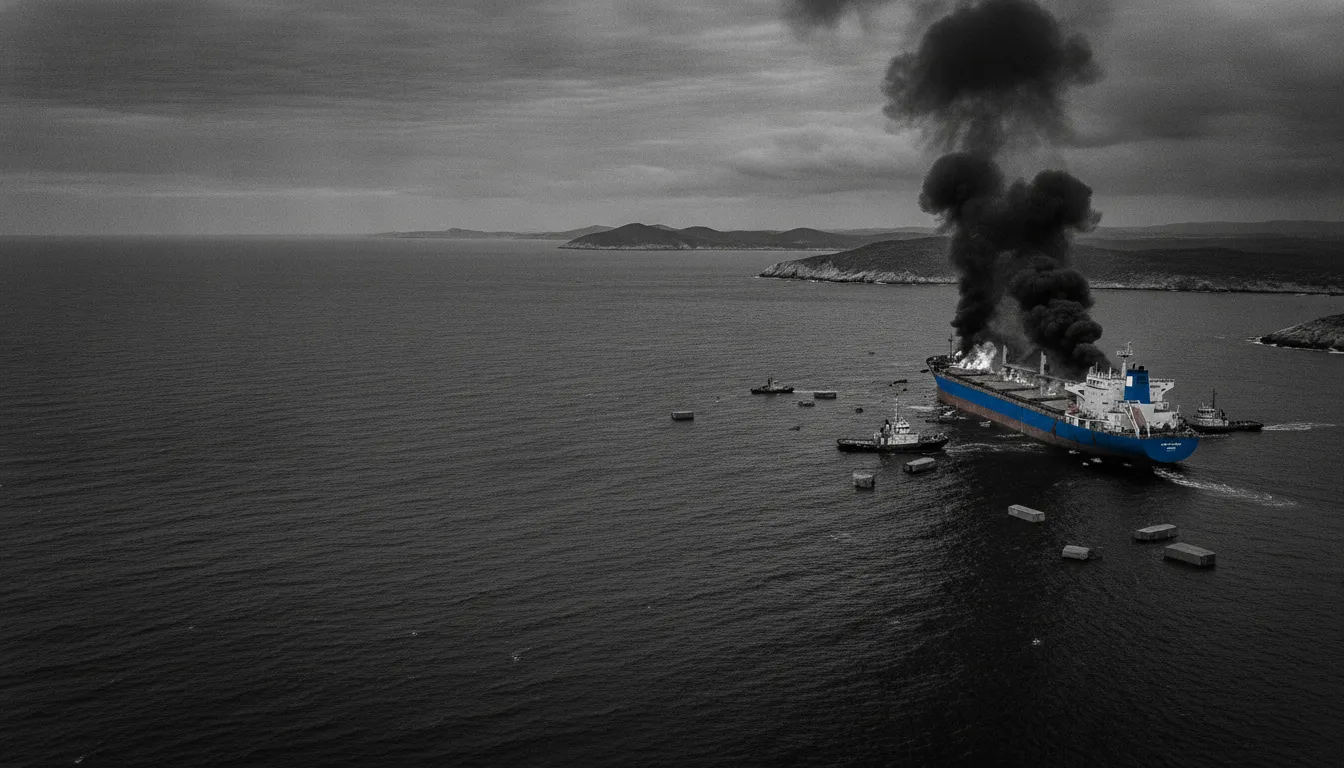
Fujairah, the Middle East's largest bunkering hub and world's third-largest overall, buckled under security pressure. On 9 March, debris from an intercepted Iranian drone struck the Fujairah Oil Industry Zone, igniting a storage fire and halting barge loading operations. Within hours, bunker suppliers including Sinopec, Mediterranean Eastern Enterprise, and Pearl Marine issued force majeure notices, citing missile strikes and shipping closures. Analytics firm Spotbarge reported 70–80% of bunker barges went offline; some reports suggest 70–80% of normal bunkering activity (typically 40–50 bunkerings per day) collapsed.
The disruption persisted. By June 2026, even after the brief ceasefire, fuel oil imports to Fujairah averaged only 7,000 barrels per day—down from 14,000 b/d in March and zero in April. Suppliers warned that bunkering could cease entirely once floating barge inventories depleted. Fujairah's VLSFO premium to Singapore widened to $214/tonne, reflecting not cheaper fuel but owner reluctance to bunker near contested waters and a complete breakdown in logistics access.
Atlantic Hubs' Premium Spiral and the $250/ton Outbid
Whilst Middle Eastern and Asian hubs fractured, European and US facilities absorbed rerouted demand. Rotterdam and Houston maintained inventory but faced unprecedented premiums. By late March, Singapore VLSFO stood at $1,049/tonne against Rotterdam at $748/tonne on 12 March, yet by April the premium had reversed—Rotterdam premiums to crude widened, and by May, Asian buyers were actively outbidding Atlantic orders for spot cargoes.
The result: "Asian buyers are outbidding Atlantic orders for spot fuel, pushing Singapore up USD 250 per ton over Rotterdam by late March – up from just USD 26 pre-war," according to an April 2026 analysis. This spread widened because refiners in Asia were heavily dependent on Gulf feedstocks (Al Zour refinery in Kuwait supplied ~60% of Singapore VLSFO blendstocks) and faced production curtailments. European refineries, by contrast, could source non-Gulf crude and maintained better flexibility, yet their spare VLSFO capacity was being pulled eastward at widening margins, creating a two-tier global market: scarcity Asia and relative stability Europe/US.
Supply Chain Fragmentation and Lead-Time Creep
As of late June 2026, six weeks after the partial Hormuz reopening, supply geography remained fractured. In Singapore, VLSFO lead times varied wildly: some suppliers quoted 9 days, others exceeded 4 weeks (previously 2–3 weeks). HSFO lead times tightened slightly to 7–11 days, and LSMGO to 3–8 days. In Fujairah, availability had improved but supply remained "tight" for most grades, with only one supplier consistently offering VLSFO and LSMGO stocks. Elsewhere, Colombo remained stable with ~6-day lead times, but Shanghai and several northern Chinese ports faced persistent VLSFO and LSMGO constraints. Across the network, the "fragile balance" cited by logistics analysts reflected a market held up by pre-war inventories draining faster than replenishment cargoes could arrive.
Procurement teams encountered a new operational reality: vessel schedules now required 5–15 day lead-time buffers instead of 2–3 days, and even then, no single hub offered reliable availability across all grades. Operators were forced to "split lifts" (take partial stems at one port and complete at the next) or carry excess fuel to mitigate cascade refuelling gaps—both costly workarounds that have become standard practice.
Refinery Economics and Structural Undersupply
The crisis exposed deeper refining constraints. Kuwait's Al Zour facility, with 615,000 barrels per day capacity and historically crucial for Singapore VLSFO supply, became effectively inaccessible due to Hormuz closure and later partial restrictions. Vitol's 100,000 b/d Fujairah refinery faced compounded feedstock shortages. More broadly, as Brent crude prices remained elevated, refineries pivoted away from VLSFO production: the "scrubber spread" (VLSFO minus HSFO) and gasoil cracks remained so high that facilities preferred to manufacture jet fuel, marine gasoil, and distillates rather than blend VLSFO. This structural incentive—not temporary panic—kept VLSFO premiums locked in at 18.8% above Brent futures as of late May, compared to a 0.8% discount before the war. Even as crude futures slid from peak levels, VLSFO premiums persisted, signalling that supply-side constraints would linger well into H2 2026.
Procurement Response: Hub Diversification and Timing Discipline
Industry guidance has coalesced around three actionable strategies. First: monitor and diversify away from single-hub dependence. Procurement teams must track Fujairah and Singapore spreads separately, and maintain real-time visibility into Rotterdam and Houston availability—the widened Atlantic premiums make them expensive but sometimes unavoidable. Second: extend bunker lead times immediately. Vessels bound for Asia from Europe now face 10–14 additional days via Cape of Good Hope; voyage planning must factor bunker procurement delays on top of route extension. Third: embrace shorter quote-validity windows and dynamic pricing locks. As one trading source noted, coal and energy buyers are now running "shorter quote-validity windows not just because bunker costs are volatile, but because they genuinely don't know where Brent will be in 72 hours." Digital bunker management tools—offering real-time port comparisons, supplier-level availability feeds, and scenario modelling—have become competitive necessities rather than nice-to-haves.
What This Means for You
Procurement teams and vessel operators must treat the March 2026 crisis not as a temporary shock but as a structural inflection point. Global bunker supply is no longer a unified commodity: it is a fragmented, geopolitically risk-loaded web of regional hubs with divergent supply chains, lead times, and premiums. Budgeting must assume 5–15 day procurement buffers and $250–300/tonne regional spreads as baseline volatility, not worst-case scenarios. Diversification across Fujairah, Singapore, Rotterdam, Houston, and secondary ports like Colombo and Zhoushan is no longer optional—it is table-stakes risk management. Suppliers in contested regions must be stress-tested for force majeure scenarios and force majeure-light arrangements (partial availability, selective enquiries) are likely to persist. Lastly, lock in medium-term fuel-hedging or supplier-partnership frameworks now whilst refinery economics normalise: the post-crisis recovery will favour operators with pre-negotiated supply lanes, not spot-market chasers.