"LNG is no longer a pilot fuel in shipping. The transition is not without headwinds, but the methane pathway is moving forward."
— Steve Esau, SEA-LNG Chief Operations Officer, June 2026
The Supply-Side Reality: Why 800+ Vessels Exist on Just 62 Bunker Ships
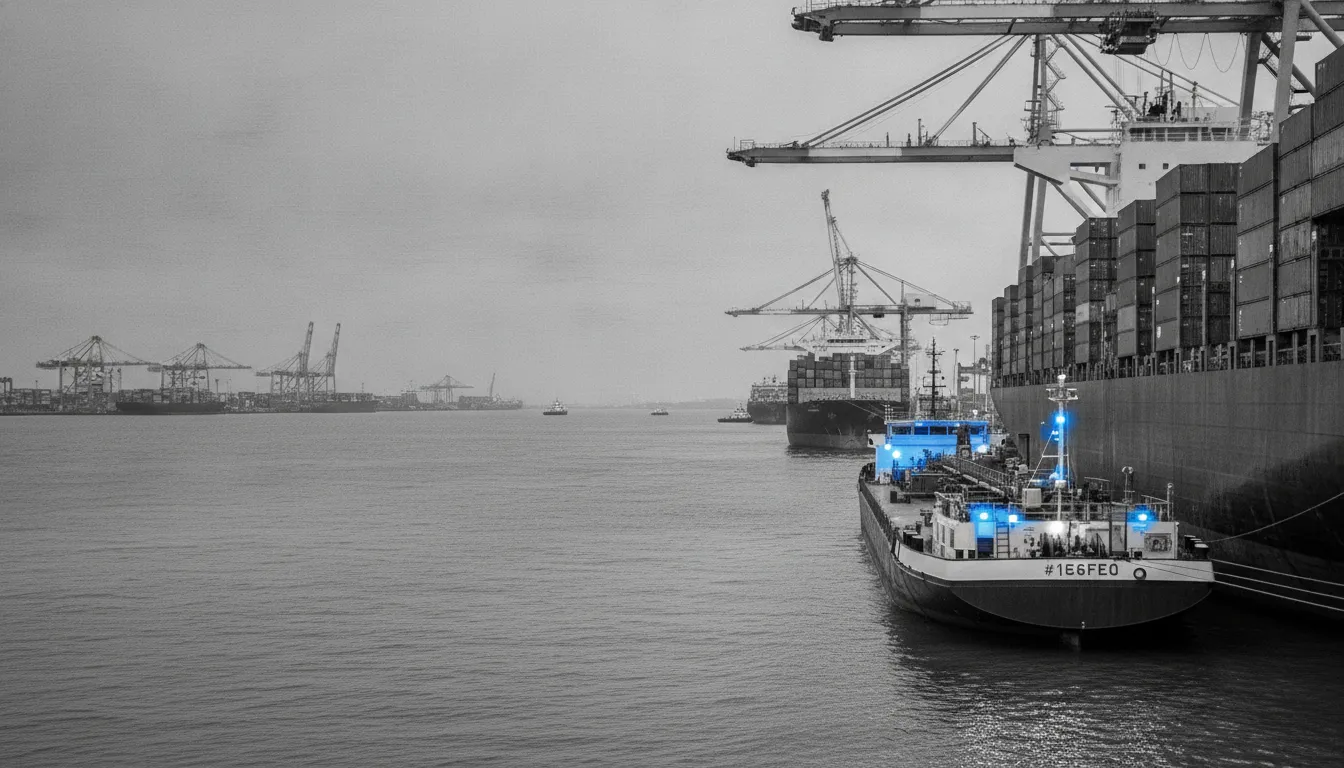
As of mid-2026, the global LNG bunker fleet comprises 62 dedicated vessels, with another 38 on order. Bunker vessels typically carry 5,000–20,000 cubic metres and transfer at 60–1,250 cubic metres per hour, enabling large-vessel operations at anchor or berth. This infrastructure has expanded dramatically: in 2016, only one LNG bunker vessel existed globally; by 2025, the fleet had reached 62 units. Yet this supply cannot yet keep pace with demand growth. DNV analysis indicates that 64 LNG bunkering vessels are in operation today with 16 further on order, meaning the pipeline of new capacity remains constrained relative to fleet expansion. Analysis by Kpler in early 2026 revealed that dual-fuel vessels are capturing only about 35% of their theoretical LNG demand, indicating acute constraint at non-hub ports. Singapore reported a 48% year-on-year volume increase in Q1 2026 to 150,000 tonnes, while Rotterdam and Antwerp-Bruges together reported 44% growth, with Antwerp-Bruges alone recording a 214% surge. The Port of Antwerp-Bruges specifically saw a sharp 237% year-on-year jump in LNG bunker sales in the first three quarters of 2025 compared with the same period in 2024. LNG-fuelled vessels are expected to grow from 657 in service to 1,237 between now and 2028, yet the bunker vessel orderbook may deliver only 24 new units over that window.
What this means for you: If your fleet operates primarily between European hubs and Southeast Asian deep-water ports, LNG availability is reliable and growing. Regional routes and secondary ports face unpredictability; some routes capture only 35% of theoretical fuel demand due to logistics friction. Procurement teams must build flexibility into fuel contracts and pre-arrange STS operations weeks in advance at constrained locations. DNV's classification framework now supports LNG as the primary pathway forward, yet logistical friction remains the real cost driver for early adopters. Monitor port-specific capacity announcements: Shanghai reached 712,000 cubic metres of bonded LNG bunkering (up 54% year-on-year), and Canada emerged as a new node in January 2025, contributing 38,000 tonnes in its debut year with the Seaspan Lions establishing a key West Coast supply point.
Three Delivery Methods: Matching Vessel Size and Port Infrastructure
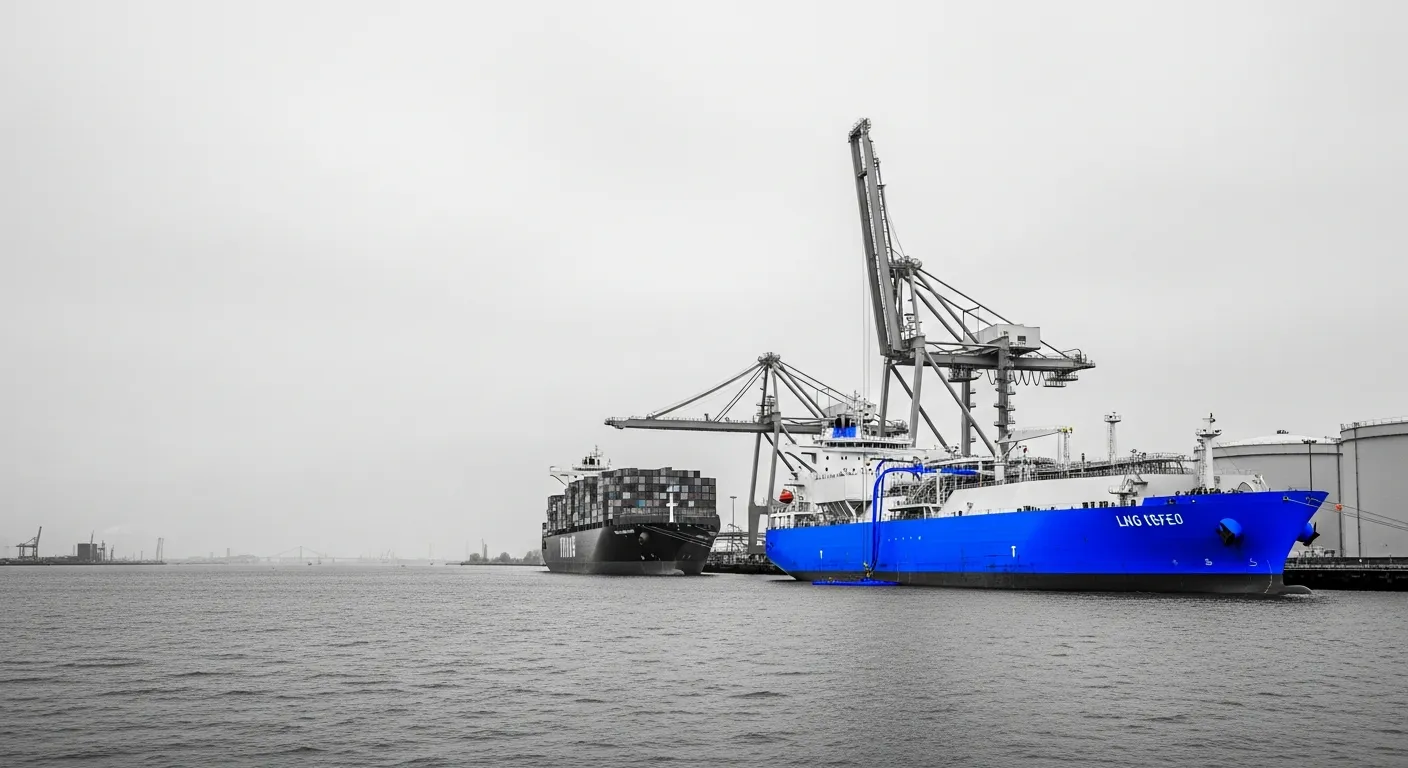
LNG reaches vessels via three fundamentally different mechanisms, each with operational and commercial trade-offs. Ship-to-Ship (STS) bunkering, where a dedicated LNG bunker vessel moors alongside the receiving ship at berth, anchorage, or during cargo operations, dominates major hubs and handles 52% of global LNG bunkering volumes by market share in 2025. STS is the most common method for large vessels including container ships, cruise ships, and tankers, enabling simultaneous cargo handling and refuelling—a critical advantage where port time carries maximum cost. Bunker vessels can deliver 5,000–20,000 cubic metres per operation. Truck-to-Ship (TTS) delivery uses specialised cryogenic road tankers (40–80 cubic metres per truck, approximately 20 metric tonnes each) connected via flexible hose at quayside; it is the most widely deployed method globally due to low upfront capital and suitability for smaller vessels and developing ports. Each truck carries 40–80 cubic metres, and multiple trucks can operate simultaneously for larger volumes. TTS bunkering typically takes about one hour owing to limited flow rate (around 1,000 litres per minute), and is best suited to smaller-sized LNG-fuelled vessels with limited bunker volumes such as tugboats, inland vessels, and smaller passenger ferries. Terminal-to-Ship (terminal-to-truck or ex-pipe/ex-installation) transfers LNG from fixed onshore storage tanks via pipeline or loading arms—a high-capacity, high-efficiency method available only where dedicated LNG terminal infrastructure exists (Rotterdam, Singapore, Gibraltar, Barcelona, Jacksonville). Transfer rates for terminal methods can exceed 3,000 litres per minute, cutting bunkering time sharply. A typical bunkering operation takes 4–12 hours depending on volume and method, with strict procedures governing each phase to manage LNG's cryogenic properties at −162°C.
What this means for you: Container and large tanker operators should prioritise STS-capable ports and build supply contracts with licensed bunker vessel operators such as Shell, TotalEnergies, Gasum, and Seaside LNG. Shell's Progress served as the primary volume driver, delivering 141,000 tonnes alone to the container segment in 2025, while Seaside LNG's Clean Everglades and Clean Canaveral supplied the cruise sector. Smaller regional ferries and inland waterway vessels benefit from TTS arrangements because upfront terminal investment is eliminated; truck-to-ship is a good provisional solution for LNG bunkering given still-limited demand in combination with lack of infrastructure. If your vessel operates on fixed routes through European Emission Control Areas, negotiate terminal-to-ship contracts at established hubs (Rotterdam supplies over 300,000 cubic metres annually; Barcelona became an LNG bunkering facility in January 2017 and now handles multiple operations) to lock in efficiency gains and reduce compliance volatility under FuelEU Maritime and EU Emissions Trading System mandates.
Supplier Vetting and Contractual Guardrails
The LNG bunker supply chain comprises global energy majors (Shell, TotalEnergies, Gasum), regional operators (Peninsula Petroleum, Nauticor, Titan, Seaside LNG), and specialist firms focused on specific geographies or vessel classes. Vetting must account for four dimensions: regulatory accreditation, operational track record, fuel quality assurance, and price risk management. All suppliers must comply with IGF Code (International Code of Safety for Ships using Gases or Low-flashpoint Fuels), ISO 20519 (bunkering operations specification), and local port authority permits. Classification societies—DNV, Lloyd's Register, ABS, Bureau Veritas—publish technical guidance and certify compliance. Gasum operates the largest LNG and bio-LNG bunkering network in the Nordic and ARA region, with more than 1,000 completed bunkering operations through its dedicated vessels Coralius and Kairos, establishing a credibility baseline. Over 62 LNG bunker vessels operate globally, and Gasum's Coralius alone has completed over 1,000 operations without incident. Platts (S&P Global Commodity Insights) began publishing daily price assessments for bio-LNG in Rotterdam in November 2024, improving transparency for bundled LNG and bio-LNG contracts. In July 2025, TotalEnergies and CMA CGM launched a logistics joint venture to develop Rotterdam LNG bunkering infrastructure, signalling supply-side consolidation. In April 2026, NYK Line acquired a 50% stake in Avenir LNG, reflecting strategic investment in supply-chain control. Key safety hazards include cryogenic burns from −162°C liquid, flammability when vapor mixes with air (5–15% concentration), asphyxiation in confined spaces, and tank overpressurization from boil-off gas (BOG) buildup. Emergency Shutdown systems linking both vessels provide automatic shutdown on leak detection, overpressure, or loss of communication.
What this means for you: Request third-party safety certifications and evidence of past performance from suppliers; Gasum's 1,000-operation safety record is the benchmark. Require Bunker Delivery Notes documenting fuel quantity and quality, and cross-reference LNG pricing to Platts assessments to detect margin overcharges. For long-haul container routes, negotiate fixed-volume contracts with major incumbents rather than spot purchases, which expose fleets to availability gaps at secondary ports. Consider fuel pooling services (Gasum's maritime pooling service) to monetise FuelEU compliance surplus if your fleet generates excess low-carbon credits. MSC, CMA CGM, Maersk, and Hapag-Lloyd all operate significant LNG-pathway tonnage, establishing proven operational benchmarks.
Cost-Benefit Timing: When Early Adoption Pays Off
LNG bunker prices have tracked closely to marine gas oil (MGO) and very-low-sulphur fuel oil (VLSFO) throughout 2025 and into 2026, holding a USD 150–250 per metric tonne price edge over VLSFO in major hub ports. For Europe-facing fleets, however, the true compliance cost now includes carbon allowances. EU Emissions Trading System allowances trade around €75 per tonne (as of mid-2026), equivalent to approximately USD 280 per tonne of VLSFO or MGO burned. Low-slip LNG vessels operating under FuelEU Maritime can meet 2025 and 2030 compliance targets with fossil LNG alone, without renewable blending—a material advantage. Methane slip measurement has become the highest-return-on-investment compliance action most LNG operators can take from 2026 onward, directly affecting cost under both ETS and FuelEU systems. Singapore delivered 571,400 tonnes of LNG bunkers in 2025, while Rotterdam recorded a more than six-fold increase in liquefied biomethane (LBM) blend bunkering in 2025 compared to 2024, with 15,260 cubic metres bunkered in Q1 2026 alone. The addressable market is expanding rapidly: global LNG bunkering market capacity is projected to grow from 13.68 million metric tonnes in 2026 to 56.29 million metric tonnes by 2031, at a 32.7% compound annual growth rate. Container fleet operations led with 39.7% of LNG bunkering market share in 2025 and are forecast to expand at 35.8% CAGR through 2031. Europe captured 72.4% share of the LNG bunkering market in 2025, while Asia-Pacific is projected to record fastest regional growth at 40.5% CAGR through 2031.
What this means for you: Fleets committed to European routes should order dual-fuel vessels now; newbuild price premiums for LNG capability remain modest (USD 3–5 million per large box ship), and regulatory tailwinds are locking in compliance value. Retrofit economics remain poor for most vessel classes, so early conversion via newbuild is the optimal path. Lock in long-term LNG supply contracts at hub ports before 2027 if your vessel enters service in 2027–2028; spot exposure will rise as competing regions (Middle East, India, Canada) develop capacity and drive regional price volatility. Monitor bio-LNG premiums against compliance credit values; in September 2025, sales of FuelEU Maritime credit surplus to LNG-fuelled vessel owners commanded significant premiums to delivered bunker bio-LNG assessments in Europe, enabling shipowners with surplus compliance to monetise excess credits by selling to under-compliant peers. Alternative-fuelled vessel orders placed in 2025 totalled 275 (down 47% year-on-year), but LNG-fuelled vessels accounted for 188 orders representing 31% of total gross tonnage, sustaining LNG's dominance despite market slowdown. In the first half of 2026, 61 LNG-fuelled vessels entered service, and LNG retained 73 of 137 alternative-fuelled vessel orders, demonstrating sustained market confidence.