The route through the Suez and the Red Sea is the fastest, most sustainable and most efficient way to serve customers. By making the structural change of returning to the trans-Suez route for the MECL service, we will offer significant improved transit times.
Maersk's Measured Suez Return: Two Routes, Two Timetables
On 6 July 2026, Maersk and Hapag-Lloyd announced that their jointly operated AE15 service—linking Asia, the Mediterranean, and Turkey—would return to the Suez Canal, with the Majestic Maersk, a 19,000 TEU vessel, scheduled to transit around 24 July. This was Maersk's second attempt in 2026 following a brief return in January–February that was suspended when geopolitical tensions erupted in late February. The company stressed this represents "the beginning of a gradual effort to reestablish transits," contingent on sustained Red Sea security improvements.
A week later, on 9 July, Maersk announced a structural shift of its Middle East Container Line (MECL)—the sole Maersk service connecting India, the Middle East, and the US East Coast—back to the trans-Suez corridor, effective August 2026. For westbound sailings, transit times will improve by 7 days; for eastbound, 14 days. Critically, the MECL will add a new Jeddah call, introducing a fresh bunker sourcing point in Saudi Arabia. Both moves remain contingent on security conditions; contingency plans to revert to Cape routing exist if the threat environment deteriorates.
Bunker Demand Now Flows Across Three Competing Hubs
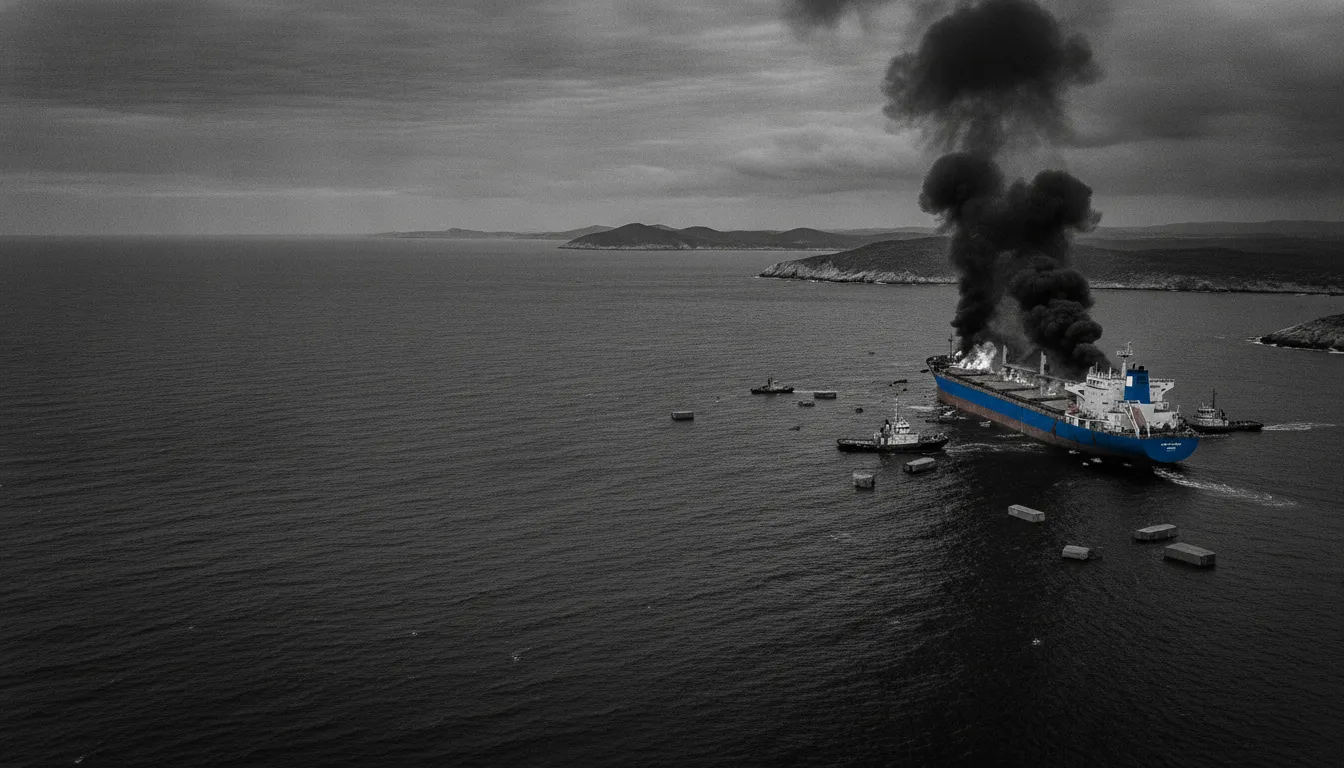
Before late 2023, approximately 10 percent of global seaborne trade transited the Suez Canal. After Houthi attacks forced near-total diversion around the Cape of Good Hope, bunker demand sharply migrated southward. Port Louis (Mauritius) nearly doubled bunker sales in 2024 to a record 929,043 metric tonnes, from 509,837 tonnes in 2023—a 82 percent surge. South African ports, historically dominant, contracted: Cape Town and Durban fell to roughly 80,000 tonnes per month in 2024 from approximately 130,000 tonnes in 2023 as higher regional prices drove vessel calls toward Mauritius.
Now, with Maersk and Hapag-Lloyd selectively returning to Suez, bunker suppliers face a fractured demand landscape. Vessels routing AE15 and MECL via Suez will source fuel in the Middle East (Jeddah, Salalah, Arabian Gulf ports) or Mediterranean hubs; Cape-routed competitors will continue loading at Port Louis, Walvis Bay, or East African ports. This split erodes the centralised inventory model that emerged during the full Cape-diversion era and requires suppliers to maintain simultaneous capacity across geographically distant bunkering zones.
The Capacity Release and Spot-Market Volatility
As Maersk and other major carriers return to Suez, industry analysts project that the Cape diversion, which currently absorbs roughly 6 percent of global container shipping capacity, will release approximately two million TEU of container capacity back into the market. This release, combined with the continued delivery of approximately 8–9 percent of the global fleet annually between 2024 and 2028, has sparked warnings of a sharp swing from market tightness to oversupply.
For bunker suppliers, this capacity release translates to a collapse in the "scarcity premium" that has inflated bunker prices during the past two years. Spot rates, already volatile, will likely spike initially as vessels routing via Suez arrive ahead of their typical Cape schedules, creating brief congestion and demand surges in Mediterranean and Middle Eastern ports. Once schedule stability returns, however, spot bunker premiums could fall sharply. Ship suppliers relying on fixed annual contracts will benefit from price certainty; those holding spot inventory or dependent on volatile short-term contracts face margin compression as a buyer's market re-emerges.
Lead Times and Inventory Planning Under Uncertainty
The gradual, contingent nature of the Suez return creates a dangerous planning environment. Maersk has already reversed course twice (January–February 2026, after trial runs in November–December 2025); the company explicitly states that individual sailings or entire service structures could revert to Cape routing if security conditions deteriorate. For a ship supplier managing bunker tanks, storage leases, and supply contracts across three continents, this volatility demands real-time tracking of carrier announcements and AIS data.
Bunker lead times—the time required to procure, barge, and deliver fuel to a vessel—vary sharply by port. Middle Eastern sourcing via Jeddah or Salalah may require 5–10 days of lead time; Cape hubs such as Port Louis or Walvis Bay typically 3–7 days. A supplier betting on Suez growth must pre-position inventory in Saudi Arabian and Red Sea terminals; one that assumes ongoing Cape dominance must secure storage capacity in southern Africa. The dual-route world offers no single optimal strategy; instead, suppliers must design a portfolio approach, hedging their bets across both corridors while accepting that some inventory will face margin pressure from shifting route allocations.
Spot vs. Contract Dynamics in a Bifurcated Market
The Suez Canal Authority reported an 18.5 percent revenue increase and 5.8 percent vessel traffic growth in the first half of fiscal year 2025–2026, signalling early recovery confidence. However, container ship transits fell to their lowest January level in at least ten years in 2026, with only 150 container crossings versus expectations of higher numbers. This contradiction—strong overall traffic but weak container volumes—reflects carrier caution and the selective, staged nature of the return.
This bifurcated market creates a pricing challenge. Suppliers with long-term contracts locked in at Cape-era price premiums will find those rates undercut once Suez-routed vessels stabilise their schedules and volumes normalise. Conversely, spot buyers hoping to play for lower prices as capacity is released may find themselves squeezed if geopolitical shocks suspend Suez transits again, pushing prices back up. The safest approach involves staggered contract negotiations: avoid fully committing to fixed pricing on either route; instead, negotiate spot caps and collar strategies that protect against both upside and downside extremes while preserving optionality.
What This Means for You: A New Operational Cadence
For buyers and ship suppliers, the dual-hub reality demands a shift in operational discipline. First, integrate real-time carrier routing intelligence—AIS tracking, service announcement monitoring, and security intelligence—into your weekly procurement cycle. Know which vessels are actually committed to Suez and which retain Cape optionality. Second, modularise your inventory across at least two regional hubs; the cost of carrying distributed stock in a high-uncertainty environment is lower than the cost of being caught holding excess fuel in the wrong location when routes flip. Third, resist the temptation to lock in multi-year bunker contracts at current prices; instead, use 2–3 month rolling contract windows with embedded spot-reference caps to capture upside if prices fall while avoiding losses if supply shocks re-emerge. Finally, build contingency relationships with suppliers in both the Middle East and southern Africa; when the Suez transit becomes routine again, spot margin compression will reward suppliers with the lowest delivered cost, not those with the deepest regional relationships. The Suez return is not a binary flip; it is a multi-quarter rebalancing in which the ability to see around corners and move inventory quickly will define winners from losers.