
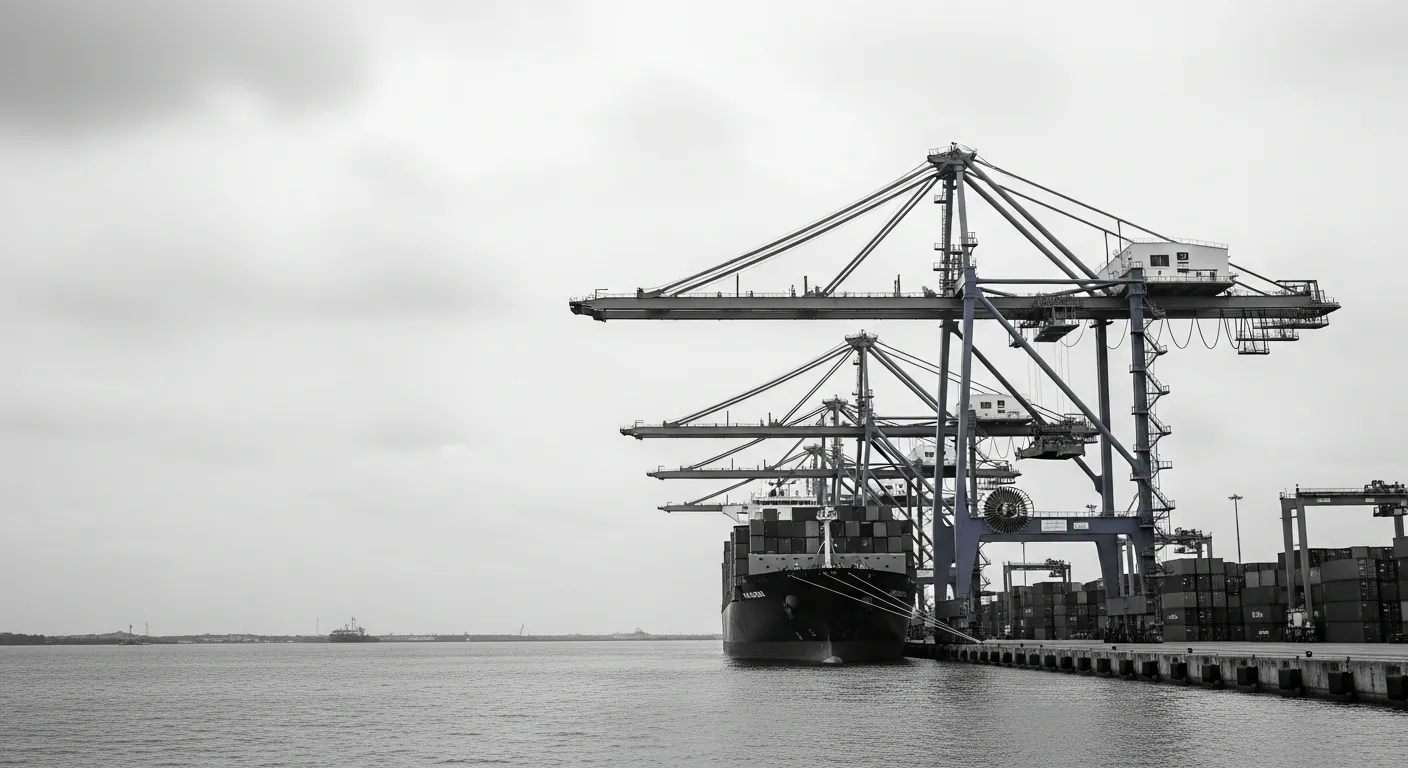
"The investment would increase cargo volumes, generate more revenue for the country and strengthen the competitiveness of Nigerian ports."
— Dr. Abubakar Dantsoho, NPA Managing Director
BUA's $85M Bet: Reconfiguring the Eastern Logistics Backbone
BUA Group, a major Nigerian industrial conglomerate, is actively executing a $85 million expansion of its BUA Ports and Terminals facility in Port Harcourt. The project targets handling over two million tonnes of imported raw materials annually—a capacity surge designed to support the rapid scaling of BUA Foods across the group's food processing operations. Critically, the expansion adds approximately 600 metres of quay frontage to the terminal, enabling it to receive larger vessels and process higher cargo volumes without the congestion that has plagued Lagos's Apapa and Tin Can Island corridors for years.
BUA Group Chairman Abdul Samad Rabiu disclosed the investment during a visit to the Nigerian Ports Authority (NPA) headquarters in Lagos on 15 July 2026. The expansion project has already advanced significantly and is positioned as critical to supporting BUA Foods' long-term growth strategy across food, cement, mining, and infrastructure segments. The NPA's Managing Director, Dr Abubakar Dantsoho, projected double-digit growth in both cargo throughput and statutory revenue from the facility, describing it as a major boost to trade and the development of Nigeria's eastern ports. This localized investment bypasses the notorious gridlock of the Apapa and Tin Can Island corridors, ensuring that essential commodities flow directly through the Rivers Port Complex without competing for congested Lagos berths. Dantsoho noted that the investment aligns with the Federal Government's strategy to decongest western ports while unlocking the commercial potential of eastern port infrastructure, further stimulating import and export activities and creating greater economic value across the maritime value chain.
Onne Direct Calls: MV Ocean Dragon Signals Shipping Line Confidence
Late July 2026 witnessed a tangible marker of the eastern ports' repositioning: the wholly Nigerian-owned container vessel MV Ocean Dragon berthed at Onne's West African Container Terminal (WACT) on 31 July 2026, marking a breakthrough in direct vessel call protocols. The 349-TEU vessel, owned by Clarion Shipping West Africa Limited, is set to operate across West Africa and beyond, servicing ports in Nigeria, Benin, Togo, Ghana, and South Africa. Dr Dantsoho emphasised that the vessel's Nigerian ownership aligns with President Tinubu's "Nigeria First" policy whilst signalling the NPA's renewed orientation towards indigenous maritime content development and the mobilisation of Nigerian shipping capacity to support regional trade.
The MV Ocean Dragon call is not an isolated voyage but the commencement of scheduled service, demonstrating that shipping lines now perceive Onne and the Eastern Ports as viable direct-call alternatives to congested Lagos terminals. During a Maritime Correspondents Organisation of Nigeria conference in late July 2026, Kenechi Okaeze, Manager of the Rivers Port Complex, firmly dismissed the narrative of historical port abandonment, stating unequivocally that management is actively rehabilitating physical structures and streamlining administrative protocols to attract direct vessel calls. This strategic repositioning is already yielding dividends: six primary berths at the Rivers Port Complex have been fully strengthened to handle increased tonnage, whilst dredging and infrastructure improvements are accelerating the terminal's ability to accommodate larger, more economical vessels. The MV Ocean Dragon's maiden call exemplifies how systematic infrastructure rehabilitation translates into immediate shipping line confidence and expanded regional connectivity.
Decentralisation Under Way: Lagos Monopoly Fracturing
Lagos ports have historically absorbed over 90 per cent of Nigeria's maritime traffic, creating systemic bottlenecks that inflated demurrage costs, delayed vital industrial imports, and constrained manufacturing output across the country. Nigeria's decentralisation strategy now targets a fundamental rebalancing of this imbalance: Eastern Ports expansion is engineered to slash overland transport distances to industrial clusters in the South-East and North-Central zones, where population density and manufacturing concentration justify direct port access. By shifting raw material imports from Lagos to Port Harcourt and Onne, importers and manufacturers can bypass notorious gridlock whilst reducing inland logistics costs and limiting product degradation during lengthy inland transit—factors particularly critical for perishable food commodities and temperature-sensitive industrial inputs.
The Federal Government has advanced a parallel £746 million United Kingdom-backed loan programme dedicated to modernising the Lagos ports, creating a dual-track approach that harmonises maritime capabilities across the entire coastline. Infrastructure improvements across Port Harcourt and Calabar include harbour dredging projects being fast-tracked to deepen drafts to 16–17 metres, enabling Nigerian ports to receive larger vessels and function as true transhipment hubs comparable to regional competitors in Ghana and Côte d'Ivoire. The Nigerian Ports Authority confirmed that procurement processes are already underway for rehabilitation works at Warri, Port Harcourt, Onne, and Calabar, demonstrating sustained government commitment to decongesting Lagos whilst systematically upgrading Eastern maritime infrastructure. This multi-port strategy reduces systemic risk and distributes operational load across the nation's maritime gateways, improving overall throughput and reducing per-container handling costs across the Nigerian maritime sector.
Procurement Ecosystem Shift: Suppliers Face Operational Repositioning
The decentralisation wave carries immediate implications for ship suppliers, chandlers, and procurement operators operating across West Africa. Direct vessel calls to Onne and Port Harcourt compress the supply chain, reducing demurrage intervals and crew provisioning windows. Ship suppliers based solely in Lagos now face competitive pressure from smaller regional competitors better positioned to serve Eastern-bound vessels and industrial customers. Procurement teams managing bulk raw material imports—sugar, wheat, edible oils, and other commodities essential to BUA Foods and competing manufacturers—now have viable alternatives to congested Lagos terminals, enabling faster turnaround times and lower per-tonne logistics costs.
The NPA has received several expressions of interest for investment in Rivers, Calabar, and Burutu Ports, signalling that private terminal operators perceive long-term viability in the Eastern Ports ecosystem. Additionally, Hapag-Lloyd, one of the world's leading liner shipping companies, launched a scheduled weekly direct service connecting East Nigeria to global trade routes at WACT Onne, validating the terminal's operational credibility and creating recurring berth-call windows for suppliers to embed regional distribution networks. Suppliers investing in Port Harcourt and Onne infrastructure—warehousing, crew change facilities, bunkering and lubrication distribution points—gain first-mover advantage in servicing recurring vessel schedules and industrialised import flows from the eastern corridor. The combination of private capital investment (BUA's $85 million terminal expansion), government infrastructure rehabilitation, and scheduled shipping line services creates a self-reinforcing cycle: improved berth availability attracts vessels, vessel arrival frequency justifies supplier capital investment, and supplier availability attracts cargo consolidation, further boosting terminal utilisation rates.
Regional Trade Integration: AfCFTA Potential Unlocked
Eastern Port expansion intersects with Nigeria's broader participation in the African Continental Free Trade Area (AfCFTA). By offering cost-effective short-sea shipping via the MV Ocean Dragon and similar West African-flagged services, the terminal enables regional cargo redistribution across West Africa—Nigeria, Benin, Togo, Ghana, and South Africa. The cost and time-saving benefits of short-sea shipping from Onne create a viable alternative to road transport, enhancing logistics efficiency and reducing supply-chain costs across the sub-region. The MV Ocean Dragon is expected to boost concerted investment drive geared towards reaping cost and time-saving benefits of short-sea shipping, offering an efficient alternative to road transport while helping reduce overall logistics costs and increase revenue for participating coastal economies.
Cargo throughput across Nigerian ports recorded significant growth in the first quarter of 2026, with total cargo volumes (excluding crude oil terminals) rising 11.6 per cent to 32.38 million metric tonnes compared to the corresponding period of 2025. Import cargo traffic increased by 3.3 per cent to 18.11 million metric tonnes, reflecting sustained demand for industrial machinery, manufacturing inputs, and food commodities. This expansion reflects sustained industrial demand and improving port productivity, creating momentum for the Eastern Ports strategy and validating procurement managers' shift towards Eastern corridor sourcing. For procurement leaders sourcing from regional suppliers across West Africa, Onne's improved connectivity and direct shipping services materialise as tangible time and cost advantages, particularly for regional manufacturers servicing multiple West African markets simultaneously.
What This Means for You: Strategic Reassessment Imperative
Ship suppliers and procurement teams must now evaluate supplier footprints beyond Lagos. Operators with distribution capabilities in Port Harcourt, Onne, and the broader Rivers Port Complex gain competitive advantage in servicing direct-call vessels and import-hungry industrial zones across the South-East and North-Central manufacturing hubs. Procurement managers should map new arrival windows and provisioning protocols at Onne and Port Harcourt, confirming that supplier contracts accommodate accelerated turnaround schedules and reduced demurrage exposure. For regional operators participating in AfCFTA trade corridors, the shift towards decentralised Eastern Ports—backed by double-digit cargo growth projections, dual government financing mechanisms, and scheduled shipping line services—signals a durable rebalancing that rewards early operational repositioning and local market knowledge. The transformation of the Eastern Ports stands as a critical barometer for West Africa's broader economic resurgence and maritime competitiveness. Procurement leaders who reposition suppliers and procurement networks ahead of sustained decentralisation will secure competitive cost structures and faster supply chain execution across Nigeria's industrial renaissance.


