
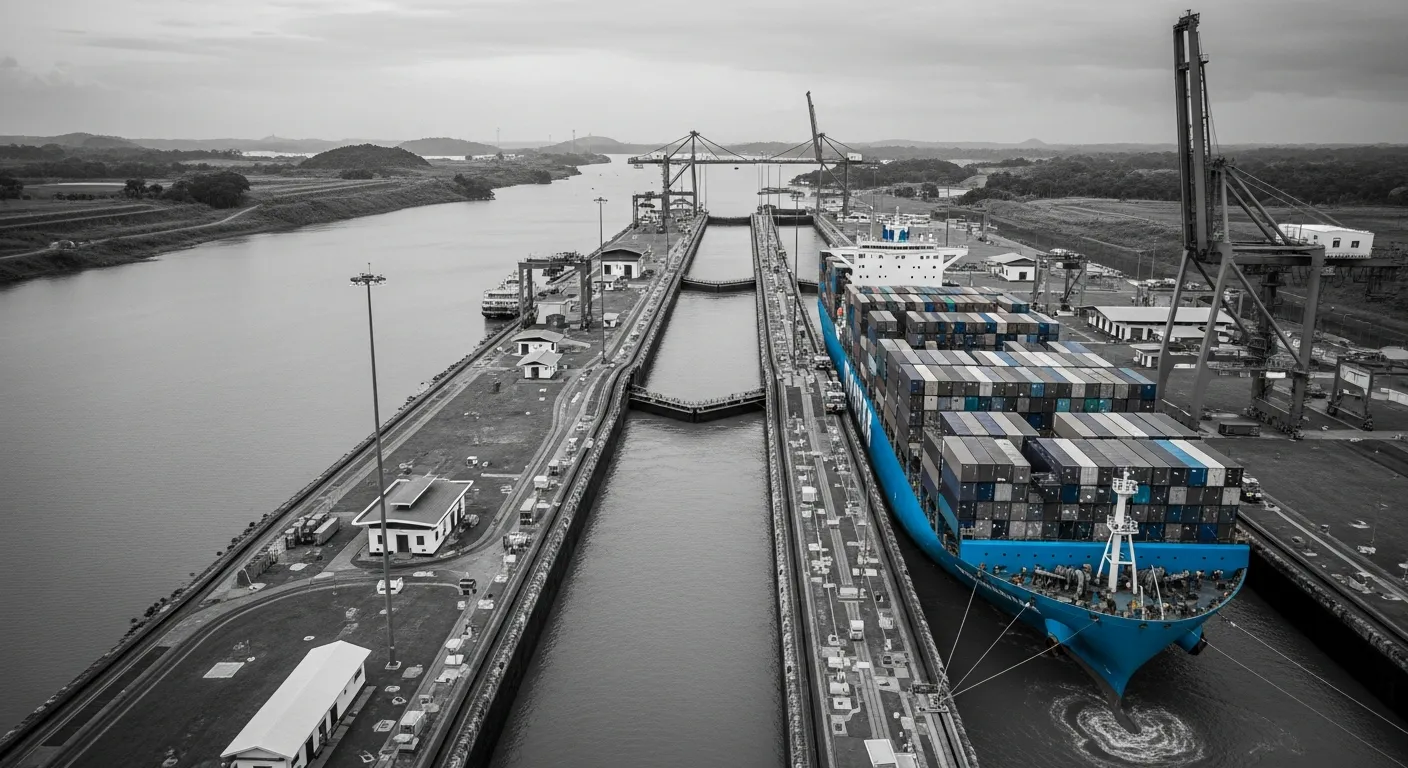
Every 10 cm draught reduction for a typical 14,000 TEU container ship could mean approximately 1% loss of effective deadweight, directly eroding cargo revenue and straining supply-chain reliability.
The Tightening Squeeze: From 50 Feet to 14.78 Metres in Weeks
Between early July and mid-August 2026, Neopanamax draft limits compressed from the standard 50-foot (15.24 metres) baseline to a sharp 14.78 metres in just six weeks. The Panama Canal Authority announced the first cut on 1 July, reducing the maximum from 50 feet to 15.09 metres (49.5 feet) effective 3 July, followed by a further half-foot reduction to 14.94 metres (49.0 feet) on 24 July, and another half-foot drop to 14.78 metres (48.5 feet) on 15 August. These cascading reductions, signed by ACP Vice President for Operations Boris Moreno Vásquez, reflect hydrological conditions in Gatun Lake and projections of an intensifying El Niño weather pattern expected to suppress rainfall across the canal watershed throughout the second half of 2026. The ACP emphasises that these adjustments form part of a proactive water management strategy to ensure safe, reliable, and sustainable canal operations under current conditions.
The velocity of these successive reductions—half a foot every fortnight—leaves minimal time for operational recalibration. Brokers, agents, and procurement teams accustomed to stable draft ceilings must now execute rapid recalculations of vessel payload, bunker allocations, and cargo manifests. Each half-foot cut directly reduces the depth to which a vessel's hull may sit in freshwater, forcing shippers to reduce load or accept longer transit delays by rerouting. The ACP has maintained roughly 38 daily transits, near the upper end of its operating capacity, as shipping demand recovered following the previous drought and ongoing disruptions in other major trade routes have supported canal volumes; however, schedule compression at the draft-reduction interface creates operational friction that strains just-in-time supply chains.
Cargo Capacity Loss and Revenue Exposure
The financial toll of draft restrictions falls most heavily on deep-draft Neopanamax container and bulk carriers. According to consultant Dynamar, every 10 cm draught reduction for a typical ship of 366 by 51 metres—a standard 14,000 TEU container vessel with a carrying capacity of 153,000 tonnes—could mean a reduction of approximately 1% of effective deadweight. This calculation compounds rapidly across fleets: a 0.51-metre reduction (from 15.24 to 14.78 metres) represents a potential 5% loss of effective cargo payload, measured in thousands of tonnes per transit. For bulk carriers transporting iron ore, coal, or grain, this loss translates directly into reduced per-voyage revenue and forced schedule extensions to meet contractual tonnage commitments. Container lines, already pressed by narrow profit margins, must decide between absorbing capacity losses or imposing Panama Canal surcharges on shippers—a cost that ripples through global supply chains.
The cascading draft reductions also force operators to choose between three costly strategies: first, accepting longer transits by reducing laden weight and spreading cargo across multiple sailings; second, paying premium auction prices to secure expedited slots and compress schedules despite reduced capacity; or third, rerouting vessels around the Cape of Good Hope or via the Suez Canal, adding weeks to transit time and inflating fuel and demurrage costs. Auction prices for Panama Canal slots have reached unprecedented levels in 2026, with an average price of $385,000 recorded in early spring, and some slots commanding record bids of $4 million in April 2026. The cost premium for schedule certainty during draft restriction periods leaves shippers with no margin for negotiation.
Bunker Procurement and the Timing Trap
For ship suppliers and bunkering coordinators, draft restrictions introduce critical timing misalignments. Vessels scheduled for canal transit must arrange bunker delivery at Panama's primary bunkering hubs—Balboa on the Pacific side and Cristóbal on the Atlantic—often days before transit confirmation. When draft limits tighten unexpectedly, operators may face forced cargo offloading to meet new draft ceilings, which in turn compresses the bunker window and leaves orders either cancelled, redirected to alternative supply points, or locked into premium spot prices. Chandleries and bunker suppliers in the Panama region depend on stable schedule forecasting; rapid draft changes disrupt both inventory planning and the certainty of payment terms for fuel suppliers whose margins already operate at razor-thin levels.
The August 15 reduction from 14.94 to 14.78 metres poses a particular coordination hazard for just-in-time supply chains. Vessels transiting northbound to the US Atlantic coast or southbound to North Asia often require fresh provisions, marine lubricants, spare parts, and additional bunker top-ups between lock entries. When draft restrictions force cargo offloading or schedule delays, bunker barges scheduled for a specific arrival window may be reassigned to other vessels, leaving chandlers with excess inventory or slot cancellations. Furthermore, delays at canal anchorages directly increase bunker consumption through idle waiting—a hidden cost that can exceed $50,000 per day for larger vessels according to industry sources. Supply chain visibility becomes critical; procurement teams must adjust order timing, quantity, and delivery window with each ACP advisory, or risk missing window closures with cascading demurrage and charter-party violation penalties.
Gatun Lake Water Levels and Hydrological Uncertainty
The root cause of the July–August 2026 draft reductions is the deterioration of Gatun Lake water levels, the artificial reservoir that supplies freshwater for every transit through the expanded locks. The ACP's water management strategy rests on a critical equation: each lockage consumes millions of gallons of freshwater; if rainfall does not replenish the lake, the authority must lower the maximum draft to ensure safe passage for all users. The projected onset of El Niño in 2026—forecast by the National Oceanic and Atmospheric Administration (NOAA) to be one of the most severe in recent years—suppresses rainfall across the canal watershed, accelerating the need for preemptive restrictions. Historical data demonstrates that Gatun Lake water levels can drop rapidly during El Niño events, and the ACP, having endured the catastrophic 2023–2024 drought that forced transits down to 24 per day and draft limits down to 44 feet, now operates with heightened precaution.
The ACP commits to closely monitoring lake levels and hydrological projections weekly and will announce additional operational adjustments as deemed necessary. This forward-looking posture, while prudent, translates into unpredictability for operators. Brokers cannot confidently lock in vessel itineraries or procurement schedules weeks in advance if draft ceilings may shift fortnightly. The LoTSA 2.0 reservation system used by the ACP increasingly prioritises high-value, pre-booked slots, often leaving non-booked vessels in a precarious wait position. Southbound vessels faced average waits of 3.2 days as of June 2026, whilst northbound traffic averaged 2.3 days—delays that compound when combined with forced cargo adjustments or bunker-window compressions.
Maintenance and Concurrent Operational Constraints
The July–August draft restriction window coincides with scheduled maintenance at the Gatun Locks. Dry chamber maintenance was scheduled for the West Lane of Gatun Locks from 21 to 22 July 2026, during which only the East Lane remained in service and lockages required additional time. As a result, the number of available slots in the Panamax Locks was reduced, multiplying wait times and further constraining schedule options for operators dependent on those original-gauge locks. This maintenance window, combined with the progressive draft reductions in late July and August, creates a narrowed operational corridor that forces extreme compression of scheduling windows for transiting vessels. Operators must anticipate multi-day waiting periods not only due to draft restrictions, but also due to the concurrent reduction in available lock capacity, intensifying the case for pre-booked, premium-priced slots.
What This Means for You: Planning and Risk Mitigation
Brokers, shipowners, and procurement teams must treat the July–August 2026 period as a high-risk transit environment requiring real-time coordination and contingency planning. First, lock in pre-booked canal slots as early as possible to secure schedule certainty; auction prices will likely spike further as operators compete for constrained capacity. Second, coordinate with ship agents and bunkering suppliers at least two weeks in advance of estimated transit dates; draft reductions may force cargo adjustments that compress or eliminate bunker delivery windows. Third, develop rerouting scenarios for critical voyages; if transit delay or cargo-offloading costs exceed alternative-route premiums, the Cape of Good Hope or Suez routes may become economically rational despite longer transit times. Fourth, monitor ACP weekly hydrological advisories and revise procurement and scheduling assumptions at each announcement. Finally, build contract flexibility into charter parties and supplier agreements by including force majeure clauses tied to draft restrictions, allowing parties to adjust delivery windows and quantities without penalty. The 14.78-metre ceiling of 15 August marks a critical inflection point; operations planned for the second half of August must assume this lower draft limit and adjust cargo, bunker, and scheduling plans accordingly. Early coordination with local Panama agents, bunkering coordinators, and logistics providers who understand real-time draft impacts remains the most cost-effective hedge against supply-chain disruption.


