When Hormuz closed, the world's energy trade didn't stop—it moved. Panama caught one side of that diversion. Southern Africa faces a parallel test: can it absorb, process, and route that diverted cargo faster and more reliably than competitors?
The Hormuz Closure and Instant Panama Windfall
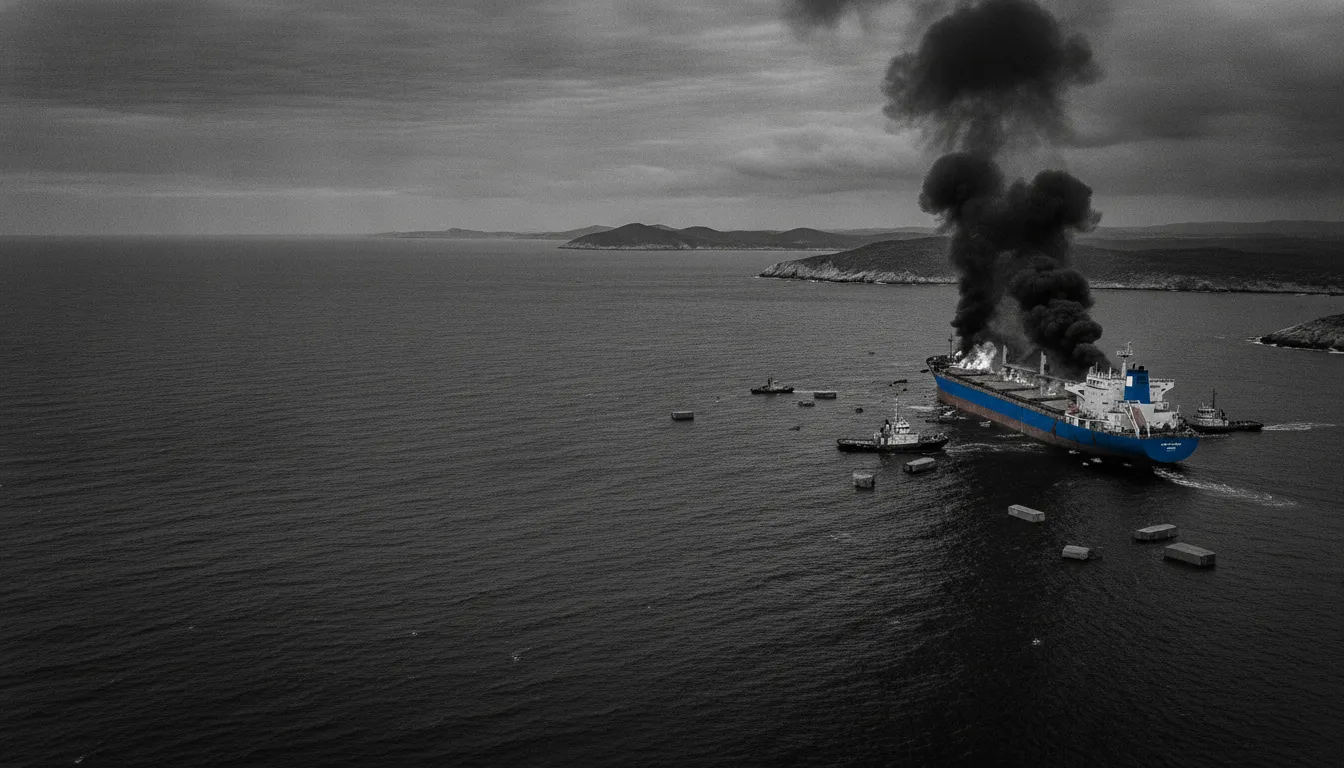
On 28 February 2026, the Iranian Revolutionary Guard Corps (IRGC) issued warnings forbidding passage through the Strait of Hormuz and began boarding merchant ships. The closure was swift and effective. Before the conflict, roughly 20 million barrels of oil per day—accounting for about 25% of global seaborne oil trade and 20% of world liquefied natural gas (LNG)—transited the strait daily. Within days, tanker traffic dropped to almost nothing. Oil prices spiked above $100 per barrel for the first time in four years, briefly reaching $126 by early March.
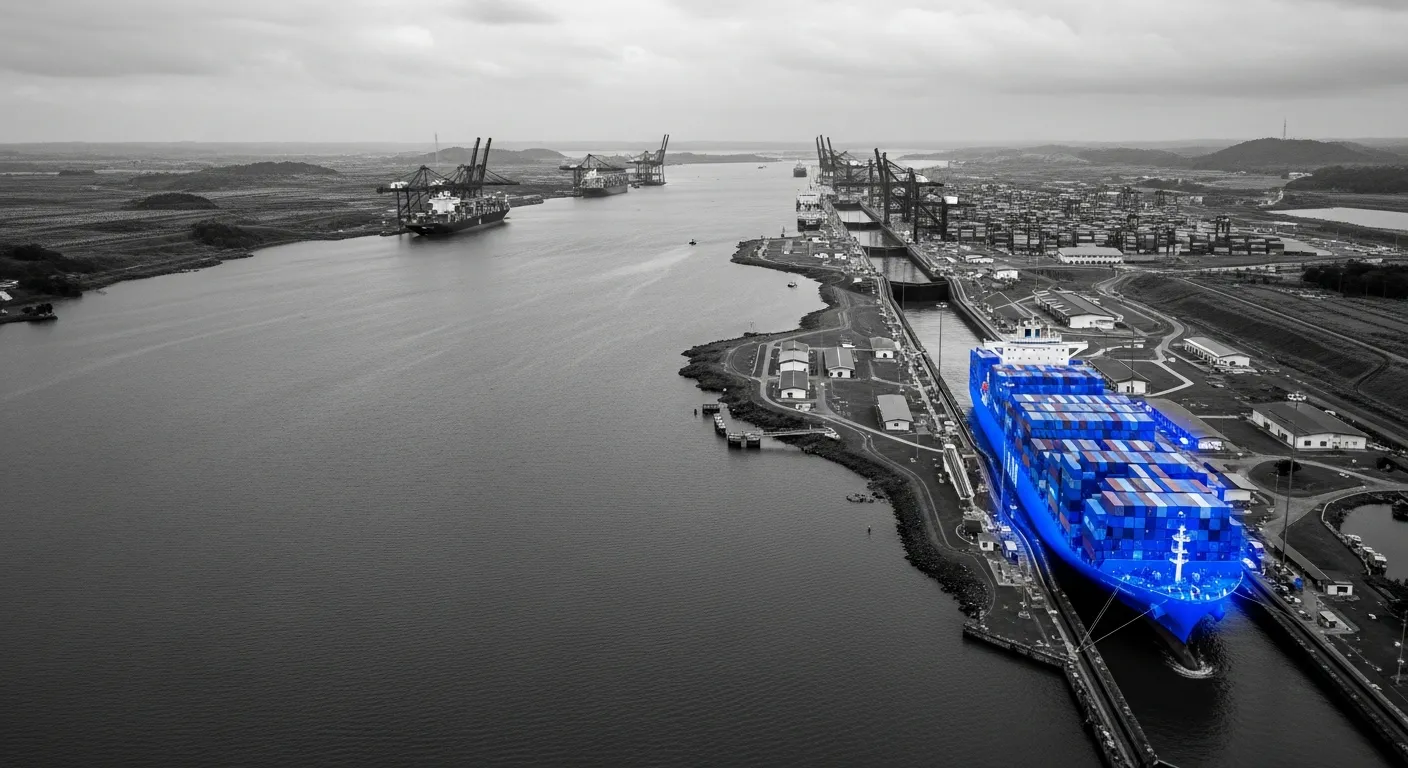
The Panama Canal Authority responded immediately to the crisis. Daily transits jumped from a normal baseline of 34–35 vessels to peaks of 40–41 vessels by March. Shipping companies, desperate for faster alternatives to the Cape of Good Hope route, began bidding for priority slots. In April 2026, one fuel vessel paid an extra $4 million for a fast-track crossing after being diverted from Europe to Singapore due to fuel shortages. The canal expects full-year fiscal 2026 revenue to exceed its $5.2 billion forecast, with a potential 10–15% increase driven by higher traffic and auction-fee premiums.
Energy Rerouting Reshapes Global Trade Lanes
Before the Hormuz crisis, US liquefied natural gas exports to Asia via the Panama Canal had dropped by 80% compared to pre-drought years, as shipping had shifted toward the Cape of Good Hope route. The Hormuz closure reversed that trend overnight. By June 2026, the canal was transiting an average of one LNG tanker per day as buyers in Japan, China, and South Korea turned to US suppliers to replace Middle Eastern producers such as Qatar. This shift is not temporary: the Atlantic Council and shipping analysts assess that routine Hormuz transit is unlikely to resume for the remainder of 2026.
The rerouting is not confined to LNG. US crude oil shipments crossing the Panama Canal are nearing their highest levels in four years. Freight and energy flows that previously moved through the Red Sea and Arabian Gulf now navigate the Western Hemisphere. Brent crude prices have remained elevated—briefly topping $107 per barrel in April—and every dollar per barrel adds to the urgency of vessels to reach their destinations by the fastest available route, not the cheapest.
The Wider African Opportunity—And Its Constraints
East Africa's ports have already begun absorbing diverted traffic. Kenya's Lamu Port, which opened in 2021 with only three of its planned 32 berths operational, received 74 vessel calls in the first 2.5 months of 2026—roughly a third of all calls since its opening. Tanzania's Dar es Salaam, competing for the same landlocked hinterland via the Central Corridor, is processing similar cargo surges. Yet East Africa's advantage is geographic proximity to Asia and the Indian Ocean: these ports capture East-bound Asian containers that skip the Red Sea entirely.
Southern African gateways—Durban, Cape Town, and Port Elizabeth—occupy a different strategic role. They are not shortcuts to Asia; they are refuge points. Vessels rerouting around the Cape of Good Hope to avoid Hormuz and Houthi-affected Red Sea waters use Southern African ports as transhipment hubs, refuelling stops, and repair stations. The Strait of Hormuz crisis has driven increased international shipping traffic around the Cape route. Durban and Port Elizabeth can anchor regional supply chains, while rail corridors into the Southern African Development Community (SADC) could knit together intra-African trade. But Southern African ports continue to face congestion challenges due to infrastructure constraints, equipment shortages, and operational inefficiencies that undermine their ability to capitalise on the windfall.
Toll Income vs. Operational Readiness: The Panama Test
Panama's revenue surge masks a deeper vulnerability. The canal generated an estimated $2.965 billion transfer to Panama's National Treasury in fiscal 2025 alone—a 20% increase from the prior year. Yet the incoming Panama Canal Authority administrator, Ilya Espino de Marotta, has warned that the crisis is also a test of the canal's water management and operational limits. In 2023 and 2024, severe drought reduced transits to only 18 ships per day—a 40% drop due to water-supply constraints. The current surge in demand during the Hormuz crisis is precisely the kind of shock for which the canal's $1.6 billion Rio Indio Reservoir project (approved in February 2025) is designed to prepare.
Southern African ports face a more immediate constraint: they do not have the luxury of water scarcity as an excuse. Durban, Cape Town, and their regional counterparts are congested by operational inefficiency, not by a lack of physical water. Infrastructure upgrades—new cranes, intermodal logistics precincts, and capacity expansions—are underway through 2026, but they remain incomplete. The window to capture diverted cargo will close if these upgrades are not synchronised with staffing, maintenance, and integration with land-side corridors into SADC hinterlands.
The Geography of Chokepoint Competition
The Hormuz crisis has revealed a hard lesson: no single gateway is indispensable, but every gateway must be ready before the crisis hits. When Maersk, CMA CGM, Hapag-Lloyd, and MSC suspended Hormuz and Red Sea transits in early March 2026, they did not revert to one alternative route; they executed a simultaneous pivot. Some traffic went to Panama. Some to the Cape of Good Hope, where Southern African ports served as transhipment and service hubs. Some to regional Red Sea alternatives such as Aqaba and King Abdullah Port in Saudi Arabia. East African corridors absorbed landlocked trade flows from the Democratic Republic of the Congo and Rwanda.
What this pattern reveals is that competitive advantage has migrated from single ports to integrated port-rail-road corridors. The Lobito Corridor (Angola–Zambia–DRC) and the Northern Corridor through Kenya into East Africa illustrate how one efficient gateway, backed by reliable inland transport, can reshape an entire region's trade flows. For Durban, that means its value to shippers now depends not just on berth efficiency, but on predictable rail connectivity into Johannesburg, the DRC, and landlocked SADC states. For Port Elizabeth and Cape Town, it means ensuring that vessel repair, bunkering, spare parts, and crew services are competitive and reliable—because these ports must function as service hubs for the vessels that route around the Cape, not just container terminals.
What This Means for Buyers and Suppliers
For shipowners and operators, the Hormuz crisis is a reminder that route diversification is not an option—it is a necessity. Vessels booked through Panama and Southern African gateways in 2026 have delivered cargo on time; those dependent on traditional Strait routing have faced month-long delays and insurance premiums that spiked four to five times their pre-crisis levels. Procurement managers sourcing Asian goods for Southern African markets now understand that their delivery times depend on port-corridor efficiency, not just shipping rates.
For ship suppliers and chandlers, the surge in traffic through Panama and the Cape has created pockets of temporary shortage—empty containers stranded in wrong regions, spare parts backlogs, and crew-change logistics stretched thin. Those with the flexibility to stock supplies at secondary hubs (not just Singapore and Port Said) have captured premium margins. For port operators and terminal managers in Southern Africa, the lesson is clear: the next crisis—whether geopolitical, climate-driven, or operational—will reward those who have invested in infrastructure, training, and digital integration before the crisis strikes. Congestion does not forgive lateness.