'Lifting appliances and anchor handling winches are now explicitly governed under SOLAS. From 1 January 2026, lifting appliances and anchor handling winches are formally within the SOLAS framework.' — The DeepDraft, February 2026
Lifting Appliances Move from Class Rules into Formal Statutory Control
For decades, cargo cranes, stores cranes, and anchor handling winches have been regulated by classification societies and ILO Convention No. 152 — a fragmented approach that created compliance gaps. SOLAS Regulation II-1/3-13, adopted via IMO Resolution MSC.532(107), now brings all onboard lifting appliances under direct statutory control, effective 1 January 2026. The amendment applies to cargo cranes, engine-room cranes, hose-handling cranes, and associated loose gear installed on or after that date. More significantly, existing lifting appliances must undergo thorough examination, load testing, and permanent Safe Working Load (SWL) marking by the date of the first renewal survey on or after 1 January 2026 — not by some distant future compliance window.
New appliances require design and construction certification from a recognized classification society, followed by load test and thorough examination before first use and SWL marking. For vessels built before 1 January 2026, the deadline is unforgiving: completion of testing and marking documentation must occur no later than the vessel's next scheduled survey renewal. Class societies have published Guidelines for Lifting Appliances (MSC.1/Circ.1663) and Guidelines for Anchor Handling Winches (MSC.1/Circ.1662) to clarify the technical and documentary requirements. For ship managers and suppliers, this means procurement of test certificates, load documentation, and photographic evidence of SWL marking must be collected and filed before Q4 PSC inspections begin.
Electronic Inclinometers and Stability Monitoring for Casualty Prevention
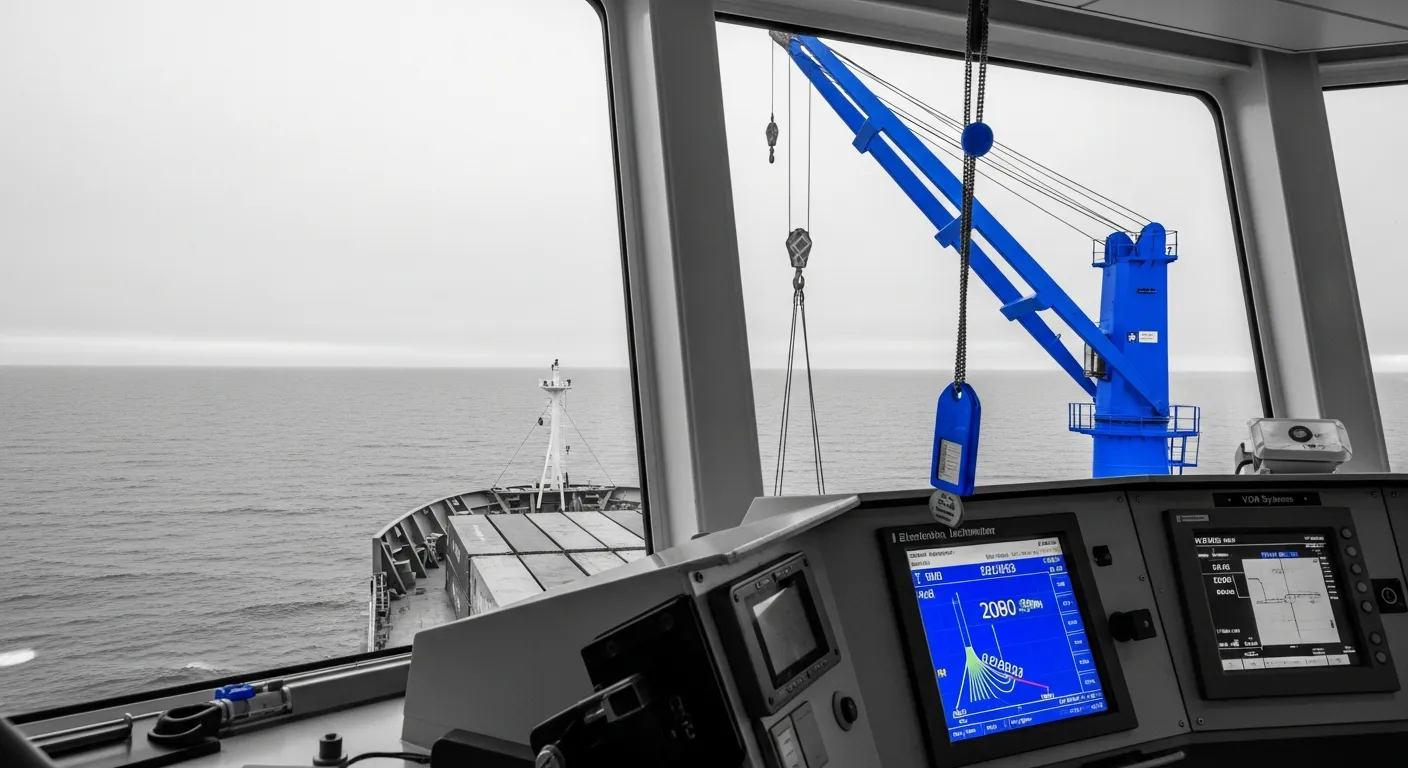
Container and bulk carrier losses at sea have exposed the need for real-time roll-motion monitoring. Under SOLAS Chapter V, Regulation V/19.2.12 (adopted via MSC.532(107)), new-build container ships and bulk carriers of 3,000 GT and upwards constructed on or after 1 January 2026 must carry an electronic inclinometer capable of determining, displaying, and recording the ship's roll motion. The inclinometer must be connected to the vessel's Voyage Data Recorder (VDR) to enable reconstruction of stability performance post-incident. Existing vessels and general cargo ships carrying containers on deck are exempt, as are bulk carriers occasionally carrying dry cargo.
For newbuild operators and shipyards, inclinometer installation has become a mandatory delivery specification. In the second half of 2026, PSC officers scrutinizing Cargo Ship Safety Equipment Certificates will verify that vessels delivered after 1 January 2026 carry valid electronic inclinometer commissioning documentation and that the system is properly integrated with the VDR. Missing or non-functional inclinometers will be recorded as deficiencies; major defects can delay port departure. Suppliers should prepare installation specifications, calibration certificates, and crew familiarization checklists as part of standard contract documentation.
Mandatory Container Loss Reporting Removes Operator Discretion
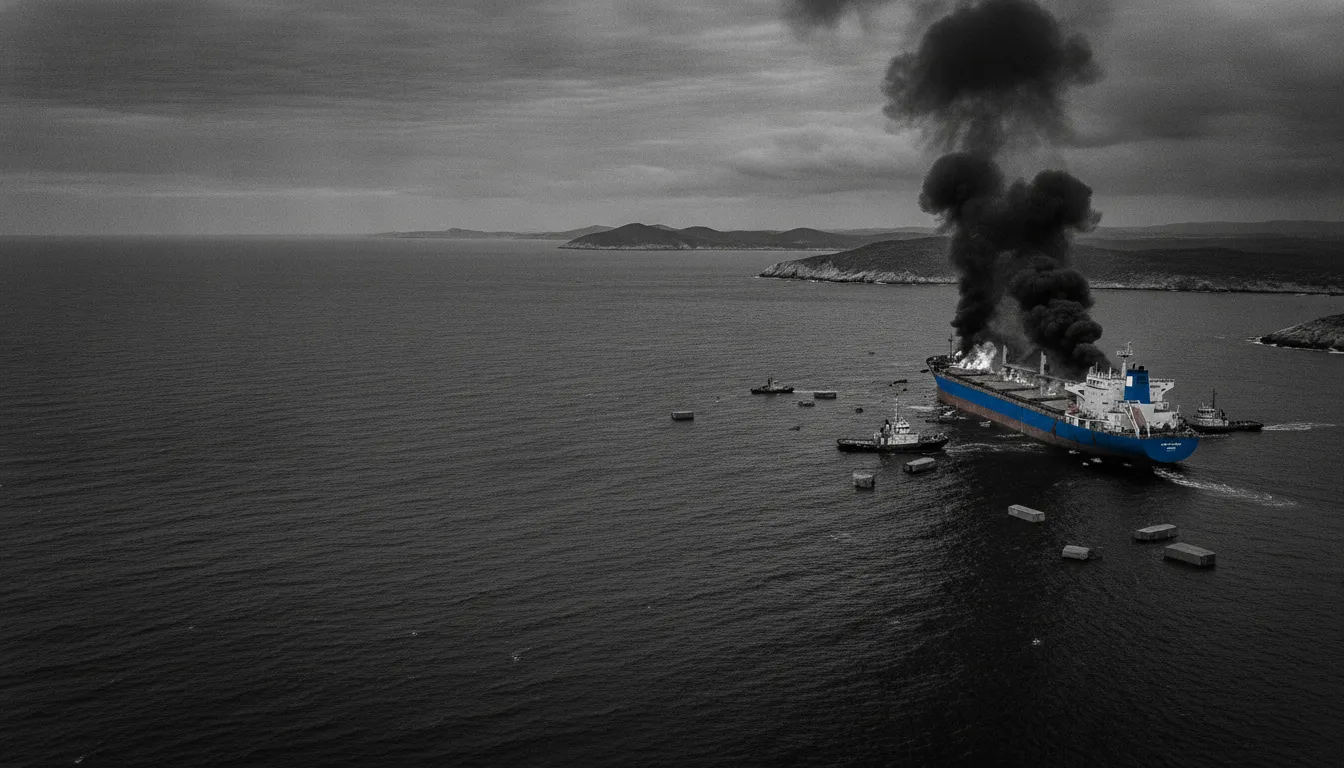
Under SOLAS Chapter V, Regulations 31 and 32 (amended by MSC.550(108)), every master involved in the loss or observation of freight containers must report the incident without delay to nearby ships, the nearest coastal state, and the vessel's flag state. The flag state then reports to the IMO. This is no longer a case-by-case judgment call — it is a formal navigational safety obligation tied to both SOLAS and MARPOL. Masters must report position, number of containers lost, container markings or contents if known, and probability of hazard to navigation. If the master is unable to make the report, the company assumes responsibility.
For vessel operators, this means updating Safety Management System (SMS) procedures, designating a reporting chain, training all bridge officers on mandatory reporting fields, and maintaining an internal log of container incidents for flag-state and PSC review. Failure to report, or inadequate SMS documentation of the reporting process, is a recordable deficiency in H2 PSC audits. Suppliers supporting vessel compliance must ensure that SMS templates, bridge procedure cards, and training materials incorporate the new reporting obligation explicitly. Charterers and insurers now expect operators to demonstrate container-loss awareness through systematic SMS documentation.
Fire Safety Tightening: PFOS Bans and Ro-Ro Detection Upgrades
SOLAS Chapter II-2 amendments (MSC.550(108)) prohibit the use and carriage of fire-extinguishing foams containing Perfluorooctane Sulfonic Acid (PFOS), a persistent environmental contaminant, effective 1 January 2026. New ships must use PFOS-free foams; existing ships must comply by the date of the next initial, annual, periodical, or renewal survey after 1 January 2026. Additionally, new Ro-Ro and vehicle-carrier spaces now require individually addressable smoke and heat detectors installed to cover the entire space — not fixed-grid detectors that may miss localized fires. For cargo ships, fixed fire detection systems must cover control stations and cargo control rooms.
Ship managers must conduct an inventory of onboard fire-fighting systems, identify foam-containing extinguishers and fixed systems, and schedule replacement before the next survey renewal. Documentation of foam specification, approval certificates, and decontamination work orders must be retained for PSC officers. In mid-2026, Maritime authorities announced focused fire-safety inspection campaigns (Maritime New Zealand, April–May 2026). Failure to produce PFOS-compliant foam certificates or evidence of system replacement creates automatic grounds for detailed inspection. Suppliers should stock PFOS-approved foams, issue compliant system certification with each product, and support fleet transition planning during the compliance window.
PSC Detention Data and Mid-Year Enforcement Intensity
Port State Control detention statistics in Q1 2026 showed 64 detentions for DNV-classed vessels, compared to 52 in Q1 2025 — a 23% increase. Shortcomings in ISM implementation and fire safety remain the dominant detention drivers. As Q2 and Q3 2026 progress, PSC officers are cross-referencing vessels' lifting appliance documentation (load test records, SWL certificates), inclinometer installations (for newbuilds), container loss SMS procedures, and PFOS-foam replacement status against the formal amendment timelines. A single missing load test certificate for deck cranes or undocumented SMS revision for container reporting can escalate a routine inspection into a detailed deficiency report visible to future charterers. Operators flagged for deficiencies face increased targeting rates (300–400% higher future inspection risk) and exclusion from time-charter markets. Insurance underwriters now review PSC deficiency profiles as a material underwriting factor; non-compliance records can trigger coverage exclusions or premium surcharges.
Supply Chain Disruption Risk and the Audit-Ready Imperative
For suppliers and ship managers, the convergence of lifting appliance certification deadlines, inclinometer commissioning requirements, SMS updates, and fire-system replacements creates a procurement and compliance bottleneck in H2 2026. Equipment delivery delays, shipyard capacity constraints, and classification-society survey backlogs can cascade into missed renewal deadlines. A vessel with an overdue lifting appliance load test, an uninstalled inclinometer (for newbuilds), or unrevised SMS procedures cannot clear port state control and faces detention. Detention costs average USD 75,000–300,000 daily, including lost charter revenue, crew expenses, and port fees. For boxship and bulker operators relying on tight schedule turnarounds, a single H2 2026 PSC detention effectively voids the commercial viability of a voyage and propagates schedule losses across the fleet.
Operators and suppliers must adopt a systematic preparation strategy: conduct fleet audits by September 2026 to identify missing lifting appliance documentation, verify newbuild inclinometer commissioning status, review SMS container-loss procedures for completeness, and confirm PFOS-foam system compliance status. Engage classification societies early to schedule renewal surveys before peak Q4 PSC campaign periods. Procure audit-ready document packages (test certificates, SWL photographs, foam approval sheets, SMS evidence) and maintain digital filing systems accessible to PSC officers during inspections. For ship suppliers, this means partnering with clients on compliance timelines, issuing supporting documentation proactively, and maintaining inventory of approved equipment to meet rush replacement requests.
What This Means for You
The SOLAS 2026 amendments are not theoretical compliance exercises — they are enforceable obligations backed by PSC detention authority, flag-state prosecution, and insurance-coverage consequences. Operators without audit-ready lifting appliance documentation, SMS procedures, fire-system records, and crew training certificates face detention risk in H2 2026. Suppliers failing to provide compliant equipment specifications and supporting certification will see clients excluded from PSC-sensitive routes. The window for corrective action closes as PSC campaigns intensify through Q3 and Q4 2026. Invest now in systematic documentation, crew training, and equipment procurement cycles aligned to survey deadlines. Delay, and you will manage the costs and commercial fallout of detention instead.