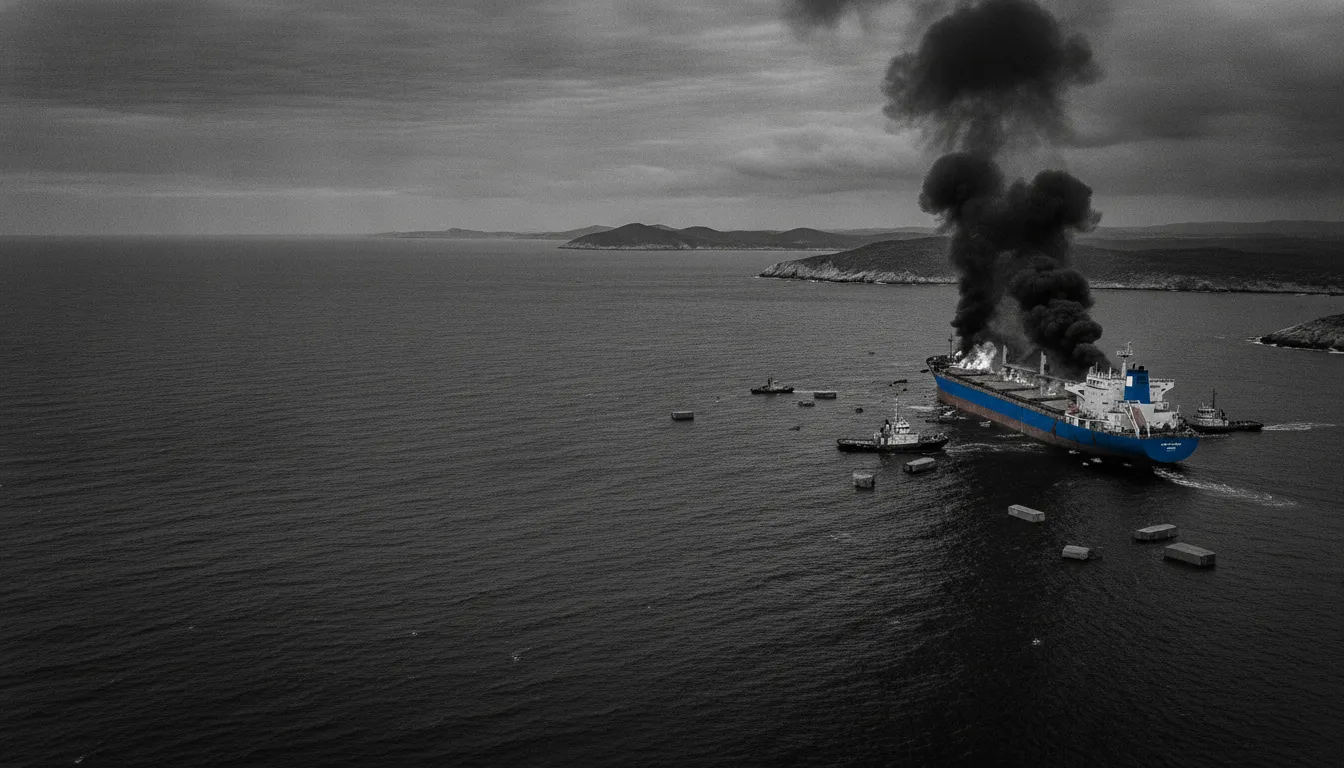
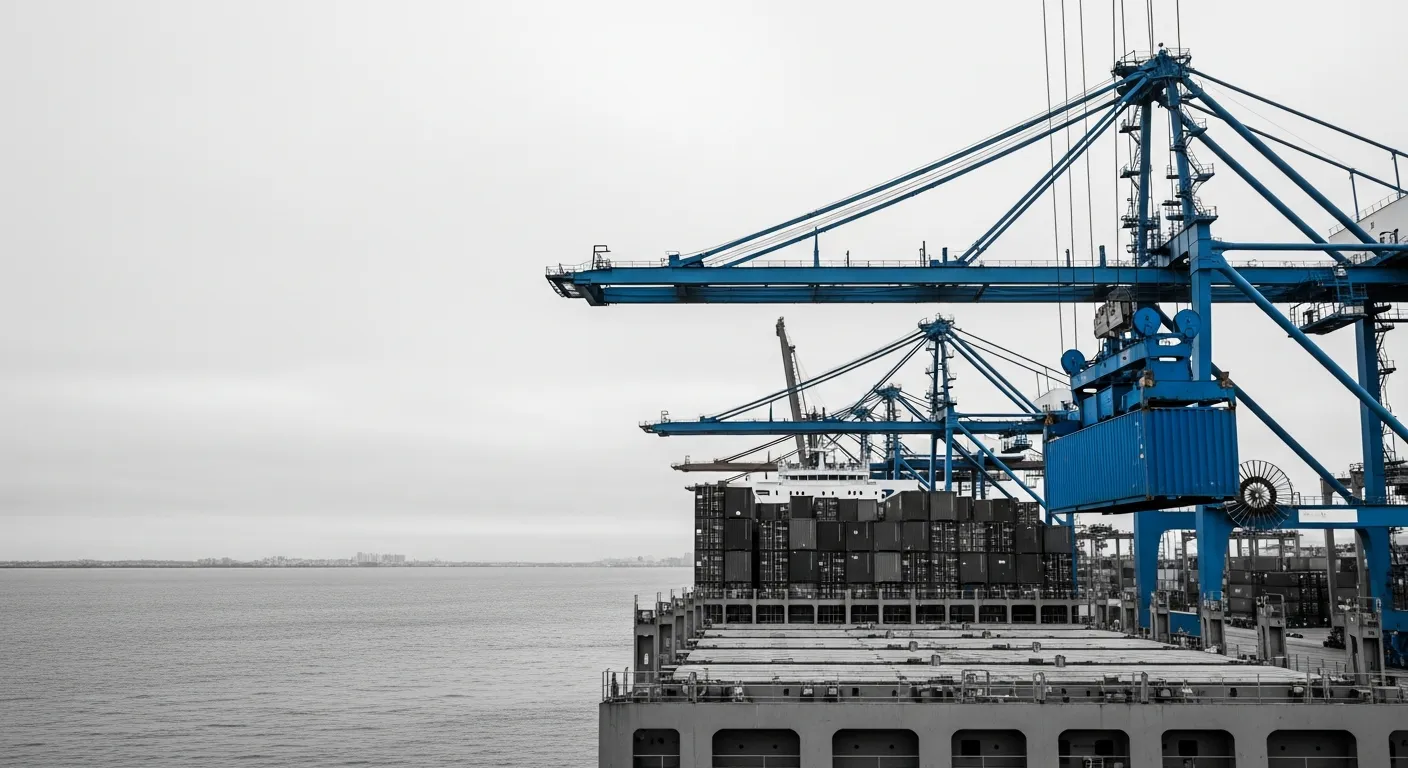
"Lifting appliances are among the top causes of workplace injuries and fatalities at sea. The MSC's decision was driven by increasing accidents involving lifting appliances and winches, beginning with analysis of maritime accident data and identification of regulatory gaps."
The Regulatory Mandate: What Effective 1 January 2026 Means
SOLAS Regulation II-1/3-13 introduces the first unified international safety regime for shipboard lifting equipment. Previously, lifting appliances operated under a fragmented mix of flag-state rules, class-society notations, and optional ILO Convention 152 compliance. The IMO Maritime Safety Committee adopted this amendment in June 2023 following systematic analysis of accident data and existing regulatory gaps. Resolution MSC.532(107) now establishes uniform design, testing, inspection, and maintenance standards applicable to virtually all permanently installed lifting systems on SOLAS vessels—cargo cranes, engine-room cranes, stores cranes, hose-handling equipment, and anchor handling winches.
The effective date, 1 January 2026, creates a phased transition designed to balance practical implementation with safety urgency. New lifting appliances delivered on or after that date must undergo full design approval, manufacturing surveillance, load testing, and thorough examination before entering service—a front-loaded compliance approach ensuring safety at point of installation. Existing equipment—anything installed before 1 January 2026—must achieve compliance no later than the vessel's first Cargo Ship Safety Construction Renewal Survey or Passenger Ship Safety Survey conducted on or after the deadline. This renewal-survey-linked timing gives older fleets a variable compliance window: vessels on five-year renewal cycles have until 2031 for their first survey, whilst annual-inspection vessels may face tighter deadlines. The IMO Guidelines for Lifting Appliances (MSC.1/Circ.1663) and Guidelines for Anchor Handling Winches (MSC.1/Circ.1662) provide detailed implementation methodology, covering design criteria, testing protocols, marking requirements, maintenance scheduling, and crew training obligations. The approach acknowledges practical retrofit constraints whilst establishing clear deadlines and unified global benchmarks, eliminating the previous patchwork where some flags required ILO 152 compliance, others permitted full exemptions, and smaller registries imposed minimal oversight.
Scope and Applicability: Cranes, Davits, Winches, and Loose Gear
The regulation applies to a broad class of permanently installed lifting systems. Equipment covered includes cargo-handling cranes, engine-room and stores cranes, hose-handling gear, personnel-lift appliances, derricks, and the davits used for launch and recovery of lifeboats and tenders. Anchor handling winches—deployed on offshore support vessels, tugs, and specialised offshore vessels to manage subsea mooring and anchoring operations—receive dedicated technical requirements under MSC.1/Circ.1662. These winches are used to deploy, recover, and reposition anchors and mooring lines belonging to other vessels and subsea installations, a distinct function from a vessel's own anchor windlass (which remains outside SOLAS II-1/3-13 scope). Anchor handling winches typically operate on dedicated anchor handling tugs (AHTS), offshore service vessels, and certain supply vessels engaged in subsea construction or maintenance operations.
Loose gear—shackles, slings, hooks, spreader beams, wire rope assemblies, and other load-attachment devices—must be proof-tested, permanently marked with safe working load (SWL), unique identification number (serial), and any operational restrictions, and included in the vessel's onboard Register of Lifting Appliances and Cargo Handling Gear. Flag administrations retain discretion over equipment with SWL below 1,000 kg; some administrations (UK, Singapore) enforce full compliance across all sizes, whilst others (Liberia, Marshall Islands, Türkiye) permit exemptions from design approval but still require such gear to be included in vessel safety management systems via risk assessments, maintenance schedules, and crew training protocols. This variance means shipowners operating multi-flag fleets must confirm each flag state's interpretation to avoid survey surprises. Equipment explicitly excluded includes life-saving davits (already covered under LSA Code), lifting appliances on offshore construction vessels (pipe-laying, cable-laying, and decommissioning ships), integrated mechanical equipment for hold hatch opening and closing, and gear used only in enclosed machinery spaces during engine maintenance or component replacement.
New Installations: Design Approval and Certification Before First Use
All lifting appliances installed on or after 1 January 2026 must comply with design and construction standards set by a Classification Society (Lloyd's Register CLAME, DNV, ABS, ClassNK, Bureau Veritas) or an equivalent international standard acceptable to the flag administration. The certification process includes design plan appraisal, material verification, fabrication surveys, component certification, final load test and thorough examination before the appliance enters service, and permanent marking with SWL, maximum or minimum slewing radius, boom angle, and operational limits. The IMO Guidelines require that all new appliances be operationally tested and thoroughly examined following installation and before first use, with documentation retained onboard. Manufacturers must provide operation and maintenance manuals; where unavailable, competent third parties may reconstruct them per IMO guidance, though this retroactive approach is less preferred than original manufacturer documentation.
For anchor handling winches, the certification regime is more prescriptive and performance-oriented. New units must undergo structural appraisal of the winch and its foundation connections, overload brake holding capacity (BHC) testing at 110% BHC (or calculation if physical testing is impractical due to onshore constraints), overload testing to 110% of maximum line pull (MLP), emergency release system functional testing (confirming safe operation under dead-ship power-loss conditions), and five-yearly bollard pull tests to verify sustained pulling capacity. The winch and associated equipment must be marked with operational restrictions, minimum lighting levels (at least 320 Lux around the operating area), and emergency procedures. This prescriptive regime ensures anchor handling winches meet stringent offshore safety demands and prevents catastrophic failures during high-stakes subsea anchor-positioning operations.
Existing Fleet Compliance: Load Testing, SWL Determination, and Factual Statements
Owners of vessels with lifting equipment installed before 1 January 2026 face a tighter audit and certification pathway—the core compliance challenge driving demand for specialised audit and testing services. All existing lifting appliances must undergo load testing and thorough examination by a competent person no later than the first renewal survey on or after 1 January 2026. Equipment must be permanently marked with SWL and accompanied by documentary evidence. Where prior certification exists—under ILO Convention 152, another IACS member code, or acceptable international instruments approved by the flag—compliance is grandfathered; no re-testing is required if the Administration recognises the prior certificate as equivalent. This creates an incentive for owners to audit their records early: vessels with existing ILO 152 or class-society certifications can avoid costly re-testing.
For appliances lacking valid prior certification (common for older engine-room and stores cranes installed decades ago when no regulatory regime existed), owners must either nominate an SWL based on documentary evidence (manufacturer drawings, operation manuals, design specifications) or, in consultation with the flag administration and class society, conduct empirical load tests to establish SWL. Where manufacturers are defunct and no documentation exists, SWL is calculated per IMO guidelines MSC.1/Circ.1663 Table 1, based on an SWL nominated by the Company and approved by the flag or recognised organisation. Upon completion of load test and thorough examination, owners issue a Certificate of Test and Thorough Examination (or, where prior certification is absent, a Factual Statement per UI SC 310 guidance). This documentation must be maintained onboard and presented to surveyors at renewal survey. Existing anchor handling winches follow similar protocols: they must be tested and thoroughly examined by first renewal survey after 1 January 2026, including overload BHC testing and five-yearly bollard pull tests unless prior equivalent certification exists.
Operational and Maintenance Requirements: SMS Integration and Crew Training
Beyond certification, SOLAS II-1/3-13 mandates ongoing operational and maintenance regimes. All lifting appliances and associated loose gear must be operationally tested, thoroughly examined, inspected, operated, and maintained in line with IMO guidelines. Owners must adhere to manufacturer recommendations, industry standards, and documented operational profiles whilst ensuring lifting appliances are embedded in the onboard maintenance programme—typically the Planned Maintenance System (PMS). Maintenance and operational manuals must be available on board; where missing, IMO guidelines provide methods for reconstructing them from available documentation or third-party expertise. All personnel operating lifting appliances must be properly trained, qualified, and familiarised with equipment-specific procedures, limitations, and emergency protocols. This requirement elevates crew training from best practice to regulatory obligation, triggering periodic refresher training and documented competency records.
For existing equipment found inoperable during compliance audits, SOLAS Regulation II-1/3-13.4 provides a practicality provision: inoperable lifting appliances or winches do not automatically render a ship unseaworthy or justify port detention, provided the master takes appropriate action to secure the equipment so it does not interfere with vessel operation. However, this safe-to-proceed clause requires the inoperability to be recorded, the equipment secured, and plans established for repair or replacement. Many owners are proactively upgrading or replacing older equipment rather than managing inoperability through voyage planning, particularly for vessels on tight commercial schedules or operating in regions with strict port-state control enforcement.
What This Means for Buyers, Shipowners, and Suppliers
The SOLAS II-1/3-13 deadline creates immediate procurement and service demands. Shipowners must conduct comprehensive audits of all lifting appliances across their fleets, identify certification status and SWL documentation, coordinate with their class societies on testing schedules, and plan capital expenditure for equipment that fails compliance testing. Class societies, marine surveyors, and specialised audit firms now offer pre-inspection and compliance-readiness services—identifying hidden deficiencies before formal renewal surveys, reducing the risk of costly delays or detention. For suppliers and offshore contractors, the regulations open new markets: load-testing services, loose-gear proof-testing, SWL determination engineering, replacement cranage, and winch retrofit packages tailored to SOLAS II-1/3-13 compliance. Port-based lifting services, terminal operators, and ship-supply chandlers face increased demand for certified loose gear and lifting consumables. The regulation also aligns with broader IMO safety modernisation (MARPOL tightening, cybersecurity mandates, autonomous-vessel frameworks), positioning 2026 as a watershed year for maritime safety infrastructure investment. Owners who begin compliance audits now, coordinate survey timing with class renewal windows, and engage certified suppliers early will pass their first post-deadline surveys with confidence—avoiding port disruptions, trade delays, and reputational risk.