"Failure to comply with these rules results in heavy administrative fines, vessel detention, and serious commercial disputes regarding cargo. More importantly, these violations may lead to invalidation of P&I and Hull & Machinery (H&M) insurance policies."
Container Loss Reporting: The 'Without Delay' Blindspot
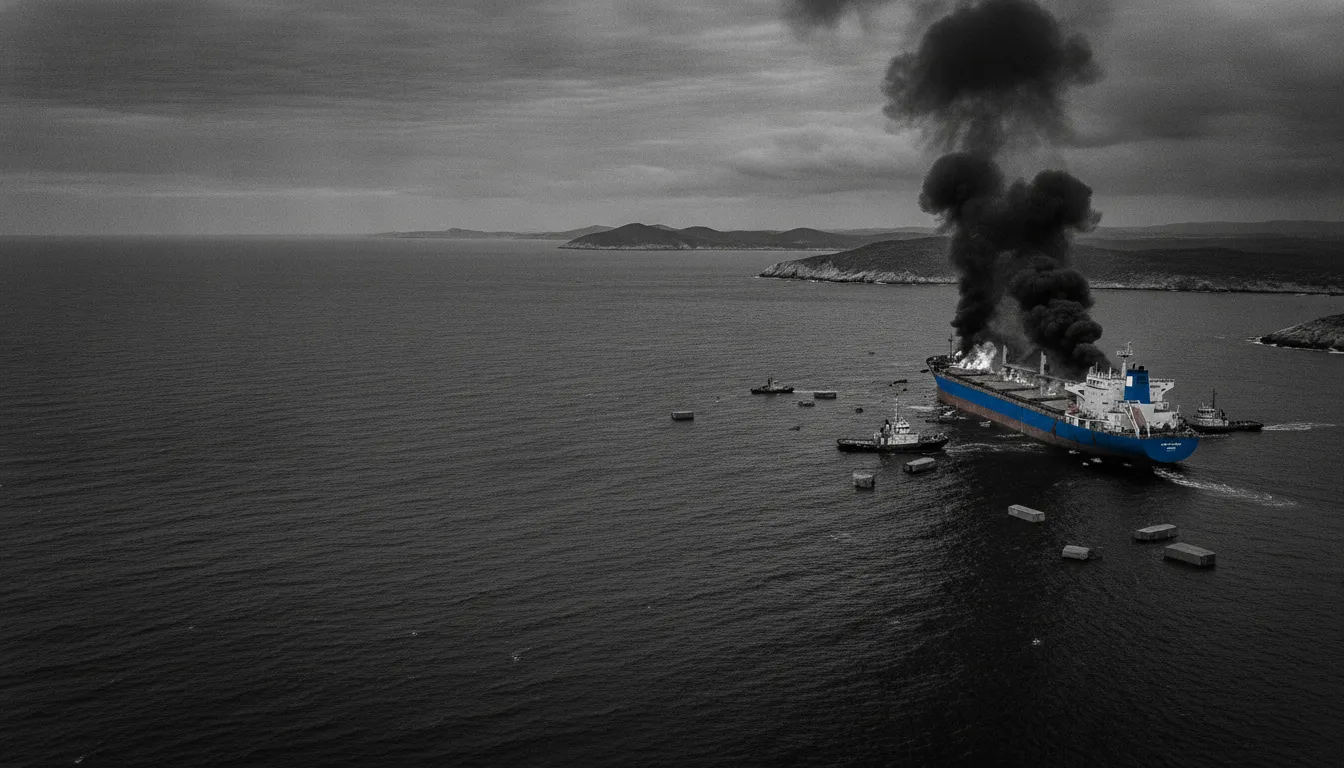
Since 1 January 2026, IMO Resolution MSC.550(108) has made container loss reporting mandatory under SOLAS V/31 and V/32. Yet Port State Control audits reveal a critical operational misalignment: masters and companies are delaying initial reports to gather complete stowage data before transmission. The regulation explicitly requires reporting "without delay" using an initial report with incomplete information, followed by a final report once thorough inspection confirms numbers. Vessels carrying even a single container, and any vessel observing drifting containers, must report immediately to nearby ships, the nearest coastal state, and the flag state. Over the past decade, an average of 1,300 containers have been lost per year; in 2024, 576 were recorded. Global Integrated Shipping Information System (GISIS) data submission by flag states remains inconsistent, with some authorities not yet uploading incident templates within regulatory timeframes.
Compliance gaps stem from Safety Management System (SMS) deficiencies. Bridge teams lack pre-loaded IMO templates (CCC.1/Circ.7), and ISM company protocols do not specify fallback responsibility when vessels cannot transmit. Liability exposure is tangible: P&I clubs are demanding proof of SMS updates before claims acceptance for container-loss-related damage. Shipowners who have not amended their SMS to reflect the two-part reporting obligation—initial without full data, final after stowage confirmation—face PSC deficiency findings that carry commercial consequences. Insurance policies are being invalidated where operators cannot produce timestamped evidence of compliance.
Lifting Appliances: Documentation Voids and SWL Test Backlogs
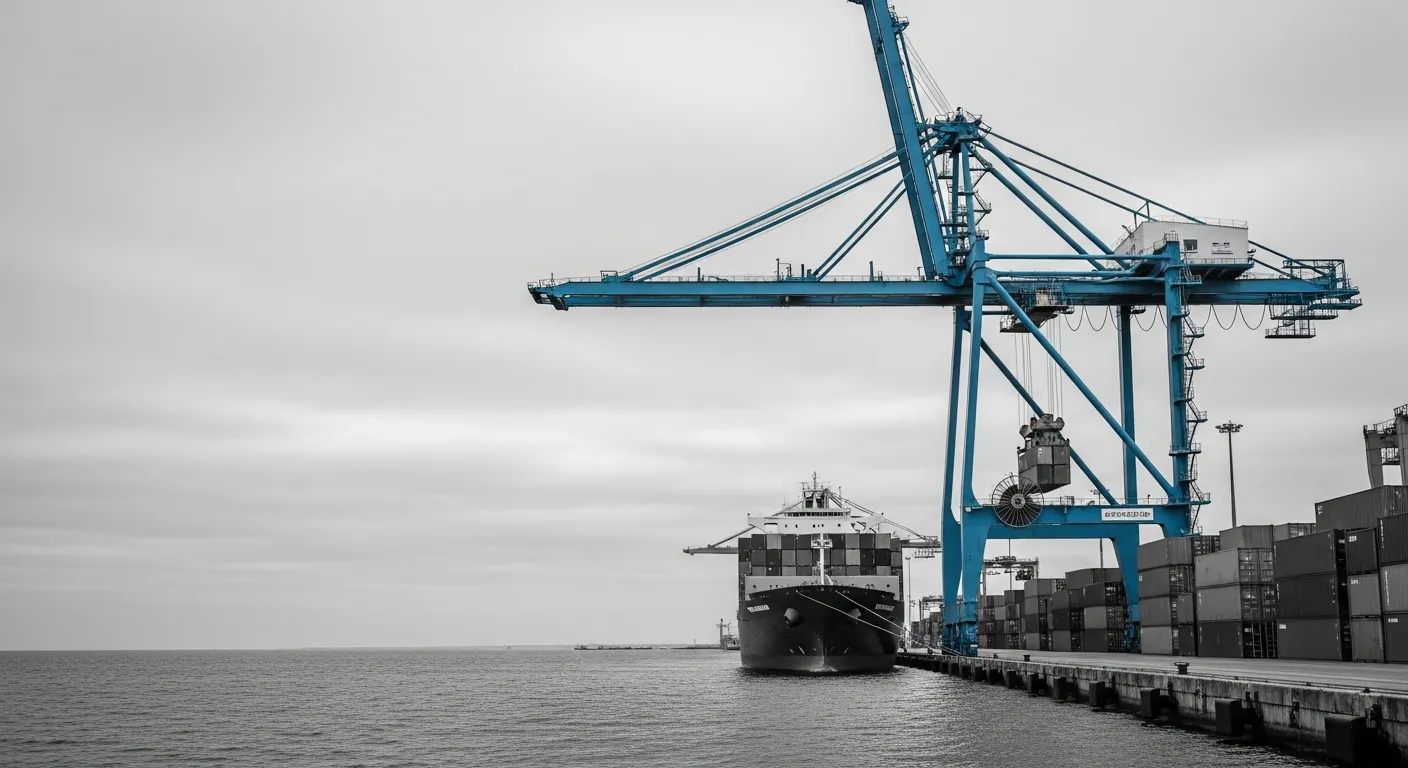
SOLAS II-1/3-13, enforced under IMO Resolution MSC.532(107), mandates that all permanently installed lifting appliances (cargo cranes, stores cranes, engine-room cranes, hose handling systems, and anchor-handling winches) be tested, load-tested, and thoroughly examined in accordance with Guidelines MSC.1/Circ.1663. For new builds delivered after 1 January 2026, compliance is immediate. Existing vessels must comply by their first renewal survey after the entry-into-force date. Port State Control findings reveal widespread documentation failures: vessels lack valid Safe Working Load (SWL) test certificates, particularly those fitted with legacy engine-room cranes installed before 2010 when no unified global standard existed. Appliances without current international instrument certificates (such as ILO Convention No. 152) require owners to issue a "factual statement" from a competent person approved by the flag administration or recognized organization—a process many operators have not initiated.
Retrofit costs are escalating sharply. Load testing and thorough examination of aging cranes requires scheduling with classification societies or approved testing firms; turnaround times have extended to three to four months in Q1 and Q2 2026. Owners of multi-crane vessels face compounded delays and costs. Class societies report that vessels with missing SWL documentation are being required to undergo full structural analysis and re-certification before surveyors will endorse compliance. Liability exposure extends beyond insurance: vessels with non-compliant lifting appliances cannot load or discharge cargo safely, creating commercial disputes with charterers and terminal operators. Several P&I clubs are now requiring SWL test reports as a condition of coverage renewal.
PFOS Foam Prohibition: Residue, Cost, and Disposal Complexity
SOLAS II-2/10.11 prohibits the use and storage of fire-extinguishing media containing perfluorooctane sulfonic acid (PFOS) above a threshold of 10 mg/kg (0.001% by weight). New ships must comply from 1 January 2026; existing vessels must be compliant by their first survey on or after that date. Audits reveal that many operators either lack PFOS-free certification from foam suppliers or have not sampled and tested aged stocks installed before 2010. Ships built before approximately 2010 face significant risk: legacy aqueous film-forming foams (AFFF) frequently contained PFOS, and many original documentation labels have degraded or been discarded. Port State Control officers are now conducting targeted foam audits across major ports; absence of evidence is a detainable deficiency.
Compliance costs exceed initial forecasts. Simple foam replacement—draining old stock and refilling with PFOS-free foam—is often unreliable: PFOS residue adheres to tank internal surfaces, and when new foam is introduced, contamination migrates back into the liquid, resulting in concentrations above regulatory limits. Full system decontamination, certification testing (requiring accredited laboratories), disposal of PFOS waste through licensed Treatment, Storage and Disposal Facilities (TSDF), and replacement with approved PFOS-free foam average €8,000 to €15,000 per vessel, depending on system complexity. Specialized cleaning and replacement crews are fully booked through Q2 2026. Insurance policies are being voided for vessels unable to produce Supplier Declarations of Conformity (SDoC) or laboratory test reports confirming PFOS absence by survey date.
PSC Enforcement and Insurance Invalidation Risk
Fire safety deficiencies remain the most-cited PSC finding globally. The Paris MoU's 2024 report documented that fire safety issues accounted for 17.2% of all Port State Control findings. Class societies and PSC officers now conduct inspections based on SWL test reports, PFOS decontamination certificates, and fuel flashpoint declarations. Vessels with missing or incomplete documentation across any of the three pillars face recorded deficiencies visible to charterers, increased inspection targeting, and detention risk. The consequences extend beyond operational disruption: P&I and Hull & Machinery insurance policies are being invalidated where operators cannot produce evidence of compliance by first survey. Insurance claims for cargo damage, injury, or loss of hire are denied where the vessel lacked valid certifications at the time of casualty.
Flag state enforcement is inconsistent. Some administrations (UK, Singapore, DNV-flagged vessels) are conducting rigorous lifting appliance audits; others permit delayed compliance pathways. USCG port state inspections in U.S. waters have already detected PFOS and lifting appliance non-compliance deficiencies and have issued detention orders. PSC regimes (Paris MoU, Tokyo MoU, Indian Ocean MoU, Black Sea MoU) are aligning on common deficiency criteria, meaning a finding at one major port signals imminent findings at others. Recorded deficiencies remain on a vessel's PSC profile for three years, reducing charterer confidence and increasing insurance premiums.
SMS Integration and Documentation Audit Readiness
Operators must embed all three compliance pillars into their Safety Management System before the next survey. SMS updates must specify: (1) container loss reporting workflows and bridge team responsibilities; (2) lifting appliance maintenance schedules, SWL verification intervals, and documentation retention protocols; (3) foam inventory tracking, PFOS testing procedures, and waste disposal records. Crew training on container reporting procedures remains incomplete across much of the global fleet. Bridge teams on many vessels lack pre-loaded IMO reporting templates; masters report confusion over what constitutes "without delay" vs. final reporting. Lifting appliance operators lack documented authorization records and pre-operation checklists. Compliance officers are discovering that historical maintenance logs for older cranes lack the documentary evidence (load test certificates, thickness surveys, wire rope inspections) now demanded by class societies and regulators.
Audit readiness requires immediate action. Operators should commission a vessel-by-vessel compliance gap audit covering: (1) SMS procedures—do they reflect the two-part container reporting obligation and include fallback protocols if the master cannot transmit? (2) Lifting appliance inventory—which cranes lack current SWL certificates, and what is the timeline and cost to obtain them? (3) PFOS inventory and testing—have all firefighting systems been sampled and tested, and is disposal documentation complete? (4) Insurance verification—have P&I and H&M providers confirmed ongoing coverage subject to these amendments, or have they imposed conditions? Delays in addressing these gaps will result in PSC detentions, insurance claims denial, and commercial penalties from charterers unable to load or discharge cargo.
What This Means for You
Compliance with SOLAS 2026 amendments is no longer a planning exercise—it is a survival metric for fleet operations. Container loss reporting, lifting appliance certification, and PFOS removal are being audited together by Port State Control officers and class surveyors, with deficiencies triggering insurance policy review and potential invalidation. Retrofit costs continue to escalate as specialized resources become scarce. Operators must treat SMS updates as urgent priority, verify insurance coverage explicitly, and commission vessel audits now to identify gaps before the next survey. Failure will result in detention, loss of charterer confidence, and denial of insurance recovery.