"The issue is no longer whether ships can pass, but whether ordinary commercial traffic can return safely and predictably."
The Strait of Hormuz Closure and Its Scope
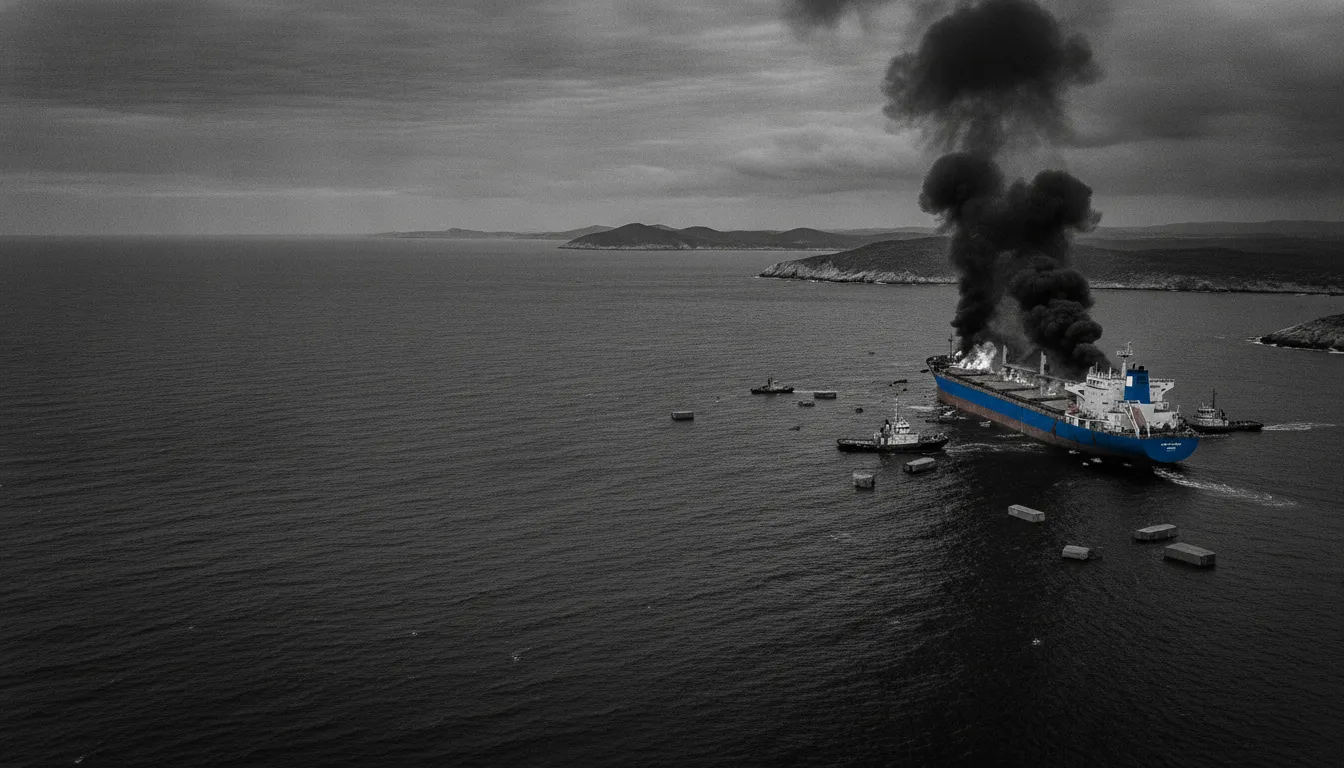
Following military strikes on February 28, 2026, the Strait of Hormuz has become effectively impassable for commercial shipping. The Islamic Revolutionary Guard Corps confirmed the closure on March 2, and by May, over 1,550 vessels remained stranded with approximately 22,500 mariners trapped. Prior to the conflict, roughly 20% of the world's daily oil supply—approximately 15 million barrels of crude oil and 5 million barrels of refined products—flowed through the strait. The International Energy Agency characterised the disruption as the largest supply disruption in the history of the global oil market, surpassing even the 1973 OPEC embargo. Tanker traffic through the strait collapsed to below 10% of normal operational capacity within weeks, and protection and indemnity insurance was cancelled from March 5, rendering the waterway commercially unnavigable despite the absence of a complete physical barrier.
Major container shipping lines including Maersk, CMA CGM, MSC, and Hapag-Lloyd suspended all transits, forcing vessels destined for Asia–Europe routes to divert around the Cape of Good Hope, adding 14–24 days to voyage times and compounding bunker consumption and operational costs. The chokepoint's closure simultaneously triggered a secondary crisis: Houthi forces resumed attacks on Red Sea shipping on February 28, effectively blocking both of the Middle East's major maritime corridors and eliminating routing alternatives. Over 150 tankers anchored outside the strait rather than risk transit, whilst crude production across Kuwait, Iraq, Saudi Arabia, and the UAE fell by a reported 6.7 million barrels per day as tankers could not depart.
Bunker Supply Disruption and Regional Hub Impacts
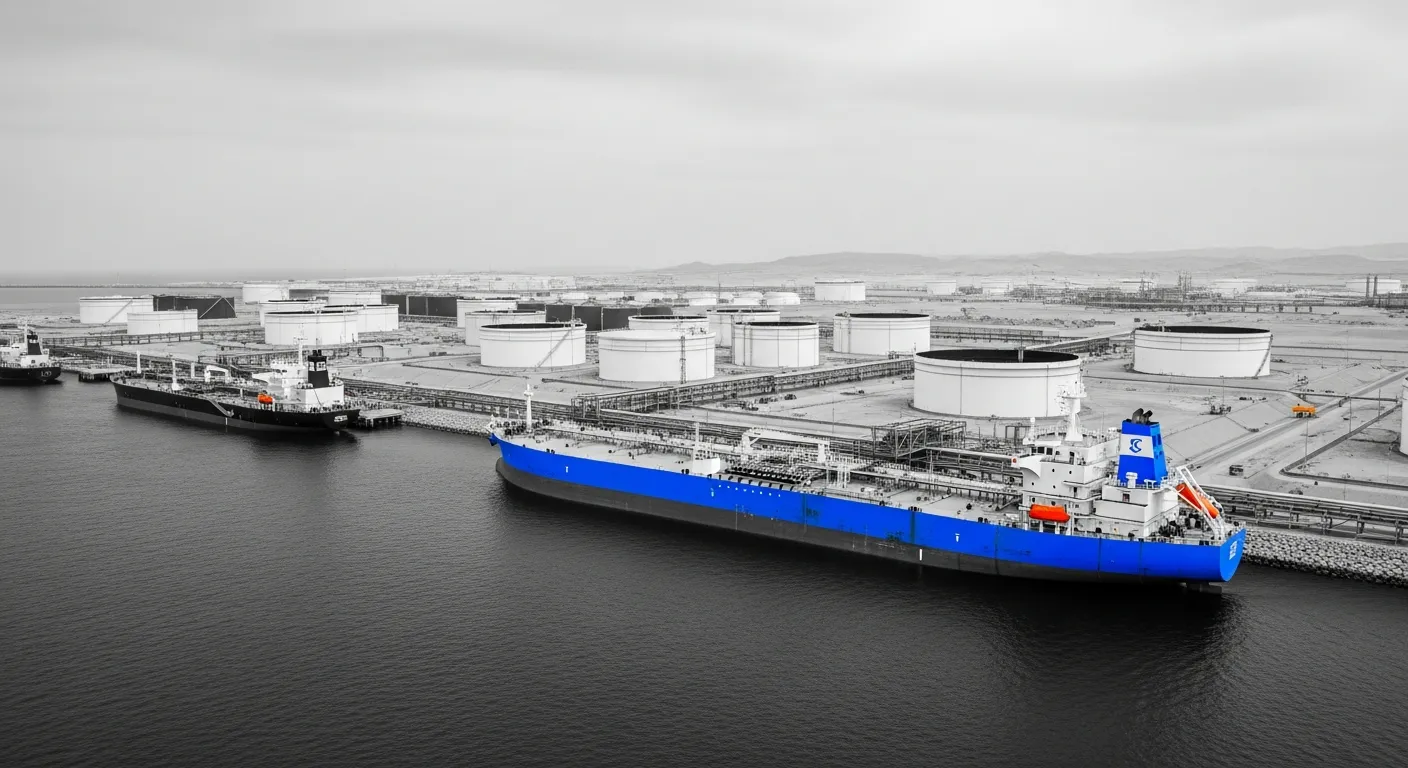
The closure has created acute supply imbalances across global bunkering hubs. Singapore, the world's largest marine refuelling centre, saw inventories tighten sharply as heavier crude feedstock from Iraq and Kuwait became inaccessible. Between early March and May 2026, VLSFO prices in Singapore rose from approximately $500 per metric tonne to more than $800/t, whilst Fujairah—which sits outside the strait and serves as a critical bypass bunkering and storage hub—experienced premiums surging from typical $10–20/t above Singapore benchmarks to peaks exceeding $50/t within days. One analyst noted that "delivered bunker premiums surged from $15 per tonne weekly averages to peaks exceeding $50 per tonne within days." Physical constraints compounded the crisis: Kuwait's al-Zour refinery, operating at 615,000 barrels per day capacity, became effectively inaccessible due to shipping route disruptions, whilst the tanker Marlin Santorini, carrying 110,000 tonnes of VLSFO product, was trapped since February 28, representing both immediate cargo loss and broader market signalling of supply unavailability.
Vitol's 100,000 barrels per day Fujairah refinery, historically dependent on specific feedstock streams to maintain VLSFO production economics, faced compounding difficulties as crude supply chains fractured. The technical complexity of VLSFO production means that specification failures can result in costly remediation, vessel engine damage claims, or regulatory penalties. During supply crises, the economic pressure to maintain output volumes must be balanced against quality control requirements that protect both suppliers and end users. Customer behaviour during the Fujairah crisis revealed important dynamics: rather than accepting elevated premium pricing, many regular bunker customers relocated to alternative hubs, demonstrating price sensitivity limits even during physical scarcity periods and indicating that marine fuel markets retain competitive dynamics despite regional disruptions.
Global Crude and Refined Product Volatility
Brent crude jumped from $73 per barrel on February 27 to above $100 within days of the closure, with later peaks reaching $130 and beyond as the conflict deepened. By March 11, Brent sat at $91—up 25% in two weeks. This volatility directly fed into bunker fuel pricing, particularly in hubs east of Suez. European gas futures rose 56%, to €50 per megawatt-hour on March 11 from €32 on February 27, whilst jet fuel prices increased 58% from February 27 to March 6. Global indices showed VLSFO averages climbing roughly 8% to an eight-month high of $590/t in key ports by early May, with Fujairah, Singapore, and Rotterdam all reflecting sharp advances as traders incorporated geopolitical risk premiums. Refiner responses varied: U.S. Gulf Coast refiners saw stronger export economics if buyers in Asia, Europe, or Latin America needed replacement barrels, whilst diesel and jet fuel margins widened when middle distillates became scarce. However, diesel and marine-fuel markets tightened significantly if bunkering hubs faced continued supply uncertainty.
The crisis exposed structural vulnerabilities in regional supply architecture. No alternative routing solution exists that can replicate Hormuz-scale throughput: Saudi Arabia's East-West Crude Oil Pipeline to the Red Sea and the UAE's Habshan–Fujairah pipeline combined can handle only a fraction of the 20–21 million barrels that transited the strait daily pre-conflict. This architectural inflexibility meant that spare production capacity—which Saudi Arabia and the UAE maintained for decades as a global supply buffer—simply could not reach world markets because it sat on the wrong side of a blockaded chokepoint. Analysts noted that recovery timelines remain deeply uncertain, with full restoration of pre-disruption export flows potentially requiring six months or more, accounting for infrastructure repair requirements, tanker fleet repositioning, and insurance market normalisation.
Insurance, War Risk, and Commercial Viability
A critical factor constraining maritime traffic through the strait has been the withdrawal of war-risk insurance coverage. Commercial insurers cancelled cover from March 5 onwards, effectively halting traffic even where the waterway was technically open to navigation. War-risk premiums rose sharply across all vessel types, shaping voyage economics fundamentally. Analysts emphasised that "the speed at which commercial insurers withdrew cover proved decisive in halting traffic." The economic consequences extend beyond insurance alone: rerouting tankers and container ships via the Cape raises freight and insurance costs and lengthens delivery times by two weeks or more. CMA CGM introduced emergency conflict surcharges of $2,000 on a 20-foot container and fuel surcharges of $150 per 20-foot equivalent unit (TEU) for headhaul dry cargo—an 11–14% increase on baseline prices. This meant that even if the strait were physically reopened, commercial operators would require sustained reassurance regarding insurance availability, safe port calls, reliable loading windows, terminal coordination, and predictable downstream supply before normalcy returned.
The broader distinction between technical reopening and commercial normalcy has become the defining analytical challenge. Whilst government announcements can move oil futures and a single escorted ship can ease market anxiety for a trading session, normal energy logistics require something far more durable. By May and June 2026, the strait remained technically operational only under severe constraint—AIS-visible commercial traffic near zero, with dark transits, spoofed positions, tanker staging, and covert export flows continuing beneath the visible surface. The strait was not closed in absolute terms, but it was no longer operating as a conventional commercial corridor. Iranian authorities managed maritime flows through controlled routes, selective transit management, and constrained export activity, rather than permitting free commercial passage.
Hedging and Fuel Procurement Strategy Under Heightened Uncertainty
The crisis has exposed limitations in conventional hedging approaches. Shipping companies facing record-high uncertainty have increasingly shifted toward shorter-term hedging positions rather than committing to or locking in prices far into the future. Hedging strategies must align with operational requirements—fleet size, routes, and fuel consumption patterns—whilst assessing risk appetite and financial objectives. Effective bunker fuel hedging involves derivative instruments such as futures contracts, options, and swaps to lock in fuel prices in advance, protecting against sudden price hikes. Plain-vanilla swaps remain the vast majority of hedging activity observed during the crisis. However, traditional hedging models assume reasonable market stability and price-discovery mechanisms. When geopolitical events trigger rapid insurance withdrawal and physical supply immobilisation, the relationship between spot prices and futures curves breaks down, rendering some hedging ineffective. Shipping companies conducting thorough market analysis must consider historical price trends, geopolitical factors, supply-demand dynamics, and regulatory changes affecting fuel prices—all of which have become dramatically more volatile and uncertain in 2026.
For operators navigating 2026, diversified fuel sourcing strategies and dynamic contract structures reduce exposure to price volatility more effectively than traditional spot-market purchasing. Advanced hedging, variable delivery models, and a diversified network of supply hubs help companies remain competitive as demand patterns shift. Companies managing fuel procurement should enter hedging agreements when fuel prices are low to maximise savings, adjust hedging positions based on geopolitical and economic factors, and ensure there are no hidden fees or unfavourable conditions. A $50/ton increase in VLSFO can add $500,000–$700,000 to voyage costs for a Capesize bulk carrier, making fuel cost management critical to profitability. Alternative fuels such as LNG or biofuel blends often carry a premium cost of 10–30%, further complicating procurement decisions. The key is to assess fuel needs, monitor the market continuously, and negotiate competitive pricing with multiple partners. No single strategy is a one-size-fits-all solution; some companies benefit from fixed-price contracts whilst others gain competitive advantage by working directly with bunker traders or refineries.
What This Means for You: Actionable Priorities for Mid-2026
Ship operators and fuel buyers must immediately reassess fuel sourcing geography and counterparty risk. Fujairah's strategic importance has been compromised by supply-chain fragmentation and infrastructure stress; alternative hub diversification to Rotterdam, Houston, and Singapore requires negotiated agreements well in advance of need. Buyers should establish long-term contracts with multiple suppliers across geographically dispersed hubs to reduce single-point-of-failure risk and lock in predictable pricing ahead of further volatility spikes. Monitor the evolution of war-risk insurance premiums and corridor-by-corridor transit viability; even partial Hormuz reopening will not immediately restore commercial normalcy, and premiums may remain elevated well into the second half of 2026. Implement dynamic hedging that responds to both crude-oil benchmarks and regional bunker spreads, rather than relying solely on lagging futures prices. Validate bunker quality documentation rigorously during crisis periods, as technical complexities of VLSFO production under supply stress increase specification failures and costly claims. Most importantly, recognise that global bunker markets will operate at elevated volatility and geopolitical risk for the remainder of 2026; companies that build supply-chain flexibility, diversify counterparties, and maintain real-time market intelligence will retain operational margin and pricing predictability where competitors face disruption and cost shocks.