"The risk of geopolitics has shown its ugly face with higher frequency and more severity over the past years than ever before," — Xeneta Chief Analyst Peter Sand. The Strait of Hormuz's closure began 28 February 2026 and persists in managed form, with shipping buyers now navigating conflicting signals: an MOU promising restoration, Iranian assertions of toll rights, and ongoing missile incidents that halt cargo movements mid-route.
The June Ceasefire Deal: What the MOU Actually Commits
On 17 June 2026, Trump and Pezeshkian signed a one-page memorandum of understanding intended to end the three-month 2026 Iran war and establish a 60-day framework for negotiating a permanent peace deal. The MOU stipulates that Iran will use "best efforts" to ensure safe passage of commercial vessels through the Strait of Hormuz and allow toll-free transits for 60 days, whilst both sides pledge to de-mine the waterway and lift naval blockades. Pakistan and Qatari mediators facilitated the agreement, with technical delegations continuing talks in Doha and Switzerland on nuclear issues, sanctions relief, and ceasefire mechanics.
However, the agreement contains critical gaps. Iran interpreted the MOU as preserving Iranian "arrangements" for controlling passage, citing an Article 5 provision that gives Iran supervisory authority. Within days of signing, Iranian officials—including parliamentary figures—hinted that "service fees" would resume after the 60-day window expires. The Joint Maritime Information Center (JMIC), overseen by the US Navy, reported that both Iran and the US dispute whether the southern route through Omani waters (preferred by international shipping) or the northern Iranian-controlled route is the approved corridor. This ambiguity has become a flashpoint for enforcement disagreements.
Ceasefire Violations: Missiles, Drones, and Tanker Strikes
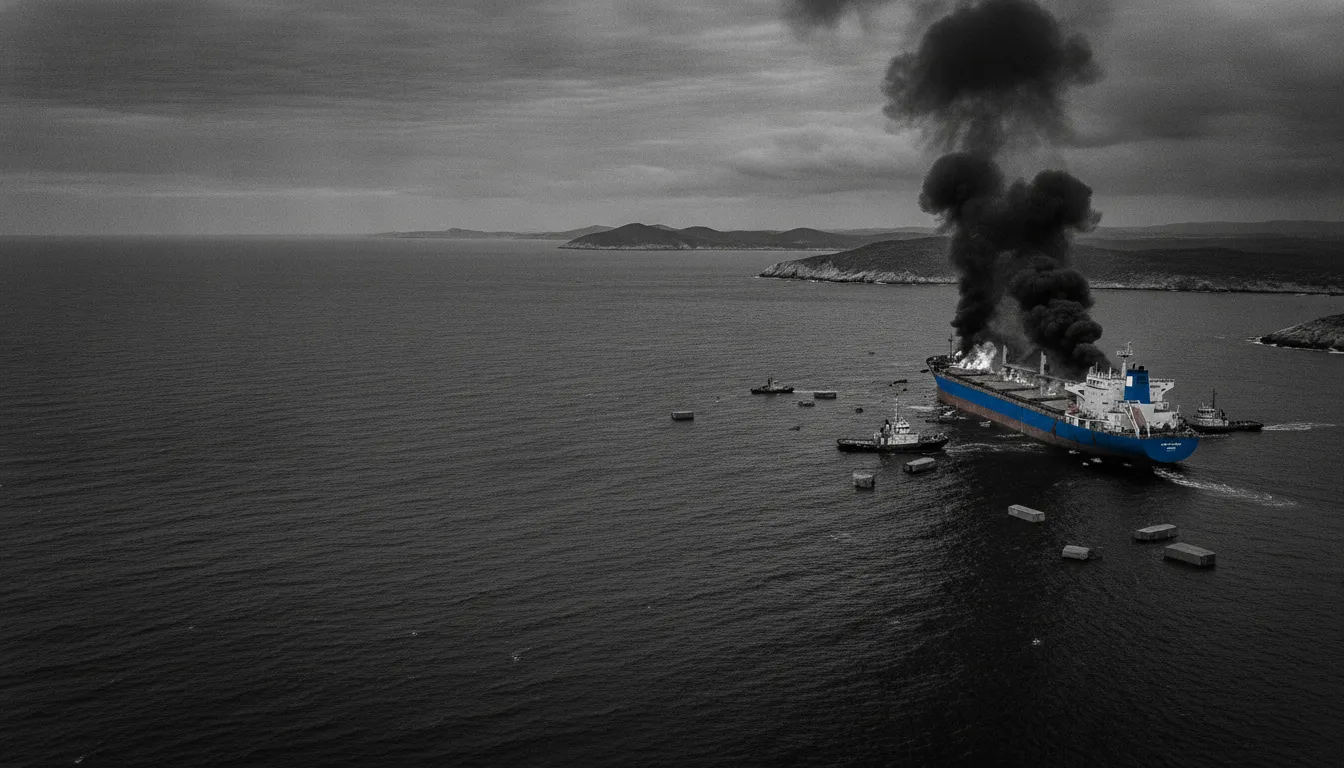
On 25 June, just eight days after the MOU signing, Iran's Islamic Revolutionary Guard Corps (IRGC) launched four drones at the Singapore-flagged container ship Ever Lovely transiting the Strait near Oman's coast. The UK Maritime Trade Operations Centre (UKMTO) confirmed the strike damaged the vessel's bridge but caused no crew injuries. Trump immediately termed the attack "a foolish violation" of the ceasefire. US Central Command conducted retaliatory strikes on Iranian missile and drone storage facilities and coastal radar sites on 26 June, with the IRGC responding by striking US military positions in Bahrain and elsewhere on 27 June.
The IRGC's statement claimed the Ever Lovely was "unauthorised" because it used a route avoiding Iranian waters, asserting that Article 5 of the MOU grants Iran sole authority over "arrangements for controlling passage." This interpretation directly contradicts US claims that multiple shipping corridors are permitted. As of 30 June, the International Maritime Organization (IMO) had documented 49 confirmed maritime incidents in the Strait and wider Persian Gulf region since the ceasefire began, indicating that missile attacks have not ceased—they have merely shifted from blanket closures to selective enforcement targeting vessels perceived to defy Iranian routing rules.
Insurance, War Risk Premiums, and Container Shipping Economics
War-risk insurance premiums for Hormuz transits have surged from 0.125% of vessel value before the conflict to between 0.2% and 1% post-ceasefire, depending on vessel class and itinerary. For very large container ships, this represents additional costs of $500,000 to $1.5 million per transit. Beyond base rate increases, operators now face stacked surcharges: war-risk surcharges reaching $1,500 per TEU (twenty-foot equivalent unit) for Gulf-linked lanes, emergency bunker surcharges triggered by fuel price volatility, and emergency freight increases of $3,000 per FEU (forty-foot equivalent unit) for Persian Gulf cargo. Maersk, CMA CGM, MSC, and Hapag-Lloyd have each suspended or heavily restricted direct sailings through the Strait, instead rerouting via the Cape of Good Hope (adding 14–24 days transit time) and transhipment hubs such as Salalah Port in Oman. This forced detour increases voyage costs by 25% to 40% and strains alternative port infrastructure. Buyers must assume these elevated costs will persist through 2026 for any Gulf-bound or Gulf-originating shipments, with no guarantee of relief even if negotiations conclude.
Traffic Recovery Remains Stalled: The 95% Reduction Persists
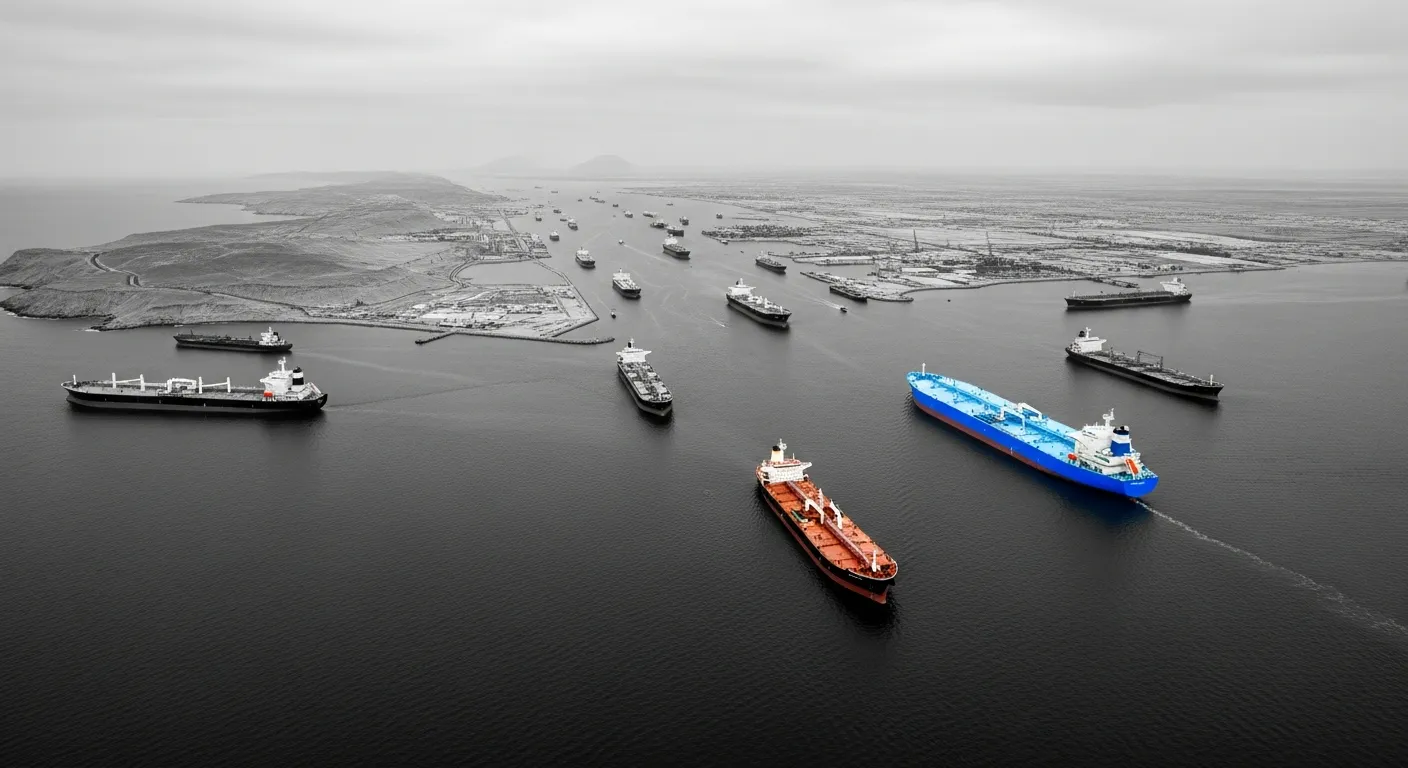
Pre-conflict baseline: roughly 3,000 vessels and approximately 138 daily transits of the Strait. Pre-ceasefire minimum: by 10 March 2026, only 15 ships crossed daily. As of late June, World Trade Organization data indicates a 95% reduction in crude oil carriers and 99% reduction in LNG tankers using the Strait compared to pre-February 2026 levels. Although the MOU claims the Strait is "open," shipowners remain hesitant to commit vessels. Despite the 27 June widened shipping corridor announced by JMIC (extending routes near Oman to allow bidirectional flows), commercial operators have not rushed to resume Hormuz transits. Post-ceasefire traffic showed only a marginal uptick—recorded at roughly 10–20 daily transits by late June—compared to the pre-conflict average of 138. The psychological deterrent effect of ongoing attacks (nine missile incidents in the first week post-MOU) ensures that only essential, high-margin shipments attempt direct Hormuz passage, with most rerouting via the Cape.
Shipping Route Contingency Planning: A Practical Playbook for Buyers
Buyers and procurement teams cannot assume Hormuz will operate normally through the rest of 2026. A practical response framework must include: (1) dual-sourcing of high-value components from non-Gulf suppliers to reduce exposure to Gulf port congestion; (2) building 8–12 week buffer stocks for critical commodities dependent on Gulf LNG or crude supply; (3) negotiating force-majeure clauses with suppliers that acknowledge 14–24 day extended transit times via Cape reroute and corresponding cost increases; (4) pre-arranging alternative transhipment points (Salalah, Jebel Ali via slower feeds, Jeddah via Red Sea pipelines) as fallback discharge ports; and (5) maintaining weekly intelligence updates on ceasefire stability by subscribing to maritime security feeds and UKMTO advisories. Container lines are introducing dynamic routing, meaning confirmed bookings may be rerouted without notice. Buyers should confirm final discharge ports with freight forwarders no fewer than 7–10 days before scheduled gate-in, and review commercial contracts for pass-through mechanisms allowing cost escalations above a baseline threshold.
What This Means for You: De-escalation as a Contract Planning Variable
The June MOU is a ceasefire, not a peace settlement. Technical negotiations continue, but sticking points remain: Iran's nuclear programme, sanctions relief timing, ceasefire violation accountability, and—critically—Iran's sovereignty claims over Strait management. The US blockade has been lifted, but both sides have demonstrated a pattern of tit-for-tat escalation triggered by routing disputes and perceived agreement violations. Analysts at CSIS and Brookings assess that full traffic recovery to pre-February 2026 levels will not occur until 2027 at the earliest, even if diplomacy succeeds. For buyers renewing annual service contracts, locking in fixed ocean freight rates with Hormuz-exposure carriers is high-risk; instead, negotiate variable-cost arrangements with defined escalation caps tied to published war-risk indices. Expect premium routing surcharges (Cape + transhipment) to remain standard practice through Q4 2026. Insurance placements—whether captive war-risk or traditional P&I—should include contingency for mission-system outages (GPS jamming, AIS manipulation) reported in Strait waters, which increase navigation risk beyond combat. The strategic lesson: treat Hormuz transit as a geopolitical variable, not a fixed maritime constant. Operational resilience now depends on pre-crisis intelligence, contractual flexibility, and acceptance that shipping timelines for Gulf trade have undergone a permanent structural shift lasting months beyond any ceasefire announcement.