"If diplomacy determines whether the Strait of Hormuz reopens, mine warfare will determine whether commercial shipping returns."
The Stalled Evacuation and Remaining Stranded Seafarers
On 23 June 2026, the International Maritime Organization launched a landmark evacuation operation targeting approximately 11,000 seafarers stranded aboard roughly 600 vessels trapped in the Persian Gulf since fighting erupted on 28 February. The operation mobilised under an IMO Council mandate with coordination from Iran, Oman, the United States and the maritime industry. Within the first 3.5 days, 115 vessels carrying about 2,500 crew members successfully transited outbound, marking the first concrete measure of a humanitarian rescue effort of unprecedented scale since the crisis began.
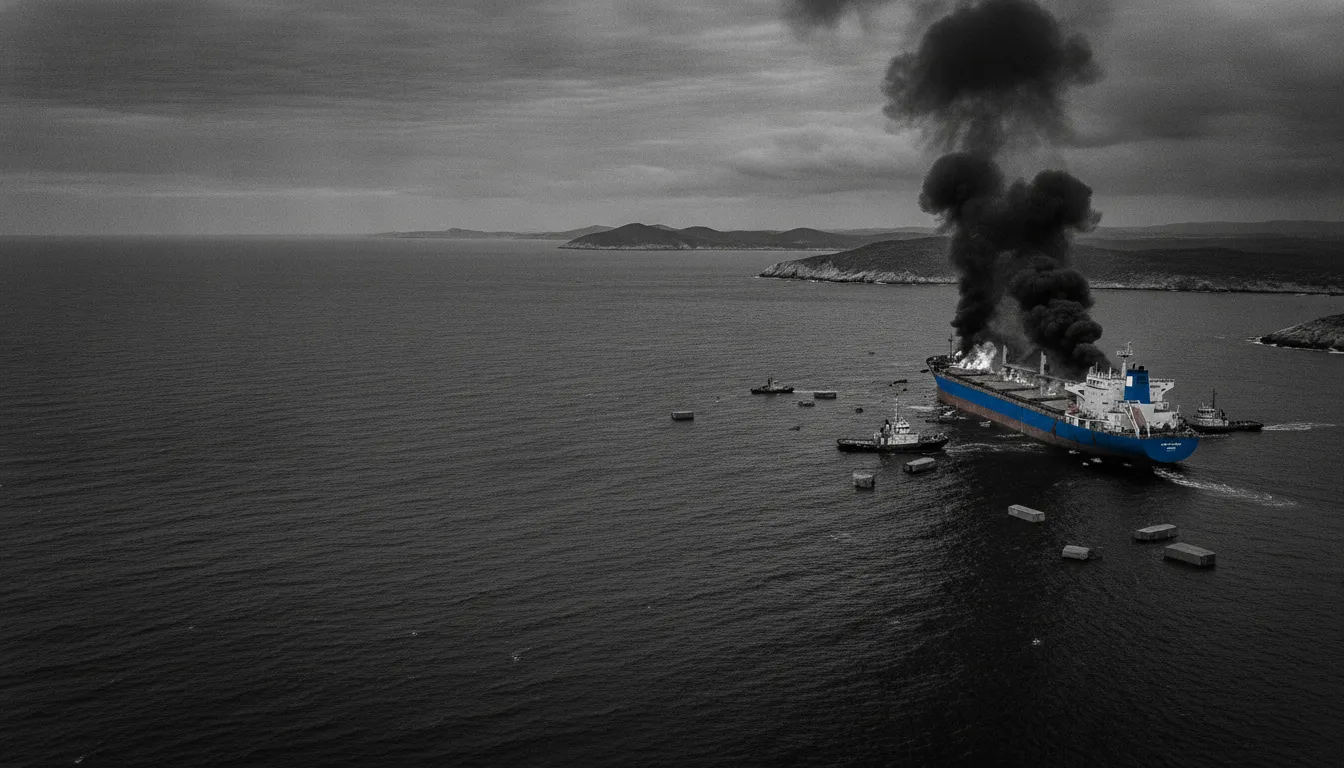
However, on 25 June, the evacuation ground to a halt. A Singapore-flagged container vessel, the Ever Lovely, was struck by an unknown projectile while transiting the southern Omani corridor—a route promoted by the IMO earlier that day and following the northern Iranian-designated lane. The attack exposed a fundamental fissure in the ceasefire agreement: uncertainty over which authority can guarantee safe passage and under which routes. IMO Secretary-General Arsenio Dominguez immediately paused the operation, citing need to "reconfirm that the necessary safety guarantees continue to be in place." That pause persists as of 1 July, leaving 8,500 seafarers in limbo and constraining the operational planning for ship suppliers who must service stranded vessel inventories and crew welfare needs.
The Mine Threat: Scale, Sophistication and Timeline Reality
Naval mines remain the Strait's most potent disruption tool. Iran is estimated to have laid between 10 and 100 mines in the waterway during the conflict, with each mine triggered by a ship's acoustic, magnetic or pressure signature. U.S. airstrikes have degraded Iran's mine-laying capacity—destroying an estimated 90 percent of Iran's stockpile—yet even residual mines paralyse shipping confidence. Dryad Global, a maritime security firm, estimates Iran retains possession of up to 1,000 naval mines despite the strikes, underscoring the threat profile facing any reopening attempt.
Mine clearance is neither quick nor risk-free. Italy's Joint Operations Command (COVI) confirmed on 1 July 2026 that demining will require "at least two months" and involve "sophisticated and advanced mines that require capabilities and expertise not available to all countries." Western maritime security sources assess that conventional minesweepers and state-of-the-art underwater drones operating in the Strait could require 40 to 50 days before insurance companies, shipping lines and oil majors gain confidence to resume normal traffic. The central shipping lanes of the 1968 Traffic Separation Scheme remain contaminated by naval mines and unusable; vessels are being routed through two ad-hoc corridors—one coordinated by Iran to the north, the other supported by Oman and the United States to the south. Neither offers the predictability or capacity of the historical scheme.
France-Oman Coordination vs. Iran's Exclusive Authority Claim
On 29 June, French President Emmanuel Macron and Oman's Sultan Haitham publicly announced a joint commitment to multinational mine-clearance operations. Macron stated: "We have decided to work jointly, together with our partners, on mine clearance in the strait to secure maritime routes and guarantee free and unconditional passage through the Strait of Hormuz." The France-UK coalition, backed by commitments from Italy, Germany, Greece, Denmark and Japan, brings combined expertise in mine countermeasures—precisely the specialised capability the Strait lacks domestically.
Iran's response was swift and categorical. On 30 June, Deputy Foreign Minister Kazem Gharibabadi posted on social media that under the Islamabad memorandum, demining operations "would be carried out exclusively by Iran and not by any other country." He warned that "any parallel arrangements or foreign involvement in mine-clearing operations would not be permitted," and cautioned France to avoid "provocations" that could complicate the "sensitive and complex" maritime situation. Iran has consistently maintained that Article 5 of the Islamabad MOU reserves navigation management, demining and temporary shipping arrangements to Iranian coordination as the coastal state. For Tehran, external involvement signals loss of control over a strategic waterway; for Western partners, Iran's sole authority risks indefinite delays if Tehran lacks operational capacity or political will to clear mines rapidly.
Port Operator and Chandler Exposure in UAE and Oman
Ship supply and chandlery operations in Jebel Ali (Dubai), Sharjah and the Port of Fujairah depend on sustained throughput and predictable scheduling. The crisis has fractured both. Containers are piling up at alternative ports—notably Sohar and Salalah in Oman—outside the Strait, creating yard congestion and trucking delays. Empty container repositioning has triggered premium charges, and war risk insurance for road transport near conflict zones has spiked by up to 50 percent. Freight forwarding firms report that multimodal solutions—combining sea freight to safe ports like Salalah with road or air freight for final legs—now dominate client enquiries, forcing chandlers to expand inland logistics partnerships or face margin compression.
A critical initiative emerged on 14 May 2026: the Sharjah-Sohar integrated logistics corridor via the Khatmat Malaha land crossing, operational between Khalid, Hamriyah and Khor Fakkan ports in Sharjah and Sohar in Oman. This pathway transports consumer goods, food, pharmaceuticals and industrial materials—though not oil or LNG. For ship suppliers, this land-bridge model is not a replacement; it bypasses maritime chokepoints but increases trucking dependencies and requires new supply chain partnerships inland. Many chandleries in Dubai and Sharjah are now negotiating contingency contracts with Salalah port operators, positioning inventory buffers and negotiating dedicated berth slots to ensure they can service diverted vessels.
Multinational Demining Architecture and Implementation Delays
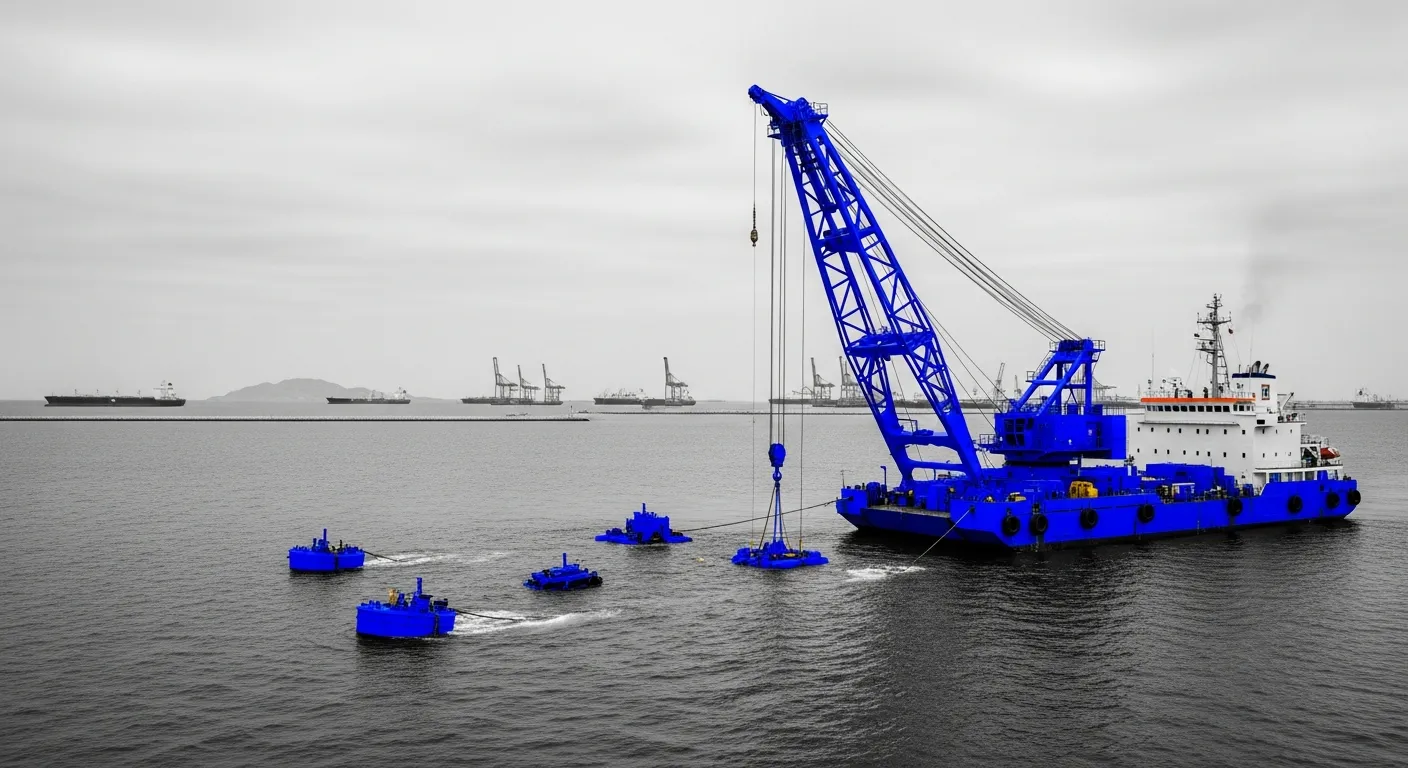
France and the United Kingdom have assembled a multinational coalition centred on mine countermeasures expertise. The operation depends on sonar-equipped underwater drones, remotely operated vehicles and helicopter-mounted mine-hunting sensors to scan the seabed and either destroy mines in place or sweep suspected areas to trigger or cut them loose. The U.S. Navy began initial mine-clearing operations in April 2026 under Project Freedom, deploying guided-missile destroyers including USS Frank E. Peterson and USS Michael Murphy. However, the White House suspended the operation, citing insufficient naval assets to sustain protection for large merchant convoys over extended periods.
The bottleneck is coordination authority, not hardware. Italy confirmed minesweepers are positioned in Djibouti, ready for deployment. Britain, France and Germany have all dispatched warships and specialist vessels to the region. Yet without a unified command structure and explicit agreement on demining sequencing, insurance underwriters remain hesitant to lower war-risk premiums. Japan, Canada and other coalition members have pledged support, but only once the security situation stabilises and a credible international framework is established. The longer the diplomatic deadlock persists, the more stranded vessels accrue storage costs and crew welfare expenses that ship suppliers must absorb or pass to shipowners—eroding margins and intensifying pressure for alternative supply arrangements.
What This Means for Regional Logistics and Procurement Strategy
For buyers, shipowners and suppliers operating in the Arabian Gulf region, the demining deadlock signals a prolonged dual-corridor operating model. Vessels will continue routing through Iran-designated and US-Oman-IMO corridors, each with distinct cost profiles, transit times and insurance regimes. Ship suppliers must assume at least 40–50 days before central shipping lanes are certified mine-free and normal traffic separation resumes. Chandlers should negotiate long-term service agreements with Salalah and Sohar operators, establish inventory reserves at Fujairah on the Gulf of Oman (outside the Strait), and explore joint procurement arrangements with competitors to absorb contingency costs. For logistics hubs reliant on Jebel Ali and Sharjah, diversification into land-bridge operations via the Sharjah-Sohar corridor and Saudi Red Sea ports (Jeddah, Yanbu, Dammam) is no longer optional—it is operational necessity. The International Maritime Organization's humanitarian evacuation target of 11,000 seafarers remains stalled at 2,500 evacuated. Until Iran and the international coalition agree on demining authority and sequencing, ship suppliers and regional ports will face elevated operational friction, margin pressure and the risk of permanent reconfiguration of supply chain topology toward southern and western Gulf alternatives.