"Seafarers feel forgotten," said IMO Secretary-General Arsenio Dominguez as his organisation coordinated one of the largest modern maritime rescue operations. For suppliers willing to serve these humanitarian routes, the crisis represents both immediate commercial opportunity and a chance to define corporate integrity.
The Scale of Confinement: 20,000 Seafarers in a War Zone
Since Israel and the United States commenced aerial operations against Iran on 28 February 2026, the Strait of Hormuz has functioned as an effective maritime blockade. The International Maritime Organization reported on 21 April that some 20,000 seafarers remained stranded on approximately 2,000 vessels—oil and gas tankers, bulk carriers, container ships, and six cruise liners—unable to transit the strategic chokepoint. Normal traffic through the strait averaged over 100 vessels daily; within weeks, only four or five transited per day. The chokepoint normally carries 25 per cent of the world's seaborne oil and 20 per cent of global LNG trade.
Iran has declared the strait closed to any vessel travelling "to and from" ports of the United States, Israel, and their allies. Simultaneously, the Trump administration imposed a naval blockade targeting ships entering Iranian ports. Crews described deteriorating conditions aboard: water reused from air-conditioning systems, dwindling food reserves, and shortages of fresh water. The Forward Seamen's Union of India reported crews remained unpaid for weeks, locked in vessels without visas to disembark in neighbouring Gulf states. Mental health impacts have been severe. Damien Chevallier, Director of the IMO's Maritime Safety Division, called the situation "unprecedented in the post-Second World War era."
The IMO Evacuation Framework and Logistics Coordination
In March 2026, the IMO Council mandated the development of a safe maritime framework to facilitate evacuation. By late June, IMO Secretary-General Arsenio Dominguez announced a phased operation to evacuate approximately 11,000 seafarers from around 600 vessels, implemented in cooperation with Iran, Oman, the United States, and other regional coastal states. In the first three and a half days of operations, 115 ships carrying roughly 2,500 crew members successfully transited through designated corridors. However, the evacuation paused after a container ship, the Ever Lovely, was struck near Oman's coast, exposing vulnerabilities in the safety guarantees.
The framework remains a work in progress dependent on sustained diplomatic coordination. IMO Secretary-General Dominguez stated: "We have secured the necessary safety guarantees and have thoroughly verified the conditions for safe navigation." Yet the operation's vulnerability to fresh attacks underscores the fragility of any single-corridor strategy. Companies and suppliers must reckon with the fact that evacuation routes remain contested space, making provisioning logistics and welfare services critical to crew retention on vessels awaiting clearance.
Supply Chain Breakdown: Food, Water, and Medical Shortages
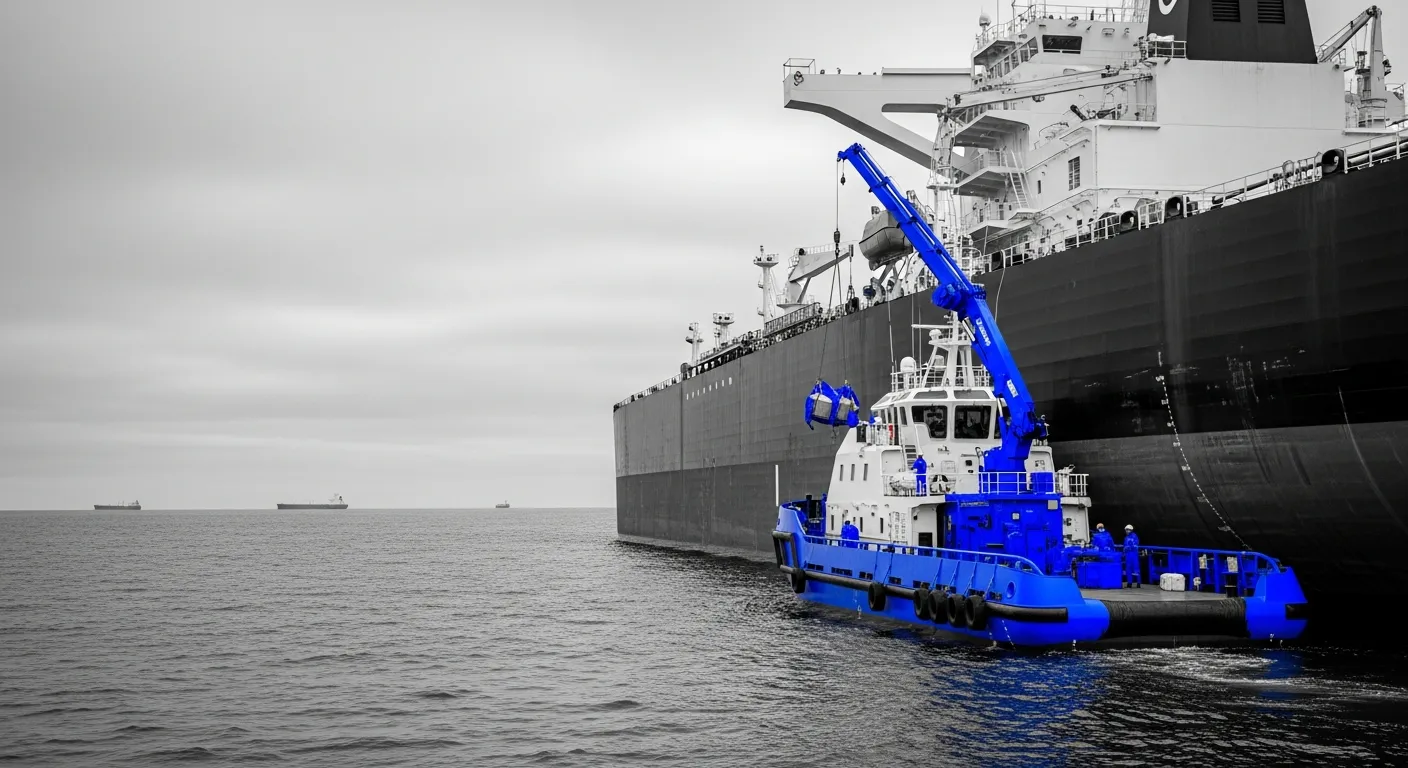
The 2,000 vessels in the Persian Gulf have relied on resupply operations from Saudi Arabia and Oman to maintain food, water, and fuel reserves. Crews aboard the tanker Auroura reported severe shortages. One crew member told CNN that "reusing water from air-conditioning systems to wash clothes and, in some cases, even to prepare food" had become routine. The International Transport Workers' Federation received over 1,000 emails from stranded mariners detailing inadequate provisions and requesting repatriation.
Many crews lost access to medical supplies mid-voyage. Some crews remained unable to communicate with families, exacerbating psychological stress. Essential humanitarian items—medication, vitamins, communications equipment, psychological support services—represent immediate demand gaps. Regional bunker suppliers, provisioning agents, and crew welfare organisations operating out of ports like Salalah, Sohar, and Duqm have become primary lifelines. For suppliers capable of scaling logistics under wartime constraints, this crisis reveals a sustainable market for humanitarian-focused emergency provisioning.
The Human Cost: 14 Fatalities and Ongoing Risk
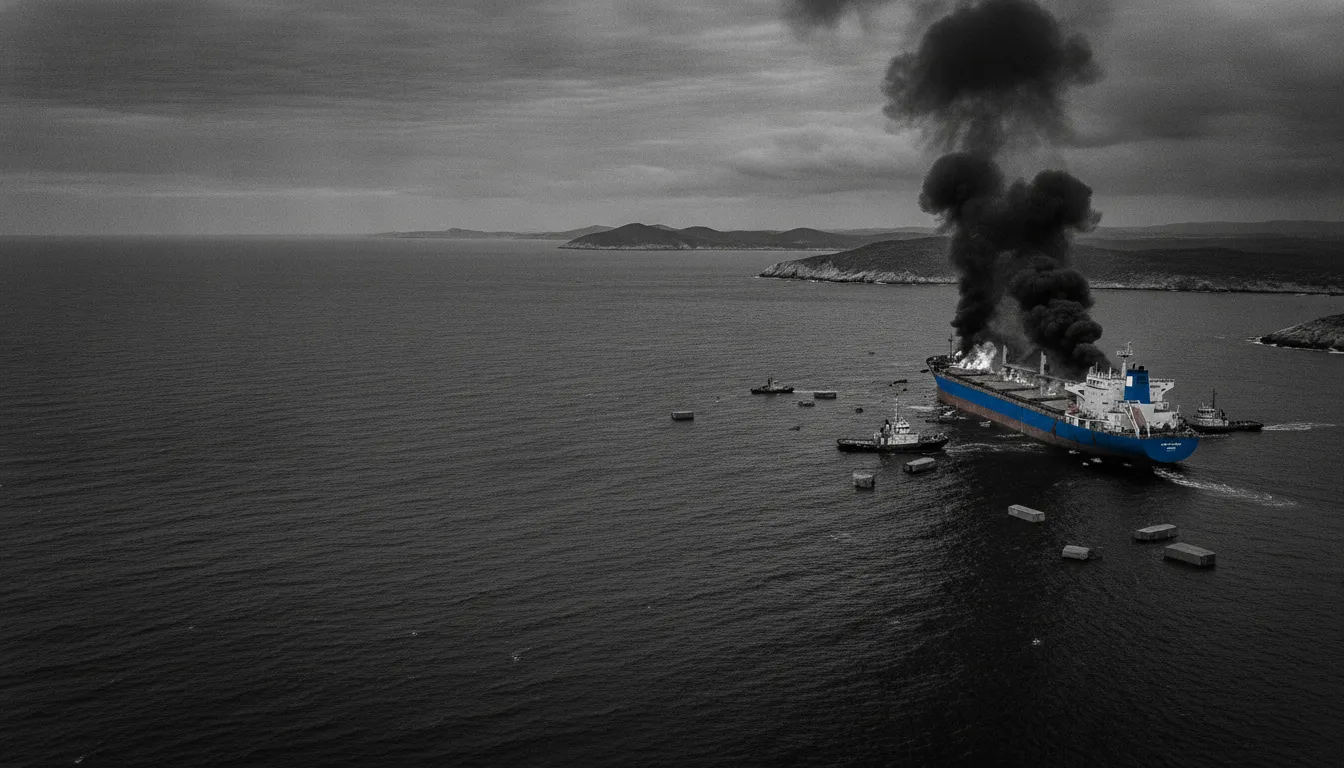
The IMO has confirmed at least 14 seafarer fatalities and more than 40 commercial vessel attacks since 28 February 2026. On 9 June, the bulk carrier Settebello recorded three seafarer deaths. Drone strikes and missile attacks have damaged lifeboats, navigation systems, and hull integrity. For crews—predominantly working-class men from India, the Philippines, and other Global South nations—the hazard extends beyond geopolitical conflict; many lack formal training for combat zones and face severe legal and financial vulnerabilities including wage arrears.
The International Transport Workers' Federation notes that crews have experienced "absolutely vulnerable" conditions, trapped between commercial pressure from vessel operators and military threats beyond their control. Some shipowners pressured remaining crews to continue cargo operations or deviate toward Iranian ports despite mounting risks. This disparity between duty and safety has created secondary crises: crew abandonment, breach of the Maritime Labour Convention (MLC 2006), and reputational damage to operators who prioritise cargo over welfare. Suppliers demonstrating active crew safeguarding protocols earn strategic differentiation.
Market Opportunity for Ethical Suppliers: Humanitarian Routes as Differentiator
The crisis has created immediate procurement demand across multiple categories: emergency food provisioning, medical supplies, communications equipment, psychological support services, fuel bunkers, fresh water deliveries, and crew repatriation logistics. Regional suppliers based in Oman, Saudi Arabia, and the UAE have become operationally essential. However, commodity-focused bunker and chandlery businesses face margin compression and commodity-price volatility. Suppliers who integrate humanitarian protocols—documented crew welfare verification, transparent pricing, direct crew communications, post-evacuation support tracking—differentiate sharply on brand and win long-term relationships with ethical operators.
Companies including Stella Maris (Apostleship of the Sea), operating chaplaincy networks across 300-plus ports, and SeafarerHelp, an IMO-backed 24/7 multilingual helpline, have demonstrated that crew welfare as a service layer generates loyalty and justify premium positioning. For ship suppliers and chandlers, partnering with or integrating equivalent care standards—crew communication credits, mental health resources, documented traceability of provisions to individual vessels—positions suppliers as partners in crew retention and safety, not merely commodity vendors. Shipping companies facing regulatory scrutiny under the MLC 2006 and reputational pressure from labour unions actively seek suppliers demonstrating verifiable crew-centric practices.
What This Means for Your Supply Business
The Persian Gulf crisis will persist until diplomatic resolution enables sustained safe passage. IMO evacuation operations will likely expand as diplomatic progress allows, creating sustained demand for coordinated logistics spanning multiple ports and suppliers. Operators managing vessels in the region require bunker, food, water, and emergency medical services from vendors capable of navigating geopolitical uncertainty and regulatory volatility. More significantly, they seek suppliers who can document crew welfare integration and demonstrate ethical compliance.
For PortProcure-listed suppliers—ship chandlers, bunker providers, crew welfare specialists, and maritime logistics firms—the moment demands strategic choice. Commodity-only positioning risks commoditisation as crisis-driven demand peaks and normalises. Conversely, suppliers integrating documented crew-welfare protocols, transparent pricing, direct crew support channels, and verifiable supply-chain traceability embed themselves as operational partners in humanitarian logistics. The 20,000 stranded seafarers represent both human suffering and a proving ground for suppliers willing to lead on maritime labour ethics. Those who act now establish themselves as the trusted partners for operators rebuilding trust in their crew-management practices post-crisis.