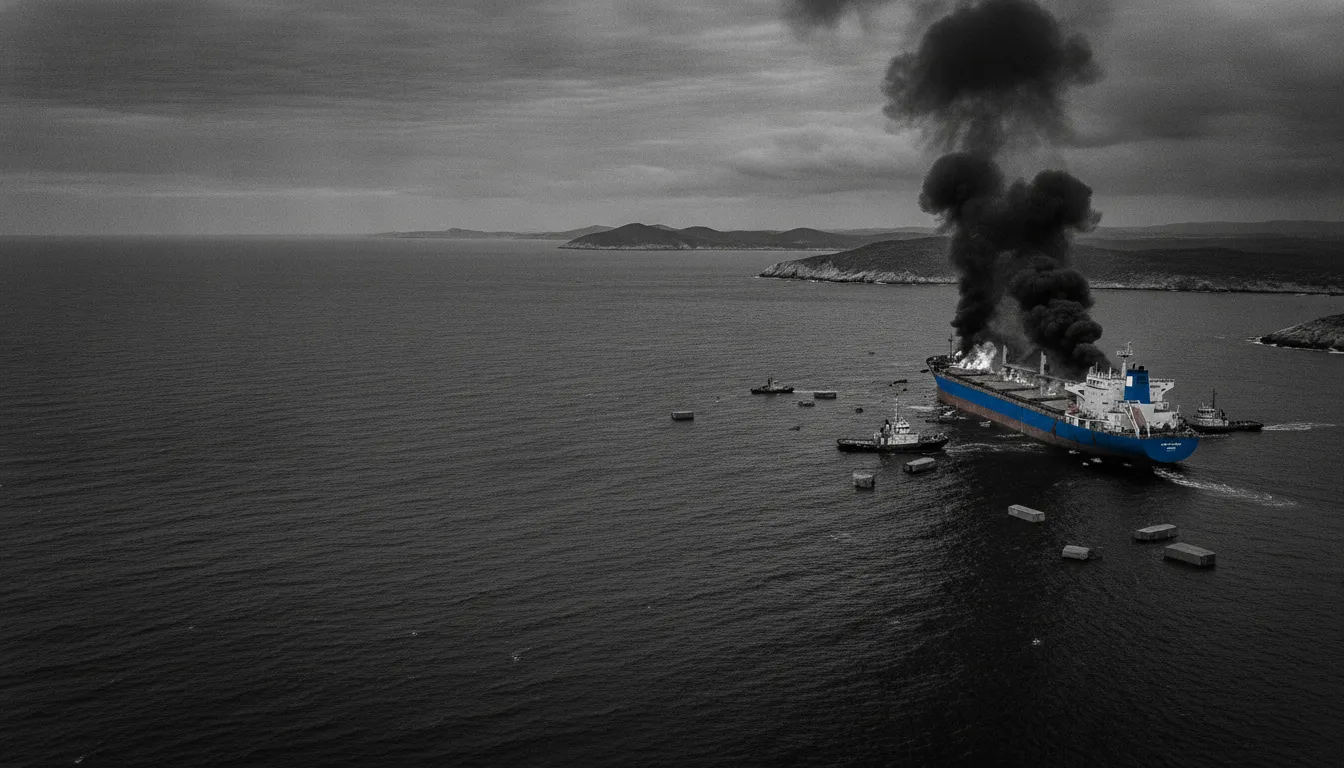
"Vessels taking the faster Suez route will arrive in Europe at the same time as vessels that took the longer Cape route, causing massive port congestion for 2-3 weeks."
Two Years of Rhythm Built on the Cape Route
When Houthi attacks began in November 2023, forcing container carriers to abandon the Red Sea, the shipping industry faced an immediate crisis: routes that had carried roughly 30% of global container traffic suddenly became too risky. By early 2024, container traffic through the Suez Canal had collapsed by 90%, according to industry data cited by Coface, while nearly 12% of all international maritime goods normally flowing through the canal had to find new paths. The rerouting around the Cape of Good Hope—adding 10 to 14 days to Asia-Europe voyages—created an unintended stabiliser. The longer transit times consumed vessel capacity and spread arrivals over wider time windows, preventing the kind of vessel bunching that would otherwise choke terminals.
For shippers relying on predictability, this inadvertent smoothing was paradoxically useful. The longer voyages, though more expensive, created a more leisurely arrival pattern. Carriers deployed extra ships to maintain weekly services; the extended cycle meant cargo streamed into ports on a gentler gradient. Port terminals operated at high but manageable density; inland logistics networks could absorb the flow. The two-year cycle normalised congestion levels that would have seemed dire before the crisis but became the baseline expectation for operations teams from Rotterdam to Singapore.
The Mathematical Trigger: Overlapping Arrivals
The return to Suez will not be sudden, but it will be concentrated. Container arrivals in European ports could spike between 10 and 39% in the transition window, according to analysis by Zencargo cited in December 2025 freight forecasts, as vessels currently en route via the Cape overlap with newly diverted Suez-bound ships. A ship departing from Asia on the Cape route takes 40 to 42 days to reach Rotterdam; one via Suez takes 28 to 32 days. When carriers begin resuming Suez sailings (CMA CGM already committed to regular India-to-US services via Suez from January 2026), both cohorts will arrive within a compressed 2- to 3-week window rather than scattered across a month.
The Institute for Supply Chain Management and Sea-Intelligence analysis suggests vessels will arrive 9 to 12 days earlier than the Cape routing allows. For a terminal operator managing berth schedules, equipment gates, and inland trucking capacity, that compression is not a marginal adjustment—it is a 30 to 40% instantaneous surge in a window when labour, cranes, and yard space are already allocated to existing volumes. Hapag-Lloyd CEO Rolf Habben Jansen acknowledged in November 2025 that carriers want an orderly return, but admitted "we fully realise that many of our customers will not want that," revealing the misalignment between orderly logistics and shipper demand for the shortest route.
Port Congestion: The Quayside and the Gate Bottleneck
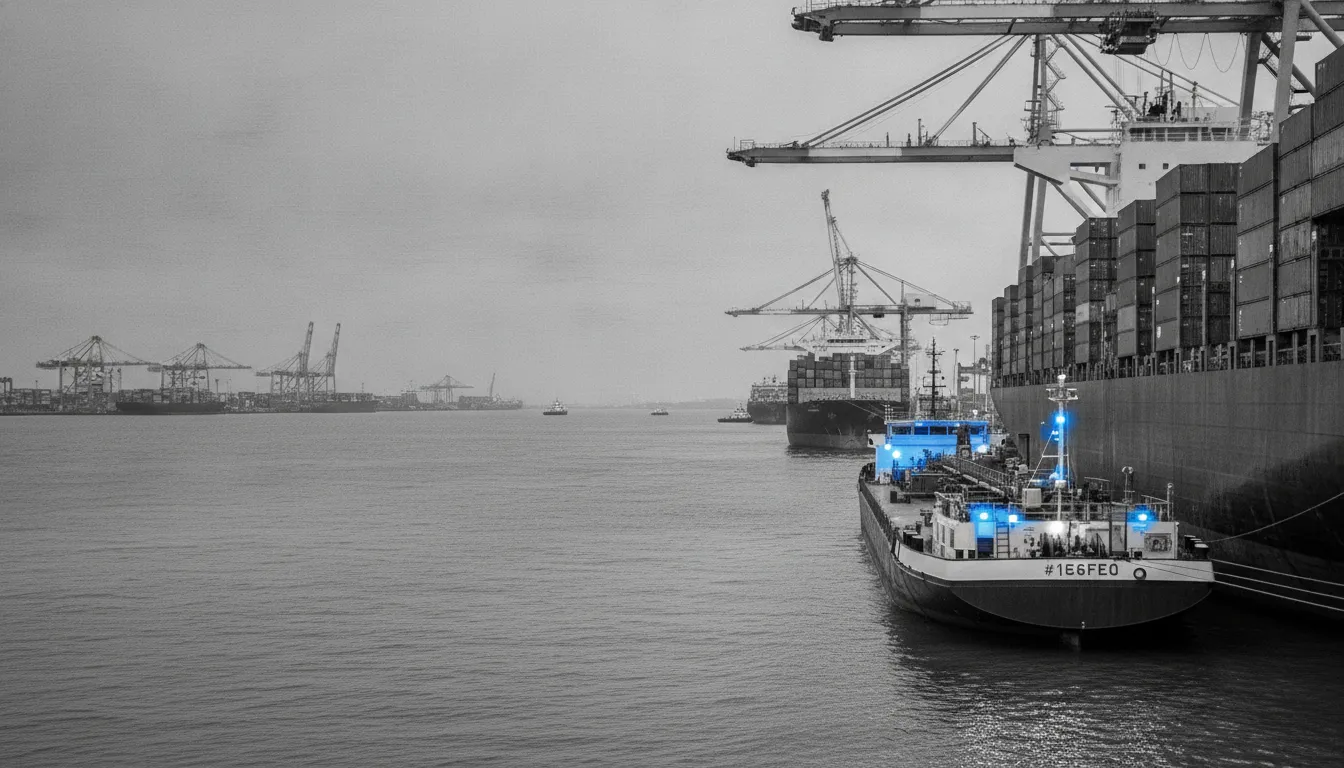
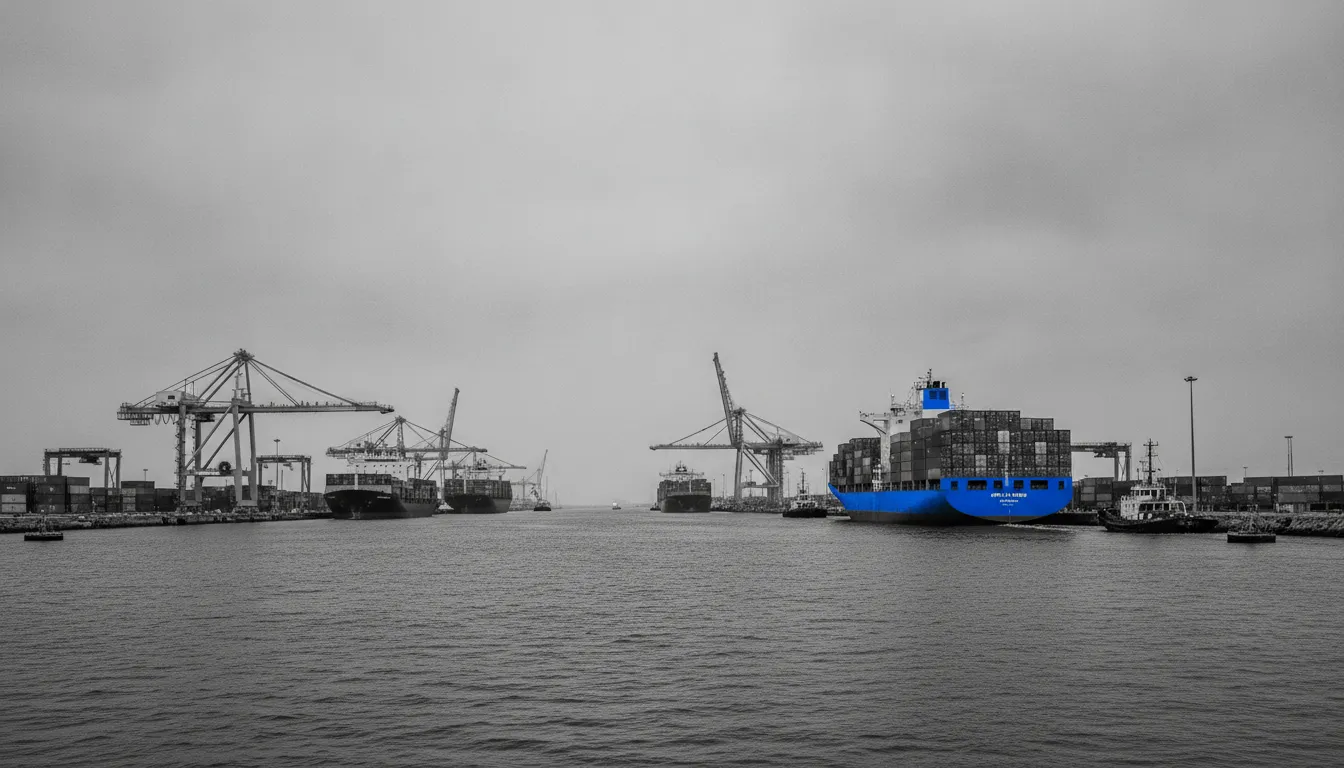
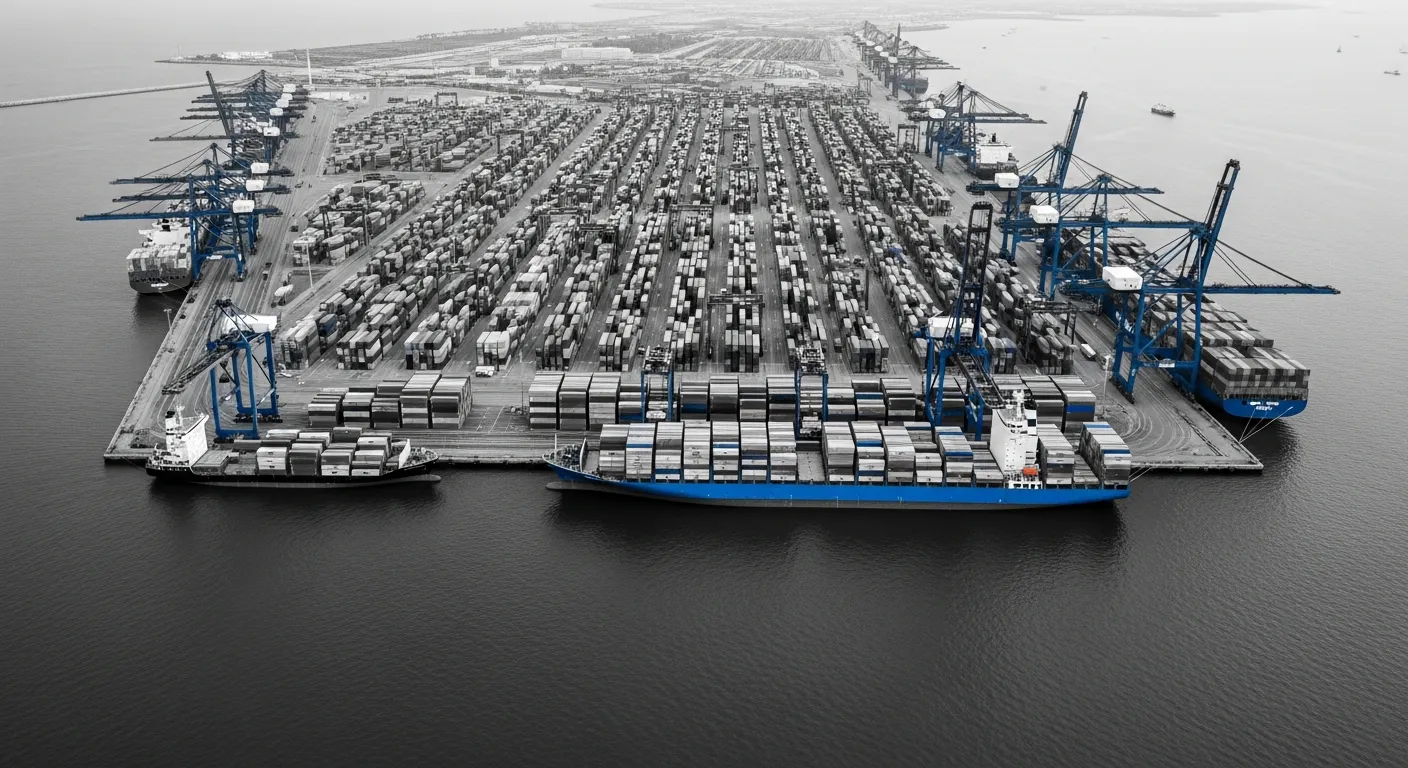
The largest terminals—Rotterdam, Antwerp, Hamburg, Singapore—are already operating at or above nominal capacity, even before any Suez surge. Terminal utilisation across key European ports remains close to saturation, according to January 2026 data from maritime analytics firms, leaving little buffer for a sudden 10 to 39% spike in vessel arrivals. The immediate congestion will show first at the quayside: berthing delays, vessel waiting times, and reduced productivity per crane. But the deeper pinch will come at the gate and inland yards, where truck drivers queue to collect containers and warehouse operators scramble to receive and store overflow inventory.
Kuehne + Nagel executive Michael Aldwell flagged this in late 2025: "The real problem will be the capacity of our customers to pull inventory from the terminal yards." Without pre-positioned off-dock storage capacity, importers will face 3- to 7-day container dwell times instead of the current 1- to 2-day standard. At Singapore, port congestion data from Linerlytica already showed berthing delays of up to seven days and queues exceeding 450,000 TEU in early 2024 during earlier Cape diversion spikes. A Suez return will test those limits again, and European ports offer fewer alternative discharge points than Asia-Pacific hubs.
Cascading Inland Disruption and Equipment Imbalances
Port gates feed inland distribution chains—truck networks, rail terminals, inland barges. The sudden influx of containers during the Suez transition window will compress inland logistics networks that have been sized around the slower Cape arrival rhythm for two years. A 2-3-week spike of 10-39% higher volumes could overwhelm trucking capacity in Northern Europe and the US East Coast, creating secondary bottlenecks at rail yards, warehouse gates, and transshipment hubs. Zencargo and Cubic forecasts from January 2026 warned of inland distribution networks "potentially clogging for months."
An even deeper disruption will emerge 8 to 9 weeks later: equipment imbalances. As containers back up in European ports and yards, empty and loaded containers get stuck in the destination region. Asian ports—from which most cargo originates—will face equipment shortages around mid-spring 2026. Carriers cannot move empties back to Asia fast enough to match the shipment surge; spot rates for empty container repositioning spike; backhaul services deteriorate. This creates a secondary shock that ripples across trans-Pacific and intra-Asian services, compressing capacity elsewhere even as European congestion eases.
Capacity Release and Market Volatility
The longer Cape diversions have absorbed approximately 2 million TEU (roughly 6% of global container shipping capacity) simply by lengthening transit time. As carriers resume Suez sailings, that capacity floods back into the market almost overnight. Combined with the delivery of new megaships—industry data shows 8 to 9% of the global container fleet is being delivered annually between 2024 and 2028—this capacity surge will swing the market from the current mild tightness into severe oversupply by mid-2026. Spot freight rates on major routes are already forecast to fall 30 to 35% from 2025 levels once the transition stabilises.
For cargo owners, the paradox is sharp: transit times will drop 10 to 14 days, but total landed costs may not fall proportionally because port congestion surcharges, yard handling fees, and equipment repositioning costs will spike during the transition. Bertling analysis from December 2025 noted that "congestion surcharges can quickly offset any ocean freight savings," and in extreme cases "the theoretical transit time reduction may disappear entirely once port delays are factored in." The window of cheap spot rates may arrive only after the congestion clears—potentially late Q2 2026—when importers have already committed to winter bookings.
What This Means for You
If you manage cargo procurement or logistics, assume the Suez transition will begin gradually post-Chinese New Year 2026 (February) and peak during the second and third quarters. Do not immediately adjust lead times to theoretical Suez schedules; plan for a two-month schedule normalisation window with elevated port congestion. Build off-dock storage capacity or negotiate overflow yard agreements now to avoid berthing-gate backlog during the spike. For time-sensitive or high-value SKUs, secure long-term contract space with a single carrier to guarantee reliability; do not rely on spot bookings during the transition. Monitor real-time port utilisation at your discharge terminals—Rotterdam and Singapore in particular—and consider temporary rerouting to secondary ports (Hamburg, Antwerp, Port Klang) to spread arrival risk. Most critically, maintain visibility over goods in transit; the overlapping arrival cohorts mean that a container booked two weeks before the Suez spike may land alongside one booked two weeks after, creating inventory control chaos unless you track position and arrival windows granularly. The 10- to 14-day time saving is real, but it will not benefit your supply chain until port systems have absorbed and digested the bunching.