"Tanger Med's 18.8% growth displaced Durban from Africa's top position, forcing procurement teams to urgently re-evaluate transshipment corridors and supplier locations."
The Scale of Displacement: From Durban's Dominance to Tanger Med's Ascendancy
For decades, Durban served as the undisputed gateway to Southern African trade and the landlocked interior. The port's 60% share of South Africa's container traffic and role as a hub for goods moving to Zambia, Zimbabwe, Malawi, Lesotho, and Eswatini made it synonymous with Sub-Saharan logistics. Yet 2024 marked an historic inflection. Tanger Med crossed the 10 million TEU threshold for the first time—10,241,392 containers—while Durban flatlined at roughly 2.8 million TEU, constrained by operational bottlenecks and infrastructure fatigue.
The magnitude of this reversal is stark. Tanger Med now handles 3.65 times the container volume of Durban and ranks 17th globally in absolute throughput, outpacing all African peers and competing directly with major Mediterranean ports like Valencia and Piraeus. Africa's total container throughput in 2024 reached approximately 28 million TEU—up from 25 million the year before—yet a single North African port absorbed over one-third of that growth. The World Bank Container Port Performance Index (CPPI) confirmed the divergence: in 2024, Durban ranked 403rd globally (last of all tracked ports), reflecting severe vessel delays and low terminal productivity, whilst Tanger Med, despite a slight efficiency dip from sustained volume pressure, remains the dominant transshipment node linking Europe, Asia, West Africa, and the Atlantic.
Why Durban Lost Ground: Systemic Congestion and Infrastructure Collapse
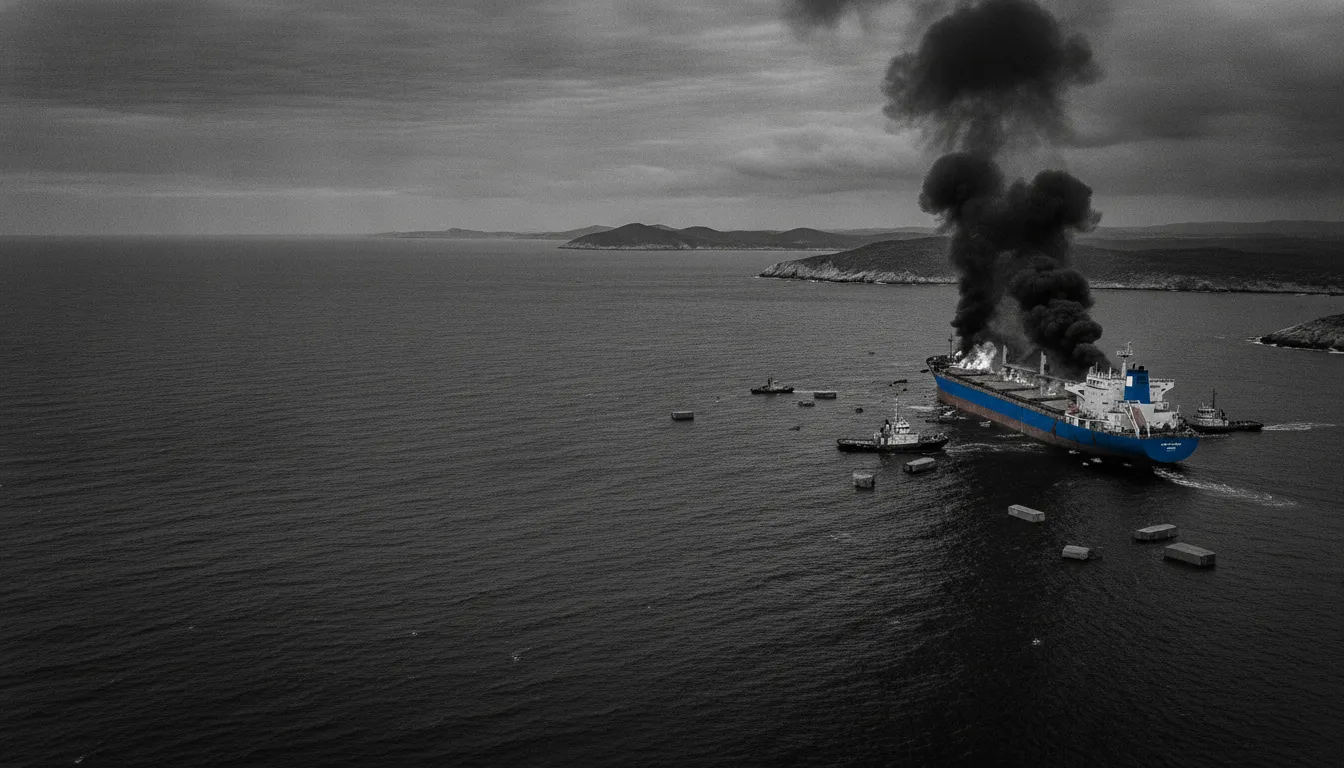
Durban's decline was neither sudden nor mysterious. The port experienced severe anchor and berth delays averaging 9.8 days in June 2024, driven by equipment failures, labour constraints, and ageing infrastructure. November 2023 saw an estimated 79 vessels and 61,000 containers trapped at outer anchorage due to operational chaos and weather. Though anchorage vessels dropped to zero by May 2025 following intensive remediation efforts, underlying capacity deficits persisted. Demurrage charges mounted for exporters, delivery schedules slipped beyond buyer tolerance, and smaller businesses faced reputational damage and margin erosion. The root causes—underinvestment in equipment maintenance, a mismatch between designed and demonstrated capacity, and declining rail infrastructure forcing overreliance on road transport—proved structural rather than cyclical.
Durban handles approximately 60 million tonnes of total cargo annually and welcomes over 4,500 commercial vessels, yet its three container terminals (Terminal 1, Multi-Purpose Terminal, and Terminal 2) exhibited marked performance fragmentation. Transnet's own forecasts indicated it would take up to 15 weeks to clear backlogs under prevailing conditions. Meanwhile, the 2024 CPPI ranked Durban 403rd of 403 ports globally, a public indictment that forced major shipping lines—Maersk, CMA CGM, Hapag-Lloyd, Mediterranean Shipping Company—to impose port congestion surcharges on South African trade lanes, compounding cost pressures for regional exporters.
Tanger Med's Advantages: Strategic Positioning and Operational Efficiency
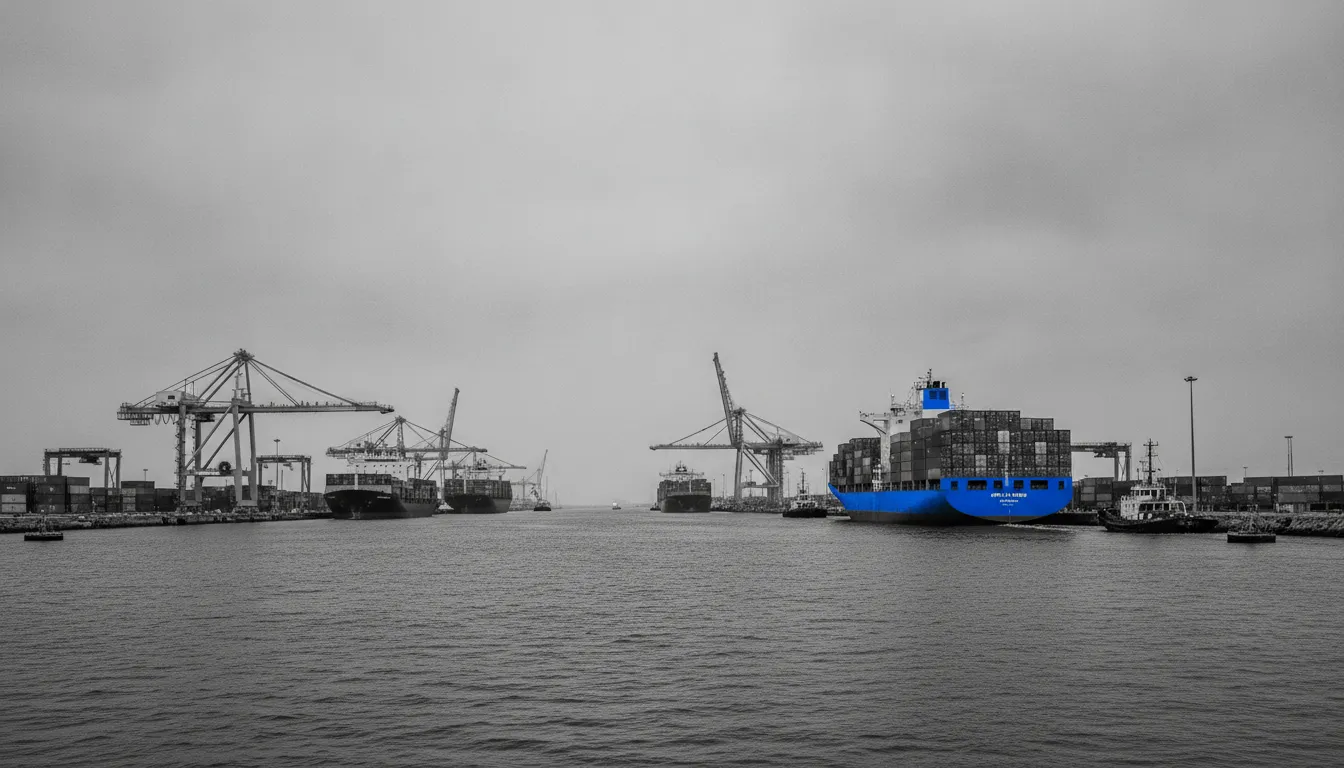
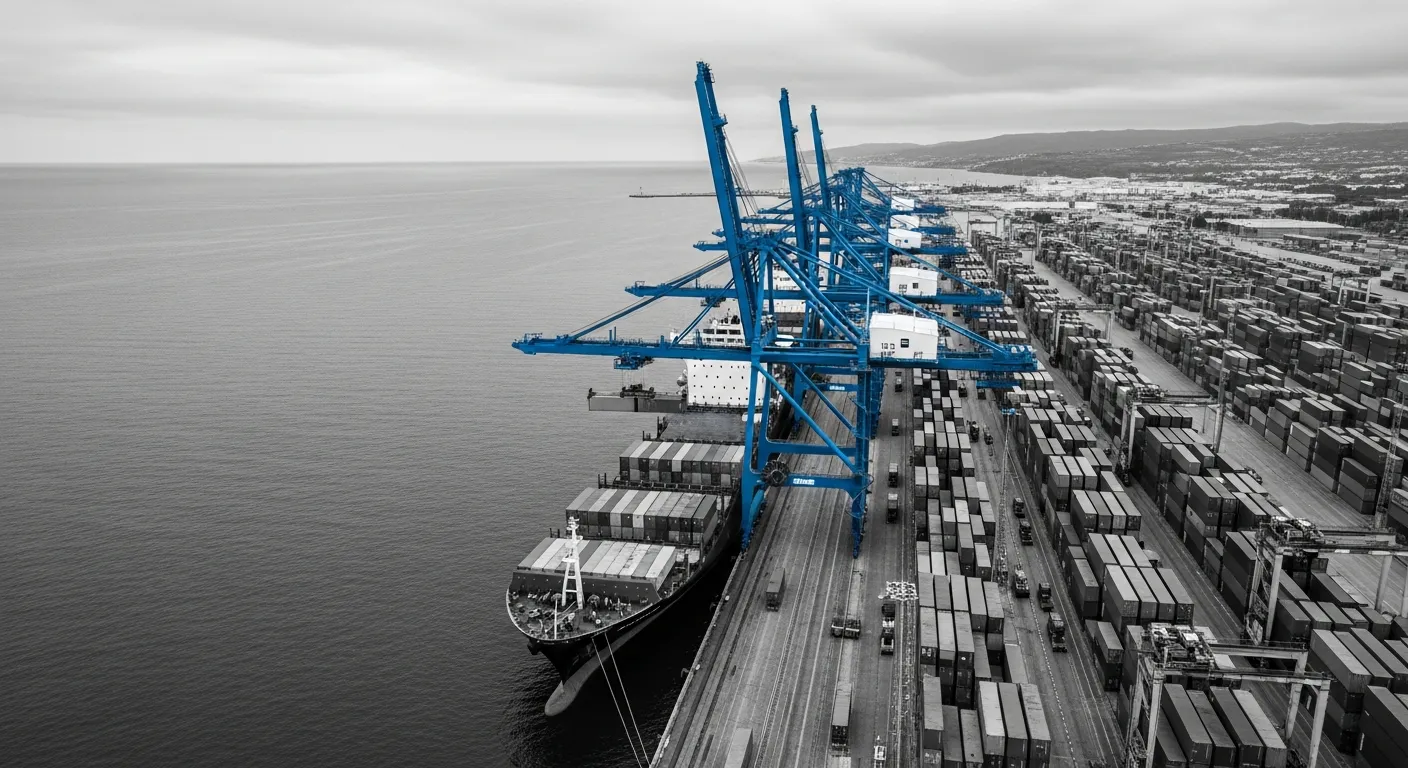
Tanger Med's ascendancy rests on three pillars: geography, infrastructure, and transshipment design. Located on the Strait of Gibraltar, the port sits at a global maritime chokepoint, reducing transit time to Southern Europe by 15–20% compared to Cape routing and capturing trade flows between Europe and West Africa in a single call. The port operates four highly automated container terminals with combined capacity of 9 million TEU, overseen by world-class operators including APM Terminals (handling 5.2 million TEU annually at MedPort Tangier), Eurogate, and Marsa Maroc. The latest expansion of Terminal TC4 brought an additional extension online in 2025, pushing annual throughput beyond 11 million TEU and accommodating mega-vessels up to 290 metres with 8.4% year-on-year growth in mega-ship calls.
Operationally, Tanger Med reports dwell times of 1–2 days versus Durban's 5–7 day median. The port's digital berth planning, auto-mooring systems, advanced simulation tools, and 18-metre draft berths enable rapid turnaround and attract all major global carriers. The Logistics Zone (MedHub), launched in 2008 and expanded continuously, provides value-added services including consolidation, warehousing, packaging, labelling, and procurement—with multinational distributors and 3PLs embedded directly adjacent to the port via a single customs area. This integrated design reduces inland distribution delays and appeals to manufacturers seeking cross-continental supply chain flexibility.
The Procurement Realignment: New Transshipment Corridors and Regional Sourcing
The port hierarchy shift is forcing procurement teams to fundamentally reconsider intra-Africa sourcing and feeder-ship routing. Historically, procurement flows targeting East, Central, and Southern African markets routed primarily through Durban, leveraging inland rail and road networks to landlocked economies. Tanger Med's emergence as the undisputed continental hub now creates viable alternatives. For shipments destined to West Africa (Togo, Ghana, Ivory Coast, Senegal), transshipment via Tanger Med reduces dwell time and unlocks access to regional ports including Lomé (2.06 million TEU in 2024, ranked Africa's fifth-largest port and fifth global position in efficiency), Tema in Ghana, Abidjan, and Port Autonome de Dakar (881,289 TEU in 2024, up 10.1% year-on-year after DP World's modernisation investments).
For Southern African-bound cargo, a growing subset of buyers now route via Tanger Med feeder services to Port Louis (Mauritius) or directly to East Africa via Mombasa (1.6 million TEU), bypassing Durban's congestion entirely. This pattern was already visible in Cape route rerouting: vessels avoiding Suez Canal attacks shifted to Cape of Good Hope but, facing Durban's congestion, increasingly deployed larger mega-ships to feeder hubs and overflow transshipment nodes. Procurement professionals must now actively monitor feeder schedules, carrier consolidation windows at Tanger Med, and cost-per-slot dynamics across competing routes—a level of transparency that previously ranked lower in Southern African-focused supply chains.
Emerging Supplier Networks: North and West African Hubs Mobilise
As Tanger Med absorbs transshipment share, new supplier ecosystems are crystallising in North Africa and West Africa. The port's integrated industrial zone hosts over 750 companies (representing €5.5 billion in annual export turnover) operating in automotive (Renault TangerMed is Africa's largest car plant, exporting 368,843 vehicles in 2024), aeronautics, logistics, textiles, and food processing. Within the Logistics Zone, major 3PLs including Emirates Logistics Morocco, GEFCO, and unnamed multinational distributors now hold advanced supplier warehouses with customs privileges, offering consolidated procurement and direct-to-Africa distribution without traditional transshipment bottlenecks.
West African ports are mobilising competitive capacity. Lomé secured a €127 million expansion programme through 2027 to boost capacity to 2.5 million TEU annually and install new cranes capable of handling mega-vessels. Lekki Port in Lagos, operational since 2023, is ramping towards 1–1.5 million TEU by 2025 and offers a fresh deep-water alternative for Nigeria's import-export base, partly decongesting Lagos/Apapa. Port Autonome de Dakar's 10.1% growth in 2024 reflects DP World's ongoing modernisation, attracting regional importers and West African landlocked-nation corridors. For procurement buyers targeting Sahel markets (Mali, Burkina Faso), these West African ports now compete credibly against Durban's traditional gateway role, offering faster clearance, lower demurrage risk, and shorter inland haul distances.
Procurement Lead-Time Implications and Supply Chain Agility
The port hierarchy shift directly impacts procurement lead times and inventory strategy. A Hong Kong electronics exporter shipping to East Africa can now choose between a traditional Durban route (face 6–7 day port dwell plus inland clearing delays totalling 3–4 weeks warehouse-to-warehouse) or a Tanger Med transshipment-to-Mombasa feeder (1–2 day Tanger Med dwell plus feeder transit, typically completing in 2–3 weeks total). West African importers no longer need to absorb Durban's chronic delays; Tanger Med-to-Lomé transshipment with onward feeder to Abidjan or Dakar now shortens lead times by 7–10 days on average, materially improving cash conversion and reducing safety stock requirements.
For ship suppliers and chandlers serving regional fleets, the shift demands supplier network recalibration. Bunkering, stores provisioning, and spares procurement now cluster around Tanger Med and emergent West African hubs rather than Durban-centric supply chains. A ship requiring crew provisions or lube oil changes mid-voyage through African waters may now call Tanger Med (within 180 ports globally connected) or feeder hubs rather than transit Durban. This reshapes vendor relationships, payment terms, and inventory positioning for maritime service providers serving Sub-Saharan and East African trades.
What This Means for You: Strategic Action Items
Procurement and logistics teams must immediately audit their Africa-destined shipments for route optionality. Durban routes remain viable for landlocked Southern African hinterlands (Zambia, Zimbabwe, Botswana), but should trigger contingency planning for alternative transshipment if congestion surges. For West, East, and Central African markets, calculate total cost of ownership (freight, port fees, inland clearance, demurrage risk) across Tanger Med and regional feeder routes versus traditional Durban single-port calls. Engage carriers and 3PLs operating at Tanger Med's Logistics Zone and West African ports—GEFCO, Emirates Logistics, and major shipping lines—to model consolidation windows and feeder sailing schedules. Monitor World Bank CPPI rankings quarterly and port-specific congestion metrics (PortCast, Beacon, Kpler) to anticipate delays and lock container slots early. Finally, consider reverse-logistics and supplier sourcing from Tanger Med's industrial ecosystem for intra-Africa regional distribution, leveraging the port's direct customs corridor and multimodal connectivity. The new African port hierarchy is permanent; agility in route selection, supplier activation, and lead-time forecasting is now table stakes for competitiveness.