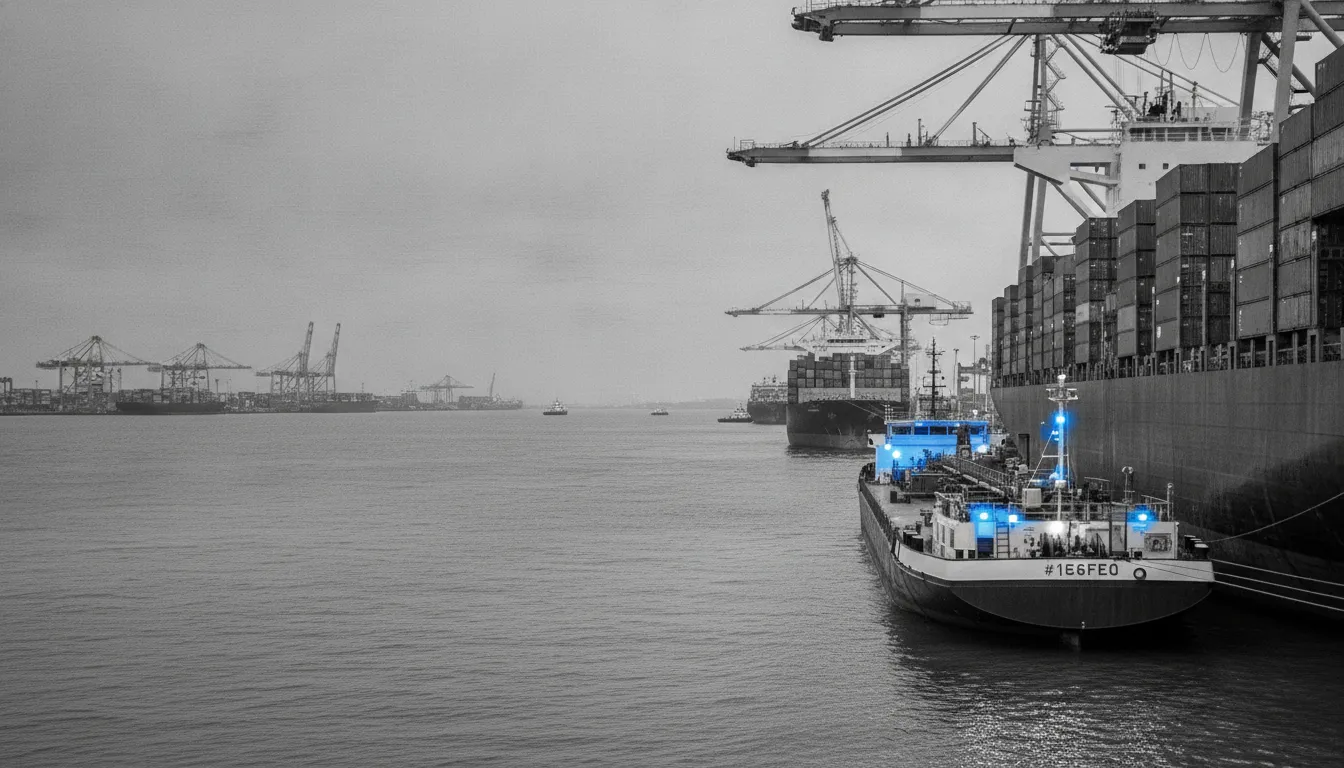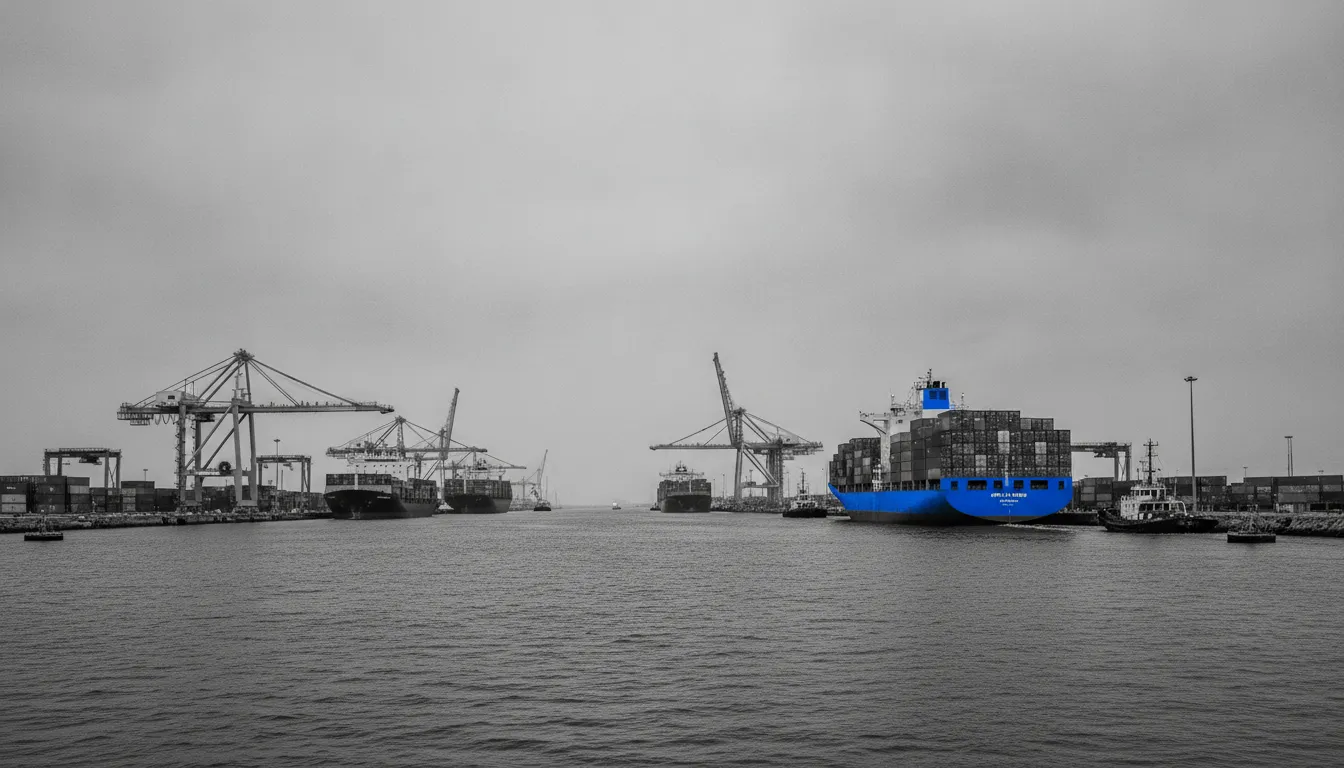
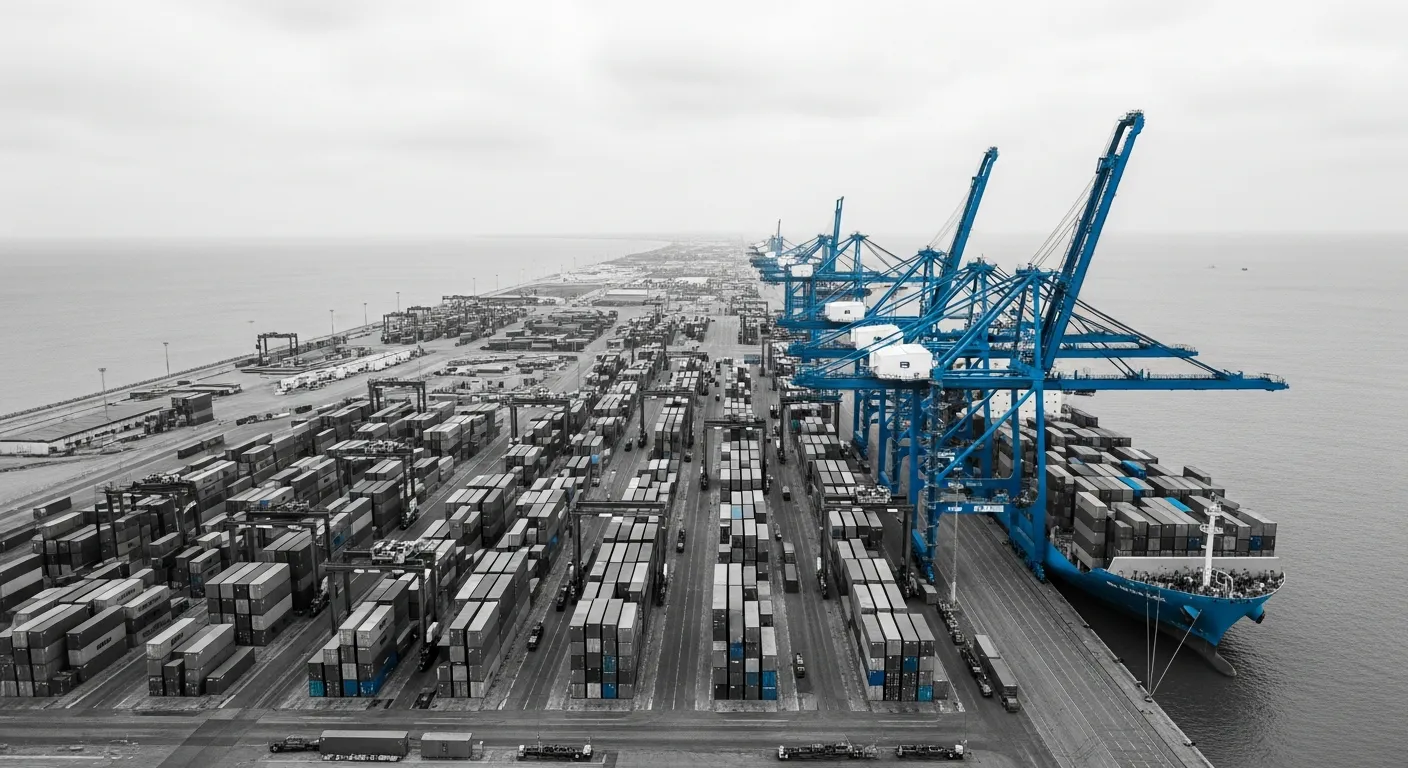
For MPS and its shareholders, the priority is efficiency and integration into global shipping networks. The difference between Terminal 2 and Terminal 3 was not a difference in technology or ambition, it was a difference in negotiating position, and in how much institutional space the state retained to define the terms.
Capacity Gains and the Governance Cost of Unsolicited Bids
Terminal 3 delivered transformational infrastructure. Capacity expanded from 800,000 TEU pre-expansion to 3.5 million TEU across Tema Port, with Terminal 3 alone now receiving vessels of up to 24,000 containers. The terminal spans 127 hectares, features a 1.4 kilometre quay with a 16-metre draft, and is equipped with 15 new gantry cranes (three ship-to-shore and twelve electric rubber-tyred gantry cranes). Since commissioning Phases 1 and 2 in November 2025, transshipment traffic has surged to over 4.4 million tonnes in 2024. Hapag-Lloyd has designated Tema its West African transshipment hub, and the terminal achieved 2 million container movements by mid-November 2025, cementing its position as West Africa's premier gateway. By every operational metric, the facility is Africa's fastest-improving deep-water container complex.
Yet this success masks a critical governance question suppliers must confront: how institutional authority over port decisions shifted when GPHA ceded exclusive container-handling rights to a multinational operator. Terminal 2, concessioned in 2004, followed a different model. GPHA built the facility first, then negotiated from a position of strength, retaining 30 per cent equity alongside APM Terminals and Africa Global Logistics, with real state oversight intact. Terminal 3 was negotiated entirely differently. Rather than running a competitive bidding process, government accepted an unsolicited proposal from MPS in 2015, after terminating a long-running international tender that had attracted 56 applicants and seven fully responsive bids. GPHA's equity stake was diluted from the intended 30 per cent to 15 per cent, and MPS was granted exclusive container-handling rights—effectively shutting out GPHA's own terminals and local stevedore companies. Around 1,200 dockworking jobs were put at risk. Following sustained protests from the Maritime and Dockworkers Union, the stake was restored to 30 per cent under the so-called Dubai Agreement, but institutional fragmentation persisted.
Supplier Vetting and the Rise of Institutional Gatekeeping
Terminal 3's operational model prioritises global shipping-line requirements and international best practices. This is operationally sound but administratively unforgiving for traditional suppliers. MPS operates with real-time performance dashboards, automated gates, and tight control between berth, yard and gate—a system that enforces standardised procedures across all service providers. For ship suppliers, freight forwarders and stevedoring companies, this means compliance with prequalification regimes that did not exist under older, more fragmented port authority structures.
The terminal now requires documented supplier accreditation, safety certifications aligned to international standards, and integration with MPS's digital platform before goods or services can be transacted. Traditional relationships—informal supplier networks built on personal trust and repeat dealings—encounter friction in this environment. A supplier's ability to secure berthing access, arrange cargo handling or negotiate credit terms now depends on passing institutional vetting conducted by a multinational operator with liability concerns and shareholder accountability. This creates a two-tier system: large, formally registered firms with compliance infrastructure move smoothly; smaller enterprises, particularly those lacking digital integration or formal governance structures, face delays or exclusion. The shift is not unique to Tema, but the scale of the facility—now handling nearly 3.5 million TEU annually—concentrates market power in ways that smaller West African ports do not.
Digitalisation as a Compliance Mandate
Terminal 3 operates with digitally integrated customs clearance, terminal operating systems and cargo-tracking infrastructure that reduces turnaround times and enhances transparency. These are genuine benefits: the International Maritime Organization mandated Maritime Single Window systems across all ports as of 1 January 2024, requiring data exchange between ships, port authorities and government agencies through a single digital portal. Tema's systems are ahead of this requirement, positioning Ghana as a regional leader in digital port governance.
However, digitalisation creates new dependency chains for suppliers. Suppliers must integrate their own systems with MPS's platforms to access real-time cargo status, slot bookings and billing. For larger multinational ship suppliers and chandlery firms, this is routine. For smaller regional operators, particularly those in Ghana or neighbouring Côte d'Ivoire, Senegal and Liberia, the cost of compliance and the technical expertise required impose barriers to market entry. A World Bank analysis noted that barriers to port digitalisation in Africa include insufficient policies and regulations, weak IT resilience, limited cybersecurity investment and gaps in digital skills. Terminal 3, by contrast, has assumed full digital maturity and imposed it downward through its supply chains. Suppliers without digital capability or capital to invest in system integration face relegation to secondary roles or exclusion entirely.
Exclusive Rights and the Compression of Local Supplier Space
The granting of exclusive container-handling rights to MPS created a structural bottleneck. Previously, stevedoring companies and labour gangs operating through GPHA's multiple terminals could negotiate rates and access with competing service providers. Terminal 3's exclusivity removed that competitive option. While GPHA retained 30 per cent equity in MPS, the authority is compromised as a regulator—it cannot neutrally monitor a terminal operator in which it holds substantial financial interest. This conflict is not new in port governance, but the scale at Tema amplifies the risk. With 3.5 million TEU flowing through a single operator, the authority to set supplier terms, pricing and access conditions rests almost entirely with MPS's management.
The consequence is visible in labour and supplier relations. Around 600 Ghanaian employees and thousands of indirect jobs were created through Terminal 3's operations, yet stevedoring gangs and small suppliers report tighter margin requirements and less negotiating leverage than before. West African trade corridors historically relied on flexible supplier relationships, informal credit arrangements and personal connections to navigate complex clearance and logistics arrangements. Terminal 3's efficiency gains came at the cost of this flexibility. Large shipping lines—Maersk, Hapag-Lloyd, CMA CGM—benefit from standardised, predictable operations. Smaller traders, regional manufacturers and local suppliers encounter a more rigid, compliance-driven system.
Implications for Supplier Strategy in Fragmented Governance
The institutional shift at Tema reflects a broader continental pattern: large-scale infrastructure projects redistribute authority. Between 2010 and 2022, African ports captured $13 billion in global port investment, heavily concentrated in the Democratic Republic of Congo, Nigeria, Senegal and Ghana. As these facilities modernise and attract multinational operators, governance architectures shift from state-led landlord-port models toward private concession models that prioritise efficiency over local stakeholder accommodation. For suppliers, the practical implication is clear: relationship-based access has given way to compliance-based access. Suppliers must invest in formal accreditation, digital integration and safety certifications to maintain market participation. Regional suppliers must either build these capabilities or risk exclusion as Tema and similar hubs anchor West African trade flows. The question that should concern policymakers—and does concern suppliers—is whether institutional fragmentation that prioritises global efficiency inadvertently weakens local supply-chain resilience and regional economic participation.