"VLSFO availability remains extremely tight, while LSMGO supply has tightened sharply and July capacity is limited." – Japan-based bunker trader, mid-July 2026
Singapore Inventories Hit Multi-Year Low Despite Import Surge
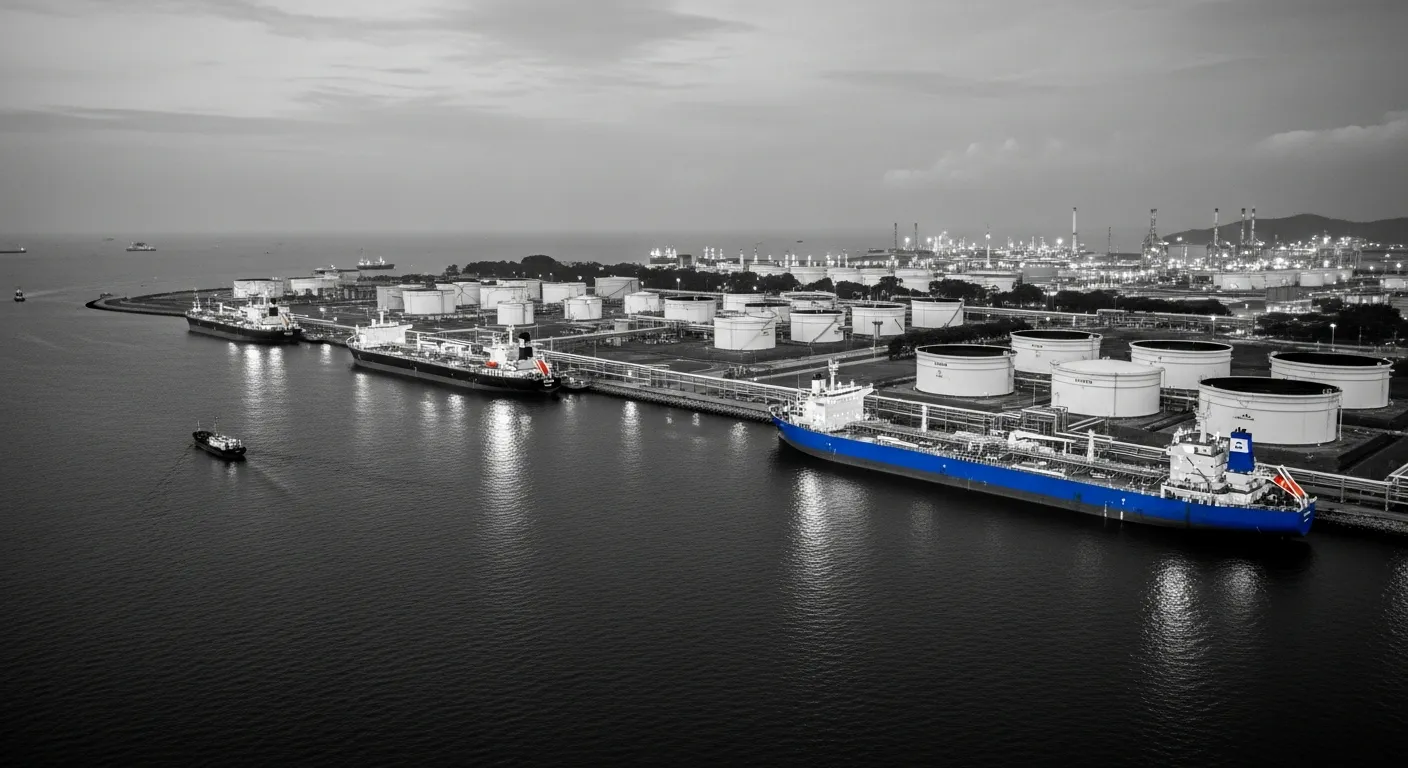
Singapore's VLSFO crisis has worsened substantially in mid-July 2026. Recommended lead times widened from 13–17 days in early July to 15–18 days as of 14 July, marking the tightest spot availability in years. Multiple suppliers are quoting staggered delivery schedules, with some promising fill-ups in as little as five days whilst others demand up to three weeks. This fractured market signals inventory desperation across the world's largest bunkering hub, where supplier fragmentation is acute: some can deliver in roughly nine days, whilst others quote lead times exceeding four weeks. The upper end of this range has extended further from around three weeks previously, indicating deteriorating access to physical tonnage.
Enterprise Singapore data reveals a troubling paradox: whilst residual fuel oil inventories climbed above 19 million barrels in early July (10% higher than June levels) on a 105% surge in net fuel oil imports—with inbound cargoes rising by 1.92 million barrels and exports falling by 206,000 barrels—middle distillate stocks expanded modestly to 8.91 million barrels. Yet VLSFO demand is outpacing refinery conversion capacity, and suppliers are rationing allocations aggressively. In stark contrast, earlier data from late June showed fuel oil inventories had dropped below 18 million barrels amid a 24% decline in net fuel oil imports, with imports falling by 781,000 barrels. Ship operators planning Singapore bunkers must lock orders 3+ weeks ahead to access competitive pricing and guaranteed tonnage. The volatility reflects both seasonal refinery maintenance and demand shifts toward alternative hubs.
Japan's Refinery Lockdown: 7–10 Day Lead Times and Limited Allocation Games
Japanese ports face the tightest VLSFO conditions in the region. Demand surged in mid-July as competitive regional pricing attracted fresh inquiries from owners seeking Asia-Pacific coverage, yet Japanese refineries have sharply curtailed spot bunker supply to prioritise domestic energy demand amid Middle East volatility and geopolitical uncertainty. At major ports—Tokyo, Chiba, Kawasaki, Kashima, Nagoya, Yokkaichi, Osaka, Kobe, Mizushima and Oita—VLSFO and LSMGO remain in critically short supply, with only a limited number of suppliers able to offer either grade. HSFO is comparatively more available at 7–10 day lead times, though even this residual grade faces tightness at some facilities. Across major ports including Tokyo, Chiba, Kawasaki, Nagoya and Yokkaichi, earlier-June data showed HSFO lead times at around 7–10 days and VLSFO at 10–12 days.
A Japan-based trader urged buyers in mid-July to secure spot requirements immediately, citing a severe supply squeeze, limited July allocations, and expectations that refineries would prioritise domestic petrochemical and power-generation demand through month-end. The trader noted that major refiners have sharply cut spot bunker supply for ocean-going vessels; one supplier had fully suspended spot supply entirely, whilst others reduced volumes by 50–90%. Vessel operators should plan 10+ day advance notice for Tokyo Bay and western Japan operations. Small parcels of 200–300 mt may still be obtainable but at premium rates; larger stem requests face outright allocation refusals. Early-June guidance indicated that monthly bunker supply volumes remain heavily constrained by refinery output, with most local suppliers already sold out on their allocated June stems, leaving only minimal prompt availability.
Fujairah's Restricted Quotations Signal Premiums and Firm-Enquiry-Only Terms
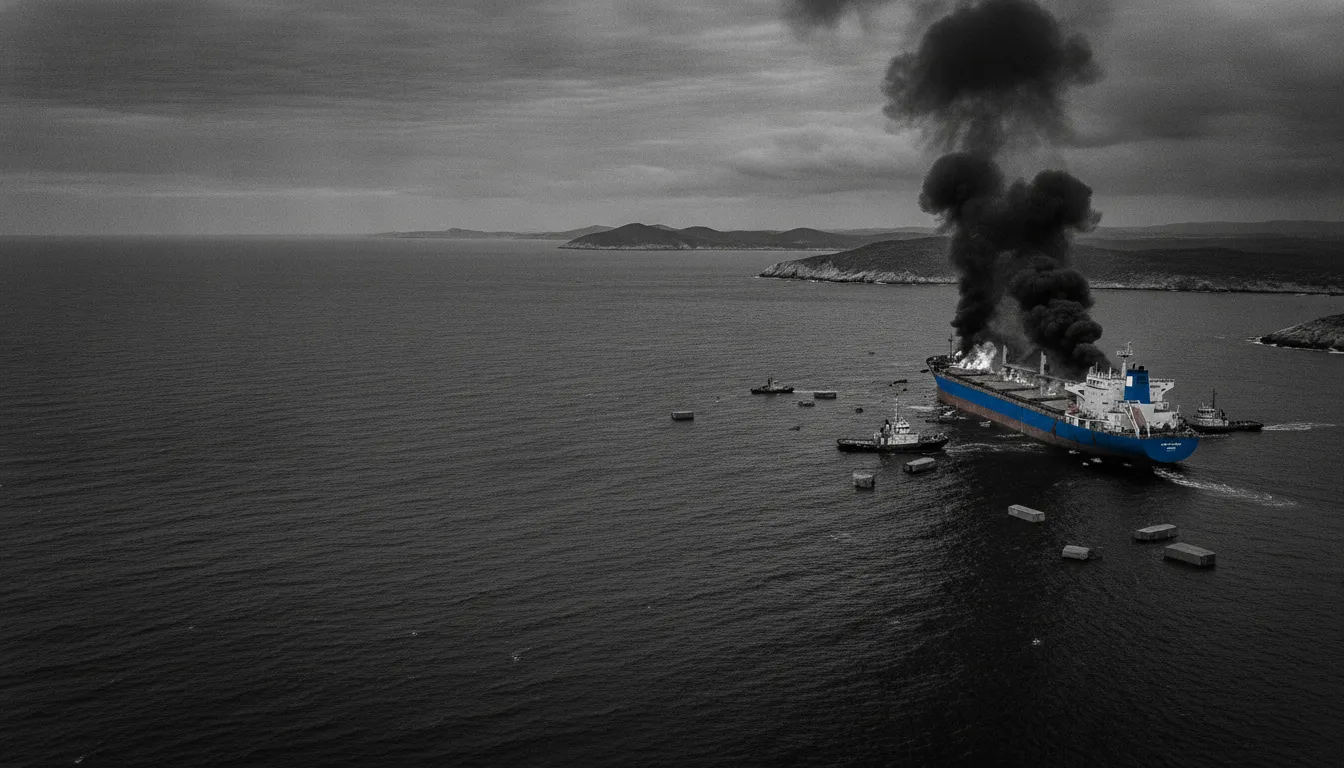
Fujairah supply remains under acute stress from ongoing Middle East instability rooted in geopolitical conflict and Strait of Hormuz closures. As of early June, only one VLSFO supplier held stocks, with most offers issued on a firm enquiry basis only. Khor Fakkan neighbouring port reported equally tight conditions, with suppliers evaluating requests on a case-by-case basis. Fuel oil imports have been declining steadily: March averaged 14,000 barrels per day, April fell to zero, and May recovered to only 7,000 b/d, according to cargo tracking firm Vortexa. Industry sources warned that Fujairah and neighbouring Khor Fakkan could run dry within days if expected replenishment cargoes failed to arrive. The supply crunch is largely driven by a shortage of incoming cargoes, leaving bunker barges without product to load. Although fresh cargo arrivals were expected over past weeks, there was still no clear indication of their arrival timeline.
By mid-June, supply tightness was expected to persist until at least mid-July, with limited cargo arrivals continuing to elevate premiums. Global trading firm Dan-Bunkering advised shipowners and operators planning to bunker in Gulf ports to allow extra lead time and secure fuel requirements well in advance. One VLSFO cargo had landed in mid-June—the first in over two months—but it was a small parcel, insufficient to meet regional demand. Fujairah's VLSFO price traded at a substantial premium of $214 per metric tonne over Singapore and Zhoushan in early June; later assessments recorded premiums of $554–$611/mt over Singapore levels, representing all-time highs. Buyers hedging Gulf region operations should diversify to Oman (Duqm, Muscat, Sohar, Salalah), where lead times of 1–2 days were available from single-source suppliers by mid-June, albeit with ongoing weather monitoring required for occasional disruption.
Indonesia: The Supply Release Valve at 2–3 Days Lead Time
Indonesia's bunker market stands in stark contrast to regional tightness. VLSFO availability is stable across Jakarta, Surabaya, Balikpapan and Cigading, where suppliers are quoting lead times of 2–3 days consistently through June and July 2026. This represents a critical procurement advantage for buyers managing fleet rotations through Southeast Asian routes and eastbound Asia-Pacific operations. LSMGO supply is similarly steady, and HSFO stocks are well supplied in Jakarta, Surabaya and Balikpapan. No allocation constraints, firm-enquiry-only restrictions, or multi-week waits plague Indonesian ports, in contrast to competitors across the region.
Ship suppliers optimising procurement chains can frontload spot purchases in Indonesia at substantially shorter lead times, then position tonnage for eastbound transits or route-specific top-ups. Indonesia's quick-turn model eliminates the allocation gamesmanship plaguing Singapore and Japan, making it an essential routing node for operators planning August–September lift-offs in the Asian hub corridor. Cost-per-metric-tonne may carry a regional differential relative to Singapore benchmarks, but operational certainty and execution risk reduction justify the diversification. Buyers facing Tokyo Bay allocation denials or Singapore 3-week waits should immediately pivot to Indonesian spot markets to secure physical tonnage within days rather than weeks, accepting modest pricing differentials as insurance against operational delays and missed departure windows.
South Korea and China: Volatile Margins and Weather-Induced Delays
South Korean ports show split conditions across regions. Southern ports (Busan, Ulsan, Masan, Onsan, Yeosu, Kwangyang) offer VLSFO and LSMGO at 4–12 day lead times, widening from earlier 4–6 day windows in early July. Western ports (Incheon, Daesan, Dangjin, Pyeongtaek, Taean) narrowed to 4–12 days from 9–14 days in early July, showing marginal relief from transient supply easing. However, weather disruptions remain an active threat: high waves and strong winds are forecast at Busan, Daesan and Taean from 26–28 July, with similar disruptions expected at Yeosu. LSMGO supply remains constrained with inconsistent lead times spanning 3–11 days across both regions.
Zhoushan (China) delivered VLSFO at 8 day lead times as of mid-July following a temporary bunkering suspension due to Super Typhoon Bavi, down from 10–15 days a week prior. Lead times for LSMGO and HSFO eased to about five days compared with 7–10 days previously. Bunkering operations at Zhoushan's outer and inner anchorages (Tiaozhoumen and Xiazhimen) were suspended from mid-July due to adverse weather, with operations expected to resume once conditions improved. Northern ports (Dalian, Qingdao) maintain ample VLSFO and LSMGO stocks, whilst Tianjin and Shanghai experience ongoing constraints with all major bunker grades in tight supply. VLSFO remains tight across southern ports (Fuzhou, Yangpu, Guangzhou), though Xiamen holds adequate VLSFO supplies but tighter LSMGO availability.
Procurement Strategy: Spot Lock-In, Allocation Boarding and Route Diversification
Bunker buyers must act on three fronts immediately. First, lock Singapore spot deals at 3+ weeks lead time rather than wait for prompt availability—marginal cost premiums on forward bookings are negligible versus operational delay risk. Pool orders with peers if stem sizes exceed single-vessel requirements; smaller prompts attract premium pricing at Singapore due to limited supplier participation. Second, board Japan allocations early or redirect to South Korean and Chinese alternatives with 4–8 day horizons to avoid end-month squeeze. Third, stage Indonesia lift-offs opportunistically: 2–3 day lead times mean buyers can execute emergency top-ups or route optimisation with minimal planning overhead and no allocation denials.
The regional premium structure—Fujairah at $200+/mt over benchmarks, Japan at allocation-dependent spot rates, Indonesia at near-par pricing—demands dynamic sourcing. Buyers should split Q3 requirements across Singapore (60% forward contract locked 3+ weeks ahead, 30% weeks-ahead spot, 10% emergency reserve), Japan/Korea (for tactical regional transit cover at 4–8 days), and Indonesia (for execution flexibility and short-cycle rotations). Supply recovery is expected only when Middle East cargo flows normalise and Japanese refinery allocations loosen; meanwhile, forward booking discipline and geographic diversification remain the only workable cost and risk mitigation tools available to ship suppliers navigating this crisis-level constrained market.